Tip Jar

Showing posts with label EPA. Show all posts

8/10/2013

Washington's Latest Special Favor

Via-WSJ
Of the nation's 143 refineries, one was exempted from the EPA's ethanol mandate. Why?

By KIMBERLEY A. STRASSEL

For a glimpse at the secret, special-favors factory that Washington has become under President Obama, check out this week's big news out of the Environmental Protection Agency. Or rather, look beyond the headlines to the corporate handout hidden within.

The big news was that the EPA issued—finally—its infamous annual quota for renewable fuels. That mandate tells the nation's refineries how much renewable fuel (ethanol) must be blended annually into gasoline, a quota that is becoming a pernicious driver of gas prices. The EPA was supposed to release the 2013 quota last November but decided to leave the industry in panicked uncertainty until now.

The 89-page rule is dull reading, until you get to page 11. Tucked on that page is one short sentence, which reads: "EPA has approved a single small refinery/small refiner exemption for 2013, so an adjustment has been made to the standards to account for this exemption." In English: Of the nation's 143 refineries, one (and only one) lucky player somehow had the pull to win itself a free pass from this government burden. Not only that, the rest of the industry gets to pick up its slack.

An exemption is no small privilege. Congress, in its limited wisdom (and fealty to corn farmers), passed legislation in 2007 requiring that the U.S. use of renewable fuels increase to 36 billion gallons annually by 2022. This year's EPA quota is 16.5 billion gallons, and the requirements keep ratcheting up even though U.S. gasoline use is falling.

12/27/2012

'Richard Windsor' departure from EPA is a victory for transparency

Via-Washington Examiner


Mark Tapscott

Lisa Jackson's forthcoming departure from the U.S. Environmental Protection Agency is a major victory for transparency and accountability in Washington.

After years of whispers that EPA officials frequently used private email addresses, fake names and coded messages to circumvent the Freedom of Information Act, or FOIA, Jackson admitted recently to using "Richard Windsor" as her chosen nom de plume on a government email account.

That was her choice because it reminded her of a much-beloved family pet, she claimed. (At least she didn't ask how anybody could suspect a puppy lover like her of any wrongdoing.) The EPA inspector general opened an investigation into the matter because it is against federal law to use nonofficial or secret email addresses to conduct official business.

The EPA IG could hardly do otherwise. The use of private or secret emails enables high government muckety-mucks like Jackson to hide things about which they don't want the rest of us to know. But we don't need an investigation to know officials have been hiding bad things within the EPA for a very long time.

10/06/2012

Blow Your Mind Stories


EPA Sued Over Heinous Experiments on Humans


After accumulating evidence via the Freedom of Information Act that showed the Environmental Protection Agency conducted disturbing experiments that exposed humans to inhalable particulates the agency has said are deadly, sound science advocate Steven Milloy has sued the federal government.

The trials, which were carried out at EPA’s Human Studies Facility at the University of North Carolina in Chapel Hill, exposed subjects to fine particulate matter (called “PM2.5”) at extremely elevated levels for up to two hours at a time. EPA’s Web site on particulate matter and its 2009 “Summary of PM2.5 Risk Estimates,” stated, “an examination of cause-specific risk estimates found that PM2.5 risk estimates for cardiovascular deaths are similar to those for all-cause deaths….” Also, in July 2011 EPA stated in the Federal Register announcement of its Cross-State Air Pollution Rule that “a recent EPA analysis estimated that 2005 levels of PM2.5 and ozone were responsible for between 130,000 and 320,000 PM2.5-related and 4,700 ozone-related premature deaths….”

And to cap it all, last September EPA Administrator Lisa Jackson told the Oversight and Investigations Subcommittee of the House Energy and Commerce Committee, “Particulate matter causes death. It doesn’t make you sick. It’s directly causal to dying sooner than you should.”

Read entire article here

and more here and here

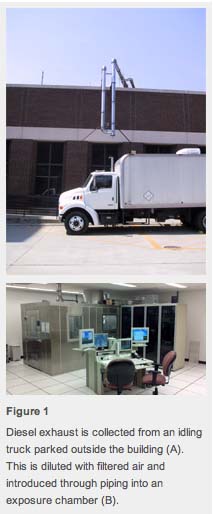
The suit accuses the EPA of paying as many as 41 participants $12 an hour to breathe in concentrated diesel exhaust, for as long a two hours at a time. The exhaust was directly piped in from a truck parked outside the Chapel Hill facility. According to the lawsuit, the fine particulate matter, called “PM2.5,” was piped in at levels 21 times greater than what the EPA calls its “permissible limit.”

Yet even that phrase is misleading. In testimony delivered to Congress in September of 2011, EPA chief Lisa Jackson claimed that exposure to fine particulate matter of 2.5 microns–or less–was lethal. ”Particulate matter causes premature death. It’s directly causal to dying sooner than you should,” she testified at the time.

2/01/2011

Spilled Milk

Via-Townhall
Thomas Sowell

Despite the old saying, "Don't cry over spilled milk," the Environmental Protection Agency is doing just that.

We all understand why the Environmental Protection Agency was given the power to issue regulations to guard against oil spills, such as that of the Exxon Valdez in Alaska or the more recent BP oil spill in the Gulf of Mexico. But not everyone understands that any power given to any bureaucracy for any purpose can be stretched far beyond that purpose.

In a classic example of this process, the EPA has decided that, since milk contains oil, it has the authority to force farmers to comply with new regulations to file "emergency management" plans to show how they will cope with spilled milk, how farmers will train "first responders" and build "containment facilities" if there is a flood of spilled milk.

Since there is no free lunch, all of this is going to cost the farmers both money and time that could be going into farming-- and is likely to end up costing consumers higher prices for farm products.

It is going to cost the taxpayers money as well, since the EPA is going to have to hire people to inspect farms, inspect farmers' reports and prosecute farmers who don't jump through all the right hoops in the right order. All of this will be "creating jobs," even if the tax money removed from the private sector correspondingly reduces the jobs that can be created there.

Does anyone seriously believe that any farmer is going to spill enough milk to compare with the Exxon Valdez oil spill or the BP oil spill?

Do you envision people fleeing their homes, as a flood of milk comes pouring down the mountainside, threatening to wipe out the village below?

It doesn't matter. Once the words are in the law, it makes no difference what the realities are. The bureaucracy has every incentive to stretch the meaning of those words, in order to expand its empire.

The Equal Employment Opportunity Commission has expanded its definition of "discrimination" to include things that no one thought was discrimination when the Civil Rights Act of 1964 was passed. The Federal Communications Commission is trying to expand its jurisdiction to cover things that were never included in its jurisdiction, and that have no relationship to the reason why the FCC was created in the first place.

Yet the ever-expanding bureaucratic state has its defenders in the mainstream media. When President Obama recently mentioned the possibility of reducing burdensome regulations-- as part of his moving of his rhetoric toward the political center, even if his policies don't move-- there was an immediate reaction in a New York Times article defending government regulations.

Under a headline that said, "Obama May Find Useless Regulations Are Scarcer Than Thought," the Times writers declared that there were few, if any, "useless" regulations. But is that the relevant criterion?

Is there any individual or business willing to spend money on everything that is not absolutely useless? There are thousands of useful things out there that any given individual or business would not spend their money on.

When I had young children, I often thought it would be useful to have a set of the Encyclopedia Britannica for them. But I never bought one. Why? Because there were other little things to spend money on, like food, clothing and shelter.

By the time I could afford to buy a set of the Encyclopedia Britannica, the kids were grown and gone. But at no time did I consider the Encyclopedia Britannica "useless."

Weighing benefits against costs is the way most people make decisions-- and the way most businesses make decisions, if they want to stay in business. Only in government is any benefit, however small, considered to be worth any cost, however large.

No doubt the Environmental Protection Agency's costly new regulations may somewhere, somehow, prevent spilled milk from pouring out into some street and looking unsightly. So the regulations are not literally "useless."

What is useless is making that the criterion.