Tip Jar

Showing posts with label Sowell. Show all posts

10/13/2013

Who Shut Down the Government?

Via-Townhall

Thomas Sowell

Even when it comes to something as basic, and apparently as simple and straightforward, as the question of who shut down the federal government, there are diametrically opposite answers, depending on whether you talk to Democrats or to Republicans.

There is really nothing complicated about the facts. The Republican-controlled House of Representatives voted all the money required to keep all government activities going -- except for ObamaCare.

This is not a matter of opinion. You can check the Congressional Record.

As for the House of Representatives' right to grant or withhold money, that is not a matter of opinion either. You can check the Constitution of the United States. All spending bills must originate in the House of Representatives, which means that Congressmen there have a right to decide whether or not they want to spend money on a particular government activity.

Whether ObamaCare is good, bad or indifferent is a matter of opinion. But it is a matter of fact that members of the House of Representatives have a right to make spending decisions based on their opinion.

ObamaCare is indeed "the law of the land," as its supporters keep saying, and the Supreme Court has upheld its Constitutionality.

But the whole point of having a division of powers within the federal government is that each branch can decide independently what it wants to do or not do, regardless of what the other branches do, when exercising the powers specifically granted to that branch by the Constitution.

The hundreds of thousands of government workers who have been laid off are not idle because the House of Representatives did not vote enough money to pay their salaries or the other expenses of their agencies -- unless they are in an agency that would administer ObamaCare.

Since we cannot read minds, we cannot say who -- if anybody -- "wants to shut down the government." But we do know who had the option to keep the government running and chose not to. The money voted by the House of Representatives covered everything that the government does, except for ObamaCare.

The Senate chose not to vote to authorize that money to be spent, because it did not include money for ObamaCare. Senate Majority Leader Harry Reid says that he wants a "clean" bill from the House of Representatives, and some in the media keep repeating the word "clean" like a mantra. But what is unclean about not giving Harry Reid everything he wants?

If Senator Reid and President Obama refuse to accept the money required to run the government, because it leaves out the money they want to run ObamaCare, that is their right. But that is also their responsibility.

You cannot blame other people for not giving you everything you want. And it is a fraud to blame them when you refuse to use the money they did vote, even when it is ample to pay for everything else in the government.

When Barack Obama keeps claiming that it is some new outrage for those who control the money to try to change government policy by granting or withholding money, that is simply a bald-faced lie. You can check the history of other examples of "legislation by appropriation" as it used to be called.

Whether legislation by appropriation is a good idea or a bad idea is a matter of opinion. But whether it is both legal and not unprecedented is a matter of fact.

Perhaps the biggest of the big lies is that the government will not be able to pay what it owes on the national debt, creating a danger of default. Tax money keeps coming into the Treasury during the shutdown, and it vastly exceeds the interest that has to be paid on the national debt.

Even if the debt ceiling is not lifted, that only means that government is not allowed to run up new debt. But that does not mean that it is unable to pay the interest on existing debt.

None of this is rocket science. But unless the Republicans get their side of the story out -- and articulation has never been their strong suit -- the lies will win. More important, the whole country will lose

8/28/2013

A Poignant Anniversary

Via-RCP


By Thomas Sowell

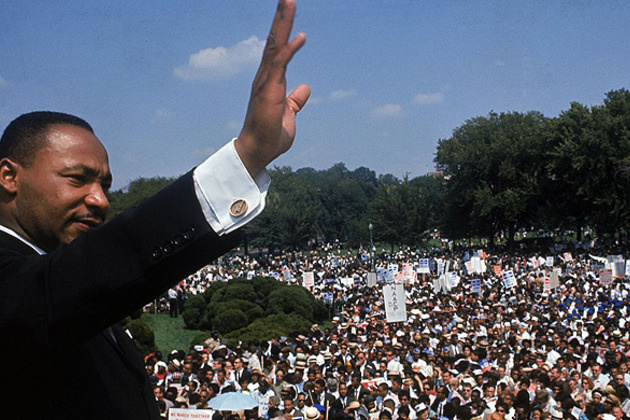
The 50th anniversary of the March on Washington, and of the Reverend Martin Luther King's memorable "I have a dream" speech, is a time for reflections -- some inspiring, and some painful and ominous.

At the core of Dr. King's speech was his dream of a world in which people would not be judged by the color of their skin, but by "the content of their character."

Judging individuals by their individual character is at the opposite pole from judging how groups are statistically represented among employees, college students or political figures.

Yet many -- if not most -- of those who celebrate the "I have a dream" speech today promote the directly opposite approach of group preferences, especially those based on skin color.

How consistent Martin Luther King himself was as he confronted the various issues of his time is a question that can be left for historians. His legacy to us is the "I have a dream" speech.

What was historic about that speech was not only what was said but how powerfully its message resonated among Americans of that time, across the spectrum of race, ideology and politics. A higher percentage of Republicans than Democrats voted in Congress for both the Civil Rights Act of 1964 and the Voting Rights Act of 1965.

To say that that was a hopeful time would be an understatement. To say that many of those hopes have since been disappointed would also be an understatement.

There has been much documented racial progress since 1963. But there has also been much retrogression, of which the disintegration of the black family has been central, especially among those at the bottom of the social pyramid.

Many people -- especially politicians and activists -- want to take credit for the economic and other advancement of blacks, even though a larger proportion of blacks rose out of poverty in the 20 years before 1960 than in the 20 years afterwards.

But no one wants to take responsibility for the policies and ideologies that led to the breakup of the black family, which had survived centuries of slavery and generations of discrimination.

Many hopes were disappointed because those were unrealistic hopes to begin with. Economic and other disparities between groups have been common for centuries, in countries around the world -- and many of those disparities have been, and still are, larger than the disparities between blacks and whites in America.

Even when those who lagged behind have advanced, they have not always caught up, even after centuries, because others were advancing at the same time. But when blacks did not catch up with whites in America, within a matter of decades, that was treated as strange -- or even a sinister sign of crafty and covert racism.

Civil rights were necessary, but far from sufficient. Education and job skills are crucial, and the government cannot give you these things. All it can do is make them available.

Race hustlers who blame all lags on the racism of others are among the obstacles to taking the fullest advantage of education and other opportunities. What does that say about the content of their character?

When the Civil Rights Act of 1964 was pending in Congress, my hope was that it would pass undiluted, not because I thought it would be a panacea but, on the contrary, because "the bitter anticlimax that is sure to follow may provoke some real thought in quarters where slogans and labels hold sway at the moment."

But the bitter anticlimax that did follow provoked no rethinking. Instead, it provoked all sorts of new demands. Judging everybody by the same standards was now regarded in some quarters as "racist" because it precluded preferences and quotas.

There are people today who talk "justice" when they really mean payback -- including payback against people who were not even born when historic injustices were committed.

The nation has just been through a sensationalized murder trial in Florida, on which many people took fierce positions before a speck of evidence was introduced, basing themselves on nothing more than judging those involved by the color of their skin.

We have a long way to go to catch up to what Martin Luther King said 50 years ago. And we are moving in the opposite direction.

8/27/2013

A Truly Great Phony

Via-RCP


By Thomas Sowell

Many years ago, I was a member of a committee that was recommending to whom grant money should be awarded. Since I knew one of the applicants, I asked if this meant that I should recuse myself from voting on his application.

"No," the chairman said. "I know him too -- and he is one of the truly great phonies of our time."

The man was indeed a very talented phony. He could convince almost anybody of almost anything -- provided that they were not already knowledgeable about the subject.

He had once spoken to me very authoritatively about Marxian economics, apparently unaware that I was one of the few people who had read all three volumes of Marx's "Capital," and had published articles on Marxian economics in scholarly journals.

What our glib talker was saying might have seemed impressive to someone who had never read "Capital," as most people have not. But it was complete nonsense to me.

Incidentally, he did not get the grant he applied for.

This episode came back to me recently, as I read an incisive column by Charles Krauthammer, citing some of the many gaffes in public statements by the President of the United States.

One presidential gaffe in particular gives the flavor, and suggests the reason, for many others. It involved the Falkland Islands.

Argentina has recently been demanding that Britain return the Falkland Islands, which have been occupied by Britons for nearly two centuries. In 1982, Argentina seized these islands by force, only to have British Prime Minister Margaret Thatcher take the islands back by force.

With Argentina today beset by domestic problems, demanding the return of the Falklands is once again a way for Argentina's government to distract the Argentine public's attention from the country's economic and other woes.

Because the Argentines call these islands "the Malvinas," rather than "the Falklands," Barack Obama decided to use the Argentine term. But he referred to them as "the Maldives."

It so happens that the Maldives are thousands of miles away from the Malvinas. The former are in the Indian Ocean, while the latter are in the South Atlantic.

Nor is this the only gross misstatement that President Obama has gotten away with, thanks to the mainstream media, which sees no evil, hears no evil and speaks no evil when it comes to Obama.

The presidential gaffe that struck me when I heard it was Barack Obama's reference to a military corps as a military "corpse." He is obviously a man who is used to sounding off about things he has paid little or no attention to in the past. His mispronunciation of a common military term was especially revealing to someone who was once in the Marine Corps, not Marine "corpse."

Like other truly talented phonies, Barack Obama concentrates his skills on the effect of his words on other people -- most of whom do not have the time to become knowledgeable about the things he is talking about. Whether what he says bears any relationship to the facts is politically irrelevant.

A talented con man, or a slick politician, does not waste his time trying to convince knowledgeable skeptics. His job is to keep the true believers believing. He is not going to convince the others anyway.

Back during Barack Obama's first year in office, he kept repeating, with great apparent earnestness, that there were "shovel-ready" projects that would quickly provide many much-needed jobs, if only his spending plans were approved by Congress.

He seemed very convincing -- if you didn't know how long it can take for any construction project to get started, after going through a bureaucratic maze of environmental impact studies, zoning commission rulings and other procedures that can delay even the smallest and simplest project for years.

Only about a year or so after his big spending programs were approved by Congress, Barack Obama himself laughed at how slowly everything was going on his supposedly "shovel-ready" projects.

One wonders how he will laugh when all his golden promises about ObamaCare turn out to be false and a medical disaster. Or when his foreign policy fiascoes in the Middle East are climaxed by a nuclear Iran.

5/07/2013

Words That Replace Thought

Via-The American Spectator


By Thomas Sowell


In doing so, they turn smart people into morons.

If there is ever a contest for words that substitute for thought, “diversity” should be recognized as the undisputed world champion.

You don’t need a speck of evidence, or a single step of logic, when you rhapsodize about the supposed benefits of diversity. The very idea of testing this wonderful, magical word against something as ugly as reality seems almost sordid.

To ask whether institutions that promote diversity 24/7 end up with better or worse relations between the races than institutions that pay no attention to it is only to get yourself regarded as a bad person. To cite hard evidence that places obsessed with diversity have worse race relations is to risk getting yourself labeled an incorrigible racist.

Free thinking is not free.

The Supreme Court of the United States has ruled that the government has a “compelling interest” in promoting diversity — apparently more compelling than the 14th Amendment’s requirement of “equal protection” of the law for everybody.

How does a racially homogeneous country like Japan manage to have high quality education, without the essential ingredient of diversity, for which there is supposedly a “compelling” need?

Conversely, why does India, one of the most diverse nations on Earth, have a record of intergroup intolerance and lethal violence today that is worse than that in the days of our Jim Crow South?

Even to ask such questions is to provoke charges of unworthy tactics, and motives too low to be dignified with an answer. Not that the true believers in diversity could answer anyway.

Among the candidates for runner-up to “diversity” as the top word for making thought obsolete is “fair.”

Apparently everyone is entitled to a “fair share” of a society’s prosperity, whether they worked 16-hour days to help create that prosperity or did nothing more than live off the taxpayers or depend on begging or crime to bring in a few bucks.

Apparently we owe them something just for gracing us with their presence, even if we feel that we could do without them quite well.

At the other end of the income scale, the rich are supposed to pay their “fair share” of taxes. But at neither end of the income scale is a “fair share” defined as a particular number or proportion, or in any other concrete way. It is just a political synonym for “more,” dressed up in moralistic-sounding rhetoric. What “fair” really means is more arbitrary power for government.

Another word that shuts down thought is “access.” People who fail to meet the standards for anything from college admission to a mortgage loan are often said to have been denied “access” or opportunity.

But equal access or equal opportunity is not the same as equal probability of success. Republicans are not denied an equal opportunity to vote in California, even though the chances of a Republican candidate actually getting elected in California are far less than the chances of a Democrat getting elected.

By the same token, if everyone is allowed to apply for college admission, or for a mortgage loan, and their applications are all judged by the same standards, then they have equal opportunity, even if the village idiot has a lower probability of getting into the Ivy League, and someone with a bad credit history is less likely to be lent money.

“Affordable” is another popular word that serves as a substitute for thought. To say that everyone is entitled to “affordable housing” is very different from saying that everyone should decide what kind of housing he or she can afford.

Government programs to promote “affordable housing” are programs to allow some people to decide what housing they want and force other people— taxpayers, landlords or whatever — to absorb a share of the cost of a decision that they had no voice in making.

More generally, making various things “affordable” in no way increases the amount of wealth in a society above what it would be when prices are “prohibitively expensive.” On the contrary, price controls reduce incentives to produce.

None of this is rocket science. But if you don’t stop and think, it doesn’t matter whether you are a genius or a moron. Words that stop people from thinking reduce even smart people to the same level as morons.

4/17/2013

Immigration Sophistry


from The American Spectator

by Thomas Sowell

Most laws are meant to stop people from doing something, and to penalize those who disregard those laws. More generally, laws are meant to protect the society from the law breakers.

But our immigration laws are different. Here the whole focus is on the “plight” of those who have broken the laws, and on what can be done to lift the stigma and ease the pressures they feel, so that they can “come out of the shadows” and “normalize” their lives.

Merely using the word “illegal” to describe their breaking the law is considered to be a sign of mean-spiritedness, if not racism. The Associated Press refuses to let their reporters refer to people who sneaked across the border into this country, in violation of American immigration laws, as “illegal immigrants.”

On the other hand, if an ordinary American citizen breaks a law, no one cares if he has to live in fear for years — “in the shadows,” as it were— worrying that his illegal act will be discovered and punished. No one bothers to come up with euphemisms to keep from calling what he did illegal.

No cities announce that they will provide “sanctuary,” so that American shoplifters, or even jay-walkers, will be protected from the law. But, in some places, illegal immigrants are treated almost as if they were in a witness protection program.

What is even more remarkable about this special treatment is that you are not supposed to think about it as special treatment. When a new immigration law is proposed that simply overlooks violations of the old law, that is not supposed to be called “amnesty” — even though the word “amnesty” has the same root as “amnesia.” It is all about forgetting.

Why is it not supposed to be called “amnesty”? Because illegal immigrants must “earn” their citizenship. But if an ordinary American citizen gets a traffic ticket, the law is not going to just forget about it, no matter what good deeds he does afterwards.

People who come here perfectly legally have to earn their citizenship. Why is earning citizenship some special reason for ignoring the illegality of others?

Impressive feats of sophistry have become the norm in discussions of illegal immigration.

For example, we are told that there is no way that the government can find all the people who are in the country illegally and deport them. Does anyone imagine that the government can find all the embezzlers, drunk drivers or bank robbers in the country? And does anyone think that this is a reason why the government should stop trying to enforce laws against embezzlement, drunk driving or bank robbery? Or let embezzlers, drunk drivers and bank robbers “come out of the shadows” and “normalize” their lives?

Even if the government does not lift a finger to find illegal immigrants, many will come to the attention of law enforcement officials because of their violations of other laws. But, even then, there is no assurance that they will be deported — and certainly not in “sanctuary” cities.

Why are there immigration laws in the first place? For the benefit of the American people — not for the benefit of people in other countries who want to come here.

But political and media elites treat the American people as if they are the problem — a problem to be circumvented with sophistry and pious promises about border security that have not been kept in all these years since the last amnesty, decades ago.

Making an irreversible decision to add millions of people — and their dissimilar cultures — permanently to the American body politic is something that should take months of careful examination and discussion, both inside and outside of Congress. But it is likely to get less time than you would take to decide whether to buy a house, or perhaps even a car.

What should American immigration policy be? It doesn’t matter what any of us think that policy should be if the borders are not secure, because whoever wants to come across that border will come across anyway, in defiance of whatever the policy might be.

If legal benefits are conferred on illegal immigrants before the border is secured, we may as well give up any pretense that we have an immigration policy, because benefits conferred are never going to be taken back, no matter how porous the border remains.

3/26/2013

Can It Happen Here?

Via-American Spectator

by Thomas Sowell

The decision of the government in Cyprus to simply take money out of people’s bank accounts there sent shock waves around the world. People far removed from that small island nation had to wonder: “Can this happen here?”

The economic repercussions of having people feel that their money is not safe in banks can be catastrophic. Banks are not just warehouses where money can be stored. They are crucial institutions for gathering individually modest amounts of money from millions of people and transferring that money to strangers whom those people would not directly entrust it to.

Multi-billion dollar corporations, whose economies of scale can bring down the prices of goods and services — thereby raising our standard of living — are seldom financed by a few billionaires.

Far more often they are financed by millions of people, who have neither the specific knowledge nor the economic expertise to risk their savings by investing directly in those enterprises. Banks are crucial intermediaries, which provide the financial expertise without which these transfers of money are too risky.

There are poor nations with rich natural resources, which are not developed because they lack either the sophisticated financial institutions necessary to make these key transfers of money or because their legal or political systems are too unreliable for people to put their money into these financial intermediaries.

Whether in Cyprus or in other countries, politicians tend to think in short run terms, if only because elections are held in the short run. Therefore, there is always a temptation to do reckless and short-sighted things to get over some current problem, even if that creates far worse problems in the long run.

Seizing money that people put in the bank would be a classic example of such short-sighted policies.

2/19/2013

Guns and Pensions

Via-Townhall


Thomas Sowell

A nation's choice between spending on military defense and spending on civilian goods has often been posed as "guns versus butter." But understanding the choices of many nations' political leaders might be helped by examining the contrast between their runaway spending on pensions while skimping on military defense.
Huge pensions for retired government workers can be found from small municipalities to national governments on both sides of the Atlantic. There is a reason. For elected officials, pensions are virtually the ideal thing to spend money on, politically speaking. Many kinds of spending of the taxpayers' money win votes from the recipients. But raising taxes to pay for this spending loses votes from the taxpayers. Pensions offer a way out of this dilemma for politicians.

Creating pensions that offer generous retirement benefits wins votes in the present by promising spending in the future. Promises cost nothing in the short run -- and elections are held in the short run, long before the pensions are due.

By contrast, private insurance companies that sell annuities are forced by law to set aside enough assets to cover the cost of the annuities they have promised to pay. But nobody can force the government to do that -- and most governments do not.

This means that it is only a matter of time before pensions are due to be paid and there is not enough money set aside to pay for them. This applies to Social Security and other government pensions here, as well as to all sorts of pensions in other countries overseas.

Eventually, the truth will come out that there is just not enough money in the till to pay what retirees were promised. But eventually can be a long time.

A politician can win quite a few elections between now and eventually -- and be living in comfortable retirement by the time it is somebody else's problem to cope with the impossibility of paying retirees the pensions they were promised.

Inflating the currency and paying pensions in dollars that won't buy as much is just one of the ways for the government to seem to be keeping its promises, while in fact welshing on the deal.

The politics of military spending are just the opposite of the politics of pensions. In the short run, politicians can always cut military spending without any immediate harm being visible, however catastrophic the consequences may turn out to be down the road.

Despite the huge increase in government spending on domestic programs during Franklin D. Roosevelt's administration in the 1930s, FDR cut back on military spending. On the eve of the Second World War, the United States had the 16th largest army in the world, right behind Portugal.

Even this small military force was so inadequately supplied with equipment that its training was skimped. American soldiers went on maneuvers using trucks with "tank" painted on their sides, since there were not enough real tanks to go around.

American warplanes were not updated to match the latest warplanes of Nazi Germany or imperial Japan. After World War II broke out, American soldiers stationed in the Philippines were fighting for their lives using rifles left over from the Spanish-American war, decades earlier. The hand grenades they threw at the Japanese invaders were so old that they often failed to explode. At the battle of Midway, of 82 Americans who flew into combat in obsolete torpedo planes, only 12 returned alive. In Europe, our best tanks were never as good as the Germans' best tanks, which destroyed several times as many American tanks as the Germans lost in tank battles.

Fortunately, the quality of American warplanes eventually caught up with and surpassed the best that the Germans and Japanese had. But a lot of American pilots lost their lives needlessly in outdated planes before that happened.

These were among the many prices paid for skimping on military spending in the years leading up to World War II. But, politically, the path of least resistance is to cut military spending in the short run and let the long run take care of itself.

In a nuclear age, we may not have time to recover from our short-sighted policies, as we did in World War II.

2/06/2013

Prophets and Losses, Part II

Via-American Spectator


By Thomas Sowell

Why central planning soothsayers are constantly wrong.

The government can only raise or lower the tax rate. Whether the actual tax revenues that the government will collect as a result will go up or down is a matter of prophecy. And these prophecies have been far too wrong far too often to base national policies on them.

When Congress was considering raising the capital gains tax rate from 20 percent to 28 percent in 1986, the Congressional Budget Office advised Congress that this would increase the revenue received from that tax. But the Congressional Budget Office was wrong, not simply about the amount of the tax revenue increase, but about the fact that the capital gains tax revenue actually fell.

There was nothing unique about this example of tax rates and tax revenues moving in opposite directions from each other — and also in opposite directions from the predictions of the Congressional Budget Office. Reductions of the capital gains tax rates in 1978, 1997 and 2003 all led to increased revenues from that tax.

The Congressional Budget Office is by no means the only government agency whose prophecies have been grossly unreliable. Anyone who looks at the history of the Federal Reserve System will find many painful examples of wrong prophecies that led to policies with bad consequences for the whole economy.

In a worldwide context, during the 20th century economic central planning by governments — prophecy at the grandest level — led to so many bad consequences, in countries around the world, that even most socialist and communist governments abandoned central planning by the end of that century.

The failures of governmental prophecies in so many different contexts cannot be blamed on stupidity. Most of the people who made these prophecies were far more educated than the average person, had far more information at their fingertips and probably had higher IQs as well.

Their intellectual superiority to others may well have given them the confidence to venture into areas where no human being has what it takes to make prophecies that lead to policies overriding the plans and actions of millions of other human beings.

As John Stuart Mill said, back in the 19th century, “even if a government were superior in intelligence and knowledge to any single individual in the nation, it must be inferior to all the individuals of the nation taken together.”

People competing with each other, and being forced to make mutual accommodations with each other in the marketplace, are operating in a trial and error process.

Human beings are going to make errors in any kind of economic or political system. The question is: Which kind of system punishes errors more quickly, and more effectively, in terms of forcing errors to be corrected?

A market economy with many competitors has incentives and constraints that are the opposite of those in a government monopoly.

Anyone familiar with the economic history of businesses knows that their mistakes have been common and large. But red ink on the bottom line lets them know that they are going to have to shape up or shut down.

Government agencies face no such constraint. The Federal Reserve can keep making the same mistakes in the next hundred years that it made in its first hundred years. Or it can make new and bigger mistakes.

Nor is the Federal Reserve unique. The same thing applies to the Congressional Budget Office and to government agencies on down to the local DMV.

Elected politicians not only can keep making the same mistakes. They have every incentive to deny that they made a mistake in the first place, since such an admission can end their careers.

That is why these prophets can lead to our losses.

2/05/2013

Prophets and Losses

Via-American Spectator


By Thomas Sowell

The vaunted Fed’s real track record on the economy.


The recent release of the Federal Reserve Board’s transcripts of its deliberations back in 2007 shows that their economic prophecies were way off. How much faith should we put in their prophecies today — or the policies based on those prophecies?

Even after the housing market began its collapse in 2006, Federal Reserve Chairman Ben Bernanke said in 2007, “The impact on the broader economy and financial markets of the problems in the subprime market seems likely to be contained.”

It turned out that financial disasters in the housing market were not “contained,” but spread out to affect the whole American economy and economies overseas. Then Chairman Bernanke said: “It is an interesting question why what looks like $100 billion or so of credit losses in the subprime market has been reflected in multiple trillions of dollars of losses in paper wealth.”

What is an even more interesting question is why we should put such faith and such power in the hands of a man and an institution that have been so wrong before.

This is not just a question of a bad guess by Ben Bernanke. The previous chairman of the Federal Reserve System, Alan Greenspan, likewise misjudged the consequences of the housing boom and bust. Nor was the Federal Reserve’s staff any more accurate in its prophecies. According to the New York Times, “The Fed’s own staff still forecast that the economy would avoid a recession.”

Today, the economy has not yet fully recovered from the recession that the Federal Reserve System’s staff and chairmen thought we would avoid.

1/15/2013

Liberalism Versus Blacks

Via-RCP


By Thomas Sowell

There is no question that liberals do an impressive job of expressing concern for blacks. But do the intentions expressed in their words match the actual consequences of their deeds?

San Francisco is a classic example of a city unexcelled in its liberalism. But the black population of San Francisco today is less than half of what it was back in 1970, even though the city's total population has grown.

Severe restrictions on building housing in San Francisco have driven rents and home prices so high that blacks and other people with low or moderate incomes have been driven out of the city. The same thing has happened in a number of other California communities dominated by liberals.

Liberals try to show their concern for the poor by raising the level of minimum wage laws. Yet they show no interest in hard evidence that minimum wage laws create disastrous levels of unemployment among young blacks in this country, as such laws created high unemployment rates among young people in general in European countries.

The black family survived centuries of slavery and generations of Jim Crow, but it has disintegrated in the wake of the liberals' expansion of the welfare state. Most black children grew up in homes with two parents during all that time but most grow up with only one parent today.

Liberals have pushed affirmative action, supposedly for the benefit of blacks and other minorities. But two recent factual studies show that affirmative action in college admissions has led to black students with every qualification for success being artificially turned into failures by being mismatched with colleges for the sake of racial body count.

The two most recent books that show this with hard facts are "Mismatch" by Richard Sander and Stuart Taylor, Jr., and "Wounds That Will Not Heal" by Russell K. Nieli. My own book "Affirmative Action Around the World" shows the same thing with different evidence.

In all these cases, and many others, liberals take positions that make them look good and feel good -- and show very little interest in the actual consequences for others, even when liberal policies are leaving havoc in their wake.

The current liberal crusade for more so-called "gun control" laws is more of the same. Factual studies over the years, both in the United States and in other countries, repeatedly show that "gun control" laws do not in fact reduce crimes committed with guns.

Cities with some of the tightest gun control laws in the nation have murder rates far above the national average. In the middle of the 20th century, New York had far more restrictive gun control laws than London, but London had far less gun crime. Yet gun crimes in London skyrocketed after severe gun control laws were imposed over the next several decades.

Although gun control is not usually considered a racial issue, a wholly disproportionate number of Americans killed by guns are black. But here, as elsewhere, liberals' devotion to their ideology greatly exceeds their concern about what actually happens to flesh and blood human beings as a result of their ideology.

One of the most polarizing and counterproductive liberal crusades of the 20th century has been the decades-long busing crusade to send black children to predominantly white schools. The idea behind this goes back to the pronouncement by Chief Justice Earl Warren that "separate educational facilities are inherently unequal."

Yet within walking distance of the Supreme Court where this pronouncement was made was an all-black high school that had scored higher than two-thirds of the city's white high schools taking the same test -- way back in 1899! But who cares about facts, when you are on a liberal crusade that makes you feel morally superior?

To challenge government-imposed racial segregation and discrimination is one thing. But to claim that blacks get a better education if they sit next to whites in school is something very different. And it is something that goes counter to the facts.

Many liberal ideas about race sound plausible, and it is understandable that these ideas might have been attractive 50 years ago. What is not understandable is how so many liberals can blindly ignore 50 years of evidence to the contrary since then.

12/18/2012

Invincible Ignorance

Via-Town Hall

Thomas Sowell

Must every tragic mass shooting bring out the shrill ignorance of "gun control" advocates?

The key fallacy of so-called gun control laws is that such laws do not in fact control guns. They simply disarm law-abiding citizens, while people bent on violence find firearms readily available.

If gun control zealots had any respect for facts, they would have discovered this long ago, because there have been too many factual studies over the years to leave any serious doubt about gun control laws being not merely futile but counterproductive.

Places and times with the strongest gun control laws have often been places and times with high murder rates. Washington, D.C., is a classic example, but just one among many.

When it comes to the rate of gun ownership, that is higher in rural areas than in urban areas, but the murder rate is higher in urban areas. The rate of gun ownership is higher among whites than among blacks, but the murder rate is higher among blacks. For the country as a whole, hand gun ownership doubled in the late 20th century, while the murder rate went down.

The few counter-examples offered by gun control zealots do not stand up under scrutiny. Perhaps their strongest talking point is that Britain has stronger gun control laws than the United States and lower murder rates.

Read article here

11/14/2012

Is Demography Destiny?

Via-Town Hall


Thomas Sowell

Some media pundits see in the growing proportion of non-white groups in the population a growing opposition to the Republican Party that will sooner or later make it virtually impossible for Republicans to win presidential elections or even to control either house of Congress. But is demography destiny?

Conventional wisdom in the Republican establishment is that what the GOP needs to do, in order to win black votes or Hispanic votes, is to craft policies specifically targeting these groups. In other words, Republicans need to become more like Democrats.

Whether in a racial context or in other contexts, the supposed need for Republicans to become more like Democrats has long been a recurring theme of the moderate Republican establishment, going back more than half a century.

10/09/2012

Phony in Chief

Via-Townhall


Thomas Sowell

When President Barack Obama and others on the left are not busy admonishing the rest of us to be "civil" in our discussions of political issues, they are busy letting loose insults, accusations and smears against those who dare to disagree with them.
Like so many people who have been beaten in a verbal encounter, and who can think of clever things to say the next day, after it is all over, President Obama, after his clear loss in his debate with Mitt Romney, called Governor Romney a "phony."

Innumerable facts, however, show that it is our Commander in Chief who is Phony in Chief. A classic example was his speech to a predominantly black audience at Hampton University on June 5, 2007. That date is important, as we shall see.

10/03/2012

Capital Gains Taxes

Via-American Spectator


By Thomas Sowell

If a country wants investors to invest, it cannot treat capital gains as ordinary income.

One of the many false talking points of the Obama administration is that a rich man like Warren Buffett should not be paying a lower tax rate than his secretary. But anyone whose earnings come from capital gains usually pays a lower tax rate.

How are capital gains different from ordinary income?

10/02/2012

Cheap Politicians

You're not likely to get the cream of the crop to go into the government when they would have to accept a big drop in income to do so.


Via-American Spectator


By Thomas Sowell


Now that the National Football League has apparently learned that it can be costly to hire cheap officials, perhaps the rest of us should learn the same lesson when it comes to government officials, whose bad calls can do a lot more damage.

What do we do when we want a better car, a better home or a better bottle of wine? We pay more for it. We definitely need a lot better crop of public officials. Yet we insist on paying flea market prices for people who will be spending trillions of tax dollars, not to mention making foreign policy that can either safeguard or jeopardize the lives of millions of Americans.

Any successful engineer, surgeon, or financier would have to take a big pay cut to serve in Congress. A top student from a top law school can get a starting salary that is more than we pay a Supreme Court justice.

No doubt many, if not most, government officials are already paid more than they are worth. But the whole point of higher pay is to get better people to replace them.

9/18/2012

Can Republicans Talk?

Via-American Spectator


By Thomas Sowell

Why lose to a lie because you didn't bother to explain the truth?

The first time I saw Chris Christie on television, shortly after he became governor of New Jersey, my immediate reaction was, "My Gosh! A Talking Republican!" It was almost like seeing a talking giraffe or a talking salamander.

Technically speaking, Republicans do talk, but talking is definitely not their strong suit. Nor do they seem to have put a lot of thought into what they say or how they say it. The net result is that articulate Democrats can get away with the biggest lies, without any serious rebuttal from most Republicans.

I have not heard any Republican official or candidate even try to answer a standard claim of the Democrats, that "deregulation" is the reason the housing market went haywire and brought down the economy. Therefore, according to the Democrats, Republicans who want to restore a free market are just trying to "go back to the same policies that got us into this mess in the first place."

That sounds very persuasive, if you don't know the facts -- and it sounds like pure hogwash if you do.

But facts don't speak for themselves. And if we wait for the Republicans to speak, the whole country can be in big trouble.

The "deregulation" gambit is not new. It was tried out years ago, in California, when some of the most heavy-handed regulation of the electrical utility companies forced them to charge less for electricity than they had to pay to buy it. After this led to their financial collapse, and then to power failures and blackouts that outraged the public, the Democrats' response was that this was all due to -- you guessed it -- "deregulation."

It is the same story today on the national level. Federal agencies with powers of economic life and death over banks and other lenders forced these lenders to lower their lending standards. The words of the regulators themselves are a matter of public record, and they sound like something out of "Alice in Wonderland." They ought to be quoted, to give the lie to claims that "deregulation" is the reason for the housing boom and bust.

Some people think that nonsense is too silly to answer. But not answering it can just allow nonsense to prevail -- to the detriment of the whole country.

Much as I admire the approach of Congressman Paul Ryan, I cringed during one of his speeches when he said -- in just one sentence -- that none of his reforms would deny benefits to people already getting Social Security. When the truth is just a passing blip on the screen and the lies go on at great length, guess which one is likely to prevail politically.

Vulnerable people, depending on that monthly Social Security check, need to hear that you understand that they paid into Social Security for years when they were working, and that it would be unconscionable to now cheat them out of what they paid for.

Policy wonks already know that nobody in his right mind has proposed any such thing. But, if you depend on the votes of policy wonks to win elections, be prepared to lose in a landslide.

One of the biggest of the election year lies is that Republicans want to sacrifice the poor in order to have "tax cuts for the rich." That would be grossly immoral -- if it were true. Unscrambling the confusion in that argument can involve work. But if people on welfare can be expected to work, surely people running for high office can put in a little work too -- including the work of explaining in plain words what is totally false about the "tax cuts for the rich" argument.

I know it can be done because I have done it. You can see my essay on the subject on my website (www.tsowell.com) under the title "Tax Cuts."

But so long as Republicans don't seem to feel any urgency about refuting the Democrats' claim that they just want to help the rich at the expense of the poor, they are courting defeat on election day. Why lose to a lie because you didn't bother to explain the truth?

Some of the time that was spent at the Republican convention trying to "humanize" Mitt Romney could have been better spent debunking the Democrats' talking points. After all, we are not going to be voting for a Buddy-in-Chief in the White House, but for someone with some clear ideas about what this country needs -- and who is willing to share those ideas with us in plain English.

9/11/2012

Depending on Dependency

Via-RCP

By Thomas Sowell

The theme that most seemed to rouse the enthusiasm of delegates to the Democratic National Convention in Charlotte was that we are all responsible for one another -- and that Republicans don't want to help the poor, the sick and the helpless.

All of us should be on guard against beliefs that flatter ourselves. At the very least, we should check such beliefs against facts.

Yet the notion that people who prefer economic decisions to be made by individuals in the market are not as compassionate as people who prefer those decisions to be made collectively by politicians is seldom even thought of as a belief that should be checked against facts.

Nor is this notion confined to Democrats in America today. Belief in the superior compassion of the political left is a worldwide phenomenon that goes back at least as far as the 18th century. But in all that time, and in all those places, there has been little, if any, effort on the left to check this crucial assumption against facts.

When an empirical study of the actual behavior of American conservatives and liberals was published in 2006, it turned out that conservatives donated a larger amount of money, and a higher percentage of their incomes (which were slightly lower than liberal incomes) to philanthropic activities.

Conservatives also donated more of their time to philanthropic activities and donated far more blood than liberals. What is most remarkable about this study are not just its results. What is even more remarkable is how long it took before anyone even bothered to ask the questions. It was just assumed, for centuries, that the left was more compassionate.

Ronald Reagan donated a higher percentage of his income to charitable activities than did either Franklin D. Roosevelt or Ted Kennedy. Being willing to donate the taxpayers' money is not the same as being willing to put your own money where your mouth is.

Milton Friedman pointed out that the heyday of free market capitalism in the 19th century was a period of an unprecedented rise in philanthropic activity. Going even further back in time, in the 18th century Adam Smith, the patron saint of free market economics, was discovered from records examined after his death to have privately made large charitable donations, far beyond what might have been expected from someone of his income level.

Helping those who have been struck by unforeseeable misfortunes is fundamentally different from making dependency a way of life.

Although the big word on the left is "compassion," the big agenda on the left is dependency. The more people who are dependent on government handouts, the more votes the left can depend on for an ever-expanding welfare state.

Optimistic Republicans who say that widespread unemployment and record numbers of people on food stamps hurt President Obama's reelection chances are overlooking the fact that people who are dependent on government are more likely to vote for politicians who are giving them handouts.

President Franklin D. Roosevelt understood that, back during the Great Depression of the 1930s. He was reelected in a landslide after his first term, during which unemployment was in double digits every single month, and in some months was over 20 percent.

The time is long overdue for optimistic Republicans to understand what FDR understood long ago, and what Barack Obama clearly understands today. Dependency pays off in votes -- unless somebody alerts the taxpayers who get stuck with the bill.

The Obama administration is shamelessly advertising in the media -- whether on billboards or on television -- for people to get on food stamps. Welfare state bureaucrats have been sent into supermarkets to tell shoppers that food stamps are available.

The intelligentsia have for decades been promoting the idea that there should be no stigma to accepting government handouts. Living off the taxpayers is portrayed as a "right" or -- more ponderously -- as part of a "social contract."

You may not recall signing any such contract, but it sounds poetic and high-toned. Moreover, it wins votes among the gullible, and that is the bottom line for welfare state politicians.

2/15/2011

Rocky and Republicans

Via-Townhall

Thomas Sowell

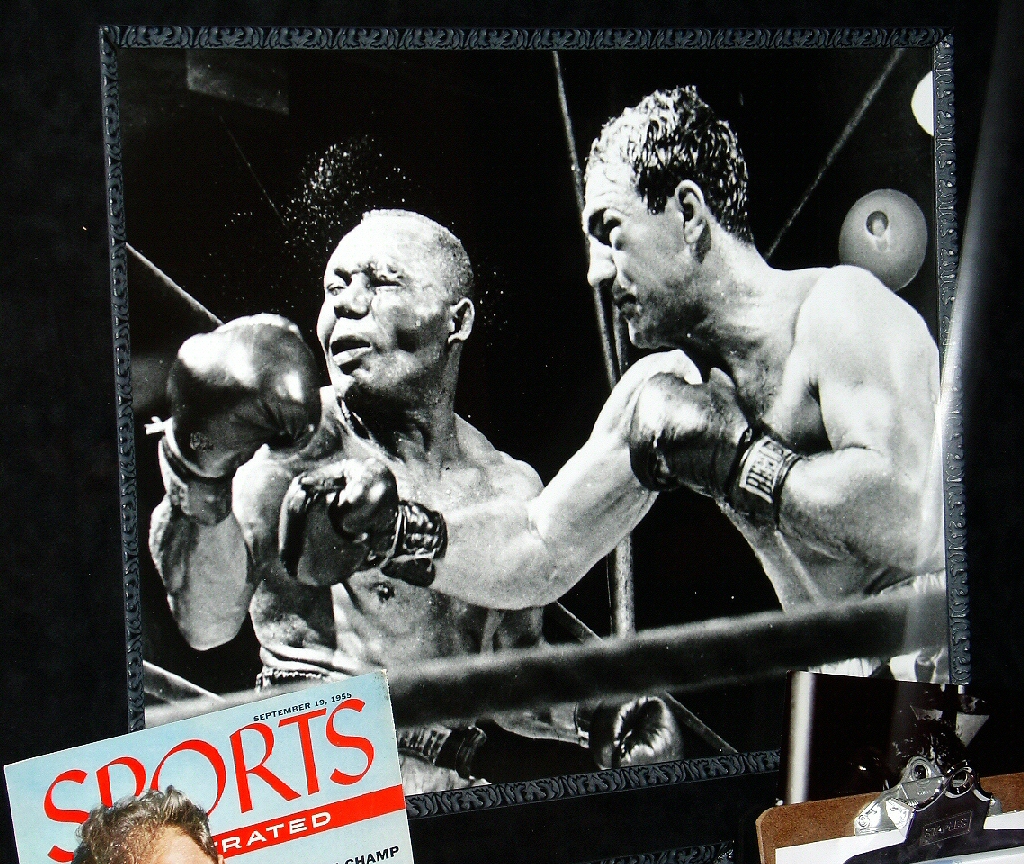
Rocky Marciano was the only heavyweight champion who never lost a single fight in his whole career-- and, at the time, he seemed the least likely fighter to do that. In many a boxing match, he was battered, bruised and bleeding.

One of the reasons Marciano took so much punishment in the ring was that he had shorter arms than most other heavyweights. It was easier for others to hit him than for him to hit them.

In a sense, Republicans today are in a similar position in the political arena. With most of the media heavily tilted toward the Democrats, Republicans are going to get hit far more often than they are going to get in their own punches.

The difference is that Rocky Marciano understood from the beginning that he was going to get hit more often, and prepared himself for that kind of fight. His strategy was to concentrate on developing punches powerful enough to nullify his opponents' greater number of punches.

Republicans take the opposite approach from that of Rocky Marciano-- and often with opposite results. That may be why they managed to lose both houses of Congress and the White House in recent years, in a country where there are millions more people who call themselves conservatives than there are who call themselves liberals.

Knowing that they are going to get hit more often in the media, you might think that Republicans would put extra time and effort into developing a knockout message. In reality, however, Republicans seem to invest much less time and thought into getting their political message across than is done by the Democrats.

First of all, Democrats develop words and phrases that they all use, so that the public hears those same words and phrases over and over again, until they sink in. Republicans have nothing to match the Democrats' catch phrases like "social justice" or "tax cuts for the rich."

Back when George W. Bush first emerged on the national political scene in 2000, Democrats said that he lacked "gravitas." The media kept repeating it. People who had never used the word "gravitas" in years were suddenly saying "gravitas" 24/7 on news programs, interview shows and in the newspapers and magazines.

When have you ever known the Republicans to be that coordinated?

Not only do Republicans fail to take the initiative when it comes to political rhetoric, they are not very good at counter-punching when they are hit.

How often have you heard "tax cuts for the rich" from Democrats-- without the Republicans saying anything to counter the implication that they are just looking out for a relatively few wealthy people, while millions of other people are losing their jobs and their homes?

The facts are all on the Republicans' side. But, unless someone articulates those facts, they will be like the proverbial tree that falls in an empty forest.

What are called "tax cuts for the rich" have been reductions in high tax rates under four different administrations, including the Democratic administration of John F. Kennedy. In each case, going all the way back to the 1920s, the reduced tax rates have led to increased tax revenues for the government.

"The rich" have ended up paying both a higher total amount of taxes and a larger share of all taxes than they did before what were called "tax cuts for the rich." The reason is very straightforward: high tax rates that people don't actually pay do not bring the government as much revenue as lower tax rates that they do pay.

High tax rates drive investors into tax shelters like tax-exempt bonds or drive their investments out of the country altogether, costing Americans jobs. This is not rocket science-- and the data are there to prove it. But somebody has to say it.

Unlike Rocky Marciano, Republicans don't seem to see a need to work on their punches. They are going to need some knockout punches if Barack Obama calls their bluff on raising the national debt limit, and there is a government shutdown that will be blamed on the Republicans. A few light jabs will not save them.

2/01/2011

Spilled Milk

Via-Townhall
Thomas Sowell

Despite the old saying, "Don't cry over spilled milk," the Environmental Protection Agency is doing just that.

We all understand why the Environmental Protection Agency was given the power to issue regulations to guard against oil spills, such as that of the Exxon Valdez in Alaska or the more recent BP oil spill in the Gulf of Mexico. But not everyone understands that any power given to any bureaucracy for any purpose can be stretched far beyond that purpose.

In a classic example of this process, the EPA has decided that, since milk contains oil, it has the authority to force farmers to comply with new regulations to file "emergency management" plans to show how they will cope with spilled milk, how farmers will train "first responders" and build "containment facilities" if there is a flood of spilled milk.

Since there is no free lunch, all of this is going to cost the farmers both money and time that could be going into farming-- and is likely to end up costing consumers higher prices for farm products.

It is going to cost the taxpayers money as well, since the EPA is going to have to hire people to inspect farms, inspect farmers' reports and prosecute farmers who don't jump through all the right hoops in the right order. All of this will be "creating jobs," even if the tax money removed from the private sector correspondingly reduces the jobs that can be created there.

Does anyone seriously believe that any farmer is going to spill enough milk to compare with the Exxon Valdez oil spill or the BP oil spill?

Do you envision people fleeing their homes, as a flood of milk comes pouring down the mountainside, threatening to wipe out the village below?

It doesn't matter. Once the words are in the law, it makes no difference what the realities are. The bureaucracy has every incentive to stretch the meaning of those words, in order to expand its empire.

The Equal Employment Opportunity Commission has expanded its definition of "discrimination" to include things that no one thought was discrimination when the Civil Rights Act of 1964 was passed. The Federal Communications Commission is trying to expand its jurisdiction to cover things that were never included in its jurisdiction, and that have no relationship to the reason why the FCC was created in the first place.

Yet the ever-expanding bureaucratic state has its defenders in the mainstream media. When President Obama recently mentioned the possibility of reducing burdensome regulations-- as part of his moving of his rhetoric toward the political center, even if his policies don't move-- there was an immediate reaction in a New York Times article defending government regulations.

Under a headline that said, "Obama May Find Useless Regulations Are Scarcer Than Thought," the Times writers declared that there were few, if any, "useless" regulations. But is that the relevant criterion?

Is there any individual or business willing to spend money on everything that is not absolutely useless? There are thousands of useful things out there that any given individual or business would not spend their money on.

When I had young children, I often thought it would be useful to have a set of the Encyclopedia Britannica for them. But I never bought one. Why? Because there were other little things to spend money on, like food, clothing and shelter.

By the time I could afford to buy a set of the Encyclopedia Britannica, the kids were grown and gone. But at no time did I consider the Encyclopedia Britannica "useless."

Weighing benefits against costs is the way most people make decisions-- and the way most businesses make decisions, if they want to stay in business. Only in government is any benefit, however small, considered to be worth any cost, however large.

No doubt the Environmental Protection Agency's costly new regulations may somewhere, somehow, prevent spilled milk from pouring out into some street and looking unsightly. So the regulations are not literally "useless."

What is useless is making that the criterion.

1/18/2011

Budget Crisis Rhetoric

Via-Townhall


By Thomas Sowell

Government budget crises can be painful, but the political rhetoric accompanying these crises can also be fascinating and revealing. Perhaps the most famous American budget crisis was New York City's, back during the 1970s. When President Gerald Ford was unwilling to bail them out, the famous headline in the New York Daily News read, "Ford to City: Drop Dead."
President Ford caved and bailed them out, after all.

The rhetoric worked. That is why so many other cities and states-- not to mention the federal government-- have continued on with irresponsible spending, and are now facing new budget crises, with no end in sight.

What would have happened if President Ford had stuck to his guns and not set the dangerous precedent of bailing out local irresponsibility with the taxpayers' money?

New York would have gone bankrupt. But millions of individuals and organizations go bankrupt without dropping dead.

Bankruptcy conveys the plain facts that political rhetoric tries to conceal. It tells people who depended on the bankrupt government that they can no longer depend on that bankrupt government. It tells the voters who elected that bankrupt government, with its big spending promises, that they made a bad mistake that they would be wise to avoid making again in the future.

Legally, bankruptcy wipes out commitments made to public sector unions, whose extravagant pay and pension contracts are bleeding municipal and state governments dry.

Is putting an end to political irresponsibility and legalized union racketeering dropping dead?

Politics being what it is, we are sure to hear all sorts of doomsday rhetoric at the thought of cutbacks in government spending. The poor will be starving in the streets, to hear the politicians and the media tell it.

But the amount of money it would take to keep the poor from starving in the streets is chump change compared to how much it would take to keep on feeding unions, subsidized businesses and other special interests who are robbing the taxpayers blind.

Letting armies of government employees retire in their fifties, to live for decades on pensions larger than they were making when they were working, costs a lot more than keeping the poor from starving in the streets.

Pouring the taxpayers' money down a thousand bottomless pits of public and private boondoggles costs a lot more than keeping the poor from starving in the streets.

Bankruptcy says: "We just don't have the money." End of discussion. Bailouts say: "Give the taxpayers a little rhetoric, and a little smoke and mirrors with the book-keeping, and we can keep the party rolling."

One of the political games that is played during a budget crisis is to cut back on essential services like police departments and fire departments, in order to blackmail the public into accepting higher tax rates. Often, a lot more money could be saved by getting rid of runaway pension contracts with public sector unions.

Bankruptcy can do that. Bailouts cannot.

What the public needs are current policemen and current firemen, not retired policemen and retired firemen, much less bureaucrats retired on inflated pensions.

The political temptation to create extravagant pensions is always there, not only at state and local levels, or at the federal level, but in countries around the world. Why? Because pensions are benefits that can be promised for the future, without raising the money to pay for them.

Politicians get the votes of those to whom pensions are promised, without losing the votes of taxpayers-- and they leave it up to future government officials to figure out what to do when the money is just not there. It is a sure-fire guarantee of political irresponsibility.

All of this works politically only so long as the voting public accepts budget crisis rhetoric at face value, without bothering to stop and think about what it means and implies.