Inside the Beltway: Democrats on the verge of identity crisis
Jubilant Democrats and much of the news media have proclaimed that Democrat Conor Lamb's microscopic victory over Republican Rick Saccone is a glorious symbol. Though Mr. Lamb received a mere 641 votes more than his opponent in the Pennsylvania race, his fans insist it is an automatic bellwether signaling the inevitable defeat of the GOP in the midterms and beyond - a predictable narrative.
Showing posts with label politics. Show all posts
Showing posts with label politics. Show all posts
3/14/2018
Democrats on the verge of identity crisis

1/20/2018
SHUT DOWN
SIGN HERE: The #SchumerShutdown is wrong. Taxpayers everywhere deserve bold leadership like we have here in Wisconsin, not the petty politics that Democrats keep playing. Send a message now. -> https://t.co/e14yyXnnOU pic.twitter.com/4LFZVjSQ3y
— Scott Walker (@ScottWalker) January 20, 2018
5/03/2013
Winning Hispanic vote would not be enough for GOP
Via-Washington Examiner

Byron York
After six months of mulling over November's election results, many Republicans remain convinced that the party's only path to future victory is to improve the GOP's appeal to Hispanic voters. But how many Hispanic voters do Republicans need to attract before the party can again win the White House?
A lot. Start with the 2012 exit polls. The New York Times' Nate Silver has created an interactive tool in which one can look at the presidential election results and calculate what would have happened if the racial and ethnic mix of voters had been different. The tool also allows one to project future results based on any number of scenarios in which the country's demographic profile and voting patterns change.
In 2012, President Obama famously won 71 percent of the Hispanic vote to Mitt Romney's 27 percent. If all other factors remained the same, how large a percentage of the Hispanic vote would Romney have had to win to capture the White House?
What if Romney had won 44 percent of the Hispanic vote, the high-water mark for Republicans achieved by George W. Bush in 2004? As it turns out, if Romney had hit that Bush mark, he still would have lost, with 240 electoral votes to 298 for Obama.
But what if Romney had been able to make history and attract 50 percent of Hispanic voters? What then? He still would have been beaten, 283 electoral votes to 255.
What if Romney had been able to do something absolutely astonishing for a Republican and win 60 percent of the Hispanic vote? He would have lost by the same margin, 283 electoral votes to 255.
But what if Romney had been able to reach a mind-blowing 70 percent of the Hispanic vote? Surely that would have meant victory, right? No, it wouldn't. Romney still would have lost, although by the narrowest of electoral margins, 270 to 268. (Under that scenario, Romney would have won the popular vote but lost in the Electoral College; he could have racked up huge numbers of Hispanic votes in California, New York and Texas, for example, and not changed the results in those states.)
According to the Times' calculator, Romney would have had to win 73 percent of the Hispanic vote to prevail in 2012. Which suggests that Romney, and Republicans, had bigger problems than Hispanic voters.
The most serious of those problems was that Romney was not able to connect with white voters who were so turned off by the campaign that they abandoned the GOP and in many cases stayed away from the polls altogether. Recent reports suggest as many as 5 million white voters simply stayed home on Election Day. If they had voted at the same rate they did in 2004, even with the demographic changes since then, Romney would have won.
Likewise, the white vote is so large that an improvement of 4 points -- going from 60 percent to 64 percent of those whites who did vote -- would have won the race for Romney.
So which would have been a more realistic goal for Romney -- matching the white turnout from just a few years earlier, or winning 73 percent of Hispanic voters?
Everyone knows the Hispanic vote will grow in the future. But if 2012 voting patterns remain the same -- whites voting in lower numbers but about 60 percent for Republicans, blacks and Asians turning out in large numbers and voting 90-plus percent and 70-plus percent, respectively, for Democrats -- Republicans will have to win an astonishingly high percentage of the Hispanic vote to capture the White House.
It is simply not reasonable to believe there is something the GOP can do -- pass immigration reform, juice up voter-outreach efforts -- that will create that result.
That doesn't mean future Republican presidential candidates should not work to increase their share of the Hispanic vote. They could, for example, actually campaign in areas with large numbers of Hispanic voters.
But here is the real solution. Romney lost because he did not appeal to the millions of Americans who have seen their standard of living decline over the past decades. They're nervous about the future. When Romney did not address their concerns, they either voted for Obama or didn't vote at all. If the next Republican candidate can address their concerns effectively, he will win. And, amazingly enough, he'll win a lot more Hispanic votes in the process. A lot from other groups, too.
It would do more than any immigration bill or outreach program ever could.

Byron York
After six months of mulling over November's election results, many Republicans remain convinced that the party's only path to future victory is to improve the GOP's appeal to Hispanic voters. But how many Hispanic voters do Republicans need to attract before the party can again win the White House?
A lot. Start with the 2012 exit polls. The New York Times' Nate Silver has created an interactive tool in which one can look at the presidential election results and calculate what would have happened if the racial and ethnic mix of voters had been different. The tool also allows one to project future results based on any number of scenarios in which the country's demographic profile and voting patterns change.
In 2012, President Obama famously won 71 percent of the Hispanic vote to Mitt Romney's 27 percent. If all other factors remained the same, how large a percentage of the Hispanic vote would Romney have had to win to capture the White House?
What if Romney had won 44 percent of the Hispanic vote, the high-water mark for Republicans achieved by George W. Bush in 2004? As it turns out, if Romney had hit that Bush mark, he still would have lost, with 240 electoral votes to 298 for Obama.
But what if Romney had been able to make history and attract 50 percent of Hispanic voters? What then? He still would have been beaten, 283 electoral votes to 255.
What if Romney had been able to do something absolutely astonishing for a Republican and win 60 percent of the Hispanic vote? He would have lost by the same margin, 283 electoral votes to 255.
But what if Romney had been able to reach a mind-blowing 70 percent of the Hispanic vote? Surely that would have meant victory, right? No, it wouldn't. Romney still would have lost, although by the narrowest of electoral margins, 270 to 268. (Under that scenario, Romney would have won the popular vote but lost in the Electoral College; he could have racked up huge numbers of Hispanic votes in California, New York and Texas, for example, and not changed the results in those states.)
According to the Times' calculator, Romney would have had to win 73 percent of the Hispanic vote to prevail in 2012. Which suggests that Romney, and Republicans, had bigger problems than Hispanic voters.
The most serious of those problems was that Romney was not able to connect with white voters who were so turned off by the campaign that they abandoned the GOP and in many cases stayed away from the polls altogether. Recent reports suggest as many as 5 million white voters simply stayed home on Election Day. If they had voted at the same rate they did in 2004, even with the demographic changes since then, Romney would have won.
Likewise, the white vote is so large that an improvement of 4 points -- going from 60 percent to 64 percent of those whites who did vote -- would have won the race for Romney.
So which would have been a more realistic goal for Romney -- matching the white turnout from just a few years earlier, or winning 73 percent of Hispanic voters?
Everyone knows the Hispanic vote will grow in the future. But if 2012 voting patterns remain the same -- whites voting in lower numbers but about 60 percent for Republicans, blacks and Asians turning out in large numbers and voting 90-plus percent and 70-plus percent, respectively, for Democrats -- Republicans will have to win an astonishingly high percentage of the Hispanic vote to capture the White House.
It is simply not reasonable to believe there is something the GOP can do -- pass immigration reform, juice up voter-outreach efforts -- that will create that result.
That doesn't mean future Republican presidential candidates should not work to increase their share of the Hispanic vote. They could, for example, actually campaign in areas with large numbers of Hispanic voters.
But here is the real solution. Romney lost because he did not appeal to the millions of Americans who have seen their standard of living decline over the past decades. They're nervous about the future. When Romney did not address their concerns, they either voted for Obama or didn't vote at all. If the next Republican candidate can address their concerns effectively, he will win. And, amazingly enough, he'll win a lot more Hispanic votes in the process. A lot from other groups, too.
It would do more than any immigration bill or outreach program ever could.
3/28/2013
Such Touching Concern
Via-American Spectator

by R. Emmett Tyrrell, Jr
WASHINGTON — The American left cares so much for humanity that it even expends copious draughts of compassion toward us, toward you and me, toward suave, dégagé conservatives. The left’s members really fret over how elements of the “extreme right” are undermining the Republican Party, consigning it to oblivion.
The latest moral colossus to perform this exemplary task is Richard Cohen of the Washington Post, but there are many more from all the precincts of the left. This past weekend I even detected this concern for us from the pollster, Andrew Kohut of the Pew Research Center. Writing a piece on the future of the Republican Party, he expressed his concern that advocates of “staunch conservatism” have left the Republican Party “estranged from America.” If moderate Republicans do not smarten up and presumably rid the party of these “staunch conservatives,” the party will go so far to the right that it will be replicating the political suicide of Senator George McGovern and his McGovernite zealots back in 1972.
If you are old enough you may remember how in 1972 the left was apoplectic that McGovern was leading the Democratic Party out into the wilderness. You do not recall it that way? You have forgotten? It did not seem like that at the time? The left in 1972 was full of its usual brag and bounce that crazy George was on the right side of history, and victory was only months away. Is Mr. Kohut mistaken?
I think he is. Actually, this grave concern by the left over the projects of the “staunch conservatives” within the Republican Party is one vast sham. A similar concern by the left for the extremist tilt of the Democratic Party is never apparent, and the reason is obvious. The concern does not exist. Yet the Democratic Party over the years has, for a certitude, gone left, far left. Review the evidence. On issue after issue — from social policy to fiscal policy — the Democrats have moved leftward. With the help of their amanuenses in the media the left is never forced to talk about it, but it is a fact. With the leftward rush of the party proclaimed in the Prophet Obama’s State of the Union Address, it is the Democrats who are extreme. Their day of reckoning will come on November 4, 2014.

by R. Emmett Tyrrell, Jr
WASHINGTON — The American left cares so much for humanity that it even expends copious draughts of compassion toward us, toward you and me, toward suave, dégagé conservatives. The left’s members really fret over how elements of the “extreme right” are undermining the Republican Party, consigning it to oblivion.
The latest moral colossus to perform this exemplary task is Richard Cohen of the Washington Post, but there are many more from all the precincts of the left. This past weekend I even detected this concern for us from the pollster, Andrew Kohut of the Pew Research Center. Writing a piece on the future of the Republican Party, he expressed his concern that advocates of “staunch conservatism” have left the Republican Party “estranged from America.” If moderate Republicans do not smarten up and presumably rid the party of these “staunch conservatives,” the party will go so far to the right that it will be replicating the political suicide of Senator George McGovern and his McGovernite zealots back in 1972.
If you are old enough you may remember how in 1972 the left was apoplectic that McGovern was leading the Democratic Party out into the wilderness. You do not recall it that way? You have forgotten? It did not seem like that at the time? The left in 1972 was full of its usual brag and bounce that crazy George was on the right side of history, and victory was only months away. Is Mr. Kohut mistaken?
I think he is. Actually, this grave concern by the left over the projects of the “staunch conservatives” within the Republican Party is one vast sham. A similar concern by the left for the extremist tilt of the Democratic Party is never apparent, and the reason is obvious. The concern does not exist. Yet the Democratic Party over the years has, for a certitude, gone left, far left. Review the evidence. On issue after issue — from social policy to fiscal policy — the Democrats have moved leftward. With the help of their amanuenses in the media the left is never forced to talk about it, but it is a fact. With the leftward rush of the party proclaimed in the Prophet Obama’s State of the Union Address, it is the Democrats who are extreme. Their day of reckoning will come on November 4, 2014.
3/22/2013
White House Misfire
Via-Washington Free Beacon

Column: How Democratic divisions frustrate liberal dreams
BY: Matthew Continetti
Harry Reid, welcome to the black helicopter crowd.
“When you go to registration, it raises all the black helicopter crowd notion that what this is all about is identifying who has a gun so that one day the government can get up and go to the house and arrest everyone who has a gun, and they’ll cite Nazi Germany and all that,” Biden told NPR Wednesday.
Paraphrase: Opposition to President Barack Obama’s gun agenda automatically makes you a conspiracy nut.
But if that’s true, a lot of Democrats must be receiving messages via their dental fillings. The day before Biden’s interview, Reid had made it clear that the gun bill he’d put to a vote on the Senate floor would not include an assault weapons ban. The assault weapons ban would rather have to be submitted as an amendment, which is almost certain to fail. Same goes for the ban on high-capacity magazines. (Universal background checks would be included in the bill, however.)
The Senate likely will pass an assortment of quite meaningless gun restrictions that will disappoint liberals who had hoped the Obama White House and congressional Democrats would seize the post-Newtown moment.
And they did try to seize the moment. It’s just that they failed—not because of Republicans but because of internal divisions within the supposedly unstoppable Democratic Party.
Let us note that in Harry Reid’s Senate there are more votes against Chuck Hagel than there are in favor of an assault weapons ban. (Reid said the ban has at most 40 votes on the floor; 41 Republicans voted against Hagel’s nomination for secretary of defense.) And let us note, too, that in this season of fake liberal concern for the divided and adrift GOP, Democrats aren’t exactly in tip-top shape, either.
Column: How Democratic divisions frustrate liberal dreams
BY: Matthew Continetti
Harry Reid, welcome to the black helicopter crowd.
“When you go to registration, it raises all the black helicopter crowd notion that what this is all about is identifying who has a gun so that one day the government can get up and go to the house and arrest everyone who has a gun, and they’ll cite Nazi Germany and all that,” Biden told NPR Wednesday.
Paraphrase: Opposition to President Barack Obama’s gun agenda automatically makes you a conspiracy nut.
But if that’s true, a lot of Democrats must be receiving messages via their dental fillings. The day before Biden’s interview, Reid had made it clear that the gun bill he’d put to a vote on the Senate floor would not include an assault weapons ban. The assault weapons ban would rather have to be submitted as an amendment, which is almost certain to fail. Same goes for the ban on high-capacity magazines. (Universal background checks would be included in the bill, however.)
The Senate likely will pass an assortment of quite meaningless gun restrictions that will disappoint liberals who had hoped the Obama White House and congressional Democrats would seize the post-Newtown moment.
And they did try to seize the moment. It’s just that they failed—not because of Republicans but because of internal divisions within the supposedly unstoppable Democratic Party.
Let us note that in Harry Reid’s Senate there are more votes against Chuck Hagel than there are in favor of an assault weapons ban. (Reid said the ban has at most 40 votes on the floor; 41 Republicans voted against Hagel’s nomination for secretary of defense.) And let us note, too, that in this season of fake liberal concern for the divided and adrift GOP, Democrats aren’t exactly in tip-top shape, either.
2/17/2013
But Don't Rule Out Malice
Via- American Thinker

By Ryan Scott Welch
There is an adage that reads "never attribute to malice that which can be adequately explained by stupidity... but don't rule out malice." This is known as Heinlein's or Hanlon's Razor (there is only a slight difference between the two). Unfortunately many people only go by the first part of Heinlein's Razor, leaving out the "but don't rule out malice" part. People using this heuristic decision-making shortcut often think that even though some things that people do seem very suspect, and even though mental red flags are going up and instinctive alarms are sounding, that there must be some explanation, other than malice, to explain the actions of people. This is especially true when the suspicious people are connected to them is some way like family, friends, or even the politicians that they support. Many people using Heinlein's Razor shrug off these suspicious actions as if they were just a mistake, or maybe the actions that people did were the result of "bad luck", or possibly that ignorance can explain why they made those decisions. But I would like to focus on the second part of Heinlein's Razor which of course is: but don't rule out malice.
Sometimes, some people actually act out of malice. Malicious people do exist in the world and always have, as far back as the beginning of recorded human history. It is easily possible that you know, or know of, some malicious people. They could be your acquaintances or friends; they could even be in your family, and yes, they might be one or more of your political leaders. In support of the second part of Heinlein's Razor there's another adage called Occam's razor that says among competing hypotheses, the one that makes the fewest assumptions should be selected -- the simpler the explanation, the more likely it is to be true, everything else being equal. If you have to mentally jump through a lot of hoops to explain how someone's motive cannot be malice then Occam's Razor says that the more assumptions you need to make the less likely that your hypothesis is true.
Read more:

By Ryan Scott Welch
There is an adage that reads "never attribute to malice that which can be adequately explained by stupidity... but don't rule out malice." This is known as Heinlein's or Hanlon's Razor (there is only a slight difference between the two). Unfortunately many people only go by the first part of Heinlein's Razor, leaving out the "but don't rule out malice" part. People using this heuristic decision-making shortcut often think that even though some things that people do seem very suspect, and even though mental red flags are going up and instinctive alarms are sounding, that there must be some explanation, other than malice, to explain the actions of people. This is especially true when the suspicious people are connected to them is some way like family, friends, or even the politicians that they support. Many people using Heinlein's Razor shrug off these suspicious actions as if they were just a mistake, or maybe the actions that people did were the result of "bad luck", or possibly that ignorance can explain why they made those decisions. But I would like to focus on the second part of Heinlein's Razor which of course is: but don't rule out malice.
Sometimes, some people actually act out of malice. Malicious people do exist in the world and always have, as far back as the beginning of recorded human history. It is easily possible that you know, or know of, some malicious people. They could be your acquaintances or friends; they could even be in your family, and yes, they might be one or more of your political leaders. In support of the second part of Heinlein's Razor there's another adage called Occam's razor that says among competing hypotheses, the one that makes the fewest assumptions should be selected -- the simpler the explanation, the more likely it is to be true, everything else being equal. If you have to mentally jump through a lot of hoops to explain how someone's motive cannot be malice then Occam's Razor says that the more assumptions you need to make the less likely that your hypothesis is true.
Read more:
2/11/2013
The Small Presidency
Via-NRO

Let’s give it another try
By Amity Shlaes
Action is something Americans of both parties demand of their presidents these days. This is natural for Democrats, whose heritage is all action, starting with Franklin Roosevelt and his Hundred Days. But Republicans like energy and a big executive as well. Over the course of the campaign this past year, any number of political stars, including Governor Mitch Daniels of Indiana, argued that only an energetic candidate would be up to the job of managing the U.S. fiscal crisis. Mitt Romney worked hard to let voters know his party could beat the Democrats in the legislative arena. He swore up and down that, à la Roosevelt, he would get off to a running start, sending five bills to Congress and signing five executive orders on his first day in the Oval Office.
The Grand Old Party’s abiding affection for a “bigger and better” presidency isn’t entirely logical. After all, the Obama presidency commenced with an effort to reenact the Hundred Days. Yet President Obama’s first-term economic performance itself was not “big” but mediocre, tiny even. Perhaps Republicans should consider whether inaction on the part of the White House can be desirable. Perhaps, led by Republicans, the United States could benefit from trying out an unfashionable idea: the small presidency.
Evidence from a near-forgotten period, the early 1920s, instructs us. In those days the country was suffering economic turmoil similar to our own. Because of a crisis — World War I — the government had intruded in business and financial markets in unprecedented fashion, nationalizing the railroads, shutting down the stock market, and entering the debt market with war bonds.
Central bankers warned that the only reason the government’s large debt hadn’t set off a fiscal apocalypse was that interest rates had not yet commenced what they deemed an inevitable rise. Angry veterans, many of them disabled, were having trouble finding jobs, and many people assumed a new federal entitlement, veteran pensions, would be established within the year. A recent and active president, Theodore Roosevelt, had taught the nation that the Oval Office was a “bully pulpit.”
But this was not the view of the two candidates on the 1920 Republican ticket, Warren Harding of Ohio and Calvin Coolidge of Massachusetts. The pair coolly campaigned on the humdrum, underwhelming motto of “normalcy,” meaning a reduction in uncertainty. The White House was no bully pulpit; the Republican elephant should not be an elephant in a china shop. After winning the presidency, Harding continued to endorse inaction. “No altered system will work a miracle,” Harding told the crowds at his March 1921 inauguration. “Any wild experiment will only add to the confusion. Our best assurance lies in efficient administration of the proven system.” Harding wanted to ensure that government did less so that commerce might enjoy free range. He pushed for and got tax cuts for businesses hindered by large levies, and he readied a plan to privatize naval oil reserves.
Harding also provided displays of austerity. He canceled an inaugural ball that was to be held at the public’s expense, and even let his wife Florence know she would not need a ball gown. He backed and signed a budget law that helped the executive curtail congressional spending. And he crafted a compromise with veterans that enabled the government to avoid granting the expected veteran pensions: It would provide hospitals, but not cash, for vets.
But despite these measures, Harding was not really cut out to be a small president. His personality was big, and he tended to do things in a big way. The inconsistency between the man and his announced intentions was evident even on the night of the inauguration: The official ball was indeed canceled, but the Hardings put on finery and partied at an opulent private ball held by the owner of the Washington Post, Edward McLean, and his wife, Evalyn.
Harding’s friends loved him, and he loved them back — too much. More than once he appointed old cronies to office, regardless of their merits. To head the Veterans Bureau, the product of his compromise with the vets, Harding tapped his old acquaintance Charles Forbes. An Ohio buddy, Harry Daugherty, got the attorney general’s post.
Even when it came to legislating smaller government, Harding tended to favor a big style, demanding extra sessions of Congress to implement his agenda.
Soon it all went wrong for Harding. The president’s demand for special legislative sessions backfired, because it gave lawmakers more time to introduce legislation of their own, and therefore gave Harding more projects to battle. His exuberant affection for his former colleagues in the Senate made it especially difficult for him to oppose their legislation, and in the end he vetoed only six bills. The buddies he appointed to high office routinely undermined his case for small government
.read entire article

Let’s give it another try
By Amity Shlaes
Action is something Americans of both parties demand of their presidents these days. This is natural for Democrats, whose heritage is all action, starting with Franklin Roosevelt and his Hundred Days. But Republicans like energy and a big executive as well. Over the course of the campaign this past year, any number of political stars, including Governor Mitch Daniels of Indiana, argued that only an energetic candidate would be up to the job of managing the U.S. fiscal crisis. Mitt Romney worked hard to let voters know his party could beat the Democrats in the legislative arena. He swore up and down that, à la Roosevelt, he would get off to a running start, sending five bills to Congress and signing five executive orders on his first day in the Oval Office.
The Grand Old Party’s abiding affection for a “bigger and better” presidency isn’t entirely logical. After all, the Obama presidency commenced with an effort to reenact the Hundred Days. Yet President Obama’s first-term economic performance itself was not “big” but mediocre, tiny even. Perhaps Republicans should consider whether inaction on the part of the White House can be desirable. Perhaps, led by Republicans, the United States could benefit from trying out an unfashionable idea: the small presidency.
Evidence from a near-forgotten period, the early 1920s, instructs us. In those days the country was suffering economic turmoil similar to our own. Because of a crisis — World War I — the government had intruded in business and financial markets in unprecedented fashion, nationalizing the railroads, shutting down the stock market, and entering the debt market with war bonds.
Central bankers warned that the only reason the government’s large debt hadn’t set off a fiscal apocalypse was that interest rates had not yet commenced what they deemed an inevitable rise. Angry veterans, many of them disabled, were having trouble finding jobs, and many people assumed a new federal entitlement, veteran pensions, would be established within the year. A recent and active president, Theodore Roosevelt, had taught the nation that the Oval Office was a “bully pulpit.”
But this was not the view of the two candidates on the 1920 Republican ticket, Warren Harding of Ohio and Calvin Coolidge of Massachusetts. The pair coolly campaigned on the humdrum, underwhelming motto of “normalcy,” meaning a reduction in uncertainty. The White House was no bully pulpit; the Republican elephant should not be an elephant in a china shop. After winning the presidency, Harding continued to endorse inaction. “No altered system will work a miracle,” Harding told the crowds at his March 1921 inauguration. “Any wild experiment will only add to the confusion. Our best assurance lies in efficient administration of the proven system.” Harding wanted to ensure that government did less so that commerce might enjoy free range. He pushed for and got tax cuts for businesses hindered by large levies, and he readied a plan to privatize naval oil reserves.
Harding also provided displays of austerity. He canceled an inaugural ball that was to be held at the public’s expense, and even let his wife Florence know she would not need a ball gown. He backed and signed a budget law that helped the executive curtail congressional spending. And he crafted a compromise with veterans that enabled the government to avoid granting the expected veteran pensions: It would provide hospitals, but not cash, for vets.
But despite these measures, Harding was not really cut out to be a small president. His personality was big, and he tended to do things in a big way. The inconsistency between the man and his announced intentions was evident even on the night of the inauguration: The official ball was indeed canceled, but the Hardings put on finery and partied at an opulent private ball held by the owner of the Washington Post, Edward McLean, and his wife, Evalyn.
Harding’s friends loved him, and he loved them back — too much. More than once he appointed old cronies to office, regardless of their merits. To head the Veterans Bureau, the product of his compromise with the vets, Harding tapped his old acquaintance Charles Forbes. An Ohio buddy, Harry Daugherty, got the attorney general’s post.
Even when it came to legislating smaller government, Harding tended to favor a big style, demanding extra sessions of Congress to implement his agenda.
Soon it all went wrong for Harding. The president’s demand for special legislative sessions backfired, because it gave lawmakers more time to introduce legislation of their own, and therefore gave Harding more projects to battle. His exuberant affection for his former colleagues in the Senate made it especially difficult for him to oppose their legislation, and in the end he vetoed only six bills. The buddies he appointed to high office routinely undermined his case for small government
.read entire article
2/02/2013
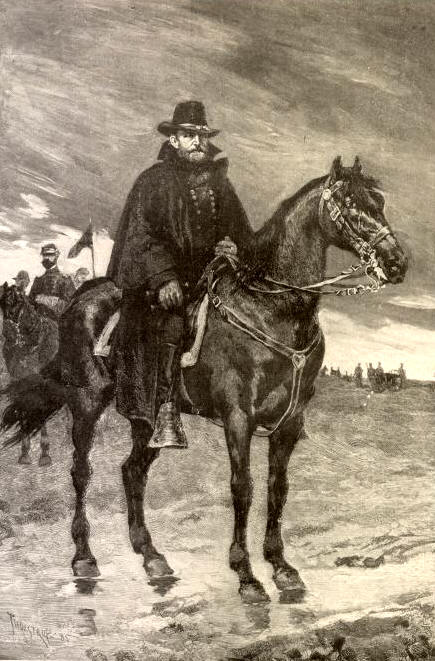
The GOP Needs a General Grant
Via-American Thinker

By Tom Thurlow
Lately there have been a number of analogies made between various liberal political positions and the abolitionist Union side in the Civil War. No doubt this is a result of the 2012 Steven Spielberg movie Lincoln, and its notoriety, and the universal need to identify with the virtuous side of any historical struggle.
A few days ago, on CNN's Piers Morgan's show, columnist Frank Rich likened opposition to gun control to slave-owners in the pre-war South who did not want to give up their slaves. According to Rich, "I think that in some ways the gun culture is as entrenched in the American psyche as [was] slavery."
As a gun owner, I resent the comparison. But if there are any credible analogies to be made with today's political movements and Abraham Lincoln, it is between the Union side of the Civil War and today's Republican Party. Hear me out on this.
I don't mean to simply point out that Abraham Lincoln was a Republican, which he was. Recall from history that during the Civil War, President Lincoln had a problem getting generals who would actively engage the Confederate army. "Some of my generals are so slow," Lincoln once remarked, "that molasses in the coldest days of winter is a race-horse compared to them."
We conservatives have a similar problem with our leaders, who hesitate to engage with President Obama and other high-ranking liberals.
Read entire article
By Tom Thurlow
Lately there have been a number of analogies made between various liberal political positions and the abolitionist Union side in the Civil War. No doubt this is a result of the 2012 Steven Spielberg movie Lincoln, and its notoriety, and the universal need to identify with the virtuous side of any historical struggle.
A few days ago, on CNN's Piers Morgan's show, columnist Frank Rich likened opposition to gun control to slave-owners in the pre-war South who did not want to give up their slaves. According to Rich, "I think that in some ways the gun culture is as entrenched in the American psyche as [was] slavery."
As a gun owner, I resent the comparison. But if there are any credible analogies to be made with today's political movements and Abraham Lincoln, it is between the Union side of the Civil War and today's Republican Party. Hear me out on this.
I don't mean to simply point out that Abraham Lincoln was a Republican, which he was. Recall from history that during the Civil War, President Lincoln had a problem getting generals who would actively engage the Confederate army. "Some of my generals are so slow," Lincoln once remarked, "that molasses in the coldest days of winter is a race-horse compared to them."
We conservatives have a similar problem with our leaders, who hesitate to engage with President Obama and other high-ranking liberals.
Read entire article
1/21/2013
It’s Not the Message, It’s Not the Messenger, It’s the Voter
Via-Front Page Magazine

By Bruce Thornton
Nearly 3 months after the presidential election the Republicans are still trying to fix what they think went wrong. A popular culprit is the Republicans’ alleged failure to communicate forcefully or persuasively a message that would move voters presumably receptive to conservative policies and principles. Just in the last week Jonah Goldberg, Daniel Henninger, Ari Fleischer, Ross Douthat, and Karl Rove have worked variations on this theme. Yet we should remember that any act of communication comprises not just a sender and a message, but also a receiver. We need to focus on the nature of America’s political “receivers,” the 65 million who voted for Obama in the November election, and the 93 million registered voters who didn’t vote. If those voters are not receptive to the Republican message, it doesn’t matter much how brilliant the messenger or the packaging of the message.
And that “message” has been out there for years now and constantly repeated. Only the stupid or willfully inattentive haven’t heard that we face a financial abyss waiting at the end of our entitlement road, that entitlements need to be reformed, that we have an exploding debt and deficit crisis, that a “tax the rich” policy only produces chump-change for solving that problem, that Obama’s economic policies have bloated the federal government at the expense of jobs and growth, and that Obama himself is the most left-wing, duplicitous, partisan, and incompetent president in modern history. And conservatives have identified repeatedly the bad ideology and flawed assumptions that have generated the policies that created those problems. The fact is, many voters know full well this dismal catalogue of failure, and they either don’t care, or they believe the fatuous rationalizations, lies, excuses, and economic magical thinking offered by the Democrats. How else explain Obama’s 55% approval rating in the latest Time/CNN poll? Either way, repeating once again the facts demonstrating that failure and the flawed ideology that has created it, or more effectively repackaging the facts and arguments and having it delivered by an oratorical genius, is not going to cut much ice.
Read entire article

By Bruce Thornton
Nearly 3 months after the presidential election the Republicans are still trying to fix what they think went wrong. A popular culprit is the Republicans’ alleged failure to communicate forcefully or persuasively a message that would move voters presumably receptive to conservative policies and principles. Just in the last week Jonah Goldberg, Daniel Henninger, Ari Fleischer, Ross Douthat, and Karl Rove have worked variations on this theme. Yet we should remember that any act of communication comprises not just a sender and a message, but also a receiver. We need to focus on the nature of America’s political “receivers,” the 65 million who voted for Obama in the November election, and the 93 million registered voters who didn’t vote. If those voters are not receptive to the Republican message, it doesn’t matter much how brilliant the messenger or the packaging of the message.
And that “message” has been out there for years now and constantly repeated. Only the stupid or willfully inattentive haven’t heard that we face a financial abyss waiting at the end of our entitlement road, that entitlements need to be reformed, that we have an exploding debt and deficit crisis, that a “tax the rich” policy only produces chump-change for solving that problem, that Obama’s economic policies have bloated the federal government at the expense of jobs and growth, and that Obama himself is the most left-wing, duplicitous, partisan, and incompetent president in modern history. And conservatives have identified repeatedly the bad ideology and flawed assumptions that have generated the policies that created those problems. The fact is, many voters know full well this dismal catalogue of failure, and they either don’t care, or they believe the fatuous rationalizations, lies, excuses, and economic magical thinking offered by the Democrats. How else explain Obama’s 55% approval rating in the latest Time/CNN poll? Either way, repeating once again the facts demonstrating that failure and the flawed ideology that has created it, or more effectively repackaging the facts and arguments and having it delivered by an oratorical genius, is not going to cut much ice.
Read entire article
12/03/2012
Fighting the Good Conservative Fight
Via-Front Page Magazine

By Arnold Ahlert
Ever since the election, introspective Republicans, gloating Democrats and a largely corrupt media have offered innumerable suggestions regarding how the GOP can “reconstitute,” “re-brand” or “re-invent” itself to attract more Americans. The party must become more diverse, more inclusive, more compassionate and/or more modern. Some of these arguments might have merit, but in reality there is only one thing Republicans must fully embrace: genuine conservatism, for two simple reasons. One, anything less makes them Democrat-lite, and voters will invariably prefer the real thing; and two, embracing conservatism is critical for the nation’s survival. That survival depends on conservatives first acknowledging, and then waging all-out war, on three critical fronts. Until that occurs, conservatives are doomed to irrelevancy.
Read Entire Article

By Arnold Ahlert
Ever since the election, introspective Republicans, gloating Democrats and a largely corrupt media have offered innumerable suggestions regarding how the GOP can “reconstitute,” “re-brand” or “re-invent” itself to attract more Americans. The party must become more diverse, more inclusive, more compassionate and/or more modern. Some of these arguments might have merit, but in reality there is only one thing Republicans must fully embrace: genuine conservatism, for two simple reasons. One, anything less makes them Democrat-lite, and voters will invariably prefer the real thing; and two, embracing conservatism is critical for the nation’s survival. That survival depends on conservatives first acknowledging, and then waging all-out war, on three critical fronts. Until that occurs, conservatives are doomed to irrelevancy.
Read Entire Article
11/19/2012
It’s Not Over by a Long Shot
Via-American Spectator
 By Ned Ryun
Conservatives must wage a perpetual campaign.
FOR YEARS I'VE BEEN TALKING about the “Long War” and the need to prosecute a perpetual campaign against the progressive left. Many people scoff at the notion of perpetual campaigning and say it detracts from the business of governing. Those people are usually liberals, who don’t like it when conservatives look and sound as if they may actually put up a fight, or conservatives who shudder at the thought of real work when they think a white paper will do. But the perpetual war is necessary.

Conservatives must wage a perpetual campaign.
FOR YEARS I'VE BEEN TALKING about the “Long War” and the need to prosecute a perpetual campaign against the progressive left. Many people scoff at the notion of perpetual campaigning and say it detracts from the business of governing. Those people are usually liberals, who don’t like it when conservatives look and sound as if they may actually put up a fight, or conservatives who shudder at the thought of real work when they think a white paper will do. But the perpetual war is necessary.
11/08/2012
The Big Tent in the Middle
Via-American Spectator

By GEORGE NEUMAYR
Dems win elections by rejecting the advice they give to Republicans.
Barack Obama's victory vindicates the "base" strategy of the Democrats. Obama never moved to the center, even as he cast his centrist opponent as an extremist. Obama didn't worry too much about winning conservative-leaning independents; he just made sure liberal Democrats got to the polls.
Democrats win elections by rejecting the "big tent" advice that they typically give to Republicans. While they mau-mau Republicans into "moving to the middle," they stand immobile on the left, maintaining fierce ideological purity and deploying wedge issues without apology. This unites their side and divides the opposition, producing contests of liberal conviction and character assassination versus GOP ambiguity and polite disagreement. They nominate candidates who accept without reservation the Democratic Party platform; Republicans struggle to find candidates willing to uphold theirs. Democrats call Republicans evil; Republicans call Democrats merely mistaken. And yet, haplessly, the Republicans are the ones who find themselves answering charges of extremism from the media.....
Read article here

By GEORGE NEUMAYR
Dems win elections by rejecting the advice they give to Republicans.
Barack Obama's victory vindicates the "base" strategy of the Democrats. Obama never moved to the center, even as he cast his centrist opponent as an extremist. Obama didn't worry too much about winning conservative-leaning independents; he just made sure liberal Democrats got to the polls.
Democrats win elections by rejecting the "big tent" advice that they typically give to Republicans. While they mau-mau Republicans into "moving to the middle," they stand immobile on the left, maintaining fierce ideological purity and deploying wedge issues without apology. This unites their side and divides the opposition, producing contests of liberal conviction and character assassination versus GOP ambiguity and polite disagreement. They nominate candidates who accept without reservation the Democratic Party platform; Republicans struggle to find candidates willing to uphold theirs. Democrats call Republicans evil; Republicans call Democrats merely mistaken. And yet, haplessly, the Republicans are the ones who find themselves answering charges of extremism from the media.....
Read article here
10/02/2012
Cheap Politicians
You're not likely to get the cream of the crop to go into the government when they would have to accept a big drop in income to do so.
Via-American Spectator

By Thomas Sowell
Now that the National Football League has apparently learned that it can be costly to hire cheap officials, perhaps the rest of us should learn the same lesson when it comes to government officials, whose bad calls can do a lot more damage.
What do we do when we want a better car, a better home or a better bottle of wine? We pay more for it. We definitely need a lot better crop of public officials. Yet we insist on paying flea market prices for people who will be spending trillions of tax dollars, not to mention making foreign policy that can either safeguard or jeopardize the lives of millions of Americans.
Any successful engineer, surgeon, or financier would have to take a big pay cut to serve in Congress. A top student from a top law school can get a starting salary that is more than we pay a Supreme Court justice.
No doubt many, if not most, government officials are already paid more than they are worth. But the whole point of higher pay is to get better people to replace them.
Via-American Spectator

By Thomas Sowell
Now that the National Football League has apparently learned that it can be costly to hire cheap officials, perhaps the rest of us should learn the same lesson when it comes to government officials, whose bad calls can do a lot more damage.
What do we do when we want a better car, a better home or a better bottle of wine? We pay more for it. We definitely need a lot better crop of public officials. Yet we insist on paying flea market prices for people who will be spending trillions of tax dollars, not to mention making foreign policy that can either safeguard or jeopardize the lives of millions of Americans.
Any successful engineer, surgeon, or financier would have to take a big pay cut to serve in Congress. A top student from a top law school can get a starting salary that is more than we pay a Supreme Court justice.
No doubt many, if not most, government officials are already paid more than they are worth. But the whole point of higher pay is to get better people to replace them.
9/18/2011
History is conservative

Not ideologically but naturally. History seldom if ever happens all at once, it develops slowly over time. The more dramatic the historical change the longer it took to arrive at what we later identify as its tipping point.
Our Declaration of Independence was the culmination of decades of colonial discontent which was in itself fermented by centuries of ideological inquiry into the place of government in the affairs of men. Our civil War did not really begin at Ft. Sumter but rather was preordained by the very words that set America on the path to liberty "We hold these truths to be self evident that all men are created equal..." Those words and the internal struggle to realize their noble meaning is what caused the decades long struggle which realized its tipping point at Ft Sumter.
So it is with all of history, like a wave starting far out at sea it moves relentlessly forward building momentum until it ultimately breaks across the shores of the current time catching many unaware or surprised by its force. This is true of epic events such as our Revolution or Civil War and it is also true of the less historic but as important minor developments that lead up to societal upheavals.
It is no wonder then that many on the left saw the spontaneous combustion of the Tea Party Movement as a reaction to our first black president and labeled it as racist. They were caught unaware of the years of frustration by a large segment the American electorate to "Big Government" policies. The Tea Party Movement was as much a reaction to years of Republican betrayal as it was to Democratic governance which reached a breaking point with the onset of the over the top spending at the outset of the Obama Administration. Only by living in a vacuum could a person look at the TPM as the product of racism rather than the release of pent up anger of at least two decades of discontent. The left has always had a problem of existing within a echo chamber, feeding off its own mantra rather than understanding the forces at work all around them. They ignore not only the present but the past and this is why they are so often not only wrong but shocked that the world is not behaving the way that they have told themselves it should.
Never has this been more obvious than through a quirk of historical circumstances aided and abetted by unprincipled politicians on the right, a complicit media and a nation suffering an identity crisis which allowed the left for a brief period of time to gain complete control of the US Government.
Rather than recognizing that circumstances had led them to this fortuitous place, they instead assumed that they had finally convinced the nation of the worthiness of their ideology and set out on a course to govern accordingly. The progressive left had become so accustomed to reinforcing themselves with their narrow vision that they actually came to believe that the nation was behind them that they were going to lead America into their long sought government controlled utopia.
How could it not be true, was not Nancy Pelosi Speaker of the House? Had not the country elected as President the new icon of the progressive left to lead us to nirvana? So self-delusional is the leftist mind set that they did not or dared not recognize that much of their victory was predicated on the lies they told of themselves to the American public. Obama may have been a master at hiding is true ideological beliefs and intentions with help from a compliant dying media, but he was by no means unique. All national leftist politicians when removed from the safe but shrinking pockets of far left enclaves such as Berkley, Madison and the plantations of urban entitlement servitude must speak to the center while promoting the governance slightly right of Lenin. They give lip service to Madison while practicing Marx wishing all the while that they had the power of Stalin.
Rush Limbaugh puts it best, "Liberalism is a lie." I would qualify that by saying that Liberalism is a lie as it has been practiced by the Democratic Party in ever growing fallaciousness and maliciousness over the past century.
Only through an audacity of deception so great could the party of the KKK turn its opponents, the party of Lincoln, into the party of racist while claiming for itself the mantle of protectors of the oppressed. Now they are attempting to take it one step further by turning Martin Luther King who was a life long Republican into a champion of socialism. This is just one aspect of what the twentieth century American liberal/progressive movement has wrought like a cancerous puss on our great nation.
An example of their myopic vision the only vision modern day leftist have, is to be found in their denial of political trends. The fact that many on the right buy into this denial is a testament to the power of the media and institutional bias that has become ingrained in the American psyche . A denial that is quickly being exposed by simple truth and the cold hard facts of reality. Consider these political events since the 2008 elections;
March 2009 The beginning of the Tea Party Movement
August 2009 The Congressional Town Hall upheavals
September 2009 The Tea Party march on DC
November 2009 NJ and VA Governor elections
January 2010 Scott Browns election in MA
November 2010 Historic landslide victories for GOP in mid terms
September 2011 NY 9 GOP victory, NV 1 landslide GOP victory
Where is the comparable trend on the left?
It is true that as a matter of actual policy accomplishments the Democrats have accomplished a great deal, the stimulus, Obamacare, Dodd-Frank etc. and they are infecting the Federal Government with their bureaucratic rule making, but where is the momentum to maintain their gains ? Does anyone doubt that a similar reverse in political make up in the federal government from the right will not undo most if not all of this in short order? Perhaps not if there were no strong grass roots political movement to insure it, but the political trends, the wave of change, indicate that is what will happen.
Is there a counter movement to offset the momentum of the Tea Party Movement? Based on election results alone, which is the most important trend, the answer seems to be no. But is one developing?
On Saturday the left attempted to create a "grassroots movement" with a "Day of Rage" hearkening back to their glory days of the late sixties and early seventies. The show case was to be to Occupy Wall Street. Here is the final words on this "major" event from the New York Times:
As a chilly darkness descended, a few hundred people realized one of the day’s objectives by setting foot onto Wall Street after a quick march through winding streets, trailed by police scooters.Yes, a political force to be reckoned with indeed.
At William Street, they were blocked from proceeding toward the stock exchange, and the march ended in front of a Greek Revival building housing Cipriani Wall Street. Patrons on a second-floor balcony peered down.
As some of the patrons laughed and raised drinks, the protesters responded by pointing at them and chanting “pay your share.”
While the media and the establishment of both parties fixate on the Sharon Angle and Christine O'Donnel aspect of the Tea Party Movement the fact is Marco Rubio, Mike Lee, Rand Paul, Ron Johnson, Allen West, Nikki Haley and scores of other Tea Party Movement candidates at all levels of government are settling in. I have written before that the greatest impact of TPM, in the long run is at the local level. In my e-mail inbox right now is a notice from my local Tea Party informing me of an upcoming candidates forum for local elections which they are hosting and which they have hosted several of over the past couple of years. They also invite state and national candidates to speak at various functions and they make a point of coming to speak to Tea Party groups not only here but all around the nation.Who and where is a similar movement on the left? In the above NYT article about the "Day of Rage" I find no mention of a politician being involved. We hear a lot about union activity in politics, but does anyone who is paying attention seriously believe that we are about to see an infusion of union activist into the political process? On the contrary support for unions in America is at historic lows as are their membership rolls.
The progressives have dominated and been the activist and guiding force of the Democratic Party for a decade now but who are their leaders? Nancy Pelosi? Consider this press release the other day from the Congressional Progressive Caucus
Congressional Progressive Caucus (CPC) Co-Chairs Reps. Raúl M. Grijalva and Keith Ellison were joined by colleagues Jan Schakowsky, Lynn Woolsey, John Conyers, Charlie Rangel, Jim McDermott and Barbara Lee today to introduce the Rebuild the American Dream Framework and emergency jobs legislation.Other than Kieth Ellis who on that list would even remotely be considered an "up and comer" less alone a young up and comer in national politics? Raúl M. Grijalva (62) barely held off the young Tea Party candidate Ruth McClung to retain his seat in the House this past election. Two other young up and comer progressives come to mind Anthony Weiner and Alan Grayson and we all know how they are doing politically. They like liberal/progressive ideology itself were exposed for what they are, corrupt and mean spirited at its core and in order to maintain a constituency it must grow ever more so as time goes on.
So then who are the next generation of Progressive politicians? Yes when I think about the future the first person that comes to mind is Charlie Rangel. To put it bluntly, the progressive movement is growing old both figuratively and literally. It is dying a slow but painful for America death.
A new wave is coming ashore. It is not as the left tries desperately to portray it as something drug up from white wigged old men reading from dusty old parchment, only the tried and true foundation principles left to us by them.
When a grand mother advises to "eat your vegetables" the advice is no less sound because it comes from aged wisdom. So it is with governance grounded in principles of individual liberty and limited government time and age makes the precepts no less wise and relevant. In fact I would argue and history has shown that the more complex and diverse society becomes the more important it is to maintain the simplicity and common sense direction laid out to us by the founding documents amended as time and the evolution of societal changes require.
If we wish to reinvent the wheel it will only be made possible by a free people operating in free markets in a free society not by the dictates of a bureaucratic soviet centered in a far away capital governed by those whose idea of progress always leads to the point of a bayonet. But the default position of humanity is always towards freedom for that is from which we came and it is towards freedom which we always seek to return.
As a great cloaked conservative minstrel once sang "Time is on My Side"
8/27/2011
Vile self destruction

Consider these two recent stories both from left leaning publications. The first is titled "Jesse Jackson Blasts Tea Party at Martin Luther King Jr. Event" with the sub-header stating, The civil rights leader says the group is up to old racist tricks. and begins:
"The Tea Party is not new," Jackson said. "It's just a new name for an old game."Note that this was not just a typical race baiting speech given by Jackson, but one at a very important event attended by members of key Democratic constituencies the administration and congress. By not denouncing this hateful rhetoric the Democratic Party tactically endorses it.
Jackson told the audience that the Tea Party's tenets are simply a form of veiled racism that was used in the past to oppose federally mandated integration on the basis of state’s rights. The luncheon honored civil rights pioneers and featured guests and speakers such as Andrew Young, former United Nations ambassador and mayor of Atlanta, U.S. Attorney General Eric Holder and NAACP President Benjamin Jealous.
Now consider the next story which appeared in Politco the same day titled "Tim Scott is the tea party talent scout". Really the picture which accompanies the story, as they say, is worth a thousand words.

Scott’s town halls are hosted by a number of local GOP and tea party groups, uneasy allies in the feverish pitch to find a nominee to defeat President Barack Obama in 2012. But his fans in the state describe him as the elected official who could unite the two groups: he is tea party in ideology and but not in temperament, able to keep one foot in official Washington, where he’s an elected freshmen representative to the House leadership team, and one foot firmly planted in the South Carolinian tradition of political rebellion. That’s evident in his frequent votes against party leaders on major bills like the continuing resolution and debt ceiling deal this year, when Scott and his fellow South Carolina freshmen refused to support leadership despite late-night lobbying efforts to bring the delegation on board.
The definition of racism is:
rac·ism [rey-siz-uhm] Show IPA
noun
1.a belief or doctrine that inherent differences among the various human races determine cultural or individual achievement, usually involving the idea that one's own race is superior and has the right to rule others.
2.a policy, system of government, etc., based upon or fostering such a doctrine; discrimination.
3.hatred or intolerance of another race or other races.
Under no definition of racism could Tim Scott, Allen West, Herman Cain or the many other African American, Hispanic, Indian-American, candidates enthusiastically supported by Tea Party groups throughout the country be possible. As Jenny Beth Martin, co-founder of the Tea Party Patriots said in reponse to Jessie Jackson's comments:
"It is unfortunate that at an event intended to honor the memory of an American hero who gave his life to ensure equal rights for every American, Jesse Jackson would choose to use the moment to make false statements which detract from the memory of Martin Luther King Jr.,"
This continued smearing of every day Americans is becoming more and more vile and is beginning to backfire on Democrats, as the truth of what they have become is growing more apparent to the general population. It is just a matter of time before the Democratic Party implodes, brought down by the acceptance and embracing of an ideology far from the mainstream of American values and principles. A party which accepts and promotes lies as a strategy to attain and maintain power can not and will not survive in America.
8/26/2011
Early Thoughts
Early Thoughts (part 1)
Even though it is a long time until the presidential election and as all the political pundits constantly remind us "a lot can happen between now and the election," I will gladly make a prediction, actually two.
The first is the easiest and the most obvious and if it does not come true it will be because something drastic and unprecedented (either good or bad) will take place in the next year,
Obama will not be re-elected, if he even runs.
I say this is obvious because America's economic situation for at least the next year is pretty much set in stone and it is not good. Although I tend to put little faith in the projections of those who forecast economic trends being as they are so often wrong, the forecasts for the coming year is like shooting fish in a barrel, they can't miss. All the forecasters are now projecting stagnant GDP growth at best and continued high unemployment with a very real chance of another recession which in reality if not technically we are already in.
There is only one way to change this downward trajectory and even that would probably not bare fruit fast enough to save Obama, though it's impact on the American electorate's psyche might. Obama would have to go Palin on the energy sector, "drill baby drill". If Obama unleashed the energy sector, oil, gas, and coal announcing some sort of face saving national emergency plan to allow for a boost in traditional energy exploration and exploitation it would, excuse the pun, energize the economy. Does anyone see that happening?
Additionally does anyone see Obama undoing Obamacare or Dodd-Frank or reigning in the EPA or any of the other regulatory monsters he has created which have business in America sitting on their hands waiting for the next shoe to drop on them?
Ain't gonna happen. Obama is a man of the Left and it would be an admission of failure to use the Right's playbook to bail himself out. Even if he tried as Clinton did "the era of big Government is over" the Democratic Party is now so dominated by progressives and far left ideologues that he would entirely loose his base.
Think about it, with all that he has done, Obamacare etc, his base is still angry at him for "compromising" with Republicans and not doing enough to institute their statist dreams. These so called "compromises" not only angered his base, they did not keep the Independents that helped elect him on his side, all the polls show that he has lost the support of Independent voters. He certainly did not loose them for not being left enough, he lost them because they believed (his history though not his rhetoric to the contrary)that he would be a "centrist". Policies not withstanding most Independents that voted for Obama were far less interested in policy than they were in some sort of "political harmony". Not only did Obama not deliver them "harmony" he enacted policies that they had ignored in the campaign which were far to the left of their general political views.
Some like to believe that if he tacks right in order to draw back in the Independents his base will stay with him because they have nowhere else to go. That is fine but why would the Independents return to a candidate that has already burned them once when there is a candidate (the Republican nominee) who is already closer to what they are looking for than the one they ran away from?
Back in 1979 when this almost identical scenario played out there were far fewer Independents, you were either a Democrat or a Republican. A large segment of the Independents of today are the Reagan Democrats, or their children, of that era, they may not be "right wingers" but they certainly are not progressive liberals. What could Obama possibly do in the next year that would attract this "middle" back to him? The answer is almost nothing. That is why he is left with the strategy of personal destruction of his opposition.
Ah can't you just feel that "Hope and Change" washing over you?
Who will be the next President...prediction two tomorrow.
Part two
I decided I needed to expand on why I believe Obama can not win beyond those I posted in part one below. I will post on who I believe will be the Republican nominee in my nest post. Regardless of who it is, that person will be the next president of the United States, and here are more reasons why.
Not So Main Stream Anymore
Most people on the right side of the political spectrum recognize that the media has a liberal bias and have a belief that few outside of the right see this bias and are therefore unduly influenced by the media. Although this had some validity in the past, the influence of the not so main stream media is quickly eroding and the proof of this can be found where it is always found, in the market.
In the past decade there has been a growing popularity and audience for FOX News, talk radio, and alternative media sources IE the internet. This coupled with the decaying share of viewers and consumers in the not so MSM is proof that the general population is less and less influenced by the media and is more and more searching out and digesting other sources of information and ideological input. It is also becoming more and more obvious that the less influence (market share) that the old media has the more extreme their ideological bias becomes which is creating a death spiral for the old media. The more influence they loose the more extreme they are which drives more and more consumers to seek out alternative sources. What makes this worse for old media and the liberal/progressive movement as a whole is that those who are the primary consumers of information are also those who are most politically involved and active. In affect the liberal media is driving away those most likely to cast votes in elections.
It is quickly reaching the point that the old media is basically just a facade that is only recognized as a powerful dispenser of information and influence within an ever decreasing base of followers primarily itself, while an ever growing portion of society ignores or disdains it. This media death spiral has only quickened during the Obama administration.
The Popularity Myth
Part of the narrative of the old media which is not really born out by facts is that Obama has been and remains a very popular president. First let's consider the election itself although Obama won the electoral college vote by a wide margin he did it by tiny margins in key states where he was able to tremendously outspend McCain. As I wrote just after the election:
Or as the The Congressional Quarterly pointed out
If you want an interesting contrast go back and watch that infomercial from the campaign and compare it to the president Obama has become and you can see why he was able to "fool some of the people, some of the time"
However even with this tremendous unprecedented spending and situation advantage Obama had, his popular vote victory was less than that of George H W Bush over Michael Dukakis in 1988.
Though Obama initially enjoyed a very strong "honeymoon" approval from the American public, it quickly dissolved when he began governing far to the left of his campaign rhetoric. The Tea Party for all the attacks on it by the once influential media sprung up within months of his inauguration based solely on his policy initiatives. Liberal media narratives not withstanding, the source for the Tea Party's name and it's initial catalyst was based on the rant of Rick Santili on the floor of the Chicago Mercantile Exchange Note the description on the CNBC web site:
Santili's outrage as well as the movement his rant inspired were the result of Obama's policies. As I have pointed out before, in both the Rasmussen (June 2009) and Gallup (December 2009)Obama has not enjoyed a monthly approval rating above 50% his first year in office. Worse, for Obama, he is underwater in approval ratings and has been so for some time on almost every important issue. Nowhere is this more illustrated and damaging to him than the recent Gallup poll which sows that 71% of Americans disprove of handling of the economy.
Then there is this
This does not mean that Obama will loose New York, though that is not outside the realm of possibility anymore, but as the story points out:
Then there is this:
All of this is being largely ignored or downplayed in the old media, but as they say, "this is the situation on the ground" President Obama, media narrative to the not withstanding, has not really ever been and is growing less popular as time goes on. In a nutshell, the idea of Obama is far more popular than the man and certainly of his job performance.
The Playing Field Has Changed
Two very important developments occurred in 2010 both of which work against Obama, the census and the mid-term elections. First the census has shifted electoral votes from traditionally blue states to Red and Purple states. As an example New York will have two less electoral votes (and congressman) while Florida will have two more of both. Texas is picking up four. In a close race this could be critical but I suspect it will not be close at all.
The far more important development is the 2010 mid term elections. First the governors. Governors are important because they control the political apparatus in a state, a presidential candidate going into a state controlled by an opposing parties governor receives virtually no support and certainly no photo ops with the most influential man in the state. The following states were won by Obama in 2008 and had a Democratic Governor but now have a Republican Governor and their electoral votes.
Maine (2)
New Mexico (3)
New Jersey (12)
Pennsylvania (18)
Ohio (16)
Virginia (11)
Wisconsin (8)
Iowa (4)
Michigan (14)
The only state that McCain won that flipped from a Republican Governor to a Democrat was Missouri (8). This is not to say that having these changes guarantees the Republican candidate victory but it does help. More importantly these switches in state governors represents a dissatisfaction in Democratic governance which Obama so clearly represents. For all the commentary about how the Republican candidates are too extreme these states which voted for Obama in 2008 quickly changed directions.
Not only do the states indicate a sea change in American politics at the Executive level it is even more true in the State legislatures. Over 700 net state legislative seats switched from Democrat to Republican
Again the most important aspect of this drastic switch is not just the control of government at the state level, it is an undeniable indication of the direction the country is headed. But where it is important on the process level is this, states formerly controlled by Democrats such as Michigan, Wisconsin, Pennsylvania are now controlled by Republicans who are enacting far reaching reforms to the election process. Many states are now enacting voter ID laws, diminishing the power of special interest in elections, IE unions and in general undoing decades of Democrat control of state governments.
Summary
For all of the above reasons and those I posted in part 1, there is little doubt in my mind that Obama is done, we just have to endure a year of nastiness. If the past few months have proven nothing else it is that the Tea Party Movement is the most influential force in American politics. The progressive and their allies in the media can scream and slander to their hearts content but the people are less and less buying it and the more they play their childish games the more devastating will be their defeat.
Early Thoughts Part three
A New Day
The first thing that must be understood in trying to discern how the Republican selection process is going to shake out is that it is a new day in the Republican Party. The Tea Party Movement for all intent and purpose is going to be the driving factor. It is not as if the TPM will simply anoint a winner like in the old days when party bosses made back room deals and a nominee emerged. But the Tea Party will be the single most influential voice and force in the selection process.
Which brings us to the first point of discussion, Michelle Backmann. If Michelle Backmann is the Tea party candidate, how come she is not doing better among Republican voters in the polls? The simple answer is that she is not the Tea Party candidate, nobody is....yet. The reason that Michelle Backmann is so identified with the Tea Party is that she is head of the Tea Party Caucus in the House. How did this happen? She created the Tea Party Caucus and declared herself its head. It is not as if the Tea Party asked her to do this or even agreed with her doing it, as a matter of fact among the Tea Party there was and still is much disagreement whether or not they really want a caucus in the House and Senate claiming to represent them. Michelle Backmann saw an opportunity and took it, she was not chosen for it.
I would say that Michelle Backmann was the candidate whom, when she entered the race, most represented the anti-establishment wing of the party. Many people respect her for her uncompromising adherence to small government principles but I suspect that few consider her the best candidate in the race. She will probably stay in the 10 to 20% range as long as she stays in which very well could be until the end when whatever delegates she gets may be important.
It is noteworthy that Backmann has chosen not to participate in the Florida straw poll next month. Most see this as a mistake but I believe it is an indication that she knows her weakness and does not want to be a big looser here and would rather feed off her Iowa straw poll win as long as possible. Romney is also not participating probably because he did not want to offend Iowa Republicans because he did not participate in their straw poll and so has made the decision not to participate in straw polls at all.
Backmann I believe will be in it for awhile unlike the other two Tea Party favorites who have been in since the beginning Rick Santorum and Herman Caine both of whom are well liked but really don't stand much of a chance and may stay in until the Iowa caucuses but not much further.
John Huntsman is a non factor and will get very liitle support except from the Main Stream Media.
Newt is a non factor but he probably will stay in for awhile just so that he can stay in the public spot light which is good for the Republicans since he is the most dynamic in the debates.
Ron Paul is always an important factor because he has a very strong base of support and good financing but there is no chance that he will be the Republican nominee. Paul like Backmann could be influential if the nominee is not decided before the convention, unlikely, and he is the most likely to attempt a third party bid, but this is doubtful simply because he would not want to destroy his son's future political career.
Of the remaining declared candidates that leaves Perry and Romney. Pundits believe that all the so called "far right" candidates will divide the vote leaving the nomination open for Romney. However the first Rasmussen poll conducted after Perry entered the race does not reflect this. Perry quickly took a commanding lead over both Romney and Backmann.
The thinking is that Backmann will win in Iowa, Romney will win in New Hampshire and Nevada and Perry will have to win in South Carolina in order to keep his candidacy viable going into the important Florida primary. I do not believe that is going to happen.
Perry will win Iowa. In the coming months Republican voters, Iowa included, will recognize that Perry is a far superior candidate and would be a far better president than Backmann. Backmann will continue to have a strong core of committed followers but nearly all the undecided and other right leaning voters will coalesce around Perry and as the Caine, Santorum, Gindrich voters start to look for a winner, they will go to Perry more than to Backmann.
The one tactical mistake that Romney made by not participating in the Florida straw poll next month is that it leaves it open for Perry to win. The Florida straw poll is different than Iowa and an organization like Romney's could still do well, but I suspect that Perry will win it. If that happens it not only greatly diminishes Backmann's momentum coming out of her Iowa straw poll win it also adds to Perry's reputation as a front runner.
When the primaries begin in earnest next year if Perry wins Iowa and South Carolina and Romney wins New Hampshire and Nevada then the big showdown will be in Florida and money will not be an issue for either of them. Both candidates have a lot going for them in Florida, Romney has a superior and well established campaign organization. He also has a large northeast transplant constituency. But Perry has a couple of advantages that should not only neutralize Romney they will probably bury him.
Perry will have the Tea Party almost completely behind him at that point and the Tea Party in Florida is growing and growing more dominate in state politics, can you say Marco Rubio and Allen West. This will by far offset Romney's superior conventional campaign, not only in Florida but pretty much everywhere, it is a new day in Republican politics. The other advantage that Perry has that will greatly help in Florida and perhaps New Hampshire as well, is Rudy Gulliani.
For those who may not know, Rudy and Rick Perry are very close friends in fact Perry endorsed Gulliani for president in 2008. If Gulianni does not run for president himself, still an if, he will be campaigning vigorously for Perry which will in part offset the "transplant" factor. If Gulianni gets in the race himself he would eat more into Romney's support than Perry's.
If Perry wins the Florida primary which I believe he will then Romney will be in the same position he was in 2008 on the defensive trying to generate enthusiasm for his candidacy.
But there is no enthusiasm for Romney not in 2008 and certainly not in 2012. All the enthusiasm
in the Republican Party has been and will continue to be with the Tea Party and the Tea Party will be with Perry because he is the most conservative candidate with a chance to win. He a;so has "creds" with the TPM and Romney does not. I believe Romney could win the presidency too, but first he would have to win the nomination not with but against a highly energized Tea Party movement which looks at him as the status quo and the status quo will not win the Republican nomination in 2012.
But what if Palin or Ryan or Christie or Gulianni,or,or,or get in. I'll cover that in part four (when and if it happens)
Even though it is a long time until the presidential election and as all the political pundits constantly remind us "a lot can happen between now and the election," I will gladly make a prediction, actually two.
The first is the easiest and the most obvious and if it does not come true it will be because something drastic and unprecedented (either good or bad) will take place in the next year,
Obama will not be re-elected, if he even runs.
I say this is obvious because America's economic situation for at least the next year is pretty much set in stone and it is not good. Although I tend to put little faith in the projections of those who forecast economic trends being as they are so often wrong, the forecasts for the coming year is like shooting fish in a barrel, they can't miss. All the forecasters are now projecting stagnant GDP growth at best and continued high unemployment with a very real chance of another recession which in reality if not technically we are already in.
There is only one way to change this downward trajectory and even that would probably not bare fruit fast enough to save Obama, though it's impact on the American electorate's psyche might. Obama would have to go Palin on the energy sector, "drill baby drill". If Obama unleashed the energy sector, oil, gas, and coal announcing some sort of face saving national emergency plan to allow for a boost in traditional energy exploration and exploitation it would, excuse the pun, energize the economy. Does anyone see that happening?
Additionally does anyone see Obama undoing Obamacare or Dodd-Frank or reigning in the EPA or any of the other regulatory monsters he has created which have business in America sitting on their hands waiting for the next shoe to drop on them?
Ain't gonna happen. Obama is a man of the Left and it would be an admission of failure to use the Right's playbook to bail himself out. Even if he tried as Clinton did "the era of big Government is over" the Democratic Party is now so dominated by progressives and far left ideologues that he would entirely loose his base.
Think about it, with all that he has done, Obamacare etc, his base is still angry at him for "compromising" with Republicans and not doing enough to institute their statist dreams. These so called "compromises" not only angered his base, they did not keep the Independents that helped elect him on his side, all the polls show that he has lost the support of Independent voters. He certainly did not loose them for not being left enough, he lost them because they believed (his history though not his rhetoric to the contrary)that he would be a "centrist". Policies not withstanding most Independents that voted for Obama were far less interested in policy than they were in some sort of "political harmony". Not only did Obama not deliver them "harmony" he enacted policies that they had ignored in the campaign which were far to the left of their general political views.
Some like to believe that if he tacks right in order to draw back in the Independents his base will stay with him because they have nowhere else to go. That is fine but why would the Independents return to a candidate that has already burned them once when there is a candidate (the Republican nominee) who is already closer to what they are looking for than the one they ran away from?
Back in 1979 when this almost identical scenario played out there were far fewer Independents, you were either a Democrat or a Republican. A large segment of the Independents of today are the Reagan Democrats, or their children, of that era, they may not be "right wingers" but they certainly are not progressive liberals. What could Obama possibly do in the next year that would attract this "middle" back to him? The answer is almost nothing. That is why he is left with the strategy of personal destruction of his opposition.
Ah can't you just feel that "Hope and Change" washing over you?
Who will be the next President...prediction two tomorrow.
Part two
I decided I needed to expand on why I believe Obama can not win beyond those I posted in part one below. I will post on who I believe will be the Republican nominee in my nest post. Regardless of who it is, that person will be the next president of the United States, and here are more reasons why.
Not So Main Stream Anymore
Most people on the right side of the political spectrum recognize that the media has a liberal bias and have a belief that few outside of the right see this bias and are therefore unduly influenced by the media. Although this had some validity in the past, the influence of the not so main stream media is quickly eroding and the proof of this can be found where it is always found, in the market.
In the past decade there has been a growing popularity and audience for FOX News, talk radio, and alternative media sources IE the internet. This coupled with the decaying share of viewers and consumers in the not so MSM is proof that the general population is less and less influenced by the media and is more and more searching out and digesting other sources of information and ideological input. It is also becoming more and more obvious that the less influence (market share) that the old media has the more extreme their ideological bias becomes which is creating a death spiral for the old media. The more influence they loose the more extreme they are which drives more and more consumers to seek out alternative sources. What makes this worse for old media and the liberal/progressive movement as a whole is that those who are the primary consumers of information are also those who are most politically involved and active. In affect the liberal media is driving away those most likely to cast votes in elections.
It is quickly reaching the point that the old media is basically just a facade that is only recognized as a powerful dispenser of information and influence within an ever decreasing base of followers primarily itself, while an ever growing portion of society ignores or disdains it. This media death spiral has only quickened during the Obama administration.
The Popularity Myth
Part of the narrative of the old media which is not really born out by facts is that Obama has been and remains a very popular president. First let's consider the election itself although Obama won the electoral college vote by a wide margin he did it by tiny margins in key states where he was able to tremendously outspend McCain. As I wrote just after the election:
Looking at the state by state comparisons of money spent it is obvious that Obama was able to pour money into key battleground states, far beyond the resources of McCain. Some Examples
In Florida Barack Obama spent a total of $36.7 million to McCain's $8.3 million a staggering $24.4 million dollar advantage or as a per vote basis Obama spent $8.86 for every vote he received while McCain spent $2.11 for each of his votes. That number is even more staggering when you consider that includes just 205,000 more votes for Obama out of over 8 million cast.
In North Carolina Obama outspent McCain $10.7 to $3.5 million or $5.04 to $1.66 for every vote they each received, basically a 3 to 1 margin to win a state by fewer than 14,000 votes or less than 1% of the votes cast.
In Virginia Obama outspent McCain $23.8 to $7.5 million or $12.15 to $4.35 per vote received.
In Ohio Obama outspent McCain $21.4 to $14.5 million or $7.90 to $5.80 per vote received.
The overwhelming money advantage allowed Obama to go after traditionally Republican states and compete. Take Indiana which borders his home state and where Obama was expected to have a very outside chance. Obama outspent McCain $11,800,000 to $428,895 or $8.63 to $0.32 for every vote received. This 25 to 1 advantage in spending helped Obama eke out a win by fewer than 26,000 votes or less than 1% of votes cast. With that large of an advantage in cash, an advantage that McCain had no chance of matching even if his campaign had been up to the challenge an outside chance at victory became a reality for Obama.
This is not to say that Obama would not have won with everything else this election cycle flowing his way, but it sure did not hurt. One is left to wonder though what would have happened if our next President had not broken his promise and taken public financing.
Or as the The Congressional Quarterly pointed out
It is in their spending rates, however, that the extent of the Obama campaign’s advantage over McCain is most dramatic.
Obama spent a total of $740 million, including $252 million since Oct. 1. McCain, who was limited to $84 million in spending after the Republican convention due to his participation in the public financing scheme, spent less than half that — $293 million total.
McCain was vastly outspent in the final two and a half weeks of the campaign, reporting $26.5 million in disbursements to Obama’s $146.6 million.
At a conference on election law held in Washington D.C. on Thursday, campaign finance expert and McCain general counsel Trevor Potter reflected on the moment when the enormity sunk in about what the Republican campaign was up against.
Potter called the Obama campaign’s 30-minute broadcast “infomercial” in the final week “a brilliant move,” adding, “I think it was at that moment when our . . . outside finance people and others realized they were dealing with a different league here.”
If you want an interesting contrast go back and watch that infomercial from the campaign and compare it to the president Obama has become and you can see why he was able to "fool some of the people, some of the time"
However even with this tremendous unprecedented spending and situation advantage Obama had, his popular vote victory was less than that of George H W Bush over Michael Dukakis in 1988.
Though Obama initially enjoyed a very strong "honeymoon" approval from the American public, it quickly dissolved when he began governing far to the left of his campaign rhetoric. The Tea Party for all the attacks on it by the once influential media sprung up within months of his inauguration based solely on his policy initiatives. Liberal media narratives not withstanding, the source for the Tea Party's name and it's initial catalyst was based on the rant of Rick Santili on the floor of the Chicago Mercantile Exchange Note the description on the CNBC web site:
CNBC's Rick Santelli and the traders on the floor of the CME Group express outrage over the notion they may have to pay their neighbor's mortgage, particularly if they bought far more house than they could actually afford, with Jason Roney, Sharmac Capital.
Santili's outrage as well as the movement his rant inspired were the result of Obama's policies. As I have pointed out before, in both the Rasmussen (June 2009) and Gallup (December 2009)Obama has not enjoyed a monthly approval rating above 50% his first year in office. Worse, for Obama, he is underwater in approval ratings and has been so for some time on almost every important issue. Nowhere is this more illustrated and damaging to him than the recent Gallup poll which sows that 71% of Americans disprove of handling of the economy.
Then there is this
The poll finds that just 36% of New Yorkers approve of Obama's job performance -- a 17-point plummet from the 53% rating he received in May. Meanwhile, 63% of voters give the president a negative job performance rating.
This does not mean that Obama will loose New York, though that is not outside the realm of possibility anymore, but as the story points out:
"If the Democratic National Committee has to spend money competing in New York for the presidential victory next year, they are in big trouble,” Greenberg said. “Because if they are competing in New York, which is a two-to-one Democratic state, that does not bode well for them nationally."
Then there is this:
Following up on his rough results in the last Quinnipiac poll, a new Muhlenberg College poll puts Obama's approval rating in Pennsylvania at 35 percent
All of this is being largely ignored or downplayed in the old media, but as they say, "this is the situation on the ground" President Obama, media narrative to the not withstanding, has not really ever been and is growing less popular as time goes on. In a nutshell, the idea of Obama is far more popular than the man and certainly of his job performance.
The Playing Field Has Changed
Two very important developments occurred in 2010 both of which work against Obama, the census and the mid-term elections. First the census has shifted electoral votes from traditionally blue states to Red and Purple states. As an example New York will have two less electoral votes (and congressman) while Florida will have two more of both. Texas is picking up four. In a close race this could be critical but I suspect it will not be close at all.
The far more important development is the 2010 mid term elections. First the governors. Governors are important because they control the political apparatus in a state, a presidential candidate going into a state controlled by an opposing parties governor receives virtually no support and certainly no photo ops with the most influential man in the state. The following states were won by Obama in 2008 and had a Democratic Governor but now have a Republican Governor and their electoral votes.
Maine (2)
New Mexico (3)
New Jersey (12)
Pennsylvania (18)
Ohio (16)
Virginia (11)
Wisconsin (8)
Iowa (4)
Michigan (14)
The only state that McCain won that flipped from a Republican Governor to a Democrat was Missouri (8). This is not to say that having these changes guarantees the Republican candidate victory but it does help. More importantly these switches in state governors represents a dissatisfaction in Democratic governance which Obama so clearly represents. For all the commentary about how the Republican candidates are too extreme these states which voted for Obama in 2008 quickly changed directions.
Not only do the states indicate a sea change in American politics at the Executive level it is even more true in the State legislatures. Over 700 net state legislative seats switched from Democrat to Republican
2010 Party Control
State legislatures saw an extreme shift in power after the November 2010 elections. Republicans now control 25 state legislatures, nearly double the 14 they controlled prior to the election.1 Democrats experienced a similar shift but in the opposite direction, from control of 27 legislatures prior to the election to just 16 currently.2
Of the 6,102 legislative seats up for election in 453 states, 13 percent changed party hands. Republicans took 732 of the 794 seats that switched. In stark contrast, just 46 seats switched to Democratic control, while 11 went to third-party candidates. In 2008, only seven percent of the seats changed hands, with the gain enjoyed mostly by Democrats, and just seven states experienced changes greater than 10 percent. That jumped to 24 states in 2010.
Most of the takeover occurred in House4 chambers, where 624 seats changed party hands. Republicans took 585 seats previously held by Democrats or third-party lawmakers. Just 30 seats changed to Democratic control and 9 changed to third-party candidates.
Senate chambers experienced similar changes, with 147 of the 1,146 seats up for election changing to Republican control.
Again the most important aspect of this drastic switch is not just the control of government at the state level, it is an undeniable indication of the direction the country is headed. But where it is important on the process level is this, states formerly controlled by Democrats such as Michigan, Wisconsin, Pennsylvania are now controlled by Republicans who are enacting far reaching reforms to the election process. Many states are now enacting voter ID laws, diminishing the power of special interest in elections, IE unions and in general undoing decades of Democrat control of state governments.
Summary
For all of the above reasons and those I posted in part 1, there is little doubt in my mind that Obama is done, we just have to endure a year of nastiness. If the past few months have proven nothing else it is that the Tea Party Movement is the most influential force in American politics. The progressive and their allies in the media can scream and slander to their hearts content but the people are less and less buying it and the more they play their childish games the more devastating will be their defeat.
Early Thoughts Part three
A New Day
The first thing that must be understood in trying to discern how the Republican selection process is going to shake out is that it is a new day in the Republican Party. The Tea Party Movement for all intent and purpose is going to be the driving factor. It is not as if the TPM will simply anoint a winner like in the old days when party bosses made back room deals and a nominee emerged. But the Tea Party will be the single most influential voice and force in the selection process.
Which brings us to the first point of discussion, Michelle Backmann. If Michelle Backmann is the Tea party candidate, how come she is not doing better among Republican voters in the polls? The simple answer is that she is not the Tea Party candidate, nobody is....yet. The reason that Michelle Backmann is so identified with the Tea Party is that she is head of the Tea Party Caucus in the House. How did this happen? She created the Tea Party Caucus and declared herself its head. It is not as if the Tea Party asked her to do this or even agreed with her doing it, as a matter of fact among the Tea Party there was and still is much disagreement whether or not they really want a caucus in the House and Senate claiming to represent them. Michelle Backmann saw an opportunity and took it, she was not chosen for it.
I would say that Michelle Backmann was the candidate whom, when she entered the race, most represented the anti-establishment wing of the party. Many people respect her for her uncompromising adherence to small government principles but I suspect that few consider her the best candidate in the race. She will probably stay in the 10 to 20% range as long as she stays in which very well could be until the end when whatever delegates she gets may be important.
It is noteworthy that Backmann has chosen not to participate in the Florida straw poll next month. Most see this as a mistake but I believe it is an indication that she knows her weakness and does not want to be a big looser here and would rather feed off her Iowa straw poll win as long as possible. Romney is also not participating probably because he did not want to offend Iowa Republicans because he did not participate in their straw poll and so has made the decision not to participate in straw polls at all.
Backmann I believe will be in it for awhile unlike the other two Tea Party favorites who have been in since the beginning Rick Santorum and Herman Caine both of whom are well liked but really don't stand much of a chance and may stay in until the Iowa caucuses but not much further.
John Huntsman is a non factor and will get very liitle support except from the Main Stream Media.
Newt is a non factor but he probably will stay in for awhile just so that he can stay in the public spot light which is good for the Republicans since he is the most dynamic in the debates.
Ron Paul is always an important factor because he has a very strong base of support and good financing but there is no chance that he will be the Republican nominee. Paul like Backmann could be influential if the nominee is not decided before the convention, unlikely, and he is the most likely to attempt a third party bid, but this is doubtful simply because he would not want to destroy his son's future political career.
Of the remaining declared candidates that leaves Perry and Romney. Pundits believe that all the so called "far right" candidates will divide the vote leaving the nomination open for Romney. However the first Rasmussen poll conducted after Perry entered the race does not reflect this. Perry quickly took a commanding lead over both Romney and Backmann.
The thinking is that Backmann will win in Iowa, Romney will win in New Hampshire and Nevada and Perry will have to win in South Carolina in order to keep his candidacy viable going into the important Florida primary. I do not believe that is going to happen.
Perry will win Iowa. In the coming months Republican voters, Iowa included, will recognize that Perry is a far superior candidate and would be a far better president than Backmann. Backmann will continue to have a strong core of committed followers but nearly all the undecided and other right leaning voters will coalesce around Perry and as the Caine, Santorum, Gindrich voters start to look for a winner, they will go to Perry more than to Backmann.
The one tactical mistake that Romney made by not participating in the Florida straw poll next month is that it leaves it open for Perry to win. The Florida straw poll is different than Iowa and an organization like Romney's could still do well, but I suspect that Perry will win it. If that happens it not only greatly diminishes Backmann's momentum coming out of her Iowa straw poll win it also adds to Perry's reputation as a front runner.
When the primaries begin in earnest next year if Perry wins Iowa and South Carolina and Romney wins New Hampshire and Nevada then the big showdown will be in Florida and money will not be an issue for either of them. Both candidates have a lot going for them in Florida, Romney has a superior and well established campaign organization. He also has a large northeast transplant constituency. But Perry has a couple of advantages that should not only neutralize Romney they will probably bury him.
Perry will have the Tea Party almost completely behind him at that point and the Tea Party in Florida is growing and growing more dominate in state politics, can you say Marco Rubio and Allen West. This will by far offset Romney's superior conventional campaign, not only in Florida but pretty much everywhere, it is a new day in Republican politics. The other advantage that Perry has that will greatly help in Florida and perhaps New Hampshire as well, is Rudy Gulliani.
For those who may not know, Rudy and Rick Perry are very close friends in fact Perry endorsed Gulliani for president in 2008. If Gulianni does not run for president himself, still an if, he will be campaigning vigorously for Perry which will in part offset the "transplant" factor. If Gulianni gets in the race himself he would eat more into Romney's support than Perry's.
If Perry wins the Florida primary which I believe he will then Romney will be in the same position he was in 2008 on the defensive trying to generate enthusiasm for his candidacy.
But there is no enthusiasm for Romney not in 2008 and certainly not in 2012. All the enthusiasm
in the Republican Party has been and will continue to be with the Tea Party and the Tea Party will be with Perry because he is the most conservative candidate with a chance to win. He a;so has "creds" with the TPM and Romney does not. I believe Romney could win the presidency too, but first he would have to win the nomination not with but against a highly energized Tea Party movement which looks at him as the status quo and the status quo will not win the Republican nomination in 2012.
But what if Palin or Ryan or Christie or Gulianni,or,or,or get in. I'll cover that in part four (when and if it happens)
8/14/2011
Dancing in the center

Every presidential election season regardless of the candidates or the particular issues facing the nation a certain political dance occurs. The dance is well known and well choreographed by the political handlers regardless of the party. It goes something like this.
During the primaries candidates tend to posture themselves in order to appeal to their "base". The "base" of each party is comprised primarily of those persons most involved in the political process, the most informed, the most politically active and generally the most committed to whichever end of political spectrum that the party represents IE Democrat-Liberalism/Progressive and Republican-Conservative. However if you belong to the "base" of a political party the other parties "base" is simply referred to as the "fringe".
The reason presidential candidates attempt to appeal to their "base" is obvious. The candidate needs to win the base in order to win the primaries in order to win the nominations since generally speaking the "base" turns out in proportionally greater numbers during primaries than during the general election when more less passionate voters, vote. This is the fist step of the dance.
The second step is for the winning candidate to quickly unite all the various opponents and their supporters within his own party which he has spent the last two years bashing in order that they will support him. This usually is not too difficult being as the ideological divide between the two parties is still such that few "base" voters for either party would ever support the other parties candidate. At worst dissatisfied "base" voters will "sit it out". These folks just take a seat against the wall and sulk as they resentfully watch the final steps to the dance taking place under the spot lights in the center of the dance floor.
The final steps to our dance is truly in the center, this is where the two candidates having secured their "base" as best as they can now begin to reach out and try to appeal to the so called "political center". These are the people who may lean towards one side of the political spectrum but who are not very active in politics except when they vote during the general election. They are not overly "committed" so they can be swayed.
Getting non "base" voters to turn out for a candidate is the key to presidential elections. In 2008 Obama was able to generate excitement and action from a usually dormant segment of the electorate, the youth vote. This in part fueled his election.
The 2008 election was unique in one very important aspect, it was one of the few presidential elections ever and the first since 1952 in which neither the incumbent president or vice-president was a candidate, it was wide open. Nobody was running on the record of the previous administration good or bad.
This of course will not be true in 2012, Obama will either have to run on his record or as seems the strategy now he will have to simply try to destroy his opponent in the eyes of the "center". Or as a Washington Examiner editorial put it:
It's a long road to the White House in 2012, however, and regardless who becomes the GOP nominee, that candidate will face a formidable opponent willing to do most anything to win. Emphasis on "anything."But regardless of the strategy, the most important question is, where is the center ? Basically for my entire life conventional wisdom has been that America is a center right country which all polling data consistently confirms.

This ideological make up does not however translate to party affiliation. Some self identified conservatives are Democrats or Independents and this is why despite the fact that conservatives are the majority in an ideological context, Democrats have a slight lead in party affiliation, Putting aside conservative Democrats who by all accounts are dwindling in influence if not in fact actual numbers, the key it would seem is where do the majority of Independents fit ideologically. The very fact that so many people identify themselves as conservative yet Democrats lead in party identification shows that a majority of Independents lean conservative. In other words more conservatives have left the Republican Party or are unwilling to be identified with the Republican Party for one reason or another allowing the Democrats to have an advantage. This it would seem is a problem that the Republicans created by not adequately identifying and maintaining their core constituency-conservatives.
Proof of this comes from the Tea Party Movement which the media loves to identify as extreme right wing or ultra conservative. In a recent article in American Thinker titled Dems' Risky Tea Party Smear Strategy, the author makes this observation from Gallup Poll numbers:
As initial survey data showed (click here), a sizable portion of the Tea Party movement is non-Republican. A Gallup poll from March 2010 found that 50% of "Tea Party identifiers" were Republicans while 43% identified as independents and 7% as Democrats. That's a perfect 50:50 split.Obviously the Tea Party Movement is considered conservative though I, as one of the 43% of the movement who is not a Republican, would describe it as a constitutional movement rather than a conservative movement. Regardless the fact remains that the political entity most identified and depicted as most conservative is comprised with nearly half independents.
It is also interesting to note that depending on which poll you believe, people who identify themselves as Tea Party members are between 18-26% of the electorate. Taking the low end of this number it shows that roughly 20% of Americans are members of the Tea party which is about the same number as identify themselves as liberal.
So in effect the "fringe" of conservatism in America is as large as the entirety of liberal America. To put it another way, fully half of the dominant ideology in America belongs to the Tea Party and nearly half of them are independents.
All of which ought to make everyone question what is really mainstream in America and it certainly is not the media.
Finding the Center
There are of course many reason not to be identified with either party such as "pro-life" Democrats or "pro-choice" Republicans whose commitment to a particular issue will not permit them to be identified with a party they do not support on a single issue. Rather than being identified with a party on an issue they feel strongly about they simply become independents.
With apologies to Rush Limbaugh I do not believe that the majority of independents in America are the "wishy washy middle". In fact I believe that the majority of independents fall into three categories all of which are more right of center than left.
The first group is disaffected Republicans who have given up on the Republican Party for not living up to the parties foundation principles, this would probably be a majority of that 43% of independents in the Tea Party.
The second group are former Democrats such as myself (and such other defectors as Ronald Reagan and Rick Perry) that recognize that the Democratic Party for all practical purposes on the national level at least is the Progressive Party and over the past several generations has totally turned on it's head the principles that it was founded on by Thomas Jefferson.
The third group probably the smallest of the three but growing are Libertarians, which ironically most closely represent the foundation principles of.the Democratic Party of Thomas Jefferson.
I would suggest that the second and third groups above along with many single issue voters are in the group who self identify themselves as "moderate" knowing that they are not liberal yet not wanting to be identified with "conservatives". Let me give you an example of why a person who by all accounts would be considered a conservative would not want to be identified as one.
Recently Rick Perry caused a controversy when he said:
"Our friends in New York six weeks ago passed a statute that said marriage can be between two people of the same sex. And you know what? That's New York, and that's their business, and that's fine with me. That is their call. If you believe in the 10th Amendment, stay out of their business."Now there is no doubt that Rick Perry is a Christian, a social conservative and as a personal and a political matter is opposed to gay marriage. The very same article points out that as governor of Texas he signed an amendment to the Texas state Constitution outlawing gay unions. Yet conservatives bashed him for the statement, a statement which is totally consistent with the original intent of the Constitution of the United States which conservatives claim they wish to protect.
As Andrew McCarthy put it on a similar issue:
That is the way our system is supposed to work. The federal government has a few discrete areas of national concern to regulate. The rest belong to the states and the people, to regulate or not as they see fit. In a free society, that means decisions on most matters of community life get made by the community that has to live with them — and pay for them. In a pluralistic society, that means we could have 50 different ways of doing things — meaning that if you find yourself in a state that is foolish enough to mandate the purchase of health insurance subsidized by taxes or penalties, you are free to move to some state that isn’t.
The inability in a federalist system to impose a “one size fits all” solution on every choice decompresses a society — which is now a society of over 300 million people with very different ideas about how we should live. It promotes social harmony by allowing people to gravitate to the communities where life best suits them.
I believe many things but one of the things I believe most is that it is not my right or duty to force my beliefs on others. I have no problem trying to convince others to my point of view that is why I post what I do on this blog. It is difficult enough to change peoples minds less alone trying to force a change in someones heart. Often times this is what conservatives do, they do as the left does, they attempt to use the constitution to enforce their beliefs on others when in fact the Constitution was designed for precisely the opposite.
Andrew McCarthy again:
I confess to thinking we’ve lost our way. The Framers gave us a federal constitution for a confident, self-determining people — people who could be trusted to make sensible choices, to govern themselves through legislation rather than be strait-jacketed in the uncompromising logic of law.For some time I have considered myself a moderate, even though most people knowing my views would label me a conservative. I do not wish to be "lumped" in with people who wish to force their views on others even though I may agree with them . It is the left however that not only wishes to force their views on others but is willing to use the power of the state to do so.
I happen to think gay marriage is an oddity — a category error that misconstrues the concept and institution of marriage. But I also appreciate that many people of good will (as opposed to people pushing a corrosive, anti-establishment agenda) would permit it out of an admirable desire to treat homosexuals with compassion and accord them some of the legal privileges (tax treatment, property rights, inheritance, etc.) attendant to marriage.
I’m not crazy about the idea, but neither am I threatened by it. I don’t believe there are enough gay people who will want to marry that the institution of marriage will be meaningfully imperiled. Public opinion remains decidedly against gay marriage, and most states will never permit it. I don’t see the harm in allowing the few states that would vote to permit it do just that — as long as other states may ban it in accordance with their own public policy, and as long as it is not a stealth invalidation of sincerely held religious beliefs. Gay marriage should never mean that Catholic adoption services must place babies with gay couples or cease operating.
Some respond, “Well, if you permit gay marriage, what’s to stop polygamy?” But if X then Y is a legal argument. We are a body politic, not the slaves of remorseless chains of legal reasoning. Legislation that permits one set of arrangements doesn’t require us to take the next step on the slippery slope.
Abortion is a heinous moral wrong because it takes human life. It is no less a taking of human life if conception is the result of rape or incest. Yet our society, fully understanding why it is revolted by abortion, favors these exceptions. And it wants abortion banned, but it does not want doctors and women prosecuted. These may not be logical distinctions, but they are sensible ones. They are accommodations that enable us to live harmoniously without agreeing. And they would prevent the vast majority of abortions.
If you want the federal constitution to ban something, then amend it. A constitutional amendment is not a prohibition imposed by the federal government, for the U.S. Constitution and the U.S. government are not the same thing. The Constitution is the compact of the people setting forth the terms on which we are bound together as a nation. In essence, it cannot be amended unless the provision in question garners super-majority support (two-thirds) in Congress, and then super-duper majority assent (three-fourths) in the states.
If banning state health-care mandates, gay marriage, and abortion, or other conservative policy prescriptions, can surmount those high hurdles, then they truly are reflective of the national will — of what it means to be an American. That is what is minimally necessary before they should be imposed as a condition of living in the United States. Same for the Left’s agenda. If a policy preference can’t meet that demanding test, then by all means continue trying to convince people to see it your way. But in the meantime, these are matters for the states to decide for themselves — and we ought to be confident that our fellow Americans will make rational choices, even if they differ from the choices we would make.
In my mind the truly conservative path as well as the traditional liberal path are basically the same path. Yet both parties which claim to represent these roads have veered so far from the center that anyone attempting to dance in the center is considered "fringe".
The founder of the Democratic Party is also one of the most revered personages of the right yet both the right and the left in this country have totally lost site of the simplicity of his message which were best summed up by these words.
I would rather be exposed to the inconveniences attending too much liberty than to those attending too small a degree of it.
Thomas Jefferson
3/25/2011
The Battle Moves to the States
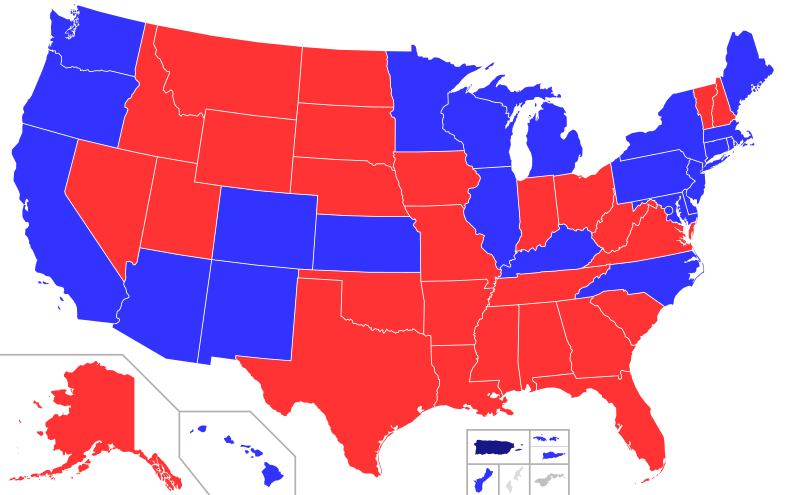
Via-American Spectator
By Grover Norquist
The pundits who live in cable TV-land tell us to keep our eyes on the looming battle royale in Washington, D.C. In one corner, the 242-member-strong Reagan Republican majority in the House of Representatives, which can pass almost any conservative legislation and defeat any liberal effort. They are assisted by the 47 Republican senators who can (unless the Democrats change the rules) filibuster any truly destructive liberal proposal. And on some issues, Senate Republicans might be able to join forces with any four of 12 vulnerable Democratic senators up for reelection in 2012 to pass legislation through the Senate.
In the other corner stand Obama with his veto and Harry Reid's Democratic majority in the Senate. The Senate Democrats have near-total control over the schedule and the determination of which votes will take place. And the Democrat-friendly establishment media will referee the bout.
Yes, out in America voters support the GOP agenda of repealing Obamacare and reducing both spending and taxes, but within the Beltway the two teams each have veto power over the other. Watching this "Mexican standoff" for the next two years will, to mix metaphors, look like watching well-matched sumo wrestlers push each other around, or two rugby teams contest the same two yards for hours.
There will be no big victories or losses. Obama's plans for ever bigger government cannot pass the House. Republicans' plans to roll back the damage of the last two (or 20) years can be stopped in the Senate and/or vetoed by Obama. So in D.C. the real action will be each party positioning itself for 2012. Republicans are likely to win a net gain of at least four of the 23 Democratic seats contested in 2012, thereby gaining a majority. It is possible they could win 13 seats for a 60-vote filibuster-proof majority. The big prize, therefore, is the presidential veto pen.
The battlefield is quite different in the 50 states. There the 2010 elections yielded examples of unified government, as opposed to the gridlock gripping the U.S. Congress. It is at the state level that legislatures and governors will enact game-changing legislation that could move the country toward or away from European welfare statism.
WHEN THE DUST SETTLED from the 2010 elections, in which Republicans gained six governorships and 715 state legislative seats -- including winning control of an additional 21 legislative bodies (taking into account the 25 party switchers from the Democratic side). The GOP now has control of the governor's office and both houses of the legislature in 21 states. The 21 unified Republican states are: Alabama, Arizona, Florida, Georgia, Idaho, Indiana, Kansas, Maine, Michigan, Nebraska, North Dakota, Ohio, Oklahoma, Pennsylvania, Tennessee, Texas, South Carolina, South Dakota, Utah, Wisconsin, and Wyoming. Republicans also possess majorities in both houses of the state legislature, but lack the governorship, in Minnesota, Missouri, Montana, New Hampshire, and North Carolina.
Democrats have complete, unfettered control and the opportunity to create little Greeces in just 11 states: Arkansas, California, Connecticut, Delaware, Hawaii, Maryland, Illinois, Massachusetts, Vermont, Washington, and West Virginia.
There is a legislative stalemate in D.C.: liberal senators from California can vote to stop conservative senators from Texas from reducing taxes, reforming entitlements, liberalizing labor law, and dismantling regulatory schemes. But at the state level, majorities can have significant effects. Illinois is a good example: the unchallenged Democratic majority there had no one to stop it from raising the personal income tax by 67 percent as its first official act.
In states with GOP majorities in both legislatures, governors are consciously channeling New Jersey's Chris Christi -- although Christie, working with a Democratic-controlled assembly and senate, does his high wire act without a net. The governors of Florida, Ohio, Pennsylvania, and Texas have taken the Taxpayer Protection Pledge to oppose any tax increase. What that pledge means in effect is a requirement to reduce future spending by $5 billion in Pennsylvania, $8 billion in Ohio, and $3.6 billion in Florida. Spending will have to be cut by more than $20 billion in Texas, according to its comptroller's office.
Such large reductions in the growth of spending fall heavily on the key constituents of the modern Democratic Party, namely public sector unions, big city political machines, and the grant recipients who use taxpayer dollars for "community organizing." And the promise for tort reform, which would never escape a Democrat's veto, threatens the power and financial clout of trial lawyers, another key Democratic bloc.
Labor laws written to force millions of Americans to pay union dues to labor union bosses are another obstacle that Republican governors and legislatures could undo. States like Pennsylvania, Wisconsin, Ohio, Michigan, and Indiana could enact right-to-work laws making union membership voluntary, or "paycheck protection" laws that stop unions from taking your union dues and spending them on politics without your express consent.
PERHAPS THE MOST IMPORTANT TASK for state-level Republicans will be redistricting. Redistricting for the 2012 election will work to maintain the unified party control of the incumbents, in both Republican and Democratic states. The partisan gap between red and blue states will continue to grow over the next 10 years. In turn, many small businessmen, high-skilled workers, and wealthy retirees will move from D to R states. And that dynamic will confirm and reinforce the partisan trends. For example, Illinois may drive away all of its entrepreneurs. Texas would welcome their talent and their resources...and their Republican votes.
In 2012, based on population migration, 10 states will lose congressional seats, and eight states will gain seats. Personal income tax rates are twice as high in the loser states. Government spending is one-third higher in losers, and four states gaining seats levy no personal income tax at all. Republican-controlled states such as Arizona, Georgia, and North Dakota could encourage further immigration of talented, productive, and industrious workers to their own voting rolls by eliminating their income taxes. By the same token, if states like Illinois and California continue their "job creator-cleansing" policies, they will create a more solidly government-employed and welfare-dependent Democratic voting bloc.
The question before America is whether, when this process reaches its natural conclusion, the productive, well-governed, job-creating states have more electoral votes than the mini-Greeces being created in states like Illinois and California. Ultimately, control of the presidency, the Senate, and the House will depend on the answer to that question.
Subscribe to:
Posts (Atom)