What If Newspapers Reported the Real News about Human Progress?
In his new book Enlightenment Now and in his McLaughlin Lecture at the Cato Institute this week, Steven Pinker made the point that we may fail to appreciate how much progress the world has made because the news is usually about bad and unusual things.
Showing posts with label Economy. Show all posts
Showing posts with label Economy. Show all posts
3/11/2018
What If Newspapers Reported the Real News about Human Progress?

3/05/2018
US oil production will lead world by 2023: IEA
US oil production will lead world by 2023: IEA
America is on its way to becoming the largest oil producer in the world. The nation will surpass Russia, the current No. 1, by 2023, the International Energy Agency estimated on Monday. U.S. crude production is projected to hit a record of 12.1 million barrels a day in 2023, which would reflect an increase of roughly 2 million barrels compared with this year.
9/30/2013
Worse is the new normal
Orange County Register
 By MARK STEYN
A few years ago, after the publication of my book “America Alone,” an exasperated reader wrote to advise me to lighten up, on the grounds that “we’re rich enough to be stupid.” That’s to say, Western democracies and their citizens are the wealthiest societies ever known, and no matter how much of our energies are wasted on pointless hyper-regulation for the business class and multigenerational welfare for the dependency class and Transgender and Colonialism Studies for our glittering youth, we can afford it, and the central fact of our wealth will ensure that our fortunes do not change. Since the collapse of Lehman Brothers in 2008, we have been less rich, and our stupidity ought in theory to be less affordable. Instead, it’s been supersized. To take only the most obvious example, President Obama has added six-and-a-half trillion bucks to the national debt, and has nothing to show for it. As Churchill would say, had his bust not been bounced from the Oval Office, never in the field of human spending has so much been owed by so many for so little.

A few years ago, after the publication of my book “America Alone,” an exasperated reader wrote to advise me to lighten up, on the grounds that “we’re rich enough to be stupid.” That’s to say, Western democracies and their citizens are the wealthiest societies ever known, and no matter how much of our energies are wasted on pointless hyper-regulation for the business class and multigenerational welfare for the dependency class and Transgender and Colonialism Studies for our glittering youth, we can afford it, and the central fact of our wealth will ensure that our fortunes do not change. Since the collapse of Lehman Brothers in 2008, we have been less rich, and our stupidity ought in theory to be less affordable. Instead, it’s been supersized. To take only the most obvious example, President Obama has added six-and-a-half trillion bucks to the national debt, and has nothing to show for it. As Churchill would say, had his bust not been bounced from the Oval Office, never in the field of human spending has so much been owed by so many for so little.
4/07/2013
Easy Money Helps Wall Street, Threatens Main Street
Via-RCP

By Jack Kelly
Per capita income and median household income, when adjusted for inflation, declined by more than 7 percent between 2007 and 2011, according to the Census Bureau's American Community Survey.
The official unemployment rate (7.6 percent in March) remains high, despite the fact that people who have stopped looking for work aren't counted in it. In 2007, 63 percent of American adults had jobs. In 2012, just 58.7 percent did.
Yet the stock market is flirting with all-time highs. Do you find this odd?
Part of the reason for the disconnect between Main Street and Wall Street is because the stock market more closely reflects corporate profits than it does the health of the economy.
Many international corporations are earning more overseas than they are at home. And corporate profits are up in part because so few are hiring. Hoarding cash can be good for the stock price even though it is bad for the economy.
But it's mostly because Wall Street has been the foremost beneficiary of the vast expansion of the money supply engineered by the Federal Reserve Board. The Fed has increased its balance sheet by more than 600 percent since March of 2000, David Stockman noted in an article last Sunday in The New York Times magazine. It's on pace to add $1 trillion this year.
The Fed runs the printing presses day and night to try to stimulate the economy. It hasn't worked. Since March of 2000, the gross domestic product has grown by a meager average of 1.7 percent a year; real business investment by less than a percent a year; jobs by just a tenth of a percent a year, noted Mr. Stockman, who was budget director during the Reagan administration.
The "liquidity" it was creating would cause banks to lend and corporations to spend, the Fed hoped. But concerns about debt and federal economic policies -- chiefly Obamacare -- have kept the extra dollars on Wall Street, boosting stock prices, but little else. Citigroup's share price has risen 85 percent since last June "despite scant evidence that the company has turned itself around," notes Peter Schiff of Euro Pacific Capital.
This has kept the chieftains of Wall Street investment banks in mansions and limos, while the net worth of 90 percent of Americans has fallen 25 percent.
Government policy has favored the big banks at the expense of ordinary Americans.
TARP -- the initial $700 billion bailout of big banks -- was "purely another Wall Street concoction," Mr. Stockman said. "The Main Street banking system was never in serious jeopardy; ATMs were not going dark and the money market industry was not imploding."
Had there been no bailout, "the crisis would have burned out on its own and meted out to speculators the losses they so richly deserved," he said.
RealClear Markets editor John Tamny agrees. "If Japan and Germany could quickly rebound from the total destruction that was World War II, the notion that we couldn't survive the failure of Citigroup (bailed out five times in the last 22 years) is too silly for words," he said.
The Obama administration has made no effort to curb the reckless practices of the big investment banks, little to punish those who engaged in outright fraud. Instead, Democrats passed a banking "reform" which protects the big banks at the expense of community banks, which were guiltless in the subprime mortgage crisis.
Less than 5 percent of President Barack Obama's $800 billion stimulus went to the needy, Mr. Stockman noted. Crony capitalists and special interest groups have been the principal beneficiaries of his massive spending spree since.
The results of the government's ever-increasing efforts to micromanage the economy have been enormous public and private debt, sluggish growth, high unemployment and falling real middle class incomes. The worst is yet to come.
The economy crashed in 2008 because reckless lending -- including by "government-sponsored entities" Fannie Mae and Freddie Mac -- caused home prices to rise to surrealistic levels that couldn't possibly be sustained. When the housing "bubble" burst, $7 trillion in paper wealth disappeared overnight. The "egregious flood of phony money from the Federal Reserve" has created a much larger bubble on Wall Street, Mr. Stockman said.
"The American machinery of monetary and fiscal stimulus has reached its limits," he said. "The United States is broke -- fiscally, morally, intellectually. When the latest bubble pops, there will be nothing to stop the collapse."

By Jack Kelly
Per capita income and median household income, when adjusted for inflation, declined by more than 7 percent between 2007 and 2011, according to the Census Bureau's American Community Survey.
The official unemployment rate (7.6 percent in March) remains high, despite the fact that people who have stopped looking for work aren't counted in it. In 2007, 63 percent of American adults had jobs. In 2012, just 58.7 percent did.
Yet the stock market is flirting with all-time highs. Do you find this odd?
Part of the reason for the disconnect between Main Street and Wall Street is because the stock market more closely reflects corporate profits than it does the health of the economy.
Many international corporations are earning more overseas than they are at home. And corporate profits are up in part because so few are hiring. Hoarding cash can be good for the stock price even though it is bad for the economy.
But it's mostly because Wall Street has been the foremost beneficiary of the vast expansion of the money supply engineered by the Federal Reserve Board. The Fed has increased its balance sheet by more than 600 percent since March of 2000, David Stockman noted in an article last Sunday in The New York Times magazine. It's on pace to add $1 trillion this year.
The Fed runs the printing presses day and night to try to stimulate the economy. It hasn't worked. Since March of 2000, the gross domestic product has grown by a meager average of 1.7 percent a year; real business investment by less than a percent a year; jobs by just a tenth of a percent a year, noted Mr. Stockman, who was budget director during the Reagan administration.
The "liquidity" it was creating would cause banks to lend and corporations to spend, the Fed hoped. But concerns about debt and federal economic policies -- chiefly Obamacare -- have kept the extra dollars on Wall Street, boosting stock prices, but little else. Citigroup's share price has risen 85 percent since last June "despite scant evidence that the company has turned itself around," notes Peter Schiff of Euro Pacific Capital.
This has kept the chieftains of Wall Street investment banks in mansions and limos, while the net worth of 90 percent of Americans has fallen 25 percent.
Government policy has favored the big banks at the expense of ordinary Americans.
TARP -- the initial $700 billion bailout of big banks -- was "purely another Wall Street concoction," Mr. Stockman said. "The Main Street banking system was never in serious jeopardy; ATMs were not going dark and the money market industry was not imploding."
Had there been no bailout, "the crisis would have burned out on its own and meted out to speculators the losses they so richly deserved," he said.
RealClear Markets editor John Tamny agrees. "If Japan and Germany could quickly rebound from the total destruction that was World War II, the notion that we couldn't survive the failure of Citigroup (bailed out five times in the last 22 years) is too silly for words," he said.
The Obama administration has made no effort to curb the reckless practices of the big investment banks, little to punish those who engaged in outright fraud. Instead, Democrats passed a banking "reform" which protects the big banks at the expense of community banks, which were guiltless in the subprime mortgage crisis.
Less than 5 percent of President Barack Obama's $800 billion stimulus went to the needy, Mr. Stockman noted. Crony capitalists and special interest groups have been the principal beneficiaries of his massive spending spree since.
The results of the government's ever-increasing efforts to micromanage the economy have been enormous public and private debt, sluggish growth, high unemployment and falling real middle class incomes. The worst is yet to come.
The economy crashed in 2008 because reckless lending -- including by "government-sponsored entities" Fannie Mae and Freddie Mac -- caused home prices to rise to surrealistic levels that couldn't possibly be sustained. When the housing "bubble" burst, $7 trillion in paper wealth disappeared overnight. The "egregious flood of phony money from the Federal Reserve" has created a much larger bubble on Wall Street, Mr. Stockman said.
"The American machinery of monetary and fiscal stimulus has reached its limits," he said. "The United States is broke -- fiscally, morally, intellectually. When the latest bubble pops, there will be nothing to stop the collapse."
3/26/2013
Can It Happen Here?
Via-American Spectator

by Thomas Sowell
The decision of the government in Cyprus to simply take money out of people’s bank accounts there sent shock waves around the world. People far removed from that small island nation had to wonder: “Can this happen here?”
The economic repercussions of having people feel that their money is not safe in banks can be catastrophic. Banks are not just warehouses where money can be stored. They are crucial institutions for gathering individually modest amounts of money from millions of people and transferring that money to strangers whom those people would not directly entrust it to.
Multi-billion dollar corporations, whose economies of scale can bring down the prices of goods and services — thereby raising our standard of living — are seldom financed by a few billionaires.
Far more often they are financed by millions of people, who have neither the specific knowledge nor the economic expertise to risk their savings by investing directly in those enterprises. Banks are crucial intermediaries, which provide the financial expertise without which these transfers of money are too risky.
There are poor nations with rich natural resources, which are not developed because they lack either the sophisticated financial institutions necessary to make these key transfers of money or because their legal or political systems are too unreliable for people to put their money into these financial intermediaries.
Whether in Cyprus or in other countries, politicians tend to think in short run terms, if only because elections are held in the short run. Therefore, there is always a temptation to do reckless and short-sighted things to get over some current problem, even if that creates far worse problems in the long run.
Seizing money that people put in the bank would be a classic example of such short-sighted policies.

by Thomas Sowell
The decision of the government in Cyprus to simply take money out of people’s bank accounts there sent shock waves around the world. People far removed from that small island nation had to wonder: “Can this happen here?”
The economic repercussions of having people feel that their money is not safe in banks can be catastrophic. Banks are not just warehouses where money can be stored. They are crucial institutions for gathering individually modest amounts of money from millions of people and transferring that money to strangers whom those people would not directly entrust it to.
Multi-billion dollar corporations, whose economies of scale can bring down the prices of goods and services — thereby raising our standard of living — are seldom financed by a few billionaires.
Far more often they are financed by millions of people, who have neither the specific knowledge nor the economic expertise to risk their savings by investing directly in those enterprises. Banks are crucial intermediaries, which provide the financial expertise without which these transfers of money are too risky.
There are poor nations with rich natural resources, which are not developed because they lack either the sophisticated financial institutions necessary to make these key transfers of money or because their legal or political systems are too unreliable for people to put their money into these financial intermediaries.
Whether in Cyprus or in other countries, politicians tend to think in short run terms, if only because elections are held in the short run. Therefore, there is always a temptation to do reckless and short-sighted things to get over some current problem, even if that creates far worse problems in the long run.
Seizing money that people put in the bank would be a classic example of such short-sighted policies.
2/07/2013
The Unscary Sequester
Via-WSJ

Washington is in a fit of collective terror over the "sequester," aka the impending across-the-board spending cuts. Trying to explain the zero economic growth at the end of 2012, White House spokesman Jay Carney blamed Republicans for "talk about letting the sequester kick in as though that were an acceptable thing." He left out that President Obama proposed the sequester in 2011.
Then on Tuesday Mr. Obama warned about "the threat of massive automatic cuts that have already started to affect business decisions." He proposed tax increases and "smaller" spending cuts to replace the sequester until Congress and he can agree to another not-so-grand-bargain. It's nice to see Mr. Obama worry about "business decisions" for a change, but listening to his cries of "massive" cuts is like watching "Scary Movie" for the 10th time. You know it's a joke.
The sequester that nobody seems to love would cut an estimated $85 billion from the budget this fiscal year starting in March. Half of the savings would come from defense and half from domestic discretionary programs. Medicare providers would take a 2% cut. This "doomsday mechanism," as some in the Administration call it, was the fallback when the White House and Republicans couldn't agree during the 2011 debt-ceiling negotiations.
The White House strategy was to create a fiscal hatchet that would disproportionately carve up the defense budget to force the GOP to raise taxes. The Pentagon absorbs half the sequester cuts though it is only about 19% of the budget. This hasn't worked.
Republicans have rightly concluded after two years of being sucker-punched that the sequester is the main negotiating leverage they have and may be the only way to restrain spending. So now Democrats and a gaggle of interest groups are denouncing Mr. Obama's fiscal brainchild because the programs they cherish—from job training to education, to the EPA and energy subsidies, to money for Planned Parenthood—are about to get chopped too.
Fear not. As always in Washington when there is talk of cutting spending, most of the hysteria is baseless. The nearby table from the House Budget Committee shows that programs are hardly starved for money. In Mr. Obama's first two years, while private businesses and households were spending less and deleveraging, federal domestic discretionary spending soared by 84% with some agencies doubling and tripling their budgets.

Spending growth has slowed since Republicans took the House in 2011. Still, from 2008-2013 federal discretionary spending has climbed to $1.062 trillion from $933 billion—an increase of 13.9%. Domestic programs grew by 16.6%, much faster than the 11.6% for national security.
Transportation funding alone climbed to $69.5 billion in 2010 with the stimulus from $10.7 billion in 2008, and in 2013 the budget is still $17.9 billion, or about 67% higher. Education spending more than doubled in Mr. Obama's first two years and is up 18.6% to $68.1 billion from 2008-2013.
But wait—this doesn't include the recent Hurricane Sandy relief bill. Less than half of that $59 billion is going to storm victims while the rest is a spending end-run around the normal appropriations process. Add that money to the tab, and total discretionary domestic spending is up closer to 30% from 2008-2013. The sequester would claw that back by all of about 5%.
Washington is in a fit of collective terror over the "sequester," aka the impending across-the-board spending cuts. Trying to explain the zero economic growth at the end of 2012, White House spokesman Jay Carney blamed Republicans for "talk about letting the sequester kick in as though that were an acceptable thing." He left out that President Obama proposed the sequester in 2011.
Then on Tuesday Mr. Obama warned about "the threat of massive automatic cuts that have already started to affect business decisions." He proposed tax increases and "smaller" spending cuts to replace the sequester until Congress and he can agree to another not-so-grand-bargain. It's nice to see Mr. Obama worry about "business decisions" for a change, but listening to his cries of "massive" cuts is like watching "Scary Movie" for the 10th time. You know it's a joke.
The sequester that nobody seems to love would cut an estimated $85 billion from the budget this fiscal year starting in March. Half of the savings would come from defense and half from domestic discretionary programs. Medicare providers would take a 2% cut. This "doomsday mechanism," as some in the Administration call it, was the fallback when the White House and Republicans couldn't agree during the 2011 debt-ceiling negotiations.
The White House strategy was to create a fiscal hatchet that would disproportionately carve up the defense budget to force the GOP to raise taxes. The Pentagon absorbs half the sequester cuts though it is only about 19% of the budget. This hasn't worked.
Republicans have rightly concluded after two years of being sucker-punched that the sequester is the main negotiating leverage they have and may be the only way to restrain spending. So now Democrats and a gaggle of interest groups are denouncing Mr. Obama's fiscal brainchild because the programs they cherish—from job training to education, to the EPA and energy subsidies, to money for Planned Parenthood—are about to get chopped too.
Fear not. As always in Washington when there is talk of cutting spending, most of the hysteria is baseless. The nearby table from the House Budget Committee shows that programs are hardly starved for money. In Mr. Obama's first two years, while private businesses and households were spending less and deleveraging, federal domestic discretionary spending soared by 84% with some agencies doubling and tripling their budgets.

Spending growth has slowed since Republicans took the House in 2011. Still, from 2008-2013 federal discretionary spending has climbed to $1.062 trillion from $933 billion—an increase of 13.9%. Domestic programs grew by 16.6%, much faster than the 11.6% for national security.
Transportation funding alone climbed to $69.5 billion in 2010 with the stimulus from $10.7 billion in 2008, and in 2013 the budget is still $17.9 billion, or about 67% higher. Education spending more than doubled in Mr. Obama's first two years and is up 18.6% to $68.1 billion from 2008-2013.
But wait—this doesn't include the recent Hurricane Sandy relief bill. Less than half of that $59 billion is going to storm victims while the rest is a spending end-run around the normal appropriations process. Add that money to the tab, and total discretionary domestic spending is up closer to 30% from 2008-2013. The sequester would claw that back by all of about 5%.
2/06/2013
Prophets and Losses, Part II
Via-American Spectator

By Thomas Sowell
Why central planning soothsayers are constantly wrong.
The government can only raise or lower the tax rate. Whether the actual tax revenues that the government will collect as a result will go up or down is a matter of prophecy. And these prophecies have been far too wrong far too often to base national policies on them.
When Congress was considering raising the capital gains tax rate from 20 percent to 28 percent in 1986, the Congressional Budget Office advised Congress that this would increase the revenue received from that tax. But the Congressional Budget Office was wrong, not simply about the amount of the tax revenue increase, but about the fact that the capital gains tax revenue actually fell.
There was nothing unique about this example of tax rates and tax revenues moving in opposite directions from each other — and also in opposite directions from the predictions of the Congressional Budget Office. Reductions of the capital gains tax rates in 1978, 1997 and 2003 all led to increased revenues from that tax.
The Congressional Budget Office is by no means the only government agency whose prophecies have been grossly unreliable. Anyone who looks at the history of the Federal Reserve System will find many painful examples of wrong prophecies that led to policies with bad consequences for the whole economy.
In a worldwide context, during the 20th century economic central planning by governments — prophecy at the grandest level — led to so many bad consequences, in countries around the world, that even most socialist and communist governments abandoned central planning by the end of that century.
The failures of governmental prophecies in so many different contexts cannot be blamed on stupidity. Most of the people who made these prophecies were far more educated than the average person, had far more information at their fingertips and probably had higher IQs as well.
Their intellectual superiority to others may well have given them the confidence to venture into areas where no human being has what it takes to make prophecies that lead to policies overriding the plans and actions of millions of other human beings.
As John Stuart Mill said, back in the 19th century, “even if a government were superior in intelligence and knowledge to any single individual in the nation, it must be inferior to all the individuals of the nation taken together.”
People competing with each other, and being forced to make mutual accommodations with each other in the marketplace, are operating in a trial and error process.
Human beings are going to make errors in any kind of economic or political system. The question is: Which kind of system punishes errors more quickly, and more effectively, in terms of forcing errors to be corrected?
A market economy with many competitors has incentives and constraints that are the opposite of those in a government monopoly.
Anyone familiar with the economic history of businesses knows that their mistakes have been common and large. But red ink on the bottom line lets them know that they are going to have to shape up or shut down.
Government agencies face no such constraint. The Federal Reserve can keep making the same mistakes in the next hundred years that it made in its first hundred years. Or it can make new and bigger mistakes.
Nor is the Federal Reserve unique. The same thing applies to the Congressional Budget Office and to government agencies on down to the local DMV.
Elected politicians not only can keep making the same mistakes. They have every incentive to deny that they made a mistake in the first place, since such an admission can end their careers.
That is why these prophets can lead to our losses.

By Thomas Sowell
Why central planning soothsayers are constantly wrong.
The government can only raise or lower the tax rate. Whether the actual tax revenues that the government will collect as a result will go up or down is a matter of prophecy. And these prophecies have been far too wrong far too often to base national policies on them.
When Congress was considering raising the capital gains tax rate from 20 percent to 28 percent in 1986, the Congressional Budget Office advised Congress that this would increase the revenue received from that tax. But the Congressional Budget Office was wrong, not simply about the amount of the tax revenue increase, but about the fact that the capital gains tax revenue actually fell.
There was nothing unique about this example of tax rates and tax revenues moving in opposite directions from each other — and also in opposite directions from the predictions of the Congressional Budget Office. Reductions of the capital gains tax rates in 1978, 1997 and 2003 all led to increased revenues from that tax.
The Congressional Budget Office is by no means the only government agency whose prophecies have been grossly unreliable. Anyone who looks at the history of the Federal Reserve System will find many painful examples of wrong prophecies that led to policies with bad consequences for the whole economy.
In a worldwide context, during the 20th century economic central planning by governments — prophecy at the grandest level — led to so many bad consequences, in countries around the world, that even most socialist and communist governments abandoned central planning by the end of that century.
The failures of governmental prophecies in so many different contexts cannot be blamed on stupidity. Most of the people who made these prophecies were far more educated than the average person, had far more information at their fingertips and probably had higher IQs as well.
Their intellectual superiority to others may well have given them the confidence to venture into areas where no human being has what it takes to make prophecies that lead to policies overriding the plans and actions of millions of other human beings.
As John Stuart Mill said, back in the 19th century, “even if a government were superior in intelligence and knowledge to any single individual in the nation, it must be inferior to all the individuals of the nation taken together.”
People competing with each other, and being forced to make mutual accommodations with each other in the marketplace, are operating in a trial and error process.
Human beings are going to make errors in any kind of economic or political system. The question is: Which kind of system punishes errors more quickly, and more effectively, in terms of forcing errors to be corrected?
A market economy with many competitors has incentives and constraints that are the opposite of those in a government monopoly.
Anyone familiar with the economic history of businesses knows that their mistakes have been common and large. But red ink on the bottom line lets them know that they are going to have to shape up or shut down.
Government agencies face no such constraint. The Federal Reserve can keep making the same mistakes in the next hundred years that it made in its first hundred years. Or it can make new and bigger mistakes.
Nor is the Federal Reserve unique. The same thing applies to the Congressional Budget Office and to government agencies on down to the local DMV.
Elected politicians not only can keep making the same mistakes. They have every incentive to deny that they made a mistake in the first place, since such an admission can end their careers.
That is why these prophets can lead to our losses.
2/05/2013
Prophets and Losses
Via-American Spectator

By Thomas Sowell
The vaunted Fed’s real track record on the economy.
The recent release of the Federal Reserve Board’s transcripts of its deliberations back in 2007 shows that their economic prophecies were way off. How much faith should we put in their prophecies today — or the policies based on those prophecies?
Even after the housing market began its collapse in 2006, Federal Reserve Chairman Ben Bernanke said in 2007, “The impact on the broader economy and financial markets of the problems in the subprime market seems likely to be contained.”
It turned out that financial disasters in the housing market were not “contained,” but spread out to affect the whole American economy and economies overseas. Then Chairman Bernanke said: “It is an interesting question why what looks like $100 billion or so of credit losses in the subprime market has been reflected in multiple trillions of dollars of losses in paper wealth.”
What is an even more interesting question is why we should put such faith and such power in the hands of a man and an institution that have been so wrong before.
This is not just a question of a bad guess by Ben Bernanke. The previous chairman of the Federal Reserve System, Alan Greenspan, likewise misjudged the consequences of the housing boom and bust. Nor was the Federal Reserve’s staff any more accurate in its prophecies. According to the New York Times, “The Fed’s own staff still forecast that the economy would avoid a recession.”
Today, the economy has not yet fully recovered from the recession that the Federal Reserve System’s staff and chairmen thought we would avoid.
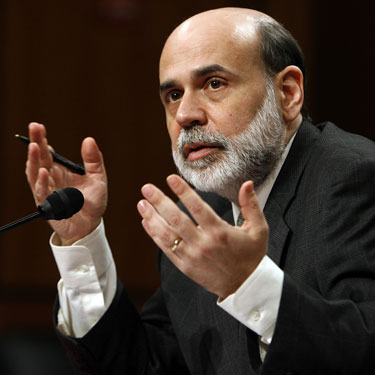
By Thomas Sowell
The vaunted Fed’s real track record on the economy.
The recent release of the Federal Reserve Board’s transcripts of its deliberations back in 2007 shows that their economic prophecies were way off. How much faith should we put in their prophecies today — or the policies based on those prophecies?
Even after the housing market began its collapse in 2006, Federal Reserve Chairman Ben Bernanke said in 2007, “The impact on the broader economy and financial markets of the problems in the subprime market seems likely to be contained.”
It turned out that financial disasters in the housing market were not “contained,” but spread out to affect the whole American economy and economies overseas. Then Chairman Bernanke said: “It is an interesting question why what looks like $100 billion or so of credit losses in the subprime market has been reflected in multiple trillions of dollars of losses in paper wealth.”
What is an even more interesting question is why we should put such faith and such power in the hands of a man and an institution that have been so wrong before.
This is not just a question of a bad guess by Ben Bernanke. The previous chairman of the Federal Reserve System, Alan Greenspan, likewise misjudged the consequences of the housing boom and bust. Nor was the Federal Reserve’s staff any more accurate in its prophecies. According to the New York Times, “The Fed’s own staff still forecast that the economy would avoid a recession.”
Today, the economy has not yet fully recovered from the recession that the Federal Reserve System’s staff and chairmen thought we would avoid.
1/09/2013
The Fiscal Facts of Life
Via-NRO

Spending less is the only way we can get out of debt.
By Michael Tanner
Having completed yet another deficit-reduction agreement that somehow managed to increase the deficit, Congress and the Obama administration are now laying the groundwork for upcoming fights over the debt ceiling, the sequester, and the continuing resolution that will fund the government given continued refusal by Senate Democrats to pass a budget.
But before sitting down to negotiate another deal that will kick the problem down the road, perhaps our legislators could use a refresher course on the fiscal facts of life.
Let’s start with the basics. This year, the federal government will spend at least $3.62 trillion, an increase of almost $92 billion from last year. Of that amount, we will borrow $941 billion, or 26 percent. Indeed, our deficit this year is almost equal to the entire federal budget in 1985. And, in reality, spending will likely be even higher, since almost every year sees additional “emergency” expenditures as well. Thus, when all is said and done, expect our deficit to actually end up exceeding $1 trillion for the fifth consecutive year.
Our national debt, which can be thought of as the cumulative total of our annual levels of fiscal irresponsibility, reached $16.4 trillion this month. This already technically exceeds the debt ceiling that was agreed to less than a year and a half ago. It is worth noting that our debt at that time was just $14.3 trillion, meaning we have added $2.1 trillion to the debt since the last time we promised to cut spending as a trade-off for agreeing to more debt.
Read entire article

Spending less is the only way we can get out of debt.
By Michael Tanner
Having completed yet another deficit-reduction agreement that somehow managed to increase the deficit, Congress and the Obama administration are now laying the groundwork for upcoming fights over the debt ceiling, the sequester, and the continuing resolution that will fund the government given continued refusal by Senate Democrats to pass a budget.
But before sitting down to negotiate another deal that will kick the problem down the road, perhaps our legislators could use a refresher course on the fiscal facts of life.
Let’s start with the basics. This year, the federal government will spend at least $3.62 trillion, an increase of almost $92 billion from last year. Of that amount, we will borrow $941 billion, or 26 percent. Indeed, our deficit this year is almost equal to the entire federal budget in 1985. And, in reality, spending will likely be even higher, since almost every year sees additional “emergency” expenditures as well. Thus, when all is said and done, expect our deficit to actually end up exceeding $1 trillion for the fifth consecutive year.
Our national debt, which can be thought of as the cumulative total of our annual levels of fiscal irresponsibility, reached $16.4 trillion this month. This already technically exceeds the debt ceiling that was agreed to less than a year and a half ago. It is worth noting that our debt at that time was just $14.3 trillion, meaning we have added $2.1 trillion to the debt since the last time we promised to cut spending as a trade-off for agreeing to more debt.
Read entire article
1/08/2013

1/07/2013
Bridge to a Higher Cliff
Via-American Spectator

By Jed Babbin
The coming fight on the debt ceiling and gun control is an ideological one, one Republicans need to fight or else face oblivion.
The New Year’s Eve deal to avoid the fiscal cliff isn’t just a lousy deal: it’s entirely corrupt. Obama insisted on what he called a “balanced deal,” but to him a balance is only between increased government spending and higher taxes. It allowed President Obama to pretend that the deal reduces federal spending by $732 billion over the next ten years though, in fact, it increases federal spending — by $332 billion — more than it cuts.
And it did precisely nothing about federal spending. In fact, it adds $4 trillion in new debt over the next decade.
The fiscal cliff deal was nothing more than a bridge from one cliff to another. If we’d gone over that cliff, the damage done could have been remedied quickly. None of the tax hikes the so-called “fiscal cliff” would have imposed would have been permanent. They could have been reduced to their pre-cliff levels by the legislation that is now going to be another “must-pass” deal on the federal debt ceiling mess next month.
And now — with the eager help of the media — the next cliff is far higher than the last one. The New Year’s Eve deal only delayed by two months the sequestration cuts that will gut the Pentagon. Obama’s leverage on the sequestration is retained. Add to that Obama’s setup up of Joe Biden’s gun control task force to report in the midst of the next debt ceiling crisis and you have a higher cliff than the last one.
Sen. Dianne Feinstein (D-Cal) has delayed the introduction of her gun control bill to await the broader, more aggressive proposals that Biden produces. She and Obama will couple the gun control bill and the debt ceiling “crises” so that regardless of whether it’s one massive bill or two — raising the debt ceiling and imposing a national gun control regime — it will pass the Senate and be laid on the steps of the House in one big lump, at the last moment.
Obama has indicated that he wants more tax hikes. Yesterday, Sen. McConnell made the rounds of the Sunday talk shows and again rejected the idea of more tax hikes. He told ABC’s George Stephanopoulos, “The tax issue is finished, over, completed.” McConnell added, “That’s behind us. Now the question is what are we going to do about the biggest problem confronting our country and our future, and that’s our spending addiction.”
But it’s not over until Obama has been defeated on it, and so far he hasn’t been.
Obama will — again — push the new “crisis” to the brink. Obama has learned that he can win by waiting until the very last moment because the Republicans will give him what he wants rather than take the blame for what he calls their failure. Obama and Treasury Secretary Geithner will be demanding that Republicans act and telling the world that the Republicans are risking a downgrade in our international credit and threatening a government shutdown.
Republicans will be left to defend their demand for spending cuts in return for a debt ceiling hike against a tidal wave of pressure from the media and Obama’s unified liberal congressional base. And they will have to do that at the same time they’re opposing the Obama-Feinstein demand for gun controls.
The February debate will be another masterful exercise of brinksmanship by Obama. Unless Republicans are willing to shut down the government and risk another downgrade to our credit rating, they will lose again.
Read entire article

By Jed Babbin
The coming fight on the debt ceiling and gun control is an ideological one, one Republicans need to fight or else face oblivion.
The New Year’s Eve deal to avoid the fiscal cliff isn’t just a lousy deal: it’s entirely corrupt. Obama insisted on what he called a “balanced deal,” but to him a balance is only between increased government spending and higher taxes. It allowed President Obama to pretend that the deal reduces federal spending by $732 billion over the next ten years though, in fact, it increases federal spending — by $332 billion — more than it cuts.
And it did precisely nothing about federal spending. In fact, it adds $4 trillion in new debt over the next decade.
The fiscal cliff deal was nothing more than a bridge from one cliff to another. If we’d gone over that cliff, the damage done could have been remedied quickly. None of the tax hikes the so-called “fiscal cliff” would have imposed would have been permanent. They could have been reduced to their pre-cliff levels by the legislation that is now going to be another “must-pass” deal on the federal debt ceiling mess next month.
And now — with the eager help of the media — the next cliff is far higher than the last one. The New Year’s Eve deal only delayed by two months the sequestration cuts that will gut the Pentagon. Obama’s leverage on the sequestration is retained. Add to that Obama’s setup up of Joe Biden’s gun control task force to report in the midst of the next debt ceiling crisis and you have a higher cliff than the last one.
Sen. Dianne Feinstein (D-Cal) has delayed the introduction of her gun control bill to await the broader, more aggressive proposals that Biden produces. She and Obama will couple the gun control bill and the debt ceiling “crises” so that regardless of whether it’s one massive bill or two — raising the debt ceiling and imposing a national gun control regime — it will pass the Senate and be laid on the steps of the House in one big lump, at the last moment.
Obama has indicated that he wants more tax hikes. Yesterday, Sen. McConnell made the rounds of the Sunday talk shows and again rejected the idea of more tax hikes. He told ABC’s George Stephanopoulos, “The tax issue is finished, over, completed.” McConnell added, “That’s behind us. Now the question is what are we going to do about the biggest problem confronting our country and our future, and that’s our spending addiction.”
But it’s not over until Obama has been defeated on it, and so far he hasn’t been.
Obama will — again — push the new “crisis” to the brink. Obama has learned that he can win by waiting until the very last moment because the Republicans will give him what he wants rather than take the blame for what he calls their failure. Obama and Treasury Secretary Geithner will be demanding that Republicans act and telling the world that the Republicans are risking a downgrade in our international credit and threatening a government shutdown.
Republicans will be left to defend their demand for spending cuts in return for a debt ceiling hike against a tidal wave of pressure from the media and Obama’s unified liberal congressional base. And they will have to do that at the same time they’re opposing the Obama-Feinstein demand for gun controls.
The February debate will be another masterful exercise of brinksmanship by Obama. Unless Republicans are willing to shut down the government and risk another downgrade to our credit rating, they will lose again.
Read entire article
1/06/2013
A Contrary View: Fiscal Cliff Deal a Win for Republicans and America
Via-American Thinker

By Mike Razar
As a recent critic myself of Republican leadership, I would like to congratulate Speaker Boehner, Leader Cantor and the entire Republican leadership in the House and the Senate. They have succeeded in luring the President and his minions into a deal they will come to regret
All the wise guys disagree with me. Of course, the progressive media are crowing about President Obama's great victory. They are touting his brilliant negotiating skills. They are positively giddy with schadenfreude for conservatives.
Yet what we're not hearing is that the Democrats have used every weapon in their arsenal...and they have now officially endorsed the validity of the core Bush tax cuts. There is no sunset provision this time. They got very little in return. Forget the "$640B in tax increases to $40B in spending cuts" description. It looks bad, but it is really a stroke of genius.
Of course, there is plenty to suggest that we're not dealing with a pretty picture here. The terms of political debate nowadays are so subjective that it is impossible to know what any of the numbers mean without careful study. Are various numbers referring to ten years or one year? If they are ten-year numbers, how likely are they to be even close to correct? What is the baseline against which the impact of a tax law change is measured? Is it yesterday's law or today's? How does it interact with other rules? Do you really think you know its impact in 2017? Those are just some of the flaws in the ongoing fiscal debate.
It is a rare statute that has a single purpose. How bad do the side provisions have to be in order to poison the main focus of the law? The main trade-off in the current law is make permanent (haha) most of the Bush tax brackets in return for raising the top bracket from 35% to 39.6% on income over $400,000.
By Mike Razar
As a recent critic myself of Republican leadership, I would like to congratulate Speaker Boehner, Leader Cantor and the entire Republican leadership in the House and the Senate. They have succeeded in luring the President and his minions into a deal they will come to regret
All the wise guys disagree with me. Of course, the progressive media are crowing about President Obama's great victory. They are touting his brilliant negotiating skills. They are positively giddy with schadenfreude for conservatives.
Yet what we're not hearing is that the Democrats have used every weapon in their arsenal...and they have now officially endorsed the validity of the core Bush tax cuts. There is no sunset provision this time. They got very little in return. Forget the "$640B in tax increases to $40B in spending cuts" description. It looks bad, but it is really a stroke of genius.
Of course, there is plenty to suggest that we're not dealing with a pretty picture here. The terms of political debate nowadays are so subjective that it is impossible to know what any of the numbers mean without careful study. Are various numbers referring to ten years or one year? If they are ten-year numbers, how likely are they to be even close to correct? What is the baseline against which the impact of a tax law change is measured? Is it yesterday's law or today's? How does it interact with other rules? Do you really think you know its impact in 2017? Those are just some of the flaws in the ongoing fiscal debate.
It is a rare statute that has a single purpose. How bad do the side provisions have to be in order to poison the main focus of the law? The main trade-off in the current law is make permanent (haha) most of the Bush tax brackets in return for raising the top bracket from 35% to 39.6% on income over $400,000.
1/05/2013
Are We Already in a New Recession?
Via-Front Page Magazine

By Arnold Ahlert
On Sunday, President Barack Obama contended that the nation is “poised to improve economic growth in 2013, but what’s been holding us back is the dysfunction here in Washington.” Obama is certainly correct about the dysfunction in our nation’s capital, but whether America’s economy will be heading in the right direction next year is beginning to resemble the “recovery summer” talk from a couple of years ago that turned out to be just that: talk. Furthermore, based on recent economic data, some economists believe the U.S. is already in another recession.
“The evidence is starting to mount a recession is already underway, and we’re a few months into it,” contends Lakshman Achuthan, co-founder of the Economic Cycle Research Institute (ECRI). Despite economic growth of 2.7 percent in the third quarter, he believes July was the month when the new recession began. Achuthan bases that call on data released by the National Bureau of Economic Research (NBER), noting that three of the four indicators NBER uses to forecast downturns–production, incomes and sales–all peaked in mid-summer. He characterizes the improving employment number as the “odd man out,” but insists that “jobs are going to turn down and join the other indicators in their downturns,” further noting that the slight increase in jobs and GDP is “not inconsistent” with historical patterns that show both indicators have often improved at the start of recessions.
Read entire article

By Arnold Ahlert
On Sunday, President Barack Obama contended that the nation is “poised to improve economic growth in 2013, but what’s been holding us back is the dysfunction here in Washington.” Obama is certainly correct about the dysfunction in our nation’s capital, but whether America’s economy will be heading in the right direction next year is beginning to resemble the “recovery summer” talk from a couple of years ago that turned out to be just that: talk. Furthermore, based on recent economic data, some economists believe the U.S. is already in another recession.
“The evidence is starting to mount a recession is already underway, and we’re a few months into it,” contends Lakshman Achuthan, co-founder of the Economic Cycle Research Institute (ECRI). Despite economic growth of 2.7 percent in the third quarter, he believes July was the month when the new recession began. Achuthan bases that call on data released by the National Bureau of Economic Research (NBER), noting that three of the four indicators NBER uses to forecast downturns–production, incomes and sales–all peaked in mid-summer. He characterizes the improving employment number as the “odd man out,” but insists that “jobs are going to turn down and join the other indicators in their downturns,” further noting that the slight increase in jobs and GDP is “not inconsistent” with historical patterns that show both indicators have often improved at the start of recessions.
Read entire article
12/30/2012
12/24/2012
The Madness of Keynesian Economics
Via-American Thinker

By Jonathon Moseley
President Barack Obama demands more stimulus spending to avoid the "fiscal cliff." Obama increased the national debt $6 trillion to $16 trillion. Yet the Democrats' 'cure for what ails ya' is even more spending. Obama demands around $75 billion in new spending to stimulate the economy in 2013.
"Keynesian Economics" is the insane belief that the economy can be stimulated by government spending. It provides the excuse to depart from common sense that allows politicians to ignore the alarm bells. It is ludicrous mainly because our government doesn't have any money to spend.
If the government had a surplus saved up, spending actual money might give our economy a short-term sugar high (with dubious long-term results). But our Federal and state governments must first suck money out of the economy by borrowing it.
History has repeatedly proven that this is nonsense. Yet Democrats will not let go of the Keynesian Myth. The government is the center of society, America's modern Democrats want to believe. So they cannot shake the dogma that our entire economy depends upon government spending.
Read entire article

By Jonathon Moseley
President Barack Obama demands more stimulus spending to avoid the "fiscal cliff." Obama increased the national debt $6 trillion to $16 trillion. Yet the Democrats' 'cure for what ails ya' is even more spending. Obama demands around $75 billion in new spending to stimulate the economy in 2013.
"Keynesian Economics" is the insane belief that the economy can be stimulated by government spending. It provides the excuse to depart from common sense that allows politicians to ignore the alarm bells. It is ludicrous mainly because our government doesn't have any money to spend.
If the government had a surplus saved up, spending actual money might give our economy a short-term sugar high (with dubious long-term results). But our Federal and state governments must first suck money out of the economy by borrowing it.
History has repeatedly proven that this is nonsense. Yet Democrats will not let go of the Keynesian Myth. The government is the center of society, America's modern Democrats want to believe. So they cannot shake the dogma that our entire economy depends upon government spending.
Read entire article
12/17/2012
Obama's Stealth Redistribution Strategy
Via-American Thinker

By Karl Ushanka
Resentment of the rich trumps all else in liberalism, and we are defending against a multi-front class war. President Obama is using a shotgun approach to redistribute your wealth, with multiple attacks on your income, property, savings, and cost of living. These coordinated attacks started after the 2008 election and are now set to hit critical mass in his second term.
You may be hearing about the automatic tax increases in the fiscal cliff, plus additional tax increases President Obama is negotiating with Speaker Boehner. But you won't hear much about liberalism's most powerful, and silent, redistribution tool: inflation.
How is inflation redistributive? While not actually taking from one and giving to another, inflation satisfies the first step of the two-step redistribution process:
Step One: Reduce the wealth of the bourgeoisie.
Step Two: Increase the wealth of the proletariat.
The liberals, progressives, communists (or whatever label you're using these days) never achieve their redistribution goals, as they often fail at or before Step Two. But for them, this is okay. In their zero-sum world, a dollar taken from one must have been given to another. Therefore, the redistribution effort is seen as a success, by them and in hindsight, if only Step One occurred.
read entire article

By Karl Ushanka
Resentment of the rich trumps all else in liberalism, and we are defending against a multi-front class war. President Obama is using a shotgun approach to redistribute your wealth, with multiple attacks on your income, property, savings, and cost of living. These coordinated attacks started after the 2008 election and are now set to hit critical mass in his second term.
You may be hearing about the automatic tax increases in the fiscal cliff, plus additional tax increases President Obama is negotiating with Speaker Boehner. But you won't hear much about liberalism's most powerful, and silent, redistribution tool: inflation.
How is inflation redistributive? While not actually taking from one and giving to another, inflation satisfies the first step of the two-step redistribution process:
Step One: Reduce the wealth of the bourgeoisie.
Step Two: Increase the wealth of the proletariat.
The liberals, progressives, communists (or whatever label you're using these days) never achieve their redistribution goals, as they often fail at or before Step Two. But for them, this is okay. In their zero-sum world, a dollar taken from one must have been given to another. Therefore, the redistribution effort is seen as a success, by them and in hindsight, if only Step One occurred.
read entire article
12/01/2012
Will We Ever Get Our America Back?
Via-American Thinker

By David S. Whitley
Ever watch one of those chase scenes in a cartoon where the one in the lead heads over the cliff and lands in a devastating crash at the bottom -- only to find whatever he was carrying (adding insult to injury) comes tumbling down on top of him?
Well, that's us. As we collectively head over this fiscal cliff -- we are actually over it right now -- we're not feeling much because we're free falling (like the cartoon character) and falling is never really that painful (though the rushing wind can chap the lips and mess up one's hair) but in the end it's the sudden deceleration at the valley floor that causes the real damage. The only problem here is that if we happen to live through it -- the crash -- there is an economic avalanche coming down on top of us that will almost certainly finish us off.
Our problems in America are not taxes and revenue; our problems are spending and the immoral class warfare that allows it all to continue without end. Warren Buffett again recently suggested we raise the rates on the wealthiest Americans to balance things out in our tax code. The problem is -- despite what the left has to say about all the wealth at the top, and the disparity between rich and poor -- that there isn't enough money at the top to pay off anything so enormous as the US national debt.

By David S. Whitley
Ever watch one of those chase scenes in a cartoon where the one in the lead heads over the cliff and lands in a devastating crash at the bottom -- only to find whatever he was carrying (adding insult to injury) comes tumbling down on top of him?
Well, that's us. As we collectively head over this fiscal cliff -- we are actually over it right now -- we're not feeling much because we're free falling (like the cartoon character) and falling is never really that painful (though the rushing wind can chap the lips and mess up one's hair) but in the end it's the sudden deceleration at the valley floor that causes the real damage. The only problem here is that if we happen to live through it -- the crash -- there is an economic avalanche coming down on top of us that will almost certainly finish us off.
Our problems in America are not taxes and revenue; our problems are spending and the immoral class warfare that allows it all to continue without end. Warren Buffett again recently suggested we raise the rates on the wealthiest Americans to balance things out in our tax code. The problem is -- despite what the left has to say about all the wealth at the top, and the disparity between rich and poor -- that there isn't enough money at the top to pay off anything so enormous as the US national debt.
11/30/2012
Brain-lock inside the Beltway
Via-Chicago Tribune

Jonah Goldberg
It's at times like this I'm ashamed to admit I live inside the Beltway.
Well, that's probably not specific enough since I'm usually ashamed to admit I live inside the Beltway.
Still, the second you try to explain the stupidity of this "fiscal cliff" fiasco to a normal person, it makes William F. Buckley's famous declaration that he'd rather be governed by the first few hundred people listed in the Boston phone book than by the faculty of Harvard seem all the more reasonable.
While there are some responsible politicians and policymakers in Washington, if you look at the whole place collectively, Uncle Sam starts to look like a junkie. The logic of addiction dictates that you make a deal that allows you to avoid all of your problems now and enjoy a quick high in exchange for a painful confrontation with reality down the road.
Almost exactly a year ago, during the famed debt ceiling negotiations, Speaker of the House John Boehner boasted that he'd forced tough concessions from the Democrats, achieving the first real cut in government spending in ages. He claimed his "real, enforceable cut" amounted to $7 billion for fiscal year 2012. The Congressional Budget Office objected, saying the real savings were closer to $1 billion.
"Which of these numbers is accurate?" asked columnist Mark Steyn at the time. Answering his own question, he wrote: "The correct answer is: Who cares?"

Jonah Goldberg
It's at times like this I'm ashamed to admit I live inside the Beltway.
Well, that's probably not specific enough since I'm usually ashamed to admit I live inside the Beltway.
Still, the second you try to explain the stupidity of this "fiscal cliff" fiasco to a normal person, it makes William F. Buckley's famous declaration that he'd rather be governed by the first few hundred people listed in the Boston phone book than by the faculty of Harvard seem all the more reasonable.
While there are some responsible politicians and policymakers in Washington, if you look at the whole place collectively, Uncle Sam starts to look like a junkie. The logic of addiction dictates that you make a deal that allows you to avoid all of your problems now and enjoy a quick high in exchange for a painful confrontation with reality down the road.
Almost exactly a year ago, during the famed debt ceiling negotiations, Speaker of the House John Boehner boasted that he'd forced tough concessions from the Democrats, achieving the first real cut in government spending in ages. He claimed his "real, enforceable cut" amounted to $7 billion for fiscal year 2012. The Congressional Budget Office objected, saying the real savings were closer to $1 billion.
"Which of these numbers is accurate?" asked columnist Mark Steyn at the time. Answering his own question, he wrote: "The correct answer is: Who cares?"
Congress should dive headlong off fiscal cliff
Via-Daily Caller

TUCKER CARLSON AND NEIL PATEL
Everyone in Washington fears the fiscal cliff. The White House has no interest in going over. Democrats understand they’ll never have more power than they do now. Delaying a budget deal until after January means getting less of what they want.
Republican leaders, meanwhile, live in fear of another 1995 government shutdown. When two sides fail to reach a deal, the media blame Republicans. That’s the lesson Republicans learned 17 years ago. They shudder imagining the headlines if negotiations were to break down next month: “Norquist-controlled GOP forces America off cliff.” Nothing terrifies them more than that. They’ll do anything to avoid it, as Obama knows well. (Hence his advantage.)
The business community fears the cliff too. Federal contractors stand to lose millions if budget cuts take effect. And nobody wants to see unemployment rise or the economy fall back into recession, both of which would likely happen if Republicans and Democrats can’t make a deal.
So there’s a lot to worry about with the fiscal cliff. Congress should leap off anyway. At a full run. Face first. Yes, it’s a scary prospect. But not as scary as the alternatives.
Read entire article

TUCKER CARLSON AND NEIL PATEL
Everyone in Washington fears the fiscal cliff. The White House has no interest in going over. Democrats understand they’ll never have more power than they do now. Delaying a budget deal until after January means getting less of what they want.
Republican leaders, meanwhile, live in fear of another 1995 government shutdown. When two sides fail to reach a deal, the media blame Republicans. That’s the lesson Republicans learned 17 years ago. They shudder imagining the headlines if negotiations were to break down next month: “Norquist-controlled GOP forces America off cliff.” Nothing terrifies them more than that. They’ll do anything to avoid it, as Obama knows well. (Hence his advantage.)
The business community fears the cliff too. Federal contractors stand to lose millions if budget cuts take effect. And nobody wants to see unemployment rise or the economy fall back into recession, both of which would likely happen if Republicans and Democrats can’t make a deal.
So there’s a lot to worry about with the fiscal cliff. Congress should leap off anyway. At a full run. Face first. Yes, it’s a scary prospect. But not as scary as the alternatives.
Read entire article

Subscribe to:
Posts (Atom)