A Silent Coup in Italy
A counterrevolution. Italian President Sergio Mattarella on Sunday barred a coalition of euroskeptic parties from forming a government despite a clear mandate handed down by voters earlier this spring. The move amounted to nothing less than a bloodless coup d'état and laid bare the naked contempt for the vox populi among the Italian and European liberal establishment.
Showing posts with label Europe. Show all posts
Showing posts with label Europe. Show all posts
5/29/2018
A Silent Coup in Italy

11/30/2012

10/15/2012


10/13/2012
Europe gives itself ‘World’s #1 Dad’ award
Via-Daily Caller

By Christopher Bedford
Imagine a deadbeat stepdad, refusing to work, living in the house his stepson built, throwing constant temper tantrums and squandering the fortune the kid’s real dad, who died in the war, had amassed.
Now imagine that guy wearing a “World’s #1 Dad” t-shirt.
Now imagine that guy is Europe, that t-shirt is the Noble Peace Prize, that hardworking kid is the U.S.A., and that t-shirt is a present he bought himself for not burning down the house when he passed out on the sofa with a lit cigarette last night.
Now stop imagining — there’s no reason: On Oct. 12, 2012, the Nobel Prize Committee (a self-congratulatory liberal club) awarded the European Union (a self-congratulatory liberal club) the Nobel Peace Prize for six decades of “the successful struggle for peace and reconciliation and for democracy and human rights,” or, translated into American, for 60 years of “living off of the old man’s legacy and in our house while managing to not light the place on fire.”
The hell are we talking about? Let’s lay it out:

By Christopher Bedford
Imagine a deadbeat stepdad, refusing to work, living in the house his stepson built, throwing constant temper tantrums and squandering the fortune the kid’s real dad, who died in the war, had amassed.
Now imagine that guy wearing a “World’s #1 Dad” t-shirt.
Now imagine that guy is Europe, that t-shirt is the Noble Peace Prize, that hardworking kid is the U.S.A., and that t-shirt is a present he bought himself for not burning down the house when he passed out on the sofa with a lit cigarette last night.
Now stop imagining — there’s no reason: On Oct. 12, 2012, the Nobel Prize Committee (a self-congratulatory liberal club) awarded the European Union (a self-congratulatory liberal club) the Nobel Peace Prize for six decades of “the successful struggle for peace and reconciliation and for democracy and human rights,” or, translated into American, for 60 years of “living off of the old man’s legacy and in our house while managing to not light the place on fire.”
The hell are we talking about? Let’s lay it out:
11/29/2010
The Unreported Merkel

By Samuel Gregg
It's not often senior European political leaders make politically-incorrect statements, but Germany's Chancellor Angela Merkel has recently made a habit of it. The subject has been the touchy question of Muslim immigration and the challenges it poses for European identity. Not only has Merkel upset the European political class (especially the Left and the Greens) by saying what everyone knows -- that multiculturalism has "utterly failed" -- but she also argued that the issue was not "too much Islam" but "too little Christianity."
"We have too few discussions about the Christian view of mankind," Merkel claimed in a recent speech. She then stressed that Germany needs to reflect more upon "the values that guide us, about our Judeo-Christian tradition." It was one way, Merkel maintained, of bringing "about cohesion in our society."
On one level, Merkel is surely stating the blindingly obvious. How can Europeans ask Muslim immigrants to integrate into European society and respect European values without Europeans themselves being clear in their own minds about what values are at the core of European identity and where these values come from?
And as much as significant portions of European society would like to deny it, it's simply a historical fact that the idea of Europe and European values such as liberty, equality before the law, and solidarity did not suddenly appear ex nihilo in the late 17th century with the various Enlightenments. Central to the formation of European identity and such values was the synthesis of Athens, Rome, and Jerusalem achieved by Christianity following the Roman Empire's collapse in the West in 476 A.D.
Indeed there's plenty of evidence that the antecedents of most of the various freedoms and genuine achievements of the various Enlightenments are to be found in Christianity. There is increasing recognition, for example, that the idea of human rights was first given concrete expression by medieval canon lawyers.
Yet it is hardly a secret that the Judeo-Christian heritage sits very loosely on many European societies. We find this in a type of secular-fundamentalism -- exemplified by Spain's current Socialist government -- that has become fashionable among sections of the European Left. But the ambiguity also manifests itself in the persistence of historical legends that diminish, distort, and denigrate Christianity's contributions to European civilization.
A good example is the mythology of the so-called "Dark Ages" that permeates popular and elite discussion of European history. Most of the moral, political, and legal foundations of modern market economies, for instance, were established in Europe well before the 16th century. Likewise the scientific method was born in the Middle Ages. Medieval thinkers such as Albertus Magnus made crucial contributions to the development of the natural sciences. Yet despite these facts, many persist in claiming that market economies are essentially a post-Enlightenment phenomenon, or that Christianity is essentially "anti-science."
But the problem is not only with secular opinion. Since the 1950s, many European Christians have gradually reduced their Christian faith to a vacuous humanitarianism worthy of the best EU-funded NGO. One difficulty with "liberal Christianity" (or whatever's left of it) is that it isn't especially interested in affirming any Christian values that go beyond sentimental platitudes about tolerance and equality which are routinely emptied of any specific Christian content. It's goodbye Thomas Aquinas, hello John Rawls.
This makes it even more ironic that increasing numbers of secular European thinkers believe Europe can only reinvigorate its distinct identity and values through reengaging its Judeo-Christian heritage. This is certainly the conclusion of one of Germany's most prominent intellectuals, Jürgen Habermas.
A self-described "methodological atheist," Habermas has been insisting for some time that Europe no longer has the luxury of wallowing in historical denial. As Habermas wrote in his 2006 book, A Time of Transitions: "Christianity, and nothing else [is] the ultimate foundation of liberty, conscience, human rights, and democracy, the benchmarks of western civilization. To this day we have no other options. We continue to nourish ourselves from this source. Everything else is postmodern chatter."
It follows that any serious discussion of Europe's Christian values in the context of contemporary immigration and identity debates will require many Europeans to go beyond their often-truncated understandings of European history and Christianity. There's something paradoxical about this being facilitated by the increasing numbers of Muslims living in Europe. But such an engagement is arguably being made even more urgent by the economic reality that Europe will need even more immigrants if its present demographic winter persists for any significant period of time.
What Chancellor Merkel herself understands by "the Christian view of mankind" was not clear from her remarks. Nor is it evident that particular Christian ideas are always compatible with some Muslim positions. Despite all the interfaith chatter to the contrary, there are some fundamental theological differences between Christianity and Islam, many of which have implications for subjects ranging from religious liberty to the nature of the state. Merkel, however, is undoubtedly correct to insist that any discussion of immigration in Europe should involve Europeans worrying a little less about Islam and paying far more attention to knowing the truth about their own heritage and Christianity's place in it.
The truth doesn't just set us free. There's no future without it.
10/22/2010
Fools Rush in Where Europe Rushes Out

Jonah Goldberg
As of this writing, France is paralyzed. By the time you read this, it might be in flames.
In Britain, where politics is more polite but the problems are perhaps just as dire, the government is proposing budget cuts on a scale not seen for nearly a century.
In Greece, well, the less said about Greece the better.
All of these countries -- and many more -- are going through painful retrenchments because they spent too much money, made too many promises and expected too little from their own citizens. The era of European austerity is upon us, because the Europeans -- or at least those in charge -- understand the mess they've made of their economies.
This should present a real problem for Barack Obama and the vast (though shrinking) chorus of experts, editorialists and activists who support his agenda. In broad terms, all of the policies Obama and the Democrats have pushed are the sorts of policies the British, the French and other Europeans had for years, even decades.
As far as I am aware, no one has asked President Obama a simple question: If your philosophy is so great, how come the countries that have embraced it for generations are so much poorer than us?
10/19/2010
The Multicultural Cult
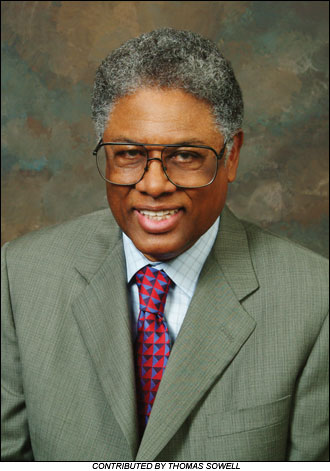
By Thomas Sowell
Somebody eventually had to say it -- and German chancellor Angela Merkel deserves credit for being the one who had the courage to say it out loud. Multiculturalism has "utterly failed."
Multiculturalism is not just a recognition that different groups have different cultures. We all knew that, long before multiculturalism became a cult that has spawned mindless rhapsodies about "diversity," without a speck of evidence to substantiate its supposed benefits.
In Germany, as in other countries in Europe, welcoming millions of foreign workers who insist on remaining foreign has created problems so obvious that only the intelligentsia could fail to see them. It takes a high IQ to evade the obvious.
"We kidded ourselves for a while," Chancellor Merkel said, but now it was clear that the attempt to build a society where people of very different languages and cultures could "live side-by-side" and "enjoy each other" has "failed, utterly failed."
This is not a lesson for Germany alone. In countries around the world, and over the centuries, peoples with jarring differences in language, cultures and values have been a major problem and, too often, sources of major disasters for the societies in which they co-exist.
Even the tragedies and atrocities associated with racial differences in racist countries have been exceeded by the tragedies and atrocities among people with clashing cultures who are physically indistinguishable from one another, as in the Balkans or Rwanda.
Among the ways that people with different cultures have managed to minimize frictions have been (1) mutual cultural accommodations, even while not amalgamating completely, and (2) living separately in their own enclaves. Both of these approaches are anathema to the multicultural cultists.
Expecting any group to adapt their lifestyles to the cultural values of the larger society around them is "cultural imperialism" according to the multicultural cult. And living in separate neighborhoods is considered to be so terrible that there are government-financed programs to take people from high-crime slums and put them in subsidized housing in middle-class neighborhoods.
Multiculturalists condemn people's objections to transplanting hoodlums, criminals and dysfunctional families into the midst of people who may have sacrificed for years to be able to escape from living among hoodlums, criminals and dysfunctional families.
The actual direct experience of the people who complain about the consequences of these social experiments is often dismissed as mere biased "perceptions" or "stereotypes," if not outright "racism." But some of the strongest complaints have come from middle-class blacks who have fled ghetto life, only to have the government transplant ghetto life back into their midst.
The absorption of millions of immigrants from Europe into American society may be cited as an example of the success of multiculturalism. But, in fact, they were absorbed in ways that were the direct opposite of what the multicultural cult is recommending today.
Before these immigrants were culturally assimilated to the norms of American society, they were by no means scattered at random among the population at large. On New York's lower east side, Hungarian Jews lived clustered together in different neighborhoods from Romanian Jews or Polish Jews -- and German Jews lived away from the lower east side.
When someone suggested relieving the overcrowding in the lower east side schools by transferring some of the children to a school in an Irish neighborhood that had space, both the Irish and the Jews objected.
None of this was peculiar to America. When immigrants from southern Italy to Australia moved into neighborhoods where people from northern Italy lived, the northern Italians moved out. Such scenarios could be found in countries around the world.
It was in later generations, after the children and grandchildren of the immigrants to America were speaking English and living lives more like the lives of other Americans, that they spread out to live and work where other Americans lived and worked. This wasn't multiculturalism. It was common sense.
10/18/2010
Some Context on the Wilders Case
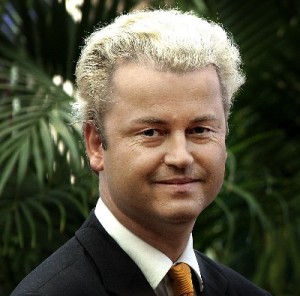
Via-NRO
By Nina Shea
Geert Wilders is the latest in a lengthening roster of Europeans who have been criminally prosecuted for criticizing Islam. Under the slogans of stopping “Islamophobia” and banning “defamation” or “insult” of Islam, for two decades a concerted demand has been made for the West to enforce Islamic blasphemy rules, as is customary in certain member states of the Organization of the Islamic Conference.
The Netherlands has been among the many EU states struggling to comply. In the name of liberalism, it has enacted laws criminalizing “hate speech,” with grossly illiberal results. A sample of the Dutch cases shows that the desire to protect minorities is a self-deluding piety in these circumstances. What really lies at the root of these vaguely defined and arbitrarily adjudicated cases is fear of Muslim violence.
One of the earliest such Western cases occurred in the Netherlands in 1992, a few years after Iran’s fatwa against Salman Rushdie triggered murders of “blasphemers” connected with his book The Satanic Verses. A Muslim cabaret artist of Pakistani background, “Zola F,” was found guilty of authoring an unflattering book about Muslim immigration, entitled The Impending Ruin of the Netherlands, Country of Gullible Fools. This created the anomaly of a white court condemning a brown immigrant for “racist hate speech.”
Ayaan Hirsi Ali, an ex-Muslim of African heritage who became a Dutch parliamentarian, was similarly prosecuted. She was charged for criticizing the Islamic teaching on killing homosexuals. Already known for her role in co-directing Submission (the film on abuses against Muslim women that led to the 2004 murder by a Muslim extremist of her co-director, Theo Van Gogh), she announced plans for a sequel on the treatment of homosexuals in Islam. This prompted the Netherlands’ main Muslim lobby to register a complaint that her remarks were “blasphemous and have been received with a great deal of pain by the Muslim community.” In 2005, after two years of legal proceedings for “incitement” to hatred, during which time she received numerous death threats and had to go into hiding, a court finally decided that although she had “sought the borders of the acceptable,” her speech did not warrant prohibition, and she was let off.
Hate-speech arrests occurred in the aftermath of the Van Gogh murder. When an artist in Rotterdam painted a street mural that included the commandment “Thou shalt not kill” next to the date of Van Gogh’s murder, a local mosque leader complained to police that the message was “racist.” The police, on orders of the mayor, sandblasted the mural and arrested a television reporter at the scene and destroyed his film. Another Dutch man hung in his window a poster for a far-right movement that stated, “Stop the tumor that is Islam. Theo has died for us. Who will be next?” After being convicted by two lower courts, he finally prevailed on appeal.
Widespread Muslim violence and protest over the Danish cartoons of Mohammed has put Dutch officials on high alert for provocative caricaturists. In 2008, after an Internet monitoring group reported him to authorities for cartoons deemed insulting to Muslims, the edgy Dutch cartoonist Gregorius Nekschot was arrested. Police seized his computer’s hard drive and cartoon sketches. The cartoons in question opposed Muslim immigration in various tasteless ways. Nekschot remains under suspicion of “insulting people on the basis of their race or belief, and possibly also of inciting hate,” and could face two years in prison or a $25,000 fine if prosecuted. During the course of this case, it was revealed that the Dutch government had established an “Interdepartmental Working Group on Cartoons,” apparently to apprise officials of any drawings that Muslims could find insulting.
The Wilders case is not unique, but it is important. It demonstrates the continued willingness of authorities in Europe’s most liberal countries to regulate the content of speech on Islam in order to placate Muslim blasphemy demands. Few such cases end in conviction, but their chilling effect on free speech within and on Islam continues to widen.
— Nina Shea directs the Hudson Institute’s Center for Religious Freedom and co-authored the forthcoming book Silenced (Oxford University Press), on contemporary blasphemy rules.
10/16/2010
Merkel says German multicultural society has failed

Via-BBC
German Chancellor Angela Merkel: "lmmigrants should learn to speak German"
Attempts to build a multicultural society in Germany have "utterly failed", Chancellor Angela Merkel says.
In a speech in Potsdam, she said the so-called "multikulti" concept - where people would "live side-by-side" happily - did not work.
Mrs Merkel's comments come amid recent outpourings of strong anti-immigrant feeling from mainstream politicians.
A recent survey showed that more than 30% of Germans believed Germany was "overrun by foreigners".
The study - by the Friedrich Ebert Foundation think-tank - also showed that roughly the same number thought that some 16 million of Germany's immigrants or people with foreign origins had come to the country for the social benefits.
Foreign workers
Mrs Merkel told a gathering of younger members of her conservative Christian Democratic Union (CDU) party on Saturday that at "the beginning of the 60s our country called the foreign workers to come to Germany and now they live in our country... We kidded ourselves a while, we said: 'They won't stay, sometime they will be gone', but this isn't reality.
"And of course, the approach [to build] a multicultural [society] and to live side-by-side and to enjoy each other... has failed, utterly failed."
In her speech, the chancellor specifically referred to recent comments by German President Christian Wulff who said that Islam was "part of Germany" like Christianity and Judaism
While acknowledging that this was the case, Mrs Merkel stressed that immigrants living in Germany needed to do more to integrate, including learning to speak German.
"Anyone who does not immediately speak German", she said, "is not welcome".
By speaking now, Mrs Merkel has now joined the increasingly hot debate on multiculturalism, coming down on the side of those who are uneasy about immigration, says the BBC's correspondent in Berlin, Stephen Evans.
Her comments come a week after she held talks with Turkish Prime Minister Recep Tayyip Erdogan, in which the two leaders pledged to do more to improve the often poor integration record of Germany's estimated 2.5 million-strong Turkish community.
Earlier this week, Horst Seehofer, the leader of the CDU's Bavarian sister party, CSU, said about integration that it was "obvious that immigrants from different cultures like Turkey and Arab countries, all in all, find it harder".
"'Multikulti' is dead," Mr Seehofer said.
In August, Thilo Sarrazin, a senior official at Germany's central bank, said that "no immigrant group other than Muslims is so strongly connected with claims on the welfare state and crime". Mr Sarrazin has since resigned.
Such recent strong anti-immigrant feelings from mainstream politicians come amid an anger in Germany about high unemployment, even if the economy is growing faster than those of its rivals, our correspondent says.
He adds that there also seems to be a new strident tone in the country, perhaps leading to less reticence about no-go-areas of the past.
6/25/2010
Is Europe Awakening to Islamist Threat?
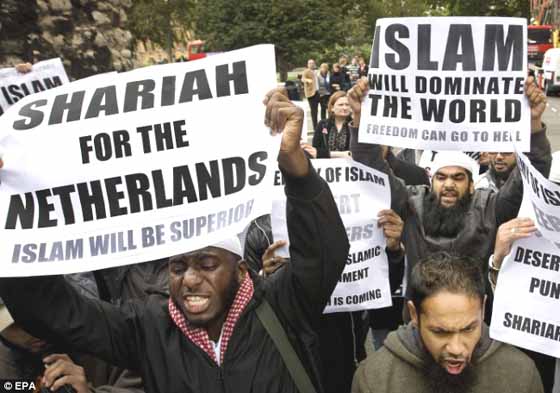
Europe may still lean significantly to the left, but a rightward shift fueled by Muslim immigration problems has begun. Just look at the Netherlands.
Via-Pajamas Media
Barry Rubin
The political situation in Europe today is quite different from the stereotype of a continent hostile to the United States (even if Obama is personally popular) and Israel, appeasement-oriented toward Iran and revolutionary Islamism, and eagerly multicultural and politically correct.
True, it is more oriented in that direction than North America, but there is a real struggle afoot.
In many countries — notably the Netherlands, Italy, Spain, Germany, and to a slightly lesser extent the United Kingdom and France — the partisan gap between the left and center-right marks a boundary of much greater significance than a decade or two ago. Although each situation is different, the parties of the left tend to be more anti-American and anti-Israel and less alert to the threat of revolutionary Islamism, as well as favor continued large-scale immigration and big-state, big-spending policies.
Take the Netherlands as a case study. After elections last month, the parties of the center-right hold 83 seats, while those of the left have 67. Since there are ten parties in parliament, talks to form a coalition government will last for weeks, especially since the two largest have only twenty percent each. In the elections, only three seats changed hands between blocs.
But the big news was the shift within the center-right — the rise of the People’s Party for Freedom and Democracy (PVV) led by the controversial Geert Wilders, which almost tripled its presence from 9 to 24 seats. To his enemies, almost no epithet is too extreme to throw at Wilders. The flamboyant Wilders has been outspoken in opposing immigration, especially that of Muslims, making a sharp critique of political Islamism and sometimes Islam itself.
The power of the Dutch state was turned on Wilders, who is currently on trial for making statements which in America would fall well within constitutional protection. State television ran documentaries during the election designed to paint him as a virtual Nazi.
What is Wilders’ program? First, a sharp limitation on asylum seekers admitted into the country, and none from Muslim-majority states. No dual nationality, no new mosques, no separate Islamic schools, no wearing of burqas, and no government subsidies for Islamic media. Mosques where violence is propagated will be closed. Heavy punishment for female circumcision. For their first ten years in Holland, immigrants receive no social benefits or citizenship. At the end of that period, those with no criminal record will receive full citizenship.
The rise in support for Wilders’ party is in large part a response to serious concern over the domestic situation in the country. Aside from the assassination of a filmmaker by a radical Islamist, there has been a steep increase in crime and social welfare spending. Amsterdam, not long ago the most gay-friendly city in the world, is a place where homosexuals might be attacked in the streets by Muslim immigrant youth. A recent television program followed three Jews wearing identifiable garb as they strolled around the city, being harassed and insulted.
Twenty percent of Dutch teachers report that attempts to teach about the Holocaust, in the country of Anne Frank, were rejected or disrupted by immigrant children.
While Muslims still comprise only a bit more than 5 percent of the population, whole areas of Dutch cities have a majority of people who are recent immigrants and whose commitment to assimilation into the country’s continued norms is questionable. For example, it is frequently estimated that up to half the country’s Muslim population is sympathetic to the September 11 attacks.
One of the main arguments against mass immigration is that it is incredibly costly to Dutch taxpayers. It is possible to be suspicious of a report commissioned by Wilders showing that the cost is 7.2 billion euros a year to a country of about 16 million people. But in fact that report was written by the country’s most respected independent think tank, and the estimate is not that much higher than the government’s own estimate of 6 billion a year.
And here’s where it gets interesting. For while the focus was on Wilders’ PVV, the second biggest winner was the mainstream conservative (in European terminology, liberal) Party for Freedom (VVD), which went from 22 to 31 seats. The VVD favors lower taxes, smaller government, AND less government regulation. While Wilders often focuses his criticism on Islam itself, the VVD is quite critical of radical Islamism.
And though the VVD’s positions are less extreme than Wilders’, it also favors serious reductions in immigration, the closing of mosques where radical doctrines are preached, and the denial of social welfare payments for immigrants during their first decade in the country. These two parties received one-third of the vote, and three Christian parties, from whose voters Wilders and the VVD obtained their increased support, have somewhat similar stances.
For instance, here’s what the platform of the Christian Union, the most liberal — in the American sense of that word — of these parties, states:
Every Dutchman has the right to assembly, to religion and to express his opinion. But financial support of Dutch political, cultural, and religious institutes from demonstrably non-free countries (such as Saudi-Arabia and Iran) is not permitted. It’s allowed to protect a free society from the importation of bondage.
It also supports banning the burqa from public buildings, public transport, and schools.
A similar pattern emerges regarding stances toward Israel. Wilders is an outspoken supporter, but the other parties are also sympathetic — though there is an anti-Israel minority in the VVD. The foreign minister, for example, a Christian Democrat, said that Israel was entitled to stop Gaza flotilla ships in international waters, refused to condemn Israel’s actions, and supports tough sanctions on Iran’s nuclear program. While the four non-Wilders center-right parties are more nuanced in their attitude than decades ago, they are certainly not knee-jerk anti-Israel in their positions.
Thus, about 55 percent of Dutch voters backed parties that want a real change in key policies.
Why is nothing dramatic likely to happen? Because 45 percent endorsed parties on the left, and given the Dutch passion for consensus, the existence of so many parties, and the reluctance of the VVD to bring Wilders’ party into government, some kind of broad coalition will likely emerge.
The largest party on the left, Labor — led by former Amsterdam mayor Job Cohen — got less than half of the overall vote. It can be described now as the party of the Dutch status quo — that is, continuation of existing policies. Despite being led by a nominal Jew, it is very critical of Israel and totally uncritical of Hamas. The left favors increases in taxes and government power.
Outsiders would view this situation of deadlock between two sides with such different overall visions of Dutch politics and society as a big problem. In contrast, the Dutch believe they thrive on this kind of paradox, finding some compromise to ease them through. Yet can a major crisis be long avoided given the economic and social issues faced by the Netherlands and so many other European states today?
2/20/2009
Czech president compares EU to Soviet Union

BRUSSELS – The European Union has turned into an undemocratic and elitist project comparable to the Communist dictatorships of eastern Europe that forbade alternative thinking, Czech President Vaclav Klaus told the European Parliament on Thursday.
Klaus, whose country now holds the rotating EU presidency, set out a scathing attack on the EU project and its institutions, provoking boos from many lawmakers, some of whom walked out, but applause from nationalists and other anti-EU legislators.
Klaus is known for deep skepticism of the EU and has refused to fly the EU flag over his official seat in Prague during the Czech presidency, saying the country is not an EU province.
He said current EU practices smacked of communist times when the Soviet Union controlled much of eastern Europe, including the Czech Republic and when dissent or even discussions were not tolerated.
"Not so long ago, in our part of Europe we lived in a political system that permitted no alternatives and therefore also no parliamentary opposition," said Klaus. "We learned the bitter lesson that with no opposition, there is no freedom."
He said the 27-nation bloc should concentrate on offering prosperity to Europeans, rather than closer political union, and scrap a stalled EU reform treaty that Irish voters have already rejected.
Klaus said that questioning deeper integration has become an "uncriticizable assumption that there is only one possible and correct future of the European integration."
"The enforcement of these notions ... is unacceptable," Klaus said. "Those who dare thinking about a different option are labeled as enemies." Observers had been expecting Klaus to deliver a critical speech during his first and only visit to the EU chamber at a time when his country holds the EU limelight as chair of the 27-nation bloc.
"I have never experienced a situation where the presidency of the European Union ... compares the EU with the Soviet Union," said Belgian lawmaker Ivo Belet.
More...
Complete Original Article
Subscribe to:
Posts (Atom)