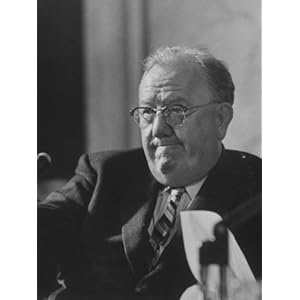
The burden of those who love freedom is to not only to protect liberty but to explain the superiority of it.
Showing posts with label Paul Ryan. Show all posts
1/26/2013
The Road Back-Paul Ryan
I’m happy to see so many friends in the audience. And I’m honored to speak to such distinguished guests. I’d say this is, perhaps, the greatest collection of conservative talent ever gathered in one room—with the possible exception of when William F. Buckley dined alone.
I started reading Buckley in college, when one of my economics professors gave me a copy of National Review. And I’ve been reading it ever since. The masthead has changed over the years. When I came to Washington, many of you were just starting out. You were landing your first jobs as writers and editors. Over time, I came to recognize your bylines—and to value your counsel. So, thank you, for 20 years of good advice.
Today, though, you’re asking for my advice—under less-than-ideal circumstances. As you’ll recall, there was an election last year. And it didn’t go our way. Like you, I understand full well that elections have consequences. The vice president’s home is just a few blocks away. And, like you, I’m disappointed. I was looking forward to taking on the big challenges. My kids were looking forward to having a pool.
But there are two ways to respond to defeat: Either you can deny it, or you can learn from it. I choose to learn from it. The way I see it, our defeat is all the more reason to lay out our vision with even more specifics—and with a broader appeal. It will be difficult without a partner in the White House. But I’m a glass-half-full kind of guy. I know we can do it.
That said, we have to deal with the fact that President Obama has a second term. That’s the topic of my talk today. A second term will present new challenges to our side—and new opportunities. To take advantage of them, we will need something we occasionally overlook. We will need prudence. I’d like to explain what that is and why we need it.
First, the context: In the president’s first term, we argued against big government in theory. In his second, we will argue against it in practice. Obamacare is no longer just a 2,000-page bill. Now, it’s 13,000 pages of regulations. And it’s growing. This year, the law will restrict our ability to use flexible-spending accounts. It will even raise taxes on life-saving medical devices. And that’s just health care. Now that the president is implementing his agenda, we’ll see that the benefits are far less than advertised.
And the costs? Well, they’re huge. We spend $1 trillion more than we take in each year. And we can’t keep that up. If we stay on this path, we will run the risk of a debt crisis. Our finances will collapse. Our economy will stall. We have to convince the country to change course.
We have to reform entitlements. And, ultimately, we have to revisit the health-care law. Clearly, President Obama doesn’t want us to get that chance. He wants his last two years to look like his first two years. He wants to perpetuate progressive government—for at least a generation—because he thinks it’s the right thing to do. And to do that, he needs to delegitimize the Republican Party—and House Republicans, in particular. He’ll try to divide us with phony emergencies and bogus deals. He’ll try to get us to fight with each other—to question each other’s motives—so we don’t challenge him.
If we play into his hands, we will betray the voters who supported us—and the country we mean to serve. We can’t let that happen. We have to be smart. We have to show prudence.
What do I mean? Well, prudence is good judgment in the art of governing. Abraham Lincoln called it “one of the cardinal virtues.” And it’s our greatest obligation as public servants. We have to find the good in every situation—and choose the best means to achieve it. We have to make decisions anchored in reality—and take responsibility for the consequences. The prudent man is like a captain at sea. He doesn’t curse the wind. He uses it—to reach his destination.
I’m not saying we should be excessively cautious. When we see an opening—however small—we should take it. What I’m saying is, if we want to promote conservatism, we’ll need to use every tool at our disposal. Sometimes, we’ll have to reject the president’s proposals. And sometimes, we’ll have to make them better.
The president will bait us. He’ll portray us as cruel and unyielding. Just the other day, he said Republicans had “suspicions” about Social Security. He said we had “suspicions” about feeding hungry children. He said we had “suspicions” about caring for the elderly. Look, it’s the same trick he plays every time: Fight a straw man. Avoid honest debate. Win the argument by default.
The way he tells it, it’s the president—and only the president—who’s trying to fix our bridges, to feed our children, to care for seniors, to clean our water. Frankly, he must be exhausted. I know we are.
But we can’t get rattled. We won’t play the villain in his morality plays. We have to stay united. We have to show that—if given the chance—we can govern. We have better ideas.
11/13/2012
9/15/2012
3/17/2012
Well, Why Isn’t He Running for President?
Via-The Corner
If this really is the most important election of our lifetime — an existential duel — it might behoove the Republicans to start acting like it.
4/05/2011
Paul Ryan's Homer Capehart Problem
Via-American Spectator
By Jeffrey Lord
Can Paul Ryan avoid becoming the next Homer Capehart? And if so, how?
Homer Capehart, after all, was right.
Early.
The issue was in fact just as real as he said it was and every bit as dangerous.
He stood up when few were willing and said why it was dangerous -- over and over again. He called the President of the United States to task for not paying attention. There would be extremely serious consequences for ignoring the problem, he insisted. He spoke, he pleaded, he demanded. He did everything up to and including begging for something to be done. He even presented two different ways to deal with this problem. And still, he was brushed off. Dismissed by the so-called sophisticates of the day -- in the White House, the Congress and certainly in the dominant liberal media of the day -- the latter more than effectively the only media of the day.
Who was Homer Capehart? He was, in the summer of 1962, the conservative Republican who was serving as the senior Senator from Indiana. What was he so concerned about?
The Soviet Union, he insisted, was in the process of installing nuclear missiles in Cuba. Intermediate range nuclear missiles that could reach anywhere on the American East Coast. America, Capehart insisted, was on the verge of opening itself to nuclear blackmail. The U.S. government and John F. Kennedy's administration, he warned, should bring an immediate halt by either blockading the island -- or invading it.
And no one -- no one of any consequence -- listened. The President, assuredly not a hard left-winger as so many Democrats are today, was nonetheless scornful of Capehart. He rejected Capehart's demands, and made a point in a campaign speech in Indiana where Capehart was running for re-election to deride the Senator as one of "those self-appointed generals and admirals who want to send someone else's son to war."
Cuba had been a thorn in the Kennedy administration's side from the moment the new President had taken office. An inexperienced Kennedy White House had thoroughly botched the Bay of Pigs invasion, in which armed Cuban exiles were prepared to storm the imprisoned island and depose Castro. Instead of either vetoing the project outright or getting it done, the very-green president did the worst thing possible: he wavered, half-in (a covert promise of air support) and half-out (refusing the air support when the invasion actually launched). The incident sent a signal to Soviet leader Nikita Khrushchev that Kennedy was weak -- an impression reinforced at a summit meeting shortly thereafter between the two men. In Vienna, now face-to-face, the Russian legendarily played the unchallenged bully, something Kennedy himself realized at the time. The Berlin Wall went up shortly thereafter in August of 1961 -- and again Kennedy gave the impression of weakness, allowing the Wall to stand.
Capehart was convinced there was more to come.
By the summer of 1962, Capehart, a successful entrepreneur who had made a fortune in the jukebox industry, had used his time in the Senate to focus on Latin American affairs. He was alarmed at the information he was receiving. Not a shy man -- but alas in the day when everyone was worshipping the youth and style of the young president and his administration -- Capehart was a decidedly old-fashioned, style-less and older man from rural Indiana. Homer Capehart was worse than informed -- he was out of style. Mocked by the so-called "best and the brightest" on Kennedy's team as "the Indiana Neanderthal." So instead of being listened to, Homer Capehart was derided. Administration officials, ruefully recalled Kennedy's White House Counsel and close aide Theodore Sorensen, responded to Capehart and "flatly asserted that no offensive weapons were in Cuba." Period, end of story.
Months went by -- and then -- reality hit. And it hit hard. Frighteningly hard.
Air Force reconnaissance flights were authorized -- finally. And the results shocked Kennedy. The photos revealed in vivid detail that everything Homer Capehart had been saying for months was absolutely, positively true. In a blink, the Cuban Missile Crisis burst onto the public consciousness, precisely as Capehart said would happen. For thirteen dramatic days in October of 1962 America and the world would teeter on the brink of all-out nuclear war. To this day the episode is the subject of books and movies depicting the calm young president and his brother Bobby tensely working to defuse the crisis and save the world. Repeatedly downplayed when not ignored altogether (Kennedy aide and hagiographer, the late Arthur Schlesinger Jr., mentions Capehart but once in his massive Camelot memoir A Thousand Days -- in reference to the fact that Capehart served on the Senate Labor Committee. That was it.) The more forthright Sorensen noted that a shocked Robert Kennedy confessed his brother's stubborn refusal in not paying attention to Homer Capehart could mean "sixty million Americans killed and as many Russians or more."
The Kennedys rallied and saved the day -- by taking Capehart's exact suggestion of a blockade and re-making it into a clever piece of iconography for RFK. Bobby Kennedy opposed an invasion of Cuba, Capehart's other suggestion, and in adapting the blockade as his own less aggressive alternative to invasion Bobby was portrayed by an all-too-unquestioning media of the day as the young "wise man" who saved the world from nuclear war. Much later historical quibbles developed about secret pledges to remove American missiles in Turkey and a promise never to invade Cuba. But in the day and time the Kennedy White House, caught asleep at the switch again in Cuba, hastily did exactly what Capehart had long demanded -- a naval blockade of Cuba. And took credit for it. And got away with it.
What frequently gets lost in the Kennedy-crazed media of today is the role of Homer Capehart -- then 65 and in the last year of his third term. Described by Time magazine in the day as a "codger," Capehart's alarms were dismissed as so much right-wing grandstanding.
The irony, of course, is that Capehart turned out to be 100% correct with his alarms of what lay ahead. A bitter JFK muttered in astonishment that Capehart was going to be known as a Midwestern Churchill for his accurate warnings. Having written a book as a college senior called Why England Slept, an account of Churchill's futile efforts to arouse his countrymen to the danger of Adolf Hitler and the Nazis before it was too late to avoid war, Kennedy was particularly stung that he himself was now in danger of being portrayed as some sort of American version of the appeasing British Prime Minister Neville Chamberlain -- ignoring Capehart's Churchillian warnings about missiles in Cuba. JFK resolved not to let this image stick -- and it didn't.
And this is where Paul Ryan confronts a modern version of Capehart's problem.
By the end of those thirteen days in 1962, there being no talk radio or Fox News to suggest otherwise or raise questions about how the Kennedys and the Democrats could have gotten such a basic reality so terribly, almost tragically wrong, literally leading the nation and the world to the edge of a nuclear holocaust, JFK was seen instead as a tough, skillful and Churchillian hero for his resolution of the crisis.
And Homer Capehart?
With the liberal media of the day unchallenged in their determined effort to make JFK a hero, Capehart's "I-told-you-so's" were swept aside -- and he lost his Senate seat that fall of 1962 to a young Indiana Democrat state legislator named Birch Bayh, the father of today's now-former Senator Evan Bayh.
THERE'S A LESSON HERE in this usually forgotten episode of American history -- the Homer Capehart story.
A lesson especially for Congressman Ryan and his House GOP colleagues as Ryan, the House Budget Committee chairman, today presents his much awaited 2012 budget. According to the Wall Street Journal , Ryan's budget "would cut more than $4 trillion from federal spending projected over the next decade and transform the Medicare health program for the elderly" -- the latter move's political effect perhaps understated by the WSJ when it says Ryan's audacious plan "will dramatically reshape the budget debate in Washington."
This is a serious, real-time effort to awaken the country even further than it was in 2010. An effort, as Thomas Jefferson once said of the growing political struggle over slavery, to ring a "firebell in the night."
Paul Ryan, like Homer Capehart, is a soothsayer. Someone who accurately, cleanly and crisply can survey the landscape of the moment and understand the meaning of events. It is a role for which one is rarely if ever appreciated at the time.
Winston Churchill is perhaps the all-time champion when it comes to this almost-never appreciated-except-in-hindsight talent. It is said that on the night in September of 1938 that the news of Chamberlain's "peace-in-our-time" Munich pact with Hitler reached London, Churchill passed the open door of a bustling restaurant in the exclusive Savoy Hotel. Hearing the sounds of clinking glasses and laughter from the oblivious crowd of upper class Brits, many of whom had spent the 1930s ignoring Churchill's repeated warnings, Churchill paused for a moment to gloomily take in the scene.
Many in the British upper class agreed with Britain's Lord Maugham, who haughtily dismissed Churchill as an "agitator" who needed to be "shot or hanged" for his obstreperous opposition to Chamberlain's repeated appeasement of Hitler in the lead-up to Munich. Watching the diners drink fine liquor and eat expensive, plentiful food Churchill quietly brooded aloud to a colleague: "Those poor people. They little know what they will have to face." When the horror Churchill foresaw finally came -- World War II and specifically the Blitz, the bombing of London by the Nazis -- over 20,000 Londoners were ruthlessly slaughtered over 76 nights of bombing, with a million homes destroyed or damaged. Whether that number included anyone dining in the Savoy that September night of 1938 will never be known. That those Londoners who managed to survive the war later deeply regretted not paying attention to Churchill is now well-recorded if deeply, disturbing history.
Like clockwork Ryan is being attacked for his stark attention to the facts on the ground regarding the deficit and the American economy. Although much younger than Homer Capehart, this fellow Midwesterner's vision about what lies ahead is just as sharp and clear as was Capehart's about what was brewing in Cuba. "There is nobody," Ryan said on Fox News Sunday with Chris Wallace, who is "saying that Medicare can stay in its current path. We should not be measuring ourselves against some mythical future of Medicare that isn't sustainable." Already Maryland Democrat Chris Van Hollen, a key architect of the Democrat's 2010 defeat as the then-head of the Democrats Congressional Campaign Committee, thinks the way to recoup the Democrats' losses is by going after his House Republican colleague for "shifting the risk and burden of rising health-care costs to seniors on Medicare….you're on your own with the insurance industry."
This, of course, is the standard "Republicans want to throw grandma in the snow" argument. It is the domestic version of the "warmonger" argument that was hurled at Homer Capehart in 1962. Not to mention Winston Churchill before him and Ronald Reagan after him.
Make no mistake, Paul Ryan has this argument dead to rights. So, alas, did Capehart on missiles in Cuba. But there is a huge difference between being right and being able to get the right thing done -- and particularly getting the right thing done in time to avert calamity. Homer Capehart was right. But he was unable to prevent what exploded into the Cuban Missile Crisis. Winston Churchill was right. But having spent the last five years futilely warning his countrymen of what lay ahead unless they changed course, he would not hold events in his hands until almost two years after that fateful night at the Savoy Hotel. By then Churchill was there to rescue his country from an all-out war that was already terrifyingly well-in-progress.
America is now sniffing at the edges of economic calamity. States teeter on the edge of bankruptcy, and the ruin of both Medicare and Social Security loom. Inflation is on the march. Paul Ryan's "missiles in Cuba" is precisely a sharply accurate view of what will happen if the Obama White House and its left-wing allies carry the day. He may well wind up being the most honored man of say, 2075 -- but in 2011 Obama and company are prepared to come down on him -- and anyone who stands with him -- like a political ton of bricks.
WHICH IS PRECISELY WHY the importance of conservative media. In 1962, not only was there no media infrastructure to look into Capehart's allegations in any serious way. There simply was no intent whatsoever to give him the time of day. There was no Fox, no talk radio and William F. Buckley's National Review was still in its infancy. Worse, Capehart was viewed disdainfully by the Republican power structure of the day -- he had been a vocal opponent of Dwight Eisenhower's "Modern Republicanism" (what might be called RINO-ism today) -- surfacing issues of class, money, and power that would erupt two years later in the Goldwater-Rockefeller fight not just for the GOP presidential nomination but for control of the GOP itself.
Ryan is in a different position altogether today. The talk radio circuit is not only there to support Ryan -- to examine what he's doing and give him a platform -- if anything it is carefully scrutinizing his House Republican colleagues for signs that they are going "wobbly," as Margaret Thatcher once famously said to then President George H.W. Bush on the eve of the Gulf War. Ryan's baselines and his numbers and his budget ideas are already being given time on Fox -- tested, talked about, and debated.
In other words, this time around, facing yet another issue that is unmistakably black-and-white, another issue that has extremely dangerous implications for the country, reinforcements in the media are here as Ryan takes his budget issue public and demands that it be dealt with.
"We can't keep kicking this can down the road," Ryan said in his Fox interview, a remark that was noted here yesterday by my colleague James Antle. "The president has punted. We're not going to follow suit."
Will the GOP let the government shut down? All of it? Part of it? Just last night as this went to Internet print an agreement was said to be reached between House Republicans that was bannered as "more aggressive." Rumored: $12 billion cuts in a week per a hasty Fox News "Breaking News" bulletin. Will Ryan and House Republicans not just stand their ground but move out front and boldly reshape what has effectively been the major domestic debate of the last eight decades?
We will see.
But this issue is in reality about a war to save the American economy -- if not America itself. It is not simply about the humdrum my-eyes-glaze-over routine of a budget battle. Those missiles that Capehart correctly warned about as a looming disaster for America have been replaced by the incoming of a $14 trillion deficit that is every bit as dangerous and deadly in its own way as an incoming nuclear missile from Cuba would have been.
This is a very, very big deal. And 2011 is not 1962.
In spite of all the chop-licking by the Howard Deans and Chuck Schumers of the world, Paul Ryan is not going to become Homer Capehart.
There's too much at stake.
This time, the American people know too much.
By Jeffrey Lord
Can Paul Ryan avoid becoming the next Homer Capehart? And if so, how?
Homer Capehart, after all, was right.
Early.
The issue was in fact just as real as he said it was and every bit as dangerous.
He stood up when few were willing and said why it was dangerous -- over and over again. He called the President of the United States to task for not paying attention. There would be extremely serious consequences for ignoring the problem, he insisted. He spoke, he pleaded, he demanded. He did everything up to and including begging for something to be done. He even presented two different ways to deal with this problem. And still, he was brushed off. Dismissed by the so-called sophisticates of the day -- in the White House, the Congress and certainly in the dominant liberal media of the day -- the latter more than effectively the only media of the day.
Who was Homer Capehart? He was, in the summer of 1962, the conservative Republican who was serving as the senior Senator from Indiana. What was he so concerned about?
The Soviet Union, he insisted, was in the process of installing nuclear missiles in Cuba. Intermediate range nuclear missiles that could reach anywhere on the American East Coast. America, Capehart insisted, was on the verge of opening itself to nuclear blackmail. The U.S. government and John F. Kennedy's administration, he warned, should bring an immediate halt by either blockading the island -- or invading it.
And no one -- no one of any consequence -- listened. The President, assuredly not a hard left-winger as so many Democrats are today, was nonetheless scornful of Capehart. He rejected Capehart's demands, and made a point in a campaign speech in Indiana where Capehart was running for re-election to deride the Senator as one of "those self-appointed generals and admirals who want to send someone else's son to war."
Cuba had been a thorn in the Kennedy administration's side from the moment the new President had taken office. An inexperienced Kennedy White House had thoroughly botched the Bay of Pigs invasion, in which armed Cuban exiles were prepared to storm the imprisoned island and depose Castro. Instead of either vetoing the project outright or getting it done, the very-green president did the worst thing possible: he wavered, half-in (a covert promise of air support) and half-out (refusing the air support when the invasion actually launched). The incident sent a signal to Soviet leader Nikita Khrushchev that Kennedy was weak -- an impression reinforced at a summit meeting shortly thereafter between the two men. In Vienna, now face-to-face, the Russian legendarily played the unchallenged bully, something Kennedy himself realized at the time. The Berlin Wall went up shortly thereafter in August of 1961 -- and again Kennedy gave the impression of weakness, allowing the Wall to stand.
Capehart was convinced there was more to come.
By the summer of 1962, Capehart, a successful entrepreneur who had made a fortune in the jukebox industry, had used his time in the Senate to focus on Latin American affairs. He was alarmed at the information he was receiving. Not a shy man -- but alas in the day when everyone was worshipping the youth and style of the young president and his administration -- Capehart was a decidedly old-fashioned, style-less and older man from rural Indiana. Homer Capehart was worse than informed -- he was out of style. Mocked by the so-called "best and the brightest" on Kennedy's team as "the Indiana Neanderthal." So instead of being listened to, Homer Capehart was derided. Administration officials, ruefully recalled Kennedy's White House Counsel and close aide Theodore Sorensen, responded to Capehart and "flatly asserted that no offensive weapons were in Cuba." Period, end of story.
Months went by -- and then -- reality hit. And it hit hard. Frighteningly hard.
Air Force reconnaissance flights were authorized -- finally. And the results shocked Kennedy. The photos revealed in vivid detail that everything Homer Capehart had been saying for months was absolutely, positively true. In a blink, the Cuban Missile Crisis burst onto the public consciousness, precisely as Capehart said would happen. For thirteen dramatic days in October of 1962 America and the world would teeter on the brink of all-out nuclear war. To this day the episode is the subject of books and movies depicting the calm young president and his brother Bobby tensely working to defuse the crisis and save the world. Repeatedly downplayed when not ignored altogether (Kennedy aide and hagiographer, the late Arthur Schlesinger Jr., mentions Capehart but once in his massive Camelot memoir A Thousand Days -- in reference to the fact that Capehart served on the Senate Labor Committee. That was it.) The more forthright Sorensen noted that a shocked Robert Kennedy confessed his brother's stubborn refusal in not paying attention to Homer Capehart could mean "sixty million Americans killed and as many Russians or more."
The Kennedys rallied and saved the day -- by taking Capehart's exact suggestion of a blockade and re-making it into a clever piece of iconography for RFK. Bobby Kennedy opposed an invasion of Cuba, Capehart's other suggestion, and in adapting the blockade as his own less aggressive alternative to invasion Bobby was portrayed by an all-too-unquestioning media of the day as the young "wise man" who saved the world from nuclear war. Much later historical quibbles developed about secret pledges to remove American missiles in Turkey and a promise never to invade Cuba. But in the day and time the Kennedy White House, caught asleep at the switch again in Cuba, hastily did exactly what Capehart had long demanded -- a naval blockade of Cuba. And took credit for it. And got away with it.
What frequently gets lost in the Kennedy-crazed media of today is the role of Homer Capehart -- then 65 and in the last year of his third term. Described by Time magazine in the day as a "codger," Capehart's alarms were dismissed as so much right-wing grandstanding.
The irony, of course, is that Capehart turned out to be 100% correct with his alarms of what lay ahead. A bitter JFK muttered in astonishment that Capehart was going to be known as a Midwestern Churchill for his accurate warnings. Having written a book as a college senior called Why England Slept, an account of Churchill's futile efforts to arouse his countrymen to the danger of Adolf Hitler and the Nazis before it was too late to avoid war, Kennedy was particularly stung that he himself was now in danger of being portrayed as some sort of American version of the appeasing British Prime Minister Neville Chamberlain -- ignoring Capehart's Churchillian warnings about missiles in Cuba. JFK resolved not to let this image stick -- and it didn't.
And this is where Paul Ryan confronts a modern version of Capehart's problem.
By the end of those thirteen days in 1962, there being no talk radio or Fox News to suggest otherwise or raise questions about how the Kennedys and the Democrats could have gotten such a basic reality so terribly, almost tragically wrong, literally leading the nation and the world to the edge of a nuclear holocaust, JFK was seen instead as a tough, skillful and Churchillian hero for his resolution of the crisis.
And Homer Capehart?
With the liberal media of the day unchallenged in their determined effort to make JFK a hero, Capehart's "I-told-you-so's" were swept aside -- and he lost his Senate seat that fall of 1962 to a young Indiana Democrat state legislator named Birch Bayh, the father of today's now-former Senator Evan Bayh.
THERE'S A LESSON HERE in this usually forgotten episode of American history -- the Homer Capehart story.
A lesson especially for Congressman Ryan and his House GOP colleagues as Ryan, the House Budget Committee chairman, today presents his much awaited 2012 budget. According to the Wall Street Journal , Ryan's budget "would cut more than $4 trillion from federal spending projected over the next decade and transform the Medicare health program for the elderly" -- the latter move's political effect perhaps understated by the WSJ when it says Ryan's audacious plan "will dramatically reshape the budget debate in Washington."
This is a serious, real-time effort to awaken the country even further than it was in 2010. An effort, as Thomas Jefferson once said of the growing political struggle over slavery, to ring a "firebell in the night."
Paul Ryan, like Homer Capehart, is a soothsayer. Someone who accurately, cleanly and crisply can survey the landscape of the moment and understand the meaning of events. It is a role for which one is rarely if ever appreciated at the time.
Winston Churchill is perhaps the all-time champion when it comes to this almost-never appreciated-except-in-hindsight talent. It is said that on the night in September of 1938 that the news of Chamberlain's "peace-in-our-time" Munich pact with Hitler reached London, Churchill passed the open door of a bustling restaurant in the exclusive Savoy Hotel. Hearing the sounds of clinking glasses and laughter from the oblivious crowd of upper class Brits, many of whom had spent the 1930s ignoring Churchill's repeated warnings, Churchill paused for a moment to gloomily take in the scene.
Many in the British upper class agreed with Britain's Lord Maugham, who haughtily dismissed Churchill as an "agitator" who needed to be "shot or hanged" for his obstreperous opposition to Chamberlain's repeated appeasement of Hitler in the lead-up to Munich. Watching the diners drink fine liquor and eat expensive, plentiful food Churchill quietly brooded aloud to a colleague: "Those poor people. They little know what they will have to face." When the horror Churchill foresaw finally came -- World War II and specifically the Blitz, the bombing of London by the Nazis -- over 20,000 Londoners were ruthlessly slaughtered over 76 nights of bombing, with a million homes destroyed or damaged. Whether that number included anyone dining in the Savoy that September night of 1938 will never be known. That those Londoners who managed to survive the war later deeply regretted not paying attention to Churchill is now well-recorded if deeply, disturbing history.
Like clockwork Ryan is being attacked for his stark attention to the facts on the ground regarding the deficit and the American economy. Although much younger than Homer Capehart, this fellow Midwesterner's vision about what lies ahead is just as sharp and clear as was Capehart's about what was brewing in Cuba. "There is nobody," Ryan said on Fox News Sunday with Chris Wallace, who is "saying that Medicare can stay in its current path. We should not be measuring ourselves against some mythical future of Medicare that isn't sustainable." Already Maryland Democrat Chris Van Hollen, a key architect of the Democrat's 2010 defeat as the then-head of the Democrats Congressional Campaign Committee, thinks the way to recoup the Democrats' losses is by going after his House Republican colleague for "shifting the risk and burden of rising health-care costs to seniors on Medicare….you're on your own with the insurance industry."
This, of course, is the standard "Republicans want to throw grandma in the snow" argument. It is the domestic version of the "warmonger" argument that was hurled at Homer Capehart in 1962. Not to mention Winston Churchill before him and Ronald Reagan after him.
Make no mistake, Paul Ryan has this argument dead to rights. So, alas, did Capehart on missiles in Cuba. But there is a huge difference between being right and being able to get the right thing done -- and particularly getting the right thing done in time to avert calamity. Homer Capehart was right. But he was unable to prevent what exploded into the Cuban Missile Crisis. Winston Churchill was right. But having spent the last five years futilely warning his countrymen of what lay ahead unless they changed course, he would not hold events in his hands until almost two years after that fateful night at the Savoy Hotel. By then Churchill was there to rescue his country from an all-out war that was already terrifyingly well-in-progress.
America is now sniffing at the edges of economic calamity. States teeter on the edge of bankruptcy, and the ruin of both Medicare and Social Security loom. Inflation is on the march. Paul Ryan's "missiles in Cuba" is precisely a sharply accurate view of what will happen if the Obama White House and its left-wing allies carry the day. He may well wind up being the most honored man of say, 2075 -- but in 2011 Obama and company are prepared to come down on him -- and anyone who stands with him -- like a political ton of bricks.
WHICH IS PRECISELY WHY the importance of conservative media. In 1962, not only was there no media infrastructure to look into Capehart's allegations in any serious way. There simply was no intent whatsoever to give him the time of day. There was no Fox, no talk radio and William F. Buckley's National Review was still in its infancy. Worse, Capehart was viewed disdainfully by the Republican power structure of the day -- he had been a vocal opponent of Dwight Eisenhower's "Modern Republicanism" (what might be called RINO-ism today) -- surfacing issues of class, money, and power that would erupt two years later in the Goldwater-Rockefeller fight not just for the GOP presidential nomination but for control of the GOP itself.
Ryan is in a different position altogether today. The talk radio circuit is not only there to support Ryan -- to examine what he's doing and give him a platform -- if anything it is carefully scrutinizing his House Republican colleagues for signs that they are going "wobbly," as Margaret Thatcher once famously said to then President George H.W. Bush on the eve of the Gulf War. Ryan's baselines and his numbers and his budget ideas are already being given time on Fox -- tested, talked about, and debated.
In other words, this time around, facing yet another issue that is unmistakably black-and-white, another issue that has extremely dangerous implications for the country, reinforcements in the media are here as Ryan takes his budget issue public and demands that it be dealt with.
"We can't keep kicking this can down the road," Ryan said in his Fox interview, a remark that was noted here yesterday by my colleague James Antle. "The president has punted. We're not going to follow suit."
Will the GOP let the government shut down? All of it? Part of it? Just last night as this went to Internet print an agreement was said to be reached between House Republicans that was bannered as "more aggressive." Rumored: $12 billion cuts in a week per a hasty Fox News "Breaking News" bulletin. Will Ryan and House Republicans not just stand their ground but move out front and boldly reshape what has effectively been the major domestic debate of the last eight decades?
We will see.
But this issue is in reality about a war to save the American economy -- if not America itself. It is not simply about the humdrum my-eyes-glaze-over routine of a budget battle. Those missiles that Capehart correctly warned about as a looming disaster for America have been replaced by the incoming of a $14 trillion deficit that is every bit as dangerous and deadly in its own way as an incoming nuclear missile from Cuba would have been.
This is a very, very big deal. And 2011 is not 1962.
In spite of all the chop-licking by the Howard Deans and Chuck Schumers of the world, Paul Ryan is not going to become Homer Capehart.
There's too much at stake.
This time, the American people know too much.
3/21/2011
Ryan Takes the Battle to Obama
Via-American Spectator
By G. Tracy Mehan
The Democrats in the Senate have been fighting a rear guard action, trying to obstruct the House Republicans in their drive for budget reform through a series of continuing resolutions (CRs) which are necessary to keep the federal government in operation during the current fiscal year. Some $10 billion has been cut from that budget already.
Notwithstanding this energetic skirmishing, the opening salvo in what promises to be the main engagement on the 2012 budget was fired last week.
The day after St. Patrick's Day, the Congressional Budget Office (CBO) released its analysis of President Obama's 2012 budget. The significance of this "preliminary analysis" was not lost on House Republican Budget Chairman Paul Ryan (R-WI).
"The Congressional Budget Office's report exposes the widening gulf between the President's rhetoric and his budget's reality," said Ryan. "Simply put, the President's budget spends too much, taxes too much, and borrows too much-and it continues to heap an unsustainable burden of debt on American families, today and in the future."
According to the GOP Budget Chairman, the President's budget can never reach balance over time.
Ryan was ratcheting up his rhetoric from the day before when he had accused the President of "punting" on the budget debate and ignoring the problem. The CBO report seems to have really rattled his cage, understandably so.
Citing a "discouraging lack of leadership," Chairman Ryan pointed out that President Obama's budget "completely ignored the recommendations of his own Fiscal Commission, refusing to seriously advance any of their proposals for reining in the runaway spending in our major entitlement programs."
Specific aspects of the 2012 Administration budget, which were particularly galling to Ryan, were the plans to spend $3.7 trillion or 24.3 percent of GDP, the highest since World War II, and $46.2 trillion over the decade. It would also increase taxes on, well, everyone, by $1.5 trillion. Federal taxes, alone, will reach almost 20 percent of GDP in 2021.
The resulting $1.2 trillion deficit in fiscal year 2012 -- the fourth straight record deficit exceeding a trillion dollars -- is followed by a doubling of the national debt by 2016 compared to the President's first year in office. The debt then triples by 2021!
Basically, CBO is saying that the Obama Administration has underestimated federal deficits by $2 trillion over the upcoming decade, as reported by the Associated Press.
Chairman Ryan, of course, understands that the root cause of this hemorrhaging federal spending is the out-of-control entitlement programs -- Medicare, Medicaid and Social Security -- which have been on autopilot since their inception but are now exploding due to spiraling health costs and the retirement of the Boomer generation. In his opening statement at hearings he conducted on the great saint's feast day, the Wisconsin Congressman said that entitlements "are growing at unsustainable rates, building trillions of dollars in debt and unfunded promises that jeopardize the programs themselves, the Federal budget, and-ultimately-the entire U.S. economy."
"The longer Congress waits, the worse these problems become, leading to an inevitable crisis that will force deep, wrenching, sudden changes with profound effects on program beneficiaries," states Ryan. These programs can be reformed, "but only through honest leadership and real reform."
The Chairman, who has been calling for and proposing concrete entitlement reform for a long time, believes "we need to have a serious, honest conversation with the American people about these problems."
"The time for that conversation is now -- and I firmly believe the American people are ready for it," said Ryan, expressing what may be the triumph of hope over experience if some recent public polling is to be believed. But what, really, is the alternative? National bankruptcy?
Unfortunately, President Obama seems to be hunkered down, failing to engage on these consequential matters, presumably hoping to play a sort of rope-a-dope strategy and skate through to re-election. This may not be as easy as he once thought given the recent letter he received from a bipartisan group of 64 senators calling on him to show some leadership on cutting the deficit.
Whatever stance the President ultimately assumes on the coming budget debate for 2012, it is clear that a battle royal is in store for the nation.
By G. Tracy Mehan
The Democrats in the Senate have been fighting a rear guard action, trying to obstruct the House Republicans in their drive for budget reform through a series of continuing resolutions (CRs) which are necessary to keep the federal government in operation during the current fiscal year. Some $10 billion has been cut from that budget already.
Notwithstanding this energetic skirmishing, the opening salvo in what promises to be the main engagement on the 2012 budget was fired last week.
The day after St. Patrick's Day, the Congressional Budget Office (CBO) released its analysis of President Obama's 2012 budget. The significance of this "preliminary analysis" was not lost on House Republican Budget Chairman Paul Ryan (R-WI).
"The Congressional Budget Office's report exposes the widening gulf between the President's rhetoric and his budget's reality," said Ryan. "Simply put, the President's budget spends too much, taxes too much, and borrows too much-and it continues to heap an unsustainable burden of debt on American families, today and in the future."
According to the GOP Budget Chairman, the President's budget can never reach balance over time.
Ryan was ratcheting up his rhetoric from the day before when he had accused the President of "punting" on the budget debate and ignoring the problem. The CBO report seems to have really rattled his cage, understandably so.
Citing a "discouraging lack of leadership," Chairman Ryan pointed out that President Obama's budget "completely ignored the recommendations of his own Fiscal Commission, refusing to seriously advance any of their proposals for reining in the runaway spending in our major entitlement programs."
Specific aspects of the 2012 Administration budget, which were particularly galling to Ryan, were the plans to spend $3.7 trillion or 24.3 percent of GDP, the highest since World War II, and $46.2 trillion over the decade. It would also increase taxes on, well, everyone, by $1.5 trillion. Federal taxes, alone, will reach almost 20 percent of GDP in 2021.
The resulting $1.2 trillion deficit in fiscal year 2012 -- the fourth straight record deficit exceeding a trillion dollars -- is followed by a doubling of the national debt by 2016 compared to the President's first year in office. The debt then triples by 2021!
Basically, CBO is saying that the Obama Administration has underestimated federal deficits by $2 trillion over the upcoming decade, as reported by the Associated Press.
Chairman Ryan, of course, understands that the root cause of this hemorrhaging federal spending is the out-of-control entitlement programs -- Medicare, Medicaid and Social Security -- which have been on autopilot since their inception but are now exploding due to spiraling health costs and the retirement of the Boomer generation. In his opening statement at hearings he conducted on the great saint's feast day, the Wisconsin Congressman said that entitlements "are growing at unsustainable rates, building trillions of dollars in debt and unfunded promises that jeopardize the programs themselves, the Federal budget, and-ultimately-the entire U.S. economy."
"The longer Congress waits, the worse these problems become, leading to an inevitable crisis that will force deep, wrenching, sudden changes with profound effects on program beneficiaries," states Ryan. These programs can be reformed, "but only through honest leadership and real reform."
The Chairman, who has been calling for and proposing concrete entitlement reform for a long time, believes "we need to have a serious, honest conversation with the American people about these problems."
"The time for that conversation is now -- and I firmly believe the American people are ready for it," said Ryan, expressing what may be the triumph of hope over experience if some recent public polling is to be believed. But what, really, is the alternative? National bankruptcy?
Unfortunately, President Obama seems to be hunkered down, failing to engage on these consequential matters, presumably hoping to play a sort of rope-a-dope strategy and skate through to re-election. This may not be as easy as he once thought given the recent letter he received from a bipartisan group of 64 senators calling on him to show some leadership on cutting the deficit.
Whatever stance the President ultimately assumes on the coming budget debate for 2012, it is clear that a battle royal is in store for the nation.
3/14/2011
1/07/2011
What Would a Return to the Constitution Entail?
Via-Pajamas Media
Fortified by historic Republican electoral gains at the federal and state levels last November, Tea Party activists and the new generation of Republicans led by rising star freshman Senator Marco Rubio, House Budget Committee Chairman Paul Ryan, and House Majority Leader Eric Cantor have reaffirmed their intention to return to the Constitution. To underscore that intention, Republican representatives kicked off the 112th Congress with a piece of provocative and potentially instructive political theater by, for the first time in the nation’s history, reading aloud the 224 year old document on the House floor [1]. But what does such a return entail?
Some hard-driving conservatives see it as an opportunity to restore simplicity and purity to democratic self-government. Meanwhile, many influential progressive politicians and pundits are determined to hear in talk of return a reckless and reactionary repudiation of the modern welfare state.
In fact, an informed and thoughtful return to the Constitution will take seriously the devotion to individual liberty and limited government shared by the original Federalist proponents of the Constitution and their Anti-Federalist opponents. It will learn from the intricately separated and blended political institutions that the Constitution established to impose restraint and allow for energy and efficiency. And it should culminate in the recovery of the spirit of political moderation that the Constitution embodies and on which its preservation depends.
It is conservatives’ good fortune that political moderation is central to the November mandate, just what the nation now needs, and at the core of the abiding conservative mission in America.
In recent times, respecting electoral mandates has proved a stumbling block for both parties. President Obama misread or disregarded the mandate of 2008, seeing in the electorate’s dismay with the Bush administration and distrust of Republican stewardship of the economy a popular authorization — or golden opportunity — to undertake large-scale progressive reform. In so doing, he repeated the mistake of the 1990s Republican revolutionaries, which was to confuse aversion to the Clintons’ health care reform with a license to effect fundamental change in the federal government’s role.
As many have noted, again this election year majorities did not endorse transformation of the political system along the lines sought by the most uncompromising elements of the winning party. Rather, they sought to rein in the transformative ambitions of the losing party.
What needs to be added is that the moderation for which the electorate has been yearning is inscribed in the Constitution’s origins and is prescribed by its principles, or better, by the manner in which it weaves together the variety of principles that animate it.
Amidst justified conservative determination today to aggressively reassert the central constitutional imperative to limit government, it should be recalled that the Constitution was also born out of the pressing need to create a larger, stronger, and more centralized government. The decision in Philadelphia in the summer of 1787 to abandon repair of the Articles of Confederation and instead replace them with a new constitution stemmed from the need to establish a national government capable of levying and collecting necessary taxes, regulating commercial life to promote economic prosperity, and providing for the national defense in a dangerous world.
The founders won ratification for the Constitution by arguing that to preserve liberty, government’s powers must be limited but ample, constrained but energetic, grounded in interest but elevated by virtue, and based on the consent of the governed while aimed at securing natural rights that are not subject to majority whim or will.
In other words, political moderation, or the balancing of competing political principles, is a constitutional imperative. It is also a demanding virtue. Although often suspected, and sometimes serving, as a mask for spinelessness, the impostor should not be confused for the real thing. Political moderation, at least of the sort that the Constitution calls for, doesn’t mean selling out principles under pressure or making a principle of pragmatism. Rather, it is exercised in recognizing the weight and reach of competing constitutional principles, and adopting policies, fashioning laws, and acting, at once judiciously and decisively, to harmonize them.
One of the principles rooted in the Constitution that conservatives must do a better job of recognizing and respecting is that of progress. It is not only that the people’s intentions proclaimed in the Constitution’s Preamble — “to form a more perfect union, establish Justice, insure domestic tranquility, provide for the common defense, promote the general welfare, and secure the blessings of liberty to ourselves and our posterity” — make progress a Constitutional aspiration. In addition, by protecting freedom and thereby unleashing curiosity, experimentation, innovation, and risk-taking the Constitution fosters an interest in improvement, including improvement of the quality of government.
But not all forms of progress are equally consistent with the spirit of political moderation in which the Constitution was conceived. Less consistent is the immoderate progressive interpretation [2] of improvement that brings bigger, bossier, more arrogant government dictating an ever-expanding array of rules to achieve a greater and more oppressive uniformity in outcomes.
Instead, conservatives should become proponents of progress understood as the
Of course Congress’s first priority must be bringing spending under control and putting people back to work. But renovating our overextended and fraying social safety net is inseparable from the long-term task of placing our economy on a sound footing. Those who doubt that such is the proper work of conservatives should revisit The Road to Serfdom, [3] Hayek’s classic defense of individual freedom and limited government. In it, the great theorist of liberty does not argue for the abolition of the welfare state, indeed he recognizes the legitimacy of government assisting those who can’t provide for themselves. Instead, he focuses his criticism on the progressive aspiration to undertake extensive central planning of the economy.
To be sure, repairing health care and Social Security without unnecessarily expanding government will require careful calibration of interests and reasonable accommodation of settled expectations and widely shared values.
Progressives seem to think that the task lies beyond conservative concerns and capabilities. After their November triumph,New York Times columnist Thomas Friedman recycled the conventional progressive wisdom that the current crop of Republicans are bereft of proposals for dealing with the country’s problems, having nothing to offer except “a grab bag of tired clichés.” [4] But it is Friedman whose captivity to cliché prevents him from reporting accurately refreshing Republican public policy ideas.
For example, Representative Paul Ryan’s Roadmap for America’s Future, 2.0 — long available to all [5] courtesy of the world wide web — presents a model of progress, conservatively understood. One can quarrel with the specific proposals it puts forward — for reforming health care, retirement, taxation, job training, and the budget process. But the spirit in which it approaches reform is exemplary.
The Roadmap starts from the understanding that unsustainable government spending is strangling the economy, which dims the prospects of all citizens for a decent future. It observes that steady expansion of government into the economy and society fosters a culture of dependency, which corrodes character by turning self-reliance into a vice. It nevertheless recognizes that government has acquired and must discharge “a necessary role in supporting the institutions through which Americans live their lives, and in providing a safety net for those who face financial or other hardships.” And it insists that reforms must be designed and evaluated in light of their ability to promote individual freedom, personal responsibility, and economic prosperity.
Such an approach makes a fair claim to embodying the spirit of political moderation in which the Constitution was created and combining the commitment to limited government and judicious reform that is critical to conserving it.
Posted By Peter Berkowitz
Fortified by historic Republican electoral gains at the federal and state levels last November, Tea Party activists and the new generation of Republicans led by rising star freshman Senator Marco Rubio, House Budget Committee Chairman Paul Ryan, and House Majority Leader Eric Cantor have reaffirmed their intention to return to the Constitution. To underscore that intention, Republican representatives kicked off the 112th Congress with a piece of provocative and potentially instructive political theater by, for the first time in the nation’s history, reading aloud the 224 year old document on the House floor [1]. But what does such a return entail?
Some hard-driving conservatives see it as an opportunity to restore simplicity and purity to democratic self-government. Meanwhile, many influential progressive politicians and pundits are determined to hear in talk of return a reckless and reactionary repudiation of the modern welfare state.
In fact, an informed and thoughtful return to the Constitution will take seriously the devotion to individual liberty and limited government shared by the original Federalist proponents of the Constitution and their Anti-Federalist opponents. It will learn from the intricately separated and blended political institutions that the Constitution established to impose restraint and allow for energy and efficiency. And it should culminate in the recovery of the spirit of political moderation that the Constitution embodies and on which its preservation depends.
It is conservatives’ good fortune that political moderation is central to the November mandate, just what the nation now needs, and at the core of the abiding conservative mission in America.
In recent times, respecting electoral mandates has proved a stumbling block for both parties. President Obama misread or disregarded the mandate of 2008, seeing in the electorate’s dismay with the Bush administration and distrust of Republican stewardship of the economy a popular authorization — or golden opportunity — to undertake large-scale progressive reform. In so doing, he repeated the mistake of the 1990s Republican revolutionaries, which was to confuse aversion to the Clintons’ health care reform with a license to effect fundamental change in the federal government’s role.
As many have noted, again this election year majorities did not endorse transformation of the political system along the lines sought by the most uncompromising elements of the winning party. Rather, they sought to rein in the transformative ambitions of the losing party.
What needs to be added is that the moderation for which the electorate has been yearning is inscribed in the Constitution’s origins and is prescribed by its principles, or better, by the manner in which it weaves together the variety of principles that animate it.
Amidst justified conservative determination today to aggressively reassert the central constitutional imperative to limit government, it should be recalled that the Constitution was also born out of the pressing need to create a larger, stronger, and more centralized government. The decision in Philadelphia in the summer of 1787 to abandon repair of the Articles of Confederation and instead replace them with a new constitution stemmed from the need to establish a national government capable of levying and collecting necessary taxes, regulating commercial life to promote economic prosperity, and providing for the national defense in a dangerous world.
The founders won ratification for the Constitution by arguing that to preserve liberty, government’s powers must be limited but ample, constrained but energetic, grounded in interest but elevated by virtue, and based on the consent of the governed while aimed at securing natural rights that are not subject to majority whim or will.
In other words, political moderation, or the balancing of competing political principles, is a constitutional imperative. It is also a demanding virtue. Although often suspected, and sometimes serving, as a mask for spinelessness, the impostor should not be confused for the real thing. Political moderation, at least of the sort that the Constitution calls for, doesn’t mean selling out principles under pressure or making a principle of pragmatism. Rather, it is exercised in recognizing the weight and reach of competing constitutional principles, and adopting policies, fashioning laws, and acting, at once judiciously and decisively, to harmonize them.
One of the principles rooted in the Constitution that conservatives must do a better job of recognizing and respecting is that of progress. It is not only that the people’s intentions proclaimed in the Constitution’s Preamble — “to form a more perfect union, establish Justice, insure domestic tranquility, provide for the common defense, promote the general welfare, and secure the blessings of liberty to ourselves and our posterity” — make progress a Constitutional aspiration. In addition, by protecting freedom and thereby unleashing curiosity, experimentation, innovation, and risk-taking the Constitution fosters an interest in improvement, including improvement of the quality of government.
But not all forms of progress are equally consistent with the spirit of political moderation in which the Constitution was conceived. Less consistent is the immoderate progressive interpretation [2] of improvement that brings bigger, bossier, more arrogant government dictating an ever-expanding array of rules to achieve a greater and more oppressive uniformity in outcomes.
Instead, conservatives should become proponents of progress understood as the
crafting of better laws to protect individual freedom. And they should pursue that constitutional mandate, which has been reinforced by the November electoral mandate, in light of changing circumstances, essential constitutional constraints, and the enduring imperfections of human nature.
Of course Congress’s first priority must be bringing spending under control and putting people back to work. But renovating our overextended and fraying social safety net is inseparable from the long-term task of placing our economy on a sound footing. Those who doubt that such is the proper work of conservatives should revisit The Road to Serfdom, [3] Hayek’s classic defense of individual freedom and limited government. In it, the great theorist of liberty does not argue for the abolition of the welfare state, indeed he recognizes the legitimacy of government assisting those who can’t provide for themselves. Instead, he focuses his criticism on the progressive aspiration to undertake extensive central planning of the economy.
To be sure, repairing health care and Social Security without unnecessarily expanding government will require careful calibration of interests and reasonable accommodation of settled expectations and widely shared values.
Progressives seem to think that the task lies beyond conservative concerns and capabilities. After their November triumph,New York Times columnist Thomas Friedman recycled the conventional progressive wisdom that the current crop of Republicans are bereft of proposals for dealing with the country’s problems, having nothing to offer except “a grab bag of tired clichés.” [4] But it is Friedman whose captivity to cliché prevents him from reporting accurately refreshing Republican public policy ideas.
For example, Representative Paul Ryan’s Roadmap for America’s Future, 2.0 — long available to all [5] courtesy of the world wide web — presents a model of progress, conservatively understood. One can quarrel with the specific proposals it puts forward — for reforming health care, retirement, taxation, job training, and the budget process. But the spirit in which it approaches reform is exemplary.
The Roadmap starts from the understanding that unsustainable government spending is strangling the economy, which dims the prospects of all citizens for a decent future. It observes that steady expansion of government into the economy and society fosters a culture of dependency, which corrodes character by turning self-reliance into a vice. It nevertheless recognizes that government has acquired and must discharge “a necessary role in supporting the institutions through which Americans live their lives, and in providing a safety net for those who face financial or other hardships.” And it insists that reforms must be designed and evaluated in light of their ability to promote individual freedom, personal responsibility, and economic prosperity.
Such an approach makes a fair claim to embodying the spirit of political moderation in which the Constitution was created and combining the commitment to limited government and judicious reform that is critical to conserving it.
1/06/2011
Two Cheers for Rivlin-Ryan
Via-The American
By Veronique de Rugy
At a minimum, the plan is an improvement over the nation’s current path. More importantly, it is evidence that some on the political center-left agree that Medicare and Medicaid’s unsustainability is a reality we can no longer ignore.
By Veronique de Rugy
How a modest plan shows progress in Washington is possible.
Whether you liked the deficit commission’s plan or not (I didn’t), one thing was certain: it failed to address the nation’s spending crisis by failing to propose fundamental entitlement reform. This is why the parallel release of a bipartisan plan by House Budget Committee Chairman Paul Ryan (R-Wisconsin) and former Clinton administration budget director Alice Rivlin was welcome news. The “Rivlin-Ryan plan,” as it is known, represents a step in the right direction to address the most pressing problem in the federal budget: the explosion in Medicare and Medicaid spending.
The plan is based in large parts on Ryan’s “Roadmap” budget plan. It is not radical. It would only reduce budget deficits by $280 billion from 2011 to 2020.
The plan has two principal features. First, people who turn 65 in 2021 or later would not enroll in existing Medicare. Instead, they would receive vouchers to purchase healthcare in the private market (the voucher amount would equal the average amount of Medicare expenditure per enrollee, growing at the same rate of growth as gross domestic product (GDP) plus 1 percentage point). These vouchers would introduce a meaningful element into the healthcare system, one currently missing from our single-payer Medicare program: price competition. By introducing competition for consumers into the insurance market, the voucher system will pressure insurers to compete on cost while maintaining a high standard of care.
Second, the Rivlin-Ryan plan would establish Medicaid block grants for states. These grants would continue providing states with federal Medicaid, but determine funding evenly by the state’s proportion of low-income residents, growing in future years at gross domestic product plus 1 percent (including adjustments for population growth). In exchange for slower growth in federal support for Medicaid, states would have a greater level of flexibility than under the current system. Overall, the plan would contain the growth of Medicare and Medicaid to the growth of GDP plus 1 percent.
Beyond Medicare and Medicaid, the plan would also reform malpractice law as well as repeal an ill-advised long-term care program (called the “CLASS Act”) created in the recently passed healthcare law.
The chart above shows the projected healthcare spending the Congressional Budget Office predicts assuming the status quo, compared with spending under the Rivlin-Ryan plan. As we can see, the bipartisan plan is by no means drastic. In fact, the plan continues the Washington tradition of extending open-ended entitlement promises to millions of people without paying for them. It reduces spending growth rather than dramatically changing the course the country is on. I think we should do more to cut healthcare spending, but this is a good start to signal that we are serious about addressing the nation’s spending issue.
12/15/2010
The New Big Picture
Via-The American Spectator
Events have moved so fast in the post-election fallout that the last seven days have seen the political cards completely reshuffled. A new big picture has emerged of the political and economic battleground for the next two years. Facing off in the Main Event are President Barack Obama and incoming House Budget Committee Chairman Paul Ryan (R-WI). For the first time in his life, President Obama is finding himself intellectually overmatched.
The Bush Tax Cuts: The Final Word and Beyond
For how many years have Barack Obama, Nancy Pelosi, and other Democrats been telling America that Bush cut taxes only for the rich? If so, where did all those middle class tax cuts come from that everyone is now talking about extending?
The Republicans are holding the middle class tax cuts hostage? It was the Republicans who enacted the middle class tax cuts, nearly 10 years ago now. That would be $3 trillion in middle class tax cuts over the next 10 years.
Obama and Pelosi are talking as if these were their middle class tax cuts. But they are George Bush's and the Republicans' middle class tax cuts, which they enacted almost 10 years ago. After four years of total domination of Congress, the Democrats have still not extended them, despite all their middle class tax cut blather.
And for three years now, President Obama and Baghdad Bob–style sycophant propagandists from the Center for American Progress have been telling us that it was the Bush tax cuts that caused the financial crisis. As I have explained before, this is Marxian economics, Groucho, not Karl. If the Bush tax cuts caused the financial crisis, then why, pray tell, are we extending them now?
Maybe that is because one of the few Democrat grownups in Washington, senior Obama economics adviser and former Harvard University President Larry Summers told reporters last week that failing to extend the Bush tax rates would cause a double dip recession, which makes Art Laffer's analysis bipartisan. But…wait a minute. Didn't…the Bush tax rates…cause the recession in the first place?
12/13/2010
A Spine Transplant for the GOP
Governor Sarah Palin just hit a home run with her cogent op-ed in theWall Street Journal endorsing Congressman Paul Ryan's (R-WI) Roadmap for America's Future, a tax-cutting, budget-balancing, entitlement-reforming proposal which House Republicans still refrain from embracing wholeheartedly.
In putting her political capital behind the Ryan plan, she may be giving a needed spine transplant to the Republican Party and saving it in spite of itself.
Governor Palin nicely highlights the relative merits of the Ryan plan over the recent recommendations of the president's Nation Commission on Fiscal Responsibility which, while certainly calling for some necessary and painful cost-cutting proposals, "makes only a limited effort to cut spending below the current trend set by the Obama administration."
Lest we forget, the National Commission is also proposing an additional trillion dollars of new taxes, something that is antithetical to everything the voters told us in the recent election and anathema to most Republicans.
So, if Republicans don't want to raise taxes, they presumably want to cut discretionary spending and, even more importantly, reform runaway entitlement spending which is about ready to deluge the nation in red ink with the aging and retirement of the Baby Boomer generation now underway. Why then are the House and Senate Republicans seemingly without any comprehensive, programmatic alternatives to the presidential Commission's recommendations? After all, it takes a horse to beat a horse.
What is the GOP's Big Idea? I am all for cutting earmarks, but they are drops in the big bucket of federal spending. I am all for reducing marginal and corporate tax rates; but this game of chicken in which Republicans join Democrats in spending on new entitlements, two wars, increased discretionary spending, and bailouts, well, for everyone, is going to turn out badly for limited government and taxpayers absent a major overhaul of the way the federal government does business. Something, as they say, has gotta give, as the Greeks and Irish are finding out.
Which brings us back to Paul Ryan's Roadmap. No sitting Republican in the House or Senate, no GOP governor, and no policy wonk in any conservative think tank has produced anything as comprehensive as Ryan's magnum opus which deals with health care, taxes, entitlements, and economic growth all in one audacious proposal.
This last point, i.e., the need to energize economic growth, not simply stop the economic bleeding and outrageous spending, was not lost on the former Alaskan governor. Ryan's proposal "does more than just fend off disaster," says Palin. "CBO [Congressional Budget Office] calculations show that the Roadmap would also help create a 'much more favorable macroeconomic outlook' for the next half-century."
"The CBO estimates that under the Roadmap, by 2058 per-person GDB would be around 70% higher than the current trend," says Governor Palin. This is so because the plan replaces the U.S.'s high and anticompetitive corporate income tax, maybe the highest in the developed world, with a business consumption tax of just 8.5%.
"The overall tax burden would be limited to 19% of GDP (compared to 21% under the deficit commission's proposals)," notes Palin.
Notwithstanding the Roadmap's comprehensive approach to cutting the Gordian Knot of high spending, spiraling health care, entitlement costs and an inefficient tax structure, only a dozen or so Republicans have signed up to co-sponsor Ryan's legislative package. The party of Lincoln has gone AWOL on the only credible proposal for fiscal reform consistent with Republican principles.
The GOP's no-show on the Ryan plan would be understandable if there were several other viable alternatives floating around out there in the political ether. There are none.
At some point, the Republican congressional leadership is going to have to… well… lead. In this case, leadership begins by educating the American people to the dimensions of the crisis they face, something Governor Palin actually gives the President's commission credit for doing; but it cannot stop there. It is well past time for them to must embrace a concrete proposal that takes on the tough issues, head-on, and prepare the electorate for the momentous issues that must be faced now and in 2012.
The only game in town is Paul Ryan's Roadmap around which Governor Palin is rallying the troops, be they independents, Tea Partiers or GOP mainstreamers. This may be her greatest contribution to the Republican Party and the nation in its time of need.
11/15/2010
"Notable Quotes"
"We owe the country an alternative. It is our obligation to give the country a different path forward on how we would do things differently. What kind of country do we want to be in the 21st century? Do you want to be a free market democracy, what I would call an opportunity side with a safety net or do you want go down... the European social democracy path of the cradle-of-the-grave-welfare state."
Paul Ryan
Paul Ryan
11/13/2010
Roadmap Rules
Via-The Weekly Standard
By MATTHEW CONTINETTI
The calls were unexpected. Early in 2010, Representative Paul Ryan of Wisconsin, the ranking Republican on the House Budget Committee, began receiving requests for information about the Roadmap for America’s Future, his ambitious plan to reform entitlements, taxes, and spending. Ryan, a Republican star, is no stranger to press inquiries. But these were coming from an unexpected source: Republican candidates for Congress who were looking for solutions—any solutions—to America’s fiscal crisis. Ryan estimates that he sent about 100 copies of the Roadmap to interested candidates. “We didn’t plan that,” he says.
Nor did Ryan fully anticipate the left’s ferocious response to his suggestions. Almost as soon as the updated Roadmap was unveiled in January—the original version was released in 2008—Democrats and liberals pounced. The fusillade was aimed at the Roadmap’s most controversial aspect: an overhaul of entitlements for Americans under 55 years old that would introduce means-testing and optional personal accounts into Social Security, and transform Medicare into a defined-contribution voucher program. Ignoring the facts, Democrats tried to play the senior card, suggesting to anyone who’d listen that the Roadmap would “privatize” Social Security and “shred” the safety net. President Obama, Speaker Pelosi, House Democratic campaign chairman Chris Van Hollen of Maryland, dozens of Democratic incumbents, legions of liberal talking heads—they all claimed the Roadmap would hurt seniors. Paul Krugman of the New York Times went so far as to call Ryan “the flimflam man” and his good-faith proposal a “fraud.”
By MATTHEW CONTINETTI
The calls were unexpected. Early in 2010, Representative Paul Ryan of Wisconsin, the ranking Republican on the House Budget Committee, began receiving requests for information about the Roadmap for America’s Future, his ambitious plan to reform entitlements, taxes, and spending. Ryan, a Republican star, is no stranger to press inquiries. But these were coming from an unexpected source: Republican candidates for Congress who were looking for solutions—any solutions—to America’s fiscal crisis. Ryan estimates that he sent about 100 copies of the Roadmap to interested candidates. “We didn’t plan that,” he says.
Nor did Ryan fully anticipate the left’s ferocious response to his suggestions. Almost as soon as the updated Roadmap was unveiled in January—the original version was released in 2008—Democrats and liberals pounced. The fusillade was aimed at the Roadmap’s most controversial aspect: an overhaul of entitlements for Americans under 55 years old that would introduce means-testing and optional personal accounts into Social Security, and transform Medicare into a defined-contribution voucher program. Ignoring the facts, Democrats tried to play the senior card, suggesting to anyone who’d listen that the Roadmap would “privatize” Social Security and “shred” the safety net. President Obama, Speaker Pelosi, House Democratic campaign chairman Chris Van Hollen of Maryland, dozens of Democratic incumbents, legions of liberal talking heads—they all claimed the Roadmap would hurt seniors. Paul Krugman of the New York Times went so far as to call Ryan “the flimflam man” and his good-faith proposal a “fraud.”
11/10/2010
Ryan: Spending up 84 percent under Obama
Via-The Hill
By Alexander Bolton
Republican Rep. Paul Ryan (Wis.), who is set to take over the House Budget Committee next year, said federal spending has increased a whopping 84 percent under President Obama.
The budget for the Environmental Protection Agency has increased by 124 percent under Obama, according to Ryan, who counted stimulus spending in his analysis.
Ryan and other Republicans are calling for a $100 billion cut in non-defense discretionary spending to bring it back to 2008 levels.
“There have been so many massive spending increases, 24 percent in the base budget, 84 percent when you add the stimulus,” Ryan said in an interview on Fox News Sunday.
“We have had spending on a gusher. And if borrowing and spending and taxing and spending actually created jobs and produced prosperity, we wouldn’t have all this joblessness,” he said.
Democrats have warned that the spending reductions Republicans have called for will cut $6 billion from the National Institutes of Health and force the layoffs of more than 2,000 FBI agents.
Ryan dismissed the criticism as the “Washington Monument strategy,” which is to put a spotlight on the most unpopular cuts.
“You’re going to have these kinds of tactics being played, which will show you that they’re really not serious about getting spending under control,” he said of the Democrats.
Ryan is the ranking Republican on the House Budget Committee. He is expected to take over as chairman in January.
He pledged to take the federal budget in a new direction, claiming the Republican pick-up of more than 60 House seats as a political mandate.
“This is an electoral repudiation,” he said.
He said his hope is to reduce future spending levels and “prevent a huge tax increase from happening in the future so we can get job creation,” he said.
By Alexander Bolton
Republican Rep. Paul Ryan (Wis.), who is set to take over the House Budget Committee next year, said federal spending has increased a whopping 84 percent under President Obama.
The budget for the Environmental Protection Agency has increased by 124 percent under Obama, according to Ryan, who counted stimulus spending in his analysis.
Ryan and other Republicans are calling for a $100 billion cut in non-defense discretionary spending to bring it back to 2008 levels.
“There have been so many massive spending increases, 24 percent in the base budget, 84 percent when you add the stimulus,” Ryan said in an interview on Fox News Sunday.
“We have had spending on a gusher. And if borrowing and spending and taxing and spending actually created jobs and produced prosperity, we wouldn’t have all this joblessness,” he said.
Democrats have warned that the spending reductions Republicans have called for will cut $6 billion from the National Institutes of Health and force the layoffs of more than 2,000 FBI agents.
Ryan dismissed the criticism as the “Washington Monument strategy,” which is to put a spotlight on the most unpopular cuts.
“You’re going to have these kinds of tactics being played, which will show you that they’re really not serious about getting spending under control,” he said of the Democrats.
Ryan is the ranking Republican on the House Budget Committee. He is expected to take over as chairman in January.
He pledged to take the federal budget in a new direction, claiming the Republican pick-up of more than 60 House seats as a political mandate.
“This is an electoral repudiation,” he said.
He said his hope is to reduce future spending levels and “prevent a huge tax increase from happening in the future so we can get job creation,” he said.
8/11/2010
Washington vs. Paul Ryan
Via-WSJ
What happens when a politician is more honest than his critics.
The immune system of the modern body politic is nothing if not resilient, and this summer all of its antibodies seem to be trained on heretofore little known Congressman Paul Ryan. That makes this a particularly instructive moment, because the attacks on the Wisconsin Republican show how deeply his radical honesty is subverting Washington's flim-flam—to borrow a phrase.
"The flim-flam man" is what Paul Krugman called Mr. Ryan in a New York Times column last week that set a spleen-to-substance record even for him. Amid drive-by attacks on the Congressman's ethics and integrity, Mr. Krugman savaged Mr. Ryan's "roadmap"—his detailed, long-range proposal to equalize taxes and the size of government—as "a fraud that makes no useful contribution to the debate over America's fiscal future."
This might be dismissed as a familiar primal scream, except it perfectly echoes the Democratic Party's emerging election strategy. The bills for decades of unsustainable social commitments are now coming due, especially Medicare, even as Democrats have created a vast new liability in ObamaCare. Mr. Ryan has one of the few credible plans for rationalizing the federal fisc, and his critics are so vicious because his candor exposes Washington's illusions about the entitlement state while offering a genuine alternative. Democrats hope that demagoguing his proposals will allow them to hang on to their majorities this fall.
Thus Peter Orszag, until last week the White House budget director, devoted much of his farewell lecture at the Brookings Institution to Mr. Ryan's plan "to replace Medicare as we know it." Having presided over record deficits of $1.4 trillion in 2009—or 9.9% of GDP—and an expected $1.5 trillion in 2010, Mr. Orszag no doubt finds it easier to change the subject than defend his own record and agenda.
Meanwhile, the Democratic Senatorial Campaign Committee recently attacked "NINE REPUBLICAN SENATE CANDIDATES WHO WANT TO END MEDICARE AS WE KNOW IT." Most of the "facts" in this missive consist of lukewarm-to-friendly comments these heretics had at one time or another made about Mr. Ryan.
The main liberal policy objection, to the extent a serious one exists, is that the roadmap would "cut working folks loose so they've got to fend for themselves," as President Obama described the supposed Republican economic philosophy at a Chicago fundraiser last week.
Mr. Ryan wants to remodel Medicare by giving seniors a modified voucher to buy private insurance. Mr. Orszag, et al., concede that the roadmap would make the entitlement permanently solvent, as confirmed in an analysis by their icon the Congressional Budget Office, but they claim that the amount of the voucher would not keep pace with rising health-care costs.
This is an odd complaint for an economist like Mr. Orszag, given that more market discipline and consumer choice in health care would drive down costs as it does in all other dynamic sectors of the economy. To take one example, recent research by Michael Chernew of Harvard shows that a one percentage point increase in seniors insured by Medicare Advantage HMOs—the Ryan-like program that offers private options—reduces traditional fee-for-service Medicare spending by 0.9%, despite its price controls.
In other words, cost-conscious competition changes how doctors and hospitals provide care to all patients. A larger transition to market-based medicine could turn out to be as smooth as the private-sector shift to 401(k)s from defined-benefit pensions, and a similar reform was even suggested in 1999 by Bill Clinton's Medicare commission, which was led by Louisiana Democrat John Breaux.
This model is a threat to the ideology of those like Mr. Krugman who believe that government can and should decide how all patients are treated. But technocratic central planning won't reform the system, as its sad 45-year history in Medicare shows, and nothing is more likely to finish off Medicare "as we know it" than to continue the current trajectory as it swallows the federal fisc and crowds out all other priorities. (See editorial below.)
In that sense, Mr. Ryan is really presenting Washington with a philosophical choice between the status quo of an ever-larger and ever-more indebted government and a plan to pay for the promises we've made while still preserving free markets and economic growth. The firehose of invective pointed at Mr. Ryan is in part an attempt to scare voters and in part an effort to prevent voters from understanding that there is in fact a choice.
***
Mr. Ryan's roadmap is much broader than health care and ambitious enough that it would require a Presidential-level debate to have any chance of passing. We'd need to inspect the details before endorsing them ourselves. But its immediate virtue is that it gives leaders in both parties heartburn because it applies the fiscal honesty that everyone claims to favor. Taxpayers need someone like Mr. Ryan to expose the emperor's naked budget.
What happens when a politician is more honest than his critics.
The immune system of the modern body politic is nothing if not resilient, and this summer all of its antibodies seem to be trained on heretofore little known Congressman Paul Ryan. That makes this a particularly instructive moment, because the attacks on the Wisconsin Republican show how deeply his radical honesty is subverting Washington's flim-flam—to borrow a phrase.
"The flim-flam man" is what Paul Krugman called Mr. Ryan in a New York Times column last week that set a spleen-to-substance record even for him. Amid drive-by attacks on the Congressman's ethics and integrity, Mr. Krugman savaged Mr. Ryan's "roadmap"—his detailed, long-range proposal to equalize taxes and the size of government—as "a fraud that makes no useful contribution to the debate over America's fiscal future."
This might be dismissed as a familiar primal scream, except it perfectly echoes the Democratic Party's emerging election strategy. The bills for decades of unsustainable social commitments are now coming due, especially Medicare, even as Democrats have created a vast new liability in ObamaCare. Mr. Ryan has one of the few credible plans for rationalizing the federal fisc, and his critics are so vicious because his candor exposes Washington's illusions about the entitlement state while offering a genuine alternative. Democrats hope that demagoguing his proposals will allow them to hang on to their majorities this fall.
Thus Peter Orszag, until last week the White House budget director, devoted much of his farewell lecture at the Brookings Institution to Mr. Ryan's plan "to replace Medicare as we know it." Having presided over record deficits of $1.4 trillion in 2009—or 9.9% of GDP—and an expected $1.5 trillion in 2010, Mr. Orszag no doubt finds it easier to change the subject than defend his own record and agenda.
Meanwhile, the Democratic Senatorial Campaign Committee recently attacked "NINE REPUBLICAN SENATE CANDIDATES WHO WANT TO END MEDICARE AS WE KNOW IT." Most of the "facts" in this missive consist of lukewarm-to-friendly comments these heretics had at one time or another made about Mr. Ryan.
The main liberal policy objection, to the extent a serious one exists, is that the roadmap would "cut working folks loose so they've got to fend for themselves," as President Obama described the supposed Republican economic philosophy at a Chicago fundraiser last week.
Mr. Ryan wants to remodel Medicare by giving seniors a modified voucher to buy private insurance. Mr. Orszag, et al., concede that the roadmap would make the entitlement permanently solvent, as confirmed in an analysis by their icon the Congressional Budget Office, but they claim that the amount of the voucher would not keep pace with rising health-care costs.
This is an odd complaint for an economist like Mr. Orszag, given that more market discipline and consumer choice in health care would drive down costs as it does in all other dynamic sectors of the economy. To take one example, recent research by Michael Chernew of Harvard shows that a one percentage point increase in seniors insured by Medicare Advantage HMOs—the Ryan-like program that offers private options—reduces traditional fee-for-service Medicare spending by 0.9%, despite its price controls.
In other words, cost-conscious competition changes how doctors and hospitals provide care to all patients. A larger transition to market-based medicine could turn out to be as smooth as the private-sector shift to 401(k)s from defined-benefit pensions, and a similar reform was even suggested in 1999 by Bill Clinton's Medicare commission, which was led by Louisiana Democrat John Breaux.
This model is a threat to the ideology of those like Mr. Krugman who believe that government can and should decide how all patients are treated. But technocratic central planning won't reform the system, as its sad 45-year history in Medicare shows, and nothing is more likely to finish off Medicare "as we know it" than to continue the current trajectory as it swallows the federal fisc and crowds out all other priorities. (See editorial below.)
In that sense, Mr. Ryan is really presenting Washington with a philosophical choice between the status quo of an ever-larger and ever-more indebted government and a plan to pay for the promises we've made while still preserving free markets and economic growth. The firehose of invective pointed at Mr. Ryan is in part an attempt to scare voters and in part an effort to prevent voters from understanding that there is in fact a choice.
***
Mr. Ryan's roadmap is much broader than health care and ambitious enough that it would require a Presidential-level debate to have any chance of passing. We'd need to inspect the details before endorsing them ourselves. But its immediate virtue is that it gives leaders in both parties heartburn because it applies the fiscal honesty that everyone claims to favor. Taxpayers need someone like Mr. Ryan to expose the emperor's naked budget.
Subscribe to:
Posts (Atom)