Tip Jar

Showing posts with label Tenth Amendment. Show all posts

11/28/2012

Parting Company

Via-TownHall
Walter E. Williams 

For decades, it has been obvious that there are irreconcilable differences between Americans who want to control the lives of others and those who wish to be left alone. Which is the more peaceful solution: Americans using the brute force of government to beat liberty-minded people into submission or simply parting company? In a marriage, where vows are ignored and broken, divorce is the most peaceful solution. Similarly, our constitutional and human rights have been increasingly violated by a government instituted to protect them. Americans who support constitutional abrogation have no intention of mending their ways.

Since Barack Obama's re-election, hundreds of thousands of petitions for secession have reached the White House. Some people have argued that secession is unconstitutional, but there's absolutely nothing in the Constitution that prohibits it. What stops secession is the prospect of brute force by a mighty federal government, as witnessed by the costly War of 1861. Let's look at the secession issue.

12/16/2010

Where’s the Line?

Via-Tenth Amendment Center


A simple question each of us needs to learn.  As Ken Ivory (UT-HD47) has stated, “I don’t have all the answers but I have a really good question, where’s the line?”  We just came from a presentation by Mr. Ivory and he is creating a ground swell of excitement here in Utah that will be spreading across the country and you can help!  As a matter of fact this is so simple to grasp and powerful to enact you will want to help.
Anyone investing a few minutes to read this knows the 10thAmendment.  “The powers not delegated to the United States by the Constitution, nor prohibited by it to the States, are reserved to the States respectively, or to the people.”  In his new booklet Mr. Ivory talks about the foundations of our “Compound Republic” and it is built upon a vertical separation of powers even more important to our preservation than the horizontal separation most were taught in 8th grade civics classes.  “The founders of this nation understood that it is the nature and disposition of men and governments to amass and consolidate unbridled power and control, or, in their words, tyranny.” (Ivory, p. 1)  The basic roots of Federalism, that unique grand experiment formed by our U.S. Constitution, has a line drawn between two governments, the State and General government levels.
Today our General government forgets there is a constitutional line while many state legislatures and governors forget their responsibility to hold the line against national encroachment, or usurpation.   When the powerful forces from D.C. send down mandates to the states there are many ways they control the strings of those who forget their responsibility to protect citizens from direct government control.  Instead they accept the mandates and all the incessant strings that come with acceptance.   By doing this the states are liable to the people for helping to weaken our governing dictates designed to secure the Blessings of Liberty for our Posterity.
According to Mr. Ivory, “The constitutional relationship among sovereign governments, State and national, is formalized in and protected by the Tenth Amendment to the Constitution.” (p. 19) Remember the words of Jefferson who reminds us the States are, “the most competent administrations for our domestic concerns and the surest bulwarks against antirepublican tendencies.”  If we wonder why we are developing rapidly into a representative democracy and losing our republican roots it is due to States failing in their responsibility for too many decades.
Mr. Ivory has clearly outlined the 37 enumerated powers found in the Constitution.  Beyond any of these the people need to ask their state legislatures why they are allowing the national government to cross the line.  We will be fighting against a long tradition of usurpation, so long it is an accepted form of operation today and it should not be.  If we continue to allow the line to be ignored then we can expect men and governments to follow the natural tendency, to draw power to the center.  Can you learn to ask the simple question, where’s the line?  More importantly, will you join many across this country over the next year who will ask this question so often it will become the one question all politicians know will be coming no matter what they do.
Stay tuned for the soon to be available booklet and website.  The title of Mr. Ivory’s timely booklet is ‘Where’s the Line?  An Investigation into the Rights, Powers, and Duties of State Legislatures.’ Armed with this booklet and a voice you too can join together with many who are tired of governments crossing their line of power.  We are a Federalist, Compound Republic built with the double security of vertical and horizontal separation of powers.  Only by restoring this can we once again take back our responsibility to raise our children, care for our needy, and embrace the level of Liberty for ourselves and our Posterity our Framers and Founders envisioned.  Where’s the Line? Alexander Hamilton knew it well, he knew the proper guardianship.
It may safely be received as an axiom in our political system, that the State governments will, in all possible contingencies, afford complete security against invasions of the public liberty by the national authority. (Federalist #28) (emphasis added)
We may safely rely on the disposition of the state legislatures to erect barriers against the encroachments of the national authority. (Federalist #85) (emphasis added)
Join the new group at the Heritage Training Center network;http://heritagetrainingcenter.com/group/wherestheline

8/06/2010

If Not Now, When?

Via-American Thinker

By Bargain Citizen

In today's America, the federal government can choose to ignore a constitutional responsibility at its whim, even when it results in citizens and states being left vulnerable to foreign invasion. Adding insult to injury, the Feds impound taxes from the injured citizens for the express purpose of providing this contractual protection.

In the matter of securing our borders and dealing with illegal aliens, we have an interesting twist. Washington has long acted beyond the powers granted to it by merely assigning itself additional authority. In this instance, however, the officials in Washington are effectively waiving authority, refusing to do what they are obligated to do per the U.S. Constitution.

Yet inside "The Matrix," where the powers that be in Washington make it up as they go along, the elite ruling class and their media lackeys insist that securing our border is the strict responsibility of the federal government.

According to Eric Holder's Justice Department and U.S. District Court Judge Susan Bolton, whether or not they do so adequately has no bearing on the matter. Regardless of the details within their respective lawsuit and rulings, the bottom line is that Washington maintains that states are powerless to take actions necessary to defend themselves, and so it is.

Someone needs to convince me that this is what the Constitution actually says.

Indeed, the U.S. government's mandate to "provide for the common defense" -- a phrase located in the Constitution's Preamble as well as Article I, Section 8 -- makes clear that the Feds bear a primary responsibility to protect us from foreign sources. Article IV, Section 4 dictates even more succinctly, "The United States ... shall protect each of them [the states] against Invasion[.]"

Obviously, the United States is not fulfilling this obligation. That is no secret. The question at hand is -- are states denied the right to defend themselves?

At least there are still a number of state attorneys general who believe so. In response to U.S. Attorney General Eric Holder and his so-called Justice Department's suit against Arizona SB1070, Michigan Attorney General Mike Cox filed a brief on behalf of nine states in support of Arizona's actions.

Article I, Section 10 of the Constitution specifies what individual states are prohibited from doing: making treaties, coining money, etc. In this section, we find the document's clause most directly pertaining to the issue: "No State shall, without the consent of Congress ... engage in War, unless actually invaded, or in such imminent Danger as will not admit of delay."

Though states are not at war in the classic or technical sense, they are clearly being invaded. Regardless of whether or not we consider them "at War," it would be difficult to reason that this clause prohibits a state from defending itself.

Note the use of the different forms of the word "invade" in these various passages. Surely, they must be interpreted in the same manner.

If the Feds, on one hand, maintain their authority to secure the border and prohibit illegal immigration is granted by Article IV's guarantee to "protect against invasion," then Article I makes clear that it is not their sole domain to do so. Here, states are granted the same power when "actually invaded."

Further, just how exactly shall we interpret being "invaded," or "in imminent danger" for that matter, and who shall make that determination? Most assuredly, citizens in states along our southern border (and in some states and cities, well beyond the border) have a far different opinion from Washington's.

In sum, it seems that Article I, Section 10 must explicitly provide states the right to act on their own behalf when they are being invaded, or else it does not prohibit them from doing so. The clause would be irrelevant in circumstances other than an official state of war, thus no prohibition otherwise.

This effectively leaves the federal government attempting to convince us that states are not to defend themselves while waiting indefinitely for Washington to determine if they are in "imminent danger."

f we are to accept the current federal government's interpretation on this matter, then federalism is indeed dead. If Washington is to routinely defy the contract which empowers it, where does that leave the states? If this is not a constitutional crises, then what shall we call it?

The federal government has been on a roll for decades, routinely usurping proper authority and effectively running roughshod over the entities (the states) that created it in the first place. However, there is one important component they lack. Now, more than ever, they do not have the people on their side. Poll after poll indicates that they are governing against our will.

Washington has drastically overreached, leaving itself vulnerable to a power shift, perhaps more so than at any other time in our nation's history.

Present circumstances facilitate the opportunity for states to boldly assert their powers. A substantial majority of citizens are solidly behind them on one issue after another, none more so than the issues of securing our borders and illegal immigration.

Just as Jan Brewer and the Arizona legislature have thrown down the gauntlet, so it is time for the next state to step forward and take the matter to the next level. We are living in times which demand bold action. The people are not only ready for it, but they thirst for it.

This is a unique point in history. The time to force the issue of states' rights is now. State leaders have an opportunity to move this debate onto the national stage unlike ever before. Forget all the wishy-washy political calculations and analysis. Such things have long since become secondary.

Besides, not only is a state protecting itself the right thing to do, not only is it constitutional, but right now, it is a winner electorally.

7/17/2010

Liberty, Sovereignty, and Arizona

Via-American Thinker

By Daniel H. Fernald

The American concept of sovereignty -- as expressed in our Declaration and Constitution -- is, like that of ancient Athens, directly linked to our natural liberty. Casting a vote is an act of sovereign delegation. That is, when one votes, one says, in effect, "I am unable to discharge all of the duties laid on me by my personal sovereignty. Thus, I will, along with my countrymen, choose certain individuals to represent my interests and to discharge such duties as are beyond my ability."

Each citizen votes for a mayor, who is charged with overseeing municipal services -- police, fire, and the like. We vote for state representatives and a governor in order to accomplish the same goal at the State level. Finally, we vote for federal representatives and a president in order that our laws may be enforced, and our Constitution defended, at the national level.

In each instance, we delegate -- but do not surrender -- some portion of our personal sovereignty in order to safeguard our natural rights. We do not delegate any portion of our personal sovereignty for any other purpose. We retain such sovereignty, i.e. personal liberty, as we do not delegate.

This follows from the logic of sovereignty's origin with the individual and its partial delegation for the limited purpose of safeguarding our natural rights. The State has no other legitimate function than to safeguard the natural rights of those whose collective sovereign delegation alone leads to its creation.

For example, we waive our natural right to perfect liberty by placing ourselves under the authority of police and courts, in exchange for which we rightly demand their protection. We also allow the State to function as an intermediary between us and our neighbors in property disputes. The list goes on.

The overriding point is that, without exception, every legitimate State power has been delegated to it by the People. Citizens delegate some limited part of their sovereign rights to the State in order that the state may act as a protector from outside forces, and an impartial arbiter when conflicts occur between citizens.

The State is not autonomous. It has no source of legitimate power other than the People. Whenever it acts beyond such sovereign powers as have been specifically delegated to it by the People, its action is unlawful and indeed constitutes an attack on liberty itself.

This liberty finds its most immediate, and concrete, expression in the natural, "negative" rights to "life, liberty and the pursuit of happiness" that are pillars of the Declaration and are woven into the very fabric of the Constitution. When read without the hermeneutic pink-colored glasses favored by so much of our leftist judiciary, our Constitution clearly privileges both the individual citizen and "The People" over the federal -- not central -- government created by it.

By crafting the Constitution in this way, our Founders recognized simultaneously the necessity and the danger of joining the several sovereign States together into a larger federation, a truly "federal" government.

Two points are worthy of note here. First, the several consenting States were already sovereign prior to the creation of the federal government. They were prior existing sovereign entities. Their creation predated the federal government created by the Constitution. The People of each sovereign and consenting State had delegated some portion of their personal sovereignty in order to create a collective entity, the State (i.e., New York, Maryland, Virginia, etc.), for the express purpose of defending their natural liberties -- and for no other purpose. Thus, the exercise by the federal government of any powers not specifically granted to it by the States is a usurpation.

Second, in creating the federal government, the States merely delegate some of the powers previously delegated to them by the citizens of those States. They retained all powers not granted. That this grant was limited, well-defined, and inelastic is clearly evidenced by both the plain language of the Constitution and, more specifically, by the 9th and 10th Amendments.

With this as background, the current imbroglio, including a pending federal lawsuit, over Arizona's commonsense approach to enforcing federal laws openly flouted by the federal government emerges as far more than just a jurisdictional battle. What is at stake in Arizona is the liberty of Arizona's citizens, and by extension the liberty of every American.

The People of Arizona have delegated some part of their personal sovereignty, and hence liberty, to their elected State representatives. These same representatives have voted to incorporate federal immigration law into state law (with specific prohibitions against racial profiling -- which are, ironically enough, absent in the relevant federal statutes). That the People of Arizona overwhelmingly support this legislation passed by their servants in the legislature should be cause for celebration -- a victory for representative democracy.

Instead of valorizing the process, however, the left -- led by our own president -- demonizes a sovereign State and its People in the never-ending quest to impose its predetermined positions by any means necessary. Thus do we have the sad spectacle of so-called "liberals" who hate liberty, who despise the sovereign exercise of power by the People.

We are very far indeed from Voltaire's "I disapprove of what you say, but I will to the death your right to say it." As I have written elsewhere, liberals are anti-liberty because they already "know" the truth; hence, they regard the traditional values of free inquiry -- with all of its messiness, vagaries, and inevitable culs-de-sac -- as wastes of time. They have the facts, about which no sensible person will argue. Consequently, anyone who argues with a truth-possessing liberal must not be a sensible person and is hence not worth arguing with. That such circular thinking is obviously illogical has been no bar to liberals' extensive use of it in such diverse areas as global warming, religion, and education.

The French judge, writer, and philosopher Estienne de la Boétie (1530-1563) wrote that "as soon as a people becomes subject, it promptly falls into such complete forgetfulness of its freedom that it can hardly be roused to the point of regaining it, obeying so easily and willingly that one is led to say ... that this people has not so much lost its liberty, as won its enslavement."

Despite the left's having won its own enslavement, the widespread support for Arizona's rightful exercise of its legitimate sovereignty should give us hope that the We, The People are not yet ready to follow them, lemming-like, over the cliff to be dashed on the waiting rocks of tyranny.

There is much more at stake in the pending federal lawsuit than the immigration policy of one State. Given the current balance of the Supreme Court, we may hope for a favorable outcome; even so, it is an affront to every American that We, The People should have to trust our natural liberty to the nine Solons in Washington. On such a slender thread does that which matters most so tenuously hang.

The author has written numerous academic articles and books, including Atheism Answered. He holds a Ph.D. in philosophy and rhetoric from Emory University and is a professor at Hankuk University of Foreign Studies in South Korea. professordhf@hotmail.com

7/15/2010

New Black Panthers, You're Free to Go -- Not So Fast, Arizona

Via-Townhall

Ann Coulter

So I guess all that hysteria about the Arizona immigration law was much ado about nothing. After months of telling us that the Nazis had seized Arizona, when the Obama administration finally got around to suing, its only objection was that the law was "pre-empted" by federal immigration law.

With the vast majority of Americans supporting Arizona's inoffensive little law, the fact that Obama is suing at all suggests that he consulted exclusively with the craziest people in America before filing this complaint. (Which is to say, Eric Holder's Justice Department.)

But apparently even they could find nothing discriminatory about Arizona's law. It's reassuring to know that, contrary to earlier indications, government lawyers can at least read English.

Instead, the administration argues, federal laws on immigration pre-empt Arizona's law under the Supremacy Clause of the Constitution.

State laws are pre-empted by federal law in two circumstances: When there is a conflict -- such as "sanctuary cities" for illegals or California's medical marijuana law -- or when Congress has so thoroughly regulated a field that there is no room for even congruent state laws.

If Obama thinks there's a conflict, I believe he's made a damning admission. There's a conflict only if the official policy of the federal government is to ignore its own immigration laws.

Only slightly less preposterous is the argument that although Arizona's law agrees with federal law, Congress has engaged in "field pre-emption" by occupying the entire field of immigration, thus prohibiting even harmonious state laws.

Field pre-emption may arise, for example, in the case of federal health and safety laws, so that manufacturers of cars, medical devices and drugs aren't forced to comply with the laws of 50 different states to sell their products nationally.

And yet, just over a year ago, the Supreme Court held that there was no "field pre-emption" even in the case of an FDA-approved anti-nausea drug because Congress had not explicitly stated that state regulation was pre-empted.

The drug, Phenergan, came with the warning that, if administered improperly (so that it enters an artery), catastrophe could ensue.

In April 2000, Phenergan was administered improperly to Diana Levine -- by a clinician ignoring six separate warnings on Phenergan's label. Catastrophe ensued; Levine developed gangrene and had to have her lower arm amputated.

Levine sued the health center and clinician for malpractice, and won.

But then she also sued the drug manufacturer, Wyeth Laboratories, on the grounds that it should have included more glaring warnings about proper administration of the drug -- like, I don't know, maybe a flashing neon sign on each vial.

Wyeth argued that since the Food and Drug Administration (after 54 years of study) had expressly approved the warnings as provided, state tort law was pre-empted by the federal drug regime.

But the Supreme Court held that Congress had to make pre-emption explicit, which it had not, so Levine was awarded $6.7 million from Wyeth.

If ever there were a case for "implicit pre-emption," this was it. Without federal supremacy for the FDA's comprehensive regulation of drugs, pharmaceutical companies are forever at the mercy of state and local laws -- and trial lawyers -- in all 50 states.

As much as I would like pharmaceutical companies to rot in hell for their support of ObamaCare, I might need their drugs someday. Now, drug prices will not only have to incorporate R&D costs, but also the cost of paying for trial lawyers' Ferraris. (Perhaps that should be listed as a side effect: "Caution! Improper use may cause nausea, dizziness, shortness of breath, and six new houses for John Edwards.")

But the point is: According to the Supreme Court's most recent pre-emption ruling, Arizona's law is not pre-empted because Congress did not expressly prohibit state regulation of illegal aliens.

In fact, the Supreme Court has repeatedly rejected the pre-emption argument against state laws on immigrants -- including laws somewhat at odds with federal law, which the Arizona law is not.

In the seminal case, De Canas v. Bica (1976), the court held 8-0 that a California law prohibiting employers from hiring illegal immigrants was not pre-empted by federal law.

The court -– per Justice William Brennan -- said that the federal government's supremacy over immigration is strictly limited to: (1) a "determination of who should or should not be admitted into the country," and (2) "the conditions under which a legal entrant may remain."

So a state can't start issuing or revoking visas, but that's about all it can't do.

Manifestly, a state law about illegal immigrants has nothing to do with immigrants who enter legally or the condition of their staying here. Illegal aliens have neither been "admitted into the country" nor are they "legal entrants."

Indeed, as Brennan noted in the De Canas case, there's even "a line of cases that upheld certain discriminatory state treatment of aliens lawfully within the United States." (You might want to jot some of this down, Mr. Holder.)

So there's no "field pre-emption" of state laws dealing with aliens, nor is there an explicit statement from Congress pre-empting state regulation of aliens.

On top of that, the Supreme Court has repeatedly upheld state laws on immigrants in the face of pre-emption challenges. Arizona's law is no more pre-empted than the rest of them.

Unless, of course, Obama is right and it's a violation of federal law to enforce federal immigration laws, which is the essence of the Department of Justice's lawsuit.

Brief for 9 states backs Arizona immigration law

Via-AP

DETROIT – States have the authority to enforce immigration laws and protect their borders, Michigan Attorney General Mike Cox said Wednesday in a legal brief on behalf of nine states supporting Arizona's immigration law.

Cox, one of five Republicans running for Michigan governor, said Michigan is the lead state backing Arizona in federal court and is joined by Alabama, Florida, Nebraska, Pennsylvania, South Carolina, South Dakota, Texas and Virginia, as well as the Northern Mariana Islands.

The Arizona law, set to take effect July 29, directs officers to question people about their immigration status during the enforcement of other laws such as traffic stops and if there's a reasonable suspicion they're in the U.S. illegally.

President Barack Obama's administration recently filed suit in federal court to block it, arguing immigration is a federal issue. The law's backers say Congress isn't doing anything meaningful about illegal immigration, so it's the state's duty to step up.

"Arizona, Michigan and every other state have the authority to enforce immigration laws, and it is appalling to see President Obama use taxpayer dollars to stop a state's efforts to protect its own borders," Cox said in a statement.

Arizona's Republican Gov. Jan Brewer, in a statement released by Cox's office, said she was thankful for the support.

In a telephone interview, Cox said the nine states supporting Arizona represents "a lot of states," considering it was only Monday that he asked other state attorneys general to join him. The brief was filed in U.S. District Court in Arizona on the same day as the deadline for such filings.

"By lawsuit, rather than by legislation, the federal government seeks to negate this preexisting power of the states to verify a person's immigration status and similarly seeks to reject the assistance that the states can lawfully provide to the Federal government," the brief states.

The brief doesn't represent the first time Cox has clashed with the Obama administration. Earlier this year, he joined with more than a dozen other attorneys general to file a lawsuit challenging the constitutionality of federal health care changes signed into law by the Democratic president.

Like with his stance on health care, the immigration brief again puts Cox at odds with Democratic Michigan Gov. Jennifer Granholm. Granholm, who can't seek re-election because of term limits, disagrees with the Arizona law, her press secretary Liz Boyd said. The Michigan primary is less than three weeks away on Aug. 3.

"It's a patently political ploy in his quest for the Republican nomination for governor," Boyd said.

7/09/2010

Arizona's Constitutional War Powers

Via-American Thinker

By James Carender

Given the levels of illegal migration and narco-trafficking across its southern border, the State of Arizona deserves America's commendation for the remarkable restraint it has exhibited in dealing with what has become a most serious international and domestic problem.

Arizona Senate Bill 1070, signed into law by Governor Janice K. Brewer on April 23, 2010, is a tiptoe exercise through an immigration minefield. In its essence, however, the law demands roughly no more of an individual than is required to open an account at the local video store. Indeed, the law presumes that one is not an alien who is unlawfully present in the United States if a valid Arizona driver license, non-operating identification license, tribal enrollment or identification card, or U.S. federal- or state- or local government-issued identification is presented, and if that issuing entity requires proof of legal presence in the United States before issuance of the identification card (Arizona Senate Bill 1070, Section 2). The bill appears intended to work hand in glove with federal immigration statutes and to "discourage and deter the unlawful entry and presence of aliens and economic activity by persons unlawfully present in the United States" (Section 1).


The route taken by the State of Arizona, enactment of Senate Bill 1070, is far less severe than it could have been if the route taken had been war, as granted to the states by the U.S. Constitution.


Article 1, Section 10, Cl. 3 of the Constitution of the United States of America provides that "[n]o state shall, without the consent of Congress ... engage in War, unless actually invaded, or in such imminent Danger as will not admit of delay."


This section of the U.S. Constitution gives to the State of Arizona (or any other State) the right to engage in war if "actually invaded" or if there is "such imminent Danger as will not admit of delay." This right is reserved to the states to be exercised without the necessity of obtaining the consent of Congress in the described exigent circumstances. Without question, the debate, should Arizona have chosen this road not heretofore taken, would have centered on the meaning of the terms "invaded" and "imminent danger." Those are, in fact, arguable issues. But if drug lords are posting sentries with AK-47s on hilltops inside the State of Arizona to protect drug transport routes, and if "coyotes" are ravaging the fragile Arizona desert with their never-ending human chains, then the debate is settled.


Enactment of Arizona Senate Bill 1070 should not have been necessary, nor should the State of Arizona ever be put into the position of having to choose war because of a "guarantee" in, again, the U.S. Constitution. Article IV, Section 4, of the Constitution of the United States of America provides that


[t]he United States shall guarantee to every State in this Union a Republican Form of Government, and shall protect each of them against Invasion; and, on Application of the Legislature, or of the Executive (when the Legislature cannot be convened) against domestic Violence.


This section of the U.S. Constitution clearly mandates that the United States government shall protect Arizona against invasion and, on application of the Arizona legislature (or the governor when the legislature cannot be convened), against domestic violence! President Obama, Senate Majority Leader Reid, and Speaker Pelosi are not fulfilling their constitutional duty to protect Arizona from the long-enduring invasion of drug smugglers and illegal migrants.


In a well-documented article, Joe Griffith describes how progressive Democrat President Woodrow Wilson was faced with a violent border situation, in 1915, when Pancho Villa and his men conducted raids along the U.S.-Mexico border. Villa and his men launched a horrific raid against the people of Columbus, New Mexico, killing many of the residents and burning much of the town. President Wilson dispatched Brigadier General John J. Pershing and his troops to protect the border.


Our Constitution is not purely a charter of negative liberties. It places affirmative burdens of utmost importance squarely on the shoulders of the members of Congress and the president. The Constitution demands of our national leaders (and guarantees) that the United States shall protect every state in this union against invasion. There has been (and continues to be) a critical failure on the part of the president (the Commander in Chief) and the U.S. Congress when it comes to border enforcement and stopping the invasion. Pancho Villa's "invasion" and destruction were not the actions of a government, yet President Wilson exercised his authority under the Constitution to send federal troops to protect the border. The current "invasion" has not been shown to be an invasion by the government of Mexico, and the question arises why President Obama cannot do as president Wilson did and secure our southern border. The president did take an oath to "preserve, protect and defend the Constitution of the United States," and that includes the Constitutional mandate that he shall protect Arizona and every other state from invasion.


The author is retired and a former felony prosecutor/assistant District Attorney in a Texas border town.

related-The DOJ’s Unsupported Suit Against the Arizona Immigration Law

4/21/2010

Go Home, Mae West


Via-The American Interest

Walter Russel Mead

“I used to be Snow White,” Mae West famously said, “but I drifted.”

Power has been drifting toward Washington and the federal government in the American political system; it needs to start drifting back home to the states and to local communities or our democratic system will become increasingly strained.

The latest poll from Pew is a shocker: almost 80 percent of Americans don’t trust the Federal government to do the right thing. The Federal government received its lowest ratings in decades, with Congress in particular standing at record lows in the public esteem. Record or near record numbers also express the view that they want a smaller government with fewer programs. The RCP maintains a rolling average of polls on a range of questions; according to these ‘polls of polls’, 71.2 percent of those asked disapprove of Congress and only 36.6 percent think the country is headed in the right direction.
In the short term, this is of course horrible news for Democrats, who will be trying to explain to voters this fall just why they deserve to keep their majorities in the House and the Senate. As the self-avowed party of a powerful federal government, the Democrats are also getting another indication that the party’s basic ideological predilections run counter to what America’s gut instincts are telling us right now. The survey results also reflect short term discontent over the state of the economy; with the bailout and the stimulus package Washington has asserted its control over economic forces. People who are unhappy about the economy are likely to blame Washington for what they don’t like.

But the survey points to more than unhappiness with the Democrats. The reality is that both parties have been moving the United States toward a more centralized government system. The Bush administration dramatically expanded the powers of the federal government, and not just on matters relating to security. “No Child Left Behind” is if nothing else a sweeping venture of the federal government into educational policy across the country (a point made in Diane Ravitch’s article in the current issue of The American Interest). The Bush administration also created a new entitlement program: the prescription drug benefit program for Medicare recipients.More...

I have enough Hamiltonianism in my political DNA to believe that the United States needs a strong federal government. Providing for the national defense, managing the country’s international engagements and commitments, supporting economic development through the provision of a sound national currency and the prudent (but not innovation-suppressing) regulation of financial markets, and the regulation of interstate commerce are all big assignments and they cannot be fulfilled without a strong national state. In addition, the federal government has a special historical responsibility to assure African-Americans equal treatment under the law. This responsibility, given to the federal government by the Civil War-era amendments to the Constitution and renewed by the Civil Rights movement, requires the federal government to monitor a range of practices in the private sector and in state and local governments across the land. In a perfect world, the federal government would not need these powers, but with almost 400 years of history behind us on this issue, federal action remains necessary as we struggle to defeat the lingering after-effects of the great national curse of race prejudice.


Even so, I believe that the time has come when we urgently need to move power and policy from the federal level back to the states and localities — not to weaken or undermine the strong federal government that we need, but to improve and defend it. Vermont and Utah are very different places with very different ideas about social, educational and economic policy. They have different needs and different priorities. Only rarely can the federal government make the people in both states happy; more usually, the compromises built into federal policy and programs will irritate the residents of both states. Left to themselves, the people in Utah and Vermont would develop very different policies on matters ranging from drug use to abortion to gay rights to education. Within some very broad limits (and with special attention to race given its special constitutional status) I don’t see why, they shouldn’t be free to do so.

Given this freedom, all of the states will do stupid things some of the time, and no state is likely to adopt the exact mix of policies that I personally would like to see, but so what? The federal government doesn’t always get things right either, and at least this way more people are likely to be reasonably contented with more of the laws and policies that directly touch their lives. There are also some built-in limits to the damage that states can do; people can cross state lines to get services or products that their own states forbid — or, in extreme cases, they can move.

A return to state power and state authority is not a perfect solution to problems of human rights and cultural freedom in the United States and not everyone will be happy with the results. There will be some states that largely ban abortion; more will restrict gay rights, especially when it comes to marriage and/or civil unions. On the other hand, some states would go farther, faster than the federal consensus would permit on other issues. But no system is perfect and returning responsibility for more of these issues to the states will promote a healthier and more vital national debate and in time, I believe, will lead to greater public acceptance of minority rights and viewpoints.


But even if state governments are less competent and less wise than the feds on specific matters, it’s vital to the continuing health of American democracy that Mae West goes home, that power drifts back to the state and local level. The federal electorate is so large, and the ability of voters and communities to affect federal election outcomes is so small, that individual citizens will inevitably feel frustrated and powerless before it. To preserve both the reality and the appearance of self-governance, to give individuals the experience, maturity and sense of participation that comes from playing a serious part in serious political events, it is necessary that some important issues be decided closer to home. In most states and communities, individual citizens can still band together into groups and movements that can fairly quickly have an impact on political events. (I’ve argued in the past that big states should think about splitting up; California, New York and Florida in particular are badly governed in part because they are large and their regions are so diverse that it’s almost impossible to provide effective government at the state level.)


The American people need to feel that they are citizens and power-holders rather than consumers and spectators passively watching the political circus. Otherwise our society will slowly unravel and the fabric of our common political life will steadily weaken. The sense of civic responsibility and the dignity that come from actively participating in self-government are necessary elements in the virtue that makes our form of government work and that keeps the economy strong. If we lose these priceless assets American society will be fatally undermined.

There are many reasons why power keeps drifting to Washington. Some are straightforward and obvious: the growing complexity and integration of the national economy creates new issues demanding federal involvement (environmental and financial regulation) and the growth of national entitlement programs which must be federally-managed to some degree. Some are rooted in the desire of power to grow: all bureaucracies and political bodies characteristically seek to increase their power, their size and their financial base of support. Some reflect cultural and political factors: ambitious and energetic people gravitate to the center. A career in Washington seems more exciting and fulfilling than a career in Albany or Sacramento. Intellectuals and policy wonks get a bigger charge out of planning grand national programs than a bunch of state and local initiatives. (That’s partly because so many states have to balance their budgets; what is the fun of government initiatives when they all have to be paid for?)

Life isn’t all skittles and beer at the state level, either. States like New York and California are even worse run than the federal government. The thirteen original colonies had a combined population of 3.9 million people in 1790; the 1990 census showed two counties with more than 3,900,000 inhabitants and a third with almost that many. State and local government often don’t get the press attention or the intellectual and political energy that they need, and the curse of public sector unions in many cases makes state and local government ruinously expensive and inefficient to boot.

If American democracy is going to thrive in the twenty-first century, this all needs to change. The Progressive reformers of 100 years ago brought new energy and commitment to state and local politics as well as to the national stage. They took on big city machines like Tammany Hall and enacted reforms to make state and local government more transparent.

In some ways, the Progressives were the opposite of what we need today. They believed that centralization of power and professionalization of government service were the most important items on the reform agenda. To some degree, today’s reformers will need to undo the work the Progressives did. The original Progressives harnessed new techniques of management and information control to create large, professionally-administered government bureaucracies. Today we need to use new techniques and technologies to break those bureaucracies down, to make small units of government more powerful, and to make government at all levels more responsive and more user-friendly. In virtually every case this will involve taking on government employees, reducing their numbers, eliminating their job security and cutting back on unsustainable retirement and other benefit levels.

Many intellectuals today, hypnotized by the Progressive state and the blue social model, look at Tea Partiers and anti-government protesters as enemies of all that is holy and good. I think not; I think they embody a spirit of populist revolt against centralized power that on balance makes sense. (Like all movements they have their share of hotheads and loony tunes; so do the greens, so did the anti-war movement in the Bush years. That’s life in this big, partly wacko country of ours. I didn’t think the loons defined the anti-Bush movements; I don’t think they define the anti-Obama ones either.)

But for social movements to rise past the level of ephemeral protest, they need to do more than talk about what they don’t like. They have to develop a vision of what they want, and they have to build a reform program that hangs together and produce cohorts of members willing and able to take the time to make that program work.

When populist movements don’t generate and sustain that kind of consistent political energy directed toward lasting change, we get a politics of slogans and piecemeal, contradictory populist reform. Take California, whose considerable problems are exacerbated by the result of past ballot propositions that came from spasms of anger and resistance rather than reflecting a consistent set of reinforcing and complementary ideas. Or we get movements and political figures like Ross Perot who strut their brief hour upon the stage, their sound and fury signifying nothing.

Will today’s populists bring forth the kind of committed and thoughtful engagement that over time will put our federal system back on solid ground, enhancing the effectiveness of government at all levels while returning power and responsibility to local communities? Or do the Tea Parties and other movements of protest, left and right, simply represent spasms of anger and frustration that will have little long term effect?

So far, American society has always managed to rise, eventually, to the challenges it faces and to develop creative new solutions to the ever more complex problems of our innovative and growing society. We are about to find out whether our luck still holds; today’s populists need to develop into a new breed of genuinely progressive reformers if the American experiment in democratic self-governance is to survive.


3/20/2010

States in Tumult Over National Healthcare Bill


Via-New American


Written by Joe Wolverton, II

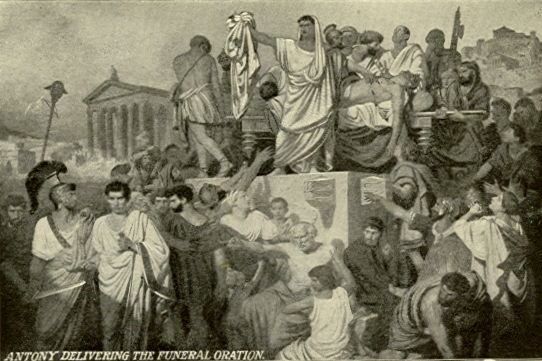
In the aftermath of the killing of Julius Caesar, Mark Antony tried to assume the tyrannical power seized by his mentor. Cicero, the famed Roman friend of liberty, opposed Antony’s various attempts to aggregate all power into his own hands. Time and time again, Cicero rose in the Senate and the in the Forum to denounce Antony and catalog his crimes against the republic.

Cicero called Antony’s voracious appetite for power “audacious” (sound familiar?), and he pleaded skillfully and passionately for the people and lawmakers of Rome to resist Antony’s dictatorial schemes. In fact, Antony’s attacks on the people and freedom of the ancient republic were on such a scale that Cicero admonished the Roman Senate to proclaim that Rome was in a “tumult” and to urge the people to take up arms in its defense.

“Tumult” derives from the Latin word “tumeo,” which is translated as “to swell.” In our own American Republic, our institutions of liberty are under attack, as well, and there is a swell of resistance growing in the country as state executives and lawmakers pass laws in defense of their own sovereignty and in defiance of federal power grabs, particularly as contained in the sweeping healthcare bill set for passage by the House of Representatives.

Idaho is the latest state to manifest its official intent to disregard the national healthcare bill and its slate of violations of the Tenth Amendment. This past Wednesday, Governor C.L. “Butch” Otter signed into law legislation that requires the Idaho Attorney General to sue the federal government if any agencies or officers thereof attempt to compel Idahoans to purchase a health insurance policy.

The law, known as the Idaho Health Freedom Act, is designed to not only protect the citizens of Idaho from unconstitutional mandates that they must purchase a qualifying insurance plan, but to protect the borders of the state of Idaho from encroachment by the national government or its agents.

"The ivory tower folks will tell you, 'No, they're not going anywhere,'" he told reporters. "But I'll tell you what, you get 36 states, that's a critical mass. That's a constitutional mass,” proclaimed Governor Otter during a press conference held at his office in Boise. Obviously, Governor Otter recognizes the tumult created by President Obama and his march toward health care “reform” and he is ready to answer with a bold stance in defense of the right of his state to govern itself.

According to surveys of state legislatures conducted by the Tenth Amendment Center and others, at least 37 states have filed or prefiled similar bills. Idaho is the first, however, to have the measure signed into law by the governor.

While Idaho earns the distinction of being the first to have a sovereignty defense bill signed into law by its governor, Virginia was technically the first state to pass such measures into law as three similar bills — S.B. 283, 311, and 417 — became law there without the governor’s signature. The laws in the Old Dominion state:

No resident of this Commonwealth, regardless of whether he has or is eligible for health insurance coverage under any policy or program provided by or through his employer, or a plan sponsored by the Commonwealth or the federal government, shall be required to obtain or maintain a policy of individual insurance coverage.

No provision of this title shall render a resident of this Commonwealth liable for any penalty, assessment, fee, or fine as a result of his failure to procure or obtain health insurance coverage.

Two Republican Attorneys General running for governor in their respective states indicated Friday that they would sue the national government in federal court if the proposed healthcare legislation passes.

Attorney General Henry McMaster of South Carolina and Attorney General Bill McCollum of Florida announced Friday that if the Obama Administration seeks to enforce the mandates currently contained in the health care bill, then it better be ready to defend the move in court.

McMaster told reporters that he and McCollum initiated a telephone conference call with other Attorneys General around the country on Thursday and they are confident that many of their colleagues will join suit in their bid to obstruct federal fiddling in matters of state sovereignty.

“Like all of these people, I swore an oath to uphold and defend the U.S. Constitution and the constitution of South Carolina,” said McMaster. “It is difficult to understand how the president and the Congress can believe that this is constitutional. It is harmful, and that's why we're going to kill it.”

With the resolve of so many state elected officials firmly fixed on boldly checking the latest attempt by Congress and the President to assume power not delegated to them by the Constitution, there is hope that this modern-day tumult may be quelled and peace, liberty, and constitutional balance will be restored to our beloved republic.


More...


2/25/2010

Utah launches effort to liberate its natural resources from federal control


Lost jobs and tax revenues have made withstanding the current recession all the more difficult.

Via-CFACT

by Bonner Cohen, Ph. D.

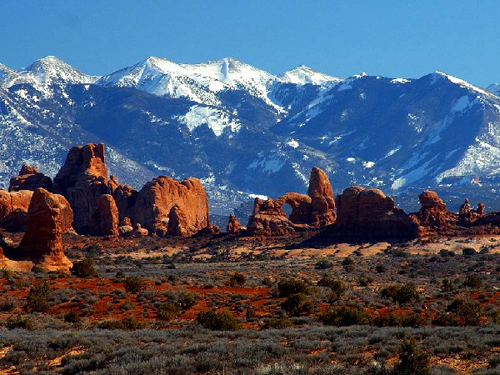
Frustrated over their state’s inability to gain access to Utah’s abundant store of natural resources, Utah lawmakers are challenging the federal government’s control over their land.

Over 60 percent of Utah’s land is owned by the federal government, and the feds routinely find ways to make the state’s energy- and mineral rich land off limits to development. The result is lost jobs and tax revenues that have made withstanding the current recession all the more difficult.

The fired-up Utah lawmakers want to use eminent domain to wrest control of land from the federal government, sell the land to private parties, and collect the revenues that the energy and minerals development would create. Initially, the lawmakers will target three parcels for the use of eminent domain in the Kaiparowits plateau in Grand Staircase-Escalante National Monument, which is know to contain large amounts of low-sulfur coal.

“In the Kaiparowits plateau alone there is a trillion dollars worth of natural resources. Had that been privatized, we’d have $50 billion in our school trust fund,” Rep. Christopher Herrod, a Provo Republican sponsoring the eminent domain bill, told the Associated Press (Feb. 13). Herrod argues that the federal government has violated its agreement with Utah when it gained statehood because it has not sold federal lands and turned those revenues over to the state. As a result, the state is chronically short in funding its school system. Having less money at its disposal, Utah spends less per pupil than any other state in the union. The state is currently facing a $700 million shortfall.

Under legislation Herrod introduced in the Utah House Feb. 11, the state would set aside $3 million to pursue its eminent domain case in the courts. Utah Attorney General Mark Shurtleff, who would lead the charge on eminent domain, wholeheartedly supports Herrod’s legislation.

Last year, Interior Secretary Ken Salazar infuriated policymakers in Utah by withdrawing 77 leases for oil and gas exploration on federal land in the state. Salazar’s move appears to have been the proverbial straw that broke the camels back, triggering the Herrod’s daring challenge to federal control. Herrod and his colleagues hope that their action will encourage other resource-rich western states to launch similar eminent domain cases against the giant landlord in Washington.


More...