Tip Jar

Showing posts with label Russia. Show all posts

7/16/2020

AS SEEN ON TWITTER 7/16/2020

https://twitter.com/ArthurSchwartz/status/1283820583126532097


3/02/2018

Americans and Russians Fought a Battle in Syria — It’s Time to Care

Americans and Russians Fought a Battle in Syria - It's Time to Care | National Review

We should not stumble into war. One of the interesting aspects of the Trump era is the extent to which our political culture is obsessing over marginalia while truly significant events transpire largely out of sight and out of mind.

7/10/2010

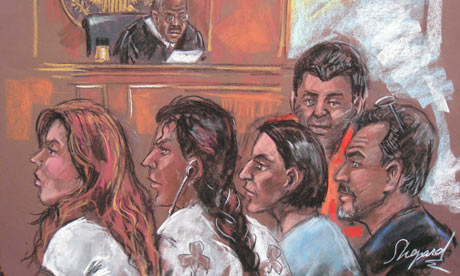
Spy swap was a mistake

Via-CNN

By Gene Coyle,

Editor's note: Gene Coyle is a retired, Russian-speaking, 30-year veteran of the CIA, who specialized for most of his career on Russian affairs. He is a recipient of the CIA's Intelligence Medal of Merit. He is now an adjunct professor at Indiana University and the author of two spy novels.

(CNN) -- The Obama administration's rush to sweep the recent Russian spy scandal off the table as quickly as possible with this swap is a bad move on several counts.

It is understandable and correct that President Barack Obama values the overall U.S.-Russian relationship above the question of whether a few Russian spies spend years in jail.

The "reset" campaign was an excellent idea; too bad no one in our Department of State knew how to correctly spell the word in Russian when Secretary Hillary Clinton presented the "button" to the Russian Foreign Minister. However, there is a line between seeking a mutually beneficial relationship and delusional pandering.

The history of U.S.-Russian relations shows that dealing respectfully but firmly is what works best. Most importantly, Moscow only agrees to anything that it perceives to be at least 50 percent in its self-interest, not because we've been nice guys. The only thing releasing all of these deep-cover Russian intelligence officers within a matter of days is going to teach Prime Minister Vladimir Putin, an old KGB officer, is that Obama is a pushover -- overly focused on making sure not to offend Russia.

Aside from sending the wrong political message, the quick swap also tells the leadership of the Russian government and the SVR, its intelligence service, that there is really no downside to being caught carrying out espionage in America.

Any intelligence service in the world, including Russia's, when deciding whether to carry out a particular espionage operation looks at the "risk factor." What will be the blow back if this becomes known?

Running "illegals" -- that is, Russians posing as citizens from a third country and who have no overt connection to the Russian embassy or consulates in America -- would usually be considered a high-risk operation by Moscow because those Russian citizens don't have diplomatic immunity if caught. It's bad press and it's bad for morale within the SVR if one, much less 11, of your deep cover officers get caught and are facing decades in prison. But Obama has now just told the SVR, "Hey, there is no penalty for spying in America. If we catch you, we'll just let you go so as not to damage 'big picture' relations."

We did show Russia certain appropriate courtesies in these arrests, which would have indicated we didn't want to harm our political relationship with Russia.

We waited until Russian President Dmitry Medvedev had made his visit to America. We waited until after the G20 meetings in Canada. We haven't even publicly named or expelled the Russian diplomats who were apparently observed being involved in the communications with these illegals. (Hopefully, the Department of State has at least told the Russian ambassador that certain of his diplomats should quietly leave America.) And speaking of morale, what message does this send to the hundreds of FBI special agents who spent thousands of hours working these cases?

According to various press accounts, the number of Russian intelligence officers in America and Western Europe has already returned to Cold War levels. Obama has now told the Russians, there isn't even a problem if we catch you. Try anything you want.

Normally, when any intelligence service has a major flap as this was, it would order an immediate stand down of other operations in that country for perhaps several months while it tried to figure out what had gone wrong. By immediately sending these SVR officers back to Moscow, they will be available to assist in that investigation.

Not knowing what all they were involved in -- it was certainly more than "penetrating the local PTA" -- I don't necessarily advocate having kept these people in prison for decades, but a year or two in prison before offering a swap would have sent a strong message to Putin and the SVR. And if the press accounts are accurate, getting four people out of Russian jails in return for these 10 doesn't seem like much of a bargain either. (An 11th suspect detained in Cyprus remains on the loose after being released on bail.)

Obama is no doubt an intelligent fellow, but he certainly didn't get very good advice from his intelligence community or Russian experts about how to handle this spy caper

2/17/2009

Václav Klaus: The unbearable inability to learn


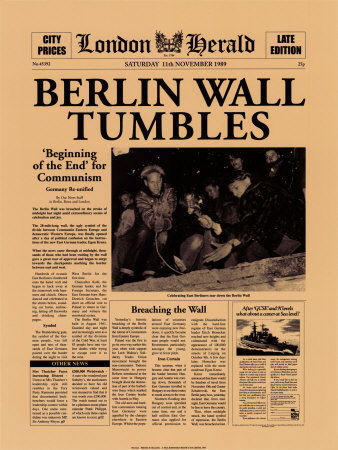
When communism ended (and I deliberately like to say that it was a collapse, not a defeat), it seemed that the ideas and institutions of that system were so thoroughly discredited that they couldn't return in any foreseeable future. And it seemed that no person could possibly - without blushing - dare to publicly defend them.

It seemed unreasonable to expect that people would prefer to trust the state instead of the markets once again; that they would believe that one can distribute more wealth than what is being produced; that people have a right for high living standards rather than that they must deserve them; that an arbitrarily lustrous doctrine is more important than the human freedom; that the wisdom of the anointed is more than the knowledge of the "ordinary" people.

Who was naive

However, we were not quite naive. During the last two decades, many of us were warning that those attitudes were only partially abandoned in the post-communist part of the world (and some third-world countries), that even those countries were quickly depleting the initial momentum, and that the "first" world was seeing no development of this kind at all.

But this opinion of ours was considered - politically correctly - to be just a part of our excessive sensitivity, a misunderstanding, and especially a proof that we were underestimating the "amazing" progress in America and Western Europe and that we were perhaps even jealous. Some extraordinarily blinded people considered our opinion to be a shadow of some obsolete attitudes - such as nationalism, pan-Slavism, and the belief in "extreme" doctrines (e.g. classical liberalism).

At any rate, our opinions were considered to be a product of our half-a-century-long leave of absence from the good company of the civilized and democratic countries and the Western pundits were hoping that we would learn our lesson soon.

Paris didn't understand

We have seen many problematic returns to the past in the European Union, both at the political and the economic level. Whenever some of us said so loudly, we were not only considered to be people of a different opinion, but even foolish, somewhat dumb, and naive people.

In this sense, my recent visit to Paris was insightful. No one disagreed with my opinions. Instead, these opinions were so distant from the French that they didn't understand them. It didn't help that I was only saying things that were completely obvious.

A power cartel

Attentive observers throughout the world are able to see these things. For example, Prof Wolfgang Kasper of Australia is writing about democracy, subsidiarity, and centralization and the European Union is his exemplary case of "de-democratization of the governance". He considers the union to be a "defensive cartel of power that is dragging the society to the bottom of the sea".

In the same group of his examples, we find the "final phase of the Roman Empire controlled from its center, closed China that was controlled by the Ming dynasty 400-500 years ago, centralized Ottoman empire 100-200 years ago, and the European Union that has been increasingly concentrated in Brussels since the 1970s". The increased regulation of the European economy is visible and enormous.

A new element in this ideological chaos is the recent economic downturn that is being attributed to the markets even though it should be obvious that it is a result of serious mistakes in the U.S. economic policymaking and similar mistakes in other advanced countries. And a manifestation of the cyclic character of the economic development.

The towering specter of Marx

However, my motivation to write this article was something else. Time magazine in the U.S. has dedicated one issue to President Obama's inauguration and it discussed the policies of the new administration. And it just happened - probably not by chance - that the editors have reserved six pages to an article called "Rethinking Marx" whose basic thesis was that "[a]s we work out how to save capitalism, it's worth studying the system's greatest critic".

On one hand, Peter Gumbel, the author, says that "we should dismiss his visionary plans for the future". On the other hand, it is argued that we should study his "trenchant diagnosis of the underlying problems of a market economy". It's worth mentioning that the author also considers The Communist Manifesto to be "almost uncannily prescient about globalization's costs and benefits". The author is logically led to the question whether we didn't make a mistake at the end of the 20th century when we prematurely rejected Marx's economic theories.

The reason why I am describing this article so extensively is that neither the author, nor the magazine, nor the timing are marginal. Time magazine has been among the very best titles in the U.S. printed media for many decades. We simply cannot ignore such things.


Václav Klaus, Hospodářské noviny (The Economic Times), February 17th, 2009: the author is the president of the Czech Republic. Translation: L.M.More...

Complete Original Article from Reference Frame

11/30/2008

This can't be good

Russia anchors in US backyard

President Dmitry Medvedev has completed a four-nation tour of Latin America aimed at boosting trade and Russian influence in the region. He ended his trip with the words: “we are back in South America” – a region the U.S. has traditionally considered its backyard.

While flying back home, President Medvedev recorded an entry for his video blog. In it he stressed the importance for Russia of engaging with Latin America.

In a hectic round of diplomacy, Medvedev visited four countries in a week. Although Moscow had a different agenda in each country, there was one overriding intention - to mark Russia’s return to the region.

Peru

On November 22, the President touched down in Peru on the first leg of the tour. In the capital Lima Medvedev discussed the world economic crisis and all aspects of security with APEC leaders who had gathered for their 16th summit.

On the sidelines of the forum Medvedev held bilateral talks with the Presidents of the U.S., Chile, Indonesia, the Ministers of Japan, Australia and Thailand. He also spoke with the leader of China and the Sultan of Brunei.

It was the first visit by a Russian leader to Peru, and President Alan Garcia was so moved by the fact that he awarded Medvedev with the Order of the Sun (La Orden El Sol del Peru) – the country’s highest honour.

And the only sour note at their meeting was a local beverage, obligatory for guests to try - Pisco Sour cocktail.

Brazil

Having attended the APEC meeting, Medvedev landed in Brazil, Latin America’s largest country. It is also Russia’s largest trade partner in the region.

Both are members of the BRIC economic bloc, and both are being hit by the financial storm sweeping the globe.

“We must do our utmost to use the benefits of our partnership and cooperation so that our nations emerge from this crisis even stronger,” President Da Silva said.

Right now Russia-Brazil trade is limited to agriculture. Russia is keen to expand that, and hopes energy will soon become a money spinner.

Latin America Sergey Brilev expert says that while Brazil is on the way to substituting oil with biofuel, “countries which export and import oil should coordinate their efforts.”

“We are seeing the energy security as imagined by Russia during the G8 presidency,” Brilev said.

Medvedev even found time to check on Rio’s landmarks like the statue of Christ the Redeemer and the Maracana Stadium which is among the largest stadiums in the world.

Venezuela

President Hugo Chavez is a frequent guest in Russia, but this was the first time a Russian leader visited the country.

To mark the historic moment local soldiers sang the Russian anthem.

Days before Medvedev reached Venezuela, Russian military vessels docked at its shores. Cannons fired a salute as a greeting to a friend and perhaps also as a warning to opponents.

This visit received a frosty reception in the West.

But as Medvedev took Chavez on a tour around the ships, it was clear the criticism was falling on deaf ears.

This time the sides focused on civil agreements - visa-free travel and energy cooperation. They also paved the way for Russia to help Venezuela build a nuclear power plant.

Cuba

Last but not least, Medvedev touched down in Cuba, a communist island just off the southern coast of the United States.

The Soviet leaders sent missiles – but Medvedev brought an icon. This was a gift for an Orthodox church recently built in the historic centre of Havana.

Together with Raul Castro they took part in an opening ceremony at the church and later made a tour around the old city with Castro as a guide.

Later Medvedev met with Fidel himself, Cuba’s former leader and legendary leader of the communist revolution.

Russia’s relations with Latin America are modest in comparison to those of China and the EU, but Medvedev is determined to change that.

“We've only just started fully-fledged and hopefully mutually rewarding cooperation with the authorities of these countries and there economies. There is no need to be shy or fear competition. What we need to do is jump into the fight,” Medvedev said in Havana.

And he promised cooperation in all areas - economic, humanitarian and military.