Via-RCP
By Scott Rasmussen
The Merriam-Webster dictionary defines an enabler as “one who enables another to persist in self-destructive behavior.” They do so “by providing excuses or by making it possible to avoid the consequences of such behavior.”
In popular culture, the term is often associated with a family covering for a drunk or drug addict. Their motives for doing so are generally good in the short-term sense of not wanting the addict to fail or be humiliated. The family members truly want to help and be supportive. But the very act of letting their loved one avoid responsibility for their actions enables the addiction to continue or get worse.
On a much larger scale, U.S. foreign policy over the past two decades has enabled global irresponsibility. Because we are always ready to intervene anywhere on the planet, the United States has protected other nations from dealing with the short-term realities of difficult foreign policy decisions. This allows both friend and foe to posture and pass judgment without consequence. As a result, we have created a more dangerous world.
We’re seeing the fruits of this misguided policy play out in Syria today. Our intentions and motives are good. We hate the slaughter and brutality of that civil war. We hate the use of chemical weapons upon civilians. We want somebody to stop it. We want the international rules against chemical warfare upheld.
Adding to the dilemma, President Obama sees his own credibility at stake. Syria brazenly crossed a “red line” that he mistakenly established. Senator John McCain believes our nation’s credibility is on the line, as well.
But American voters don’t believe it’s our fight. They don’t believe that vital national security interests of the Unite States are at stake. They recognize that other nations, closer to Syria, have much more to lose than we do. Why does the United States have to police the world? Why won’t other nation’s step forward?
The reason is simply that our interventionist foreign policy has allowed and encouraged other nations to act irresponsibly. They won’t step forward because they know we will.
It is time for the United States to end our enabling behavior.
The place to start is by staying out of Syria and let other nation’s respond as they see fit.
There is no guarantee as to what will happen next and it will certainly be uncomfortable in the short-term. The same thing happens when a family first stops covering for a drug addict. It is painful to watch others deal with the responsibility from which they have been spared for so long. However, in both the family setting and U.S. foreign policy, allowing consequences to be felt in the short-term encourages responsibility in the long-term.
The Cato Institute’s Christopher Preble puts it this way: “If we encouraged other countries to be responsible for their own security they would be better able, and therefore more willing, to play a constructive role even when their interests are not directly at stake.” A former naval officer, Preble outlines his thoughts more fully in a thought-provoking book, “The Power Problem: How American Military Dominance Makes Us Less Safe, Less Prosperous and Less Free”.
The first step on the path to a more responsible global community is to say no to U.S. involvement in Syria.
The burden of those who love freedom is to not only to protect liberty but to explain the superiority of it.
Showing posts with label national security. Show all posts
9/07/2013
9/06/2013
A war the Pentagon doesn’t want
Via-WAPO
By Robert H. Scales
Robert H. Scales, a retired Army major general, is a former commandant of the U.S. Army War College.
The tapes tell the tale. Go back and look at images of our nation’s most senior soldier, Gen. Martin Dempsey, and his body language during Tuesday’s Senate Foreign Relations Committee hearings on Syria. It’s pretty obvious that Dempsey, chairman of the Joint Chiefs of Staff, doesn’t want this war. As Secretary of State John Kerry’s thundering voice and arm-waving redounded in rage against Bashar al-Assad’s atrocities, Dempsey was largely (and respectfully) silent.
Dempsey’s unspoken words reflect the opinions of most serving military leaders. By no means do I profess to speak on behalf of all of our men and women in uniform. But I can justifiably share the sentiments of those inside the Pentagon and elsewhere who write the plans and develop strategies for fighting our wars. After personal exchanges with dozens of active and retired soldiers in recent days, I feel confident that what follows represents the overwhelming opinion of serving professionals who have been intimate witnesses to the unfolding events that will lead the United States into its next war.
They are embarrassed to be associated with the amateurism of the Obama administration’s attempts to craft a plan that makes strategic sense. None of the White House staff has any experience in war or understands it. So far, at least, this path to war violates every principle of war, including the element of surprise, achieving mass and having a clearly defined and obtainable objective.
They are repelled by the hypocrisy of a media blitz that warns against the return of Hitlerism but privately acknowledges that the motive for risking American lives is our “responsibility to protect” the world’s innocents. Prospective U.S. action in Syria is not about threats to American security. The U.S. military’s civilian masters privately are proud that they are motivated by guilt over slaughters in Rwanda, Sudan and Kosovo and not by any systemic threat to our country.
They are outraged by the fact that what may happen is an act of war and a willingness to risk American lives to make up for a slip of the tongue about “red lines.” These acts would be for retribution and to restore the reputation of a president. Our serving professionals make the point that killing more Syrians won’t deter Iranian resolve to confront us. The Iranians have already gotten the message.
Our people lament our loneliness. Our senior soldiers take pride in their past commitments to fight alongside allies and within coalitions that shared our strategic goals. This war, however, will be ours alone.
They are tired of wannabe soldiers who remain enamored of the lure of bloodless machine warfare. “Look,” one told me, “if you want to end this decisively, send in the troops and let them defeat the Syrian army. If the nation doesn’t think Syria is worth serious commitment, then leave them alone.” But they also warn that Syria is not Libya or Serbia. Perhaps the United States has become too used to fighting third-rate armies. As the Israelis learned in 1973, the Syrians are tough and mean-spirited killers with nothing to lose.
Our military members understand and take seriously their oath to defend the constitutional authority of their civilian masters. They understand that the United States is the only liberal democracy that has never been ruled by its military. But today’s soldiers know war and resent civilian policymakers who want the military to fight a war that neither they nor their loved ones will experience firsthand.
Civilian control of the armed services doesn’t mean that civilians shouldn’t listen to those who have seen war. Our most respected soldier president, Dwight Eisenhower, possessed the gravitas and courage to say no to war eight times during his presidency. He ended the Korean War and refused to aid the French in Indochina; he said no to his former wartime friends Britain and France when they demanded U.S. participation in the capture of the Suez Canal. And he resisted liberal democrats who wanted to aid the newly formed nation of South Vietnam. We all know what happened after his successor ignored Eisenhower’s advice. My generation got to go to war.
Over the past few days, the opinions of officers confiding in me have changed to some degree. Resignation seems to be creeping into their sense of outrage. One officer told me: “To hell with them. If this guy wants this war, then let him have it. Looks like no one will get hurt anyway.”
Soon the military will salute respectfully and loose the hell of hundreds of cruise missiles in an effort that will, inevitably, kill a few of those we wish to protect. They will do it with all the professionalism and skill we expect from the world’s most proficient military. I wish Kerry would take a moment to look at the images from this week’s hearings before we go to war again.
By Robert H. Scales
Robert H. Scales, a retired Army major general, is a former commandant of the U.S. Army War College.
The tapes tell the tale. Go back and look at images of our nation’s most senior soldier, Gen. Martin Dempsey, and his body language during Tuesday’s Senate Foreign Relations Committee hearings on Syria. It’s pretty obvious that Dempsey, chairman of the Joint Chiefs of Staff, doesn’t want this war. As Secretary of State John Kerry’s thundering voice and arm-waving redounded in rage against Bashar al-Assad’s atrocities, Dempsey was largely (and respectfully) silent.
Dempsey’s unspoken words reflect the opinions of most serving military leaders. By no means do I profess to speak on behalf of all of our men and women in uniform. But I can justifiably share the sentiments of those inside the Pentagon and elsewhere who write the plans and develop strategies for fighting our wars. After personal exchanges with dozens of active and retired soldiers in recent days, I feel confident that what follows represents the overwhelming opinion of serving professionals who have been intimate witnesses to the unfolding events that will lead the United States into its next war.
They are embarrassed to be associated with the amateurism of the Obama administration’s attempts to craft a plan that makes strategic sense. None of the White House staff has any experience in war or understands it. So far, at least, this path to war violates every principle of war, including the element of surprise, achieving mass and having a clearly defined and obtainable objective.
They are repelled by the hypocrisy of a media blitz that warns against the return of Hitlerism but privately acknowledges that the motive for risking American lives is our “responsibility to protect” the world’s innocents. Prospective U.S. action in Syria is not about threats to American security. The U.S. military’s civilian masters privately are proud that they are motivated by guilt over slaughters in Rwanda, Sudan and Kosovo and not by any systemic threat to our country.
They are outraged by the fact that what may happen is an act of war and a willingness to risk American lives to make up for a slip of the tongue about “red lines.” These acts would be for retribution and to restore the reputation of a president. Our serving professionals make the point that killing more Syrians won’t deter Iranian resolve to confront us. The Iranians have already gotten the message.
Our people lament our loneliness. Our senior soldiers take pride in their past commitments to fight alongside allies and within coalitions that shared our strategic goals. This war, however, will be ours alone.
They are tired of wannabe soldiers who remain enamored of the lure of bloodless machine warfare. “Look,” one told me, “if you want to end this decisively, send in the troops and let them defeat the Syrian army. If the nation doesn’t think Syria is worth serious commitment, then leave them alone.” But they also warn that Syria is not Libya or Serbia. Perhaps the United States has become too used to fighting third-rate armies. As the Israelis learned in 1973, the Syrians are tough and mean-spirited killers with nothing to lose.
Our military members understand and take seriously their oath to defend the constitutional authority of their civilian masters. They understand that the United States is the only liberal democracy that has never been ruled by its military. But today’s soldiers know war and resent civilian policymakers who want the military to fight a war that neither they nor their loved ones will experience firsthand.
Civilian control of the armed services doesn’t mean that civilians shouldn’t listen to those who have seen war. Our most respected soldier president, Dwight Eisenhower, possessed the gravitas and courage to say no to war eight times during his presidency. He ended the Korean War and refused to aid the French in Indochina; he said no to his former wartime friends Britain and France when they demanded U.S. participation in the capture of the Suez Canal. And he resisted liberal democrats who wanted to aid the newly formed nation of South Vietnam. We all know what happened after his successor ignored Eisenhower’s advice. My generation got to go to war.
Over the past few days, the opinions of officers confiding in me have changed to some degree. Resignation seems to be creeping into their sense of outrage. One officer told me: “To hell with them. If this guy wants this war, then let him have it. Looks like no one will get hurt anyway.”
Soon the military will salute respectfully and loose the hell of hundreds of cruise missiles in an effort that will, inevitably, kill a few of those we wish to protect. They will do it with all the professionalism and skill we expect from the world’s most proficient military. I wish Kerry would take a moment to look at the images from this week’s hearings before we go to war again.
9/02/2013
A vote of no confidence is in order
Via-WAPO
By Ed Rogers
What with our president having received the Nobel Peace Prize and leading us in a pivot to Asia, I guess the White House wants to pretend that the humiliating debacle America is suffering — in front of the world — isn’t happening. What’s wrong with asking Congress for authorization to go to war? The Obama apologencia will tell us it is what the president meant to do all along. They will tell us things are going according to plan. What’s the rush? But no, for the first time ever, an American president is saying, “The buck does NOT stop here.”
The president is a spent force, both domestically and internationally. Congress should help by voting to cut our losses; it should resist opening the door to the uncertain consequences of a military campaign conducted, without conviction or clear purpose, by this commander in chief. If Republicans can limit the president’s authority to wander and blunder on the world stage, there is a moral obligation to do so.
Of course Syria should be viciously punished for using chemical weapons, but who trusts this president to do so in such a way that also sends a clear message to Iran? No one does. Why would they? Better to leave Iran with a modicum of doubt than let them witness any more of the tepid uncertainty, lack of conviction or absence of moral clarity from President Obama.
The only thing worse than no response from America is a floundering response, so Congress should stop it while they can. We don’t need to go through the half-hearted lobbying effort in Congress, which will just underscore the incompetence and incapabilities of this administration. Republicans should vote to end this disaster now. A vote of no confidence is in order.
The problem is that we have serious problems that require an able president both at home and abroad. It is too soon for our president to be a marginalized lame duck. Doing nothing is one thing, but doing harm by not properly wielding the power a president holds is another.
The only possible remedy — and one that is probably impossible for this president’s ideology or ego to allow — would be for him to demand that Congress return early from their summer break, deliver a prime-time speech before a joint session, win the vote and then unleash a blistering punishment. This is probably the only way to salvage some of the president’s credibility and give Iran pause.
Unless the members of the national security team who surround Obama are so addicted to the personal grandeur and perks of office, surely someone will resign rather than be a part of the humiliation and harm this president is doing.
It is too early to take today’s headlines and extrapolate out to the next election; and national security issues don’t drive votes. I’ve resisted making 2014 election predictions, except to acknowledge that the natural midterm political cycle in 2014 favors Republicans. Fourteen months is a lifetime in politics blah blah blah, but the tectonic plates are beginning to shift and the first sign of a wave election could be forming. If the big issues of peace and prosperity are going to matter, what do the Democrats have to say for themselves?
What aspect of the economy instills confidence — never mind enthusiasm — for the future? Where in the world is America stronger as a result of the Obama presidency? Nothing is getting better for the Democrats.
By Ed Rogers
What with our president having received the Nobel Peace Prize and leading us in a pivot to Asia, I guess the White House wants to pretend that the humiliating debacle America is suffering — in front of the world — isn’t happening. What’s wrong with asking Congress for authorization to go to war? The Obama apologencia will tell us it is what the president meant to do all along. They will tell us things are going according to plan. What’s the rush? But no, for the first time ever, an American president is saying, “The buck does NOT stop here.”
The president is a spent force, both domestically and internationally. Congress should help by voting to cut our losses; it should resist opening the door to the uncertain consequences of a military campaign conducted, without conviction or clear purpose, by this commander in chief. If Republicans can limit the president’s authority to wander and blunder on the world stage, there is a moral obligation to do so.
Of course Syria should be viciously punished for using chemical weapons, but who trusts this president to do so in such a way that also sends a clear message to Iran? No one does. Why would they? Better to leave Iran with a modicum of doubt than let them witness any more of the tepid uncertainty, lack of conviction or absence of moral clarity from President Obama.
The only thing worse than no response from America is a floundering response, so Congress should stop it while they can. We don’t need to go through the half-hearted lobbying effort in Congress, which will just underscore the incompetence and incapabilities of this administration. Republicans should vote to end this disaster now. A vote of no confidence is in order.
The problem is that we have serious problems that require an able president both at home and abroad. It is too soon for our president to be a marginalized lame duck. Doing nothing is one thing, but doing harm by not properly wielding the power a president holds is another.
The only possible remedy — and one that is probably impossible for this president’s ideology or ego to allow — would be for him to demand that Congress return early from their summer break, deliver a prime-time speech before a joint session, win the vote and then unleash a blistering punishment. This is probably the only way to salvage some of the president’s credibility and give Iran pause.
Unless the members of the national security team who surround Obama are so addicted to the personal grandeur and perks of office, surely someone will resign rather than be a part of the humiliation and harm this president is doing.
It is too early to take today’s headlines and extrapolate out to the next election; and national security issues don’t drive votes. I’ve resisted making 2014 election predictions, except to acknowledge that the natural midterm political cycle in 2014 favors Republicans. Fourteen months is a lifetime in politics blah blah blah, but the tectonic plates are beginning to shift and the first sign of a wave election could be forming. If the big issues of peace and prosperity are going to matter, what do the Democrats have to say for themselves?
What aspect of the economy instills confidence — never mind enthusiasm — for the future? Where in the world is America stronger as a result of the Obama presidency? Nothing is getting better for the Democrats.
3/18/2013
Jack Lew's First Big Mistake
Via-FORBES
Gordon G. Chang,
Jack Lew will be making his first foreign trip as Treasury secretary this week as he heads to Beijing for meetings on Tuesday and Wednesday.
Lew’s visit comes on the heels of Friday’s installation of Li Keqiang as China’s premier and Thursday’s confirmation of Xi Jinping as president, the last formal steps in the transition of China’s “Fourth Generation” leaders to its Fifth. As a “senior U.S. official” told Reuters last week, “It’s important to deepen our relationship with China’s new leadership team at this time.”
Is it? For decades, Washington officials believed the key to good ties with China was knowing its leaders well, therefore devoting great effort to getting acquainted with their Chinese counterparts. Yet Beijing’s behavior has generally deteriorated over time even though American and Chinese officials have gotten to know each other, in many cases well.
Acquaintance—even friendship—has virtually no influence on Chinese foreign policymakers, however. China’s policy is especially “realist,” so it should come as no surprise that as the Obama administration tried harder to work with Beijing, ties in fact deteriorated.
Take the unfortunate dynamic evident in 2009, when President Obama took office. In February of that year, then Secretary of State Hillary Clinton said the U.S. would downgrade human rights in its relations with China. She intended her words as a signal of cooperation. The Chinese, incorrectly, saw it as sign of weakness. As Beijing-based analyst Laurence Brahm reported, officials were “ecstatic” because her comments confirmed in their minds that America “had finally succumbed to a full kowtow.”
Gordon G. Chang,
Jack Lew will be making his first foreign trip as Treasury secretary this week as he heads to Beijing for meetings on Tuesday and Wednesday.
Lew’s visit comes on the heels of Friday’s installation of Li Keqiang as China’s premier and Thursday’s confirmation of Xi Jinping as president, the last formal steps in the transition of China’s “Fourth Generation” leaders to its Fifth. As a “senior U.S. official” told Reuters last week, “It’s important to deepen our relationship with China’s new leadership team at this time.”
Is it? For decades, Washington officials believed the key to good ties with China was knowing its leaders well, therefore devoting great effort to getting acquainted with their Chinese counterparts. Yet Beijing’s behavior has generally deteriorated over time even though American and Chinese officials have gotten to know each other, in many cases well.
Acquaintance—even friendship—has virtually no influence on Chinese foreign policymakers, however. China’s policy is especially “realist,” so it should come as no surprise that as the Obama administration tried harder to work with Beijing, ties in fact deteriorated.
Take the unfortunate dynamic evident in 2009, when President Obama took office. In February of that year, then Secretary of State Hillary Clinton said the U.S. would downgrade human rights in its relations with China. She intended her words as a signal of cooperation. The Chinese, incorrectly, saw it as sign of weakness. As Beijing-based analyst Laurence Brahm reported, officials were “ecstatic” because her comments confirmed in their minds that America “had finally succumbed to a full kowtow.”
3/17/2013
The Axis of Torpor
Via-NRO
By Mark Steyn
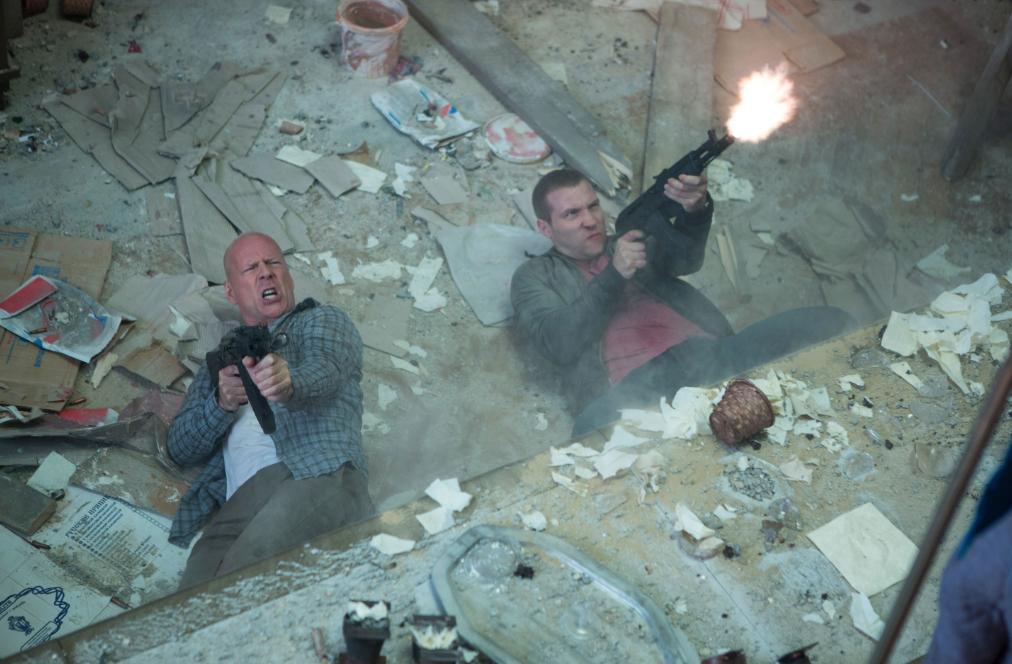
I greatly enjoy the new Hollywood genre in which dysfunctional American families fly to a foreign city and slaughter large numbers of the inhabitants as a kind of bonding experience. Liam Neeson takes his estranged wife and their teenage daughter for just such a vacation in Taken 2, in which the spectacular mountain of corpses in Istanbul brings the family back together again and ends with them (spoiler alert) enjoying a chocolate malt back at the soda fountain in California and getting to know the daughter’s new boyfriend. “Don’t shoot this one, Dad,” she cautions. “I really like him.” And they all have a good chuckle over it. In Die Hard 5 or whatever we’re up to, Bruce Willis and his estranged son fly to Moscow and do to the Russians what Neeson does to the Turks and Albanians. I gather that in the forthcoming Finding Nemo 2 Marlin and Dory’s marriage is going through a rocky patch until Nemo is kidnapped by a Ukrainian sex cartel and Marlin and Dory swim up the Dnieper River and gun down every pimp in Kiev.
Alas, outside Hollywood, foreigners are somewhat less pliable than the body count of Liam Neeson’s and Bruce Willis’s obliging extras would suggest. The funniest line in Taken 2 was Neeson’s advice to his daughter in an emergency: “Go to the U.S. embassy. You’ll be safe there.” It opened a couple of weeks after Benghazi.
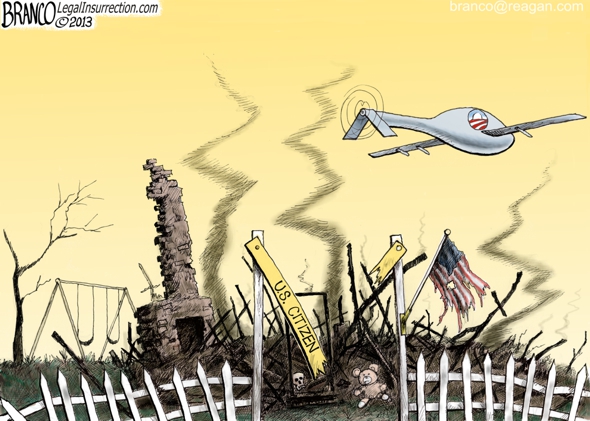
There are drones, of course, which offer the consolations of technological badassery, as if Liam Neeson could take out all the Albanians from the X-Box in his basement. But don’t worry. According to Politico, at a recent meeting with Senate Democrats, President Obama assured them that they had no need to worry about his awesome power to rain down death from the skies because, as he put it, he’s not Dick Cheney.
By Mark Steyn
I greatly enjoy the new Hollywood genre in which dysfunctional American families fly to a foreign city and slaughter large numbers of the inhabitants as a kind of bonding experience. Liam Neeson takes his estranged wife and their teenage daughter for just such a vacation in Taken 2, in which the spectacular mountain of corpses in Istanbul brings the family back together again and ends with them (spoiler alert) enjoying a chocolate malt back at the soda fountain in California and getting to know the daughter’s new boyfriend. “Don’t shoot this one, Dad,” she cautions. “I really like him.” And they all have a good chuckle over it. In Die Hard 5 or whatever we’re up to, Bruce Willis and his estranged son fly to Moscow and do to the Russians what Neeson does to the Turks and Albanians. I gather that in the forthcoming Finding Nemo 2 Marlin and Dory’s marriage is going through a rocky patch until Nemo is kidnapped by a Ukrainian sex cartel and Marlin and Dory swim up the Dnieper River and gun down every pimp in Kiev.
Alas, outside Hollywood, foreigners are somewhat less pliable than the body count of Liam Neeson’s and Bruce Willis’s obliging extras would suggest. The funniest line in Taken 2 was Neeson’s advice to his daughter in an emergency: “Go to the U.S. embassy. You’ll be safe there.” It opened a couple of weeks after Benghazi.
There are drones, of course, which offer the consolations of technological badassery, as if Liam Neeson could take out all the Albanians from the X-Box in his basement. But don’t worry. According to Politico, at a recent meeting with Senate Democrats, President Obama assured them that they had no need to worry about his awesome power to rain down death from the skies because, as he put it, he’s not Dick Cheney.
2/18/2013
John Brennan: From Mecca to Washington
Via-Front Page Magazine
By Daniel Greenfield
In 1853, the British explorer Sir Richard Francis Burton visited Mecca. Since Mecca was and is off limits to non-Muslims on pain of dearth, Burton passed himself off as a Muslim by undergoing circumcision and disguising himself as a Pashtun. “Nothing could save a European detected by the populace, or one who after pilgrimage declared himself an unbeliever,” Burton wrote.
350 years earlier, the Italian adventurer Ludovico di Varthema became the first non-Muslim to enter Mecca since the Muslim conquest. Ludovico had enlisted as a mercenary and succeeded in passing as a Mamluk, one of the white slave soldiers of the Sultanate, who had been converted to Islam. Ludovico was eventually caught out as a Christian, but escaped after a love affair with one of the Sultan’s wives.
Other Christians had visited Mecca, but always disguised as Muslims. The British cabin boy Joseph Pitts, captured by Muslim slavers and forcibly converted to Islam, visited Mecca, before managing to return home and return to his religion. Similar accounts were told by other European Christian slaves.
In 1979, hundreds of Islamists using weapons smuggled in a coffin seized the Grand Mosque of Mecca. The Saudi military, commanded by the sons of important men, rather than by competent men, proved absolutely hopeless in fighting them. So instead they turned to the French.
The French commandos of GIGN were expert at dealing with terrorist crises, but they were not Muslim and so could not be allowed into Mecca. The solution was simple. The Frenchmen underwent a rapid conversion to Islam and the siege of the Great Mosque commenced. The conversion did not take hold, but the principle remained. An infidel could not enter Mecca, even to save the House of Saud.
During his time as the CIA Station Chief in Saudi Arabia, John Brennan spoke of marveling “at the majesty of the Hajj and the devotion of those who fulfilled their duty as Muslims by making that pilgrimage.” If Brennan did indeed visit Mecca during the Hajj, then he could have only done it by converting to Islam, like John Pitts, or pretending to have done so, like the GIGN commandos.
John Guandolo, a former FBI agent and Islam expert, has alleged that the conversion took place during Brennan’s time in Saudi Arabia. And he also alleges that this conversion has been confirmed by other American officials who were in Saudi Arabia at the time. These allegations are especially explosive as Brennan has moved up through the ranks to become Obama’s nominee to head the CIA.
Read entire article
By Daniel Greenfield
In 1853, the British explorer Sir Richard Francis Burton visited Mecca. Since Mecca was and is off limits to non-Muslims on pain of dearth, Burton passed himself off as a Muslim by undergoing circumcision and disguising himself as a Pashtun. “Nothing could save a European detected by the populace, or one who after pilgrimage declared himself an unbeliever,” Burton wrote.
350 years earlier, the Italian adventurer Ludovico di Varthema became the first non-Muslim to enter Mecca since the Muslim conquest. Ludovico had enlisted as a mercenary and succeeded in passing as a Mamluk, one of the white slave soldiers of the Sultanate, who had been converted to Islam. Ludovico was eventually caught out as a Christian, but escaped after a love affair with one of the Sultan’s wives.
Other Christians had visited Mecca, but always disguised as Muslims. The British cabin boy Joseph Pitts, captured by Muslim slavers and forcibly converted to Islam, visited Mecca, before managing to return home and return to his religion. Similar accounts were told by other European Christian slaves.
In 1979, hundreds of Islamists using weapons smuggled in a coffin seized the Grand Mosque of Mecca. The Saudi military, commanded by the sons of important men, rather than by competent men, proved absolutely hopeless in fighting them. So instead they turned to the French.
The French commandos of GIGN were expert at dealing with terrorist crises, but they were not Muslim and so could not be allowed into Mecca. The solution was simple. The Frenchmen underwent a rapid conversion to Islam and the siege of the Great Mosque commenced. The conversion did not take hold, but the principle remained. An infidel could not enter Mecca, even to save the House of Saud.
During his time as the CIA Station Chief in Saudi Arabia, John Brennan spoke of marveling “at the majesty of the Hajj and the devotion of those who fulfilled their duty as Muslims by making that pilgrimage.” If Brennan did indeed visit Mecca during the Hajj, then he could have only done it by converting to Islam, like John Pitts, or pretending to have done so, like the GIGN commandos.
John Guandolo, a former FBI agent and Islam expert, has alleged that the conversion took place during Brennan’s time in Saudi Arabia. And he also alleges that this conversion has been confirmed by other American officials who were in Saudi Arabia at the time. These allegations are especially explosive as Brennan has moved up through the ranks to become Obama’s nominee to head the CIA.
Read entire article
2/07/2013
1/15/2013
Al Gore's Payday
FROM-NRO
Whatever his intentions, the former veep has benefited America’s enemies.
By Robert Zubrin
Recently, it was reported that former vice president Al Gore had managed to sell his financially troubled Current TV network to the Al Jazeera company, owned by the Qatar government, for $500 million, netting himself about $100 million in the process.
There is something unsettling about this transaction. I own a small aerospace company that does some business with the U.S. government. If I were to take a NASA middle manager out to dinner and pick up the tab, the inspector general would be all over both of us in a heartbeat. Yet here is Al Gore, a former congressman, senator, and vice president of the United States, receiving $100 million from a foreign government — and not just any foreign government, but one involved in extremely damaging economic warfare against the United States and the promotion of terrorism worldwide — and yet the attorney general takes no action. What gives?
To be sure, Al Gore is not the first high-level U.S.-government official, or even the first in his family, to obtain a payoff from a foreign government opposed to the United States. For example, his father, then-congressman Al Gore Sr., received a herd of prize cattle from Armand Hammer, which he was able to sell repeatedly at grossly inflated prices to lobbyists who never bothered to pick them up. When Gore retired from the Senate, he took up a $500,000-per-year (in 1970s money) position as CEO of the American coal subsidiary of Hammer’s Occidental Petroleum. Edward Jay Epstein extensively documented in his book Dossier: The Secret History of Armand Hammer, based on KGB files that became public after the collapse of the Soviet Union, that Hammer was in fact — as had been widely suspected before the release of said documents — a top-level paymaster of the Soviet foreign-intelligence services from 1922 onward. According to Epstein, Gore Sr. received his payoff in return for his help in preventing prosecution of Hammer by FBI Director J. Edgar Hoover, as well as for his key role in encouraging King Idris of Libya to transfer control of his country’s oilfields to Occidental — a move that no doubt facilitated the subsequent transfer of control of Libya itself to the Soviet camp.
So there is no doubt that Al Gore Sr. deserved his payoff from Armand Hammer. But what has Al Gore Jr. ever done for Qatar? Isn’t he, after all, the foremost champion of the worldwide environmentalist movement, which is bitterly opposed to oil production, the very lifeblood of the Qatari regime? Yes, he is, but there is a little catch, because while opposed in principle to oil production everywhere, the environmentalist movement has been effective in reality only in impeding it in the United States.
Read entire article
Whatever his intentions, the former veep has benefited America’s enemies.
By Robert Zubrin
Recently, it was reported that former vice president Al Gore had managed to sell his financially troubled Current TV network to the Al Jazeera company, owned by the Qatar government, for $500 million, netting himself about $100 million in the process.
There is something unsettling about this transaction. I own a small aerospace company that does some business with the U.S. government. If I were to take a NASA middle manager out to dinner and pick up the tab, the inspector general would be all over both of us in a heartbeat. Yet here is Al Gore, a former congressman, senator, and vice president of the United States, receiving $100 million from a foreign government — and not just any foreign government, but one involved in extremely damaging economic warfare against the United States and the promotion of terrorism worldwide — and yet the attorney general takes no action. What gives?
To be sure, Al Gore is not the first high-level U.S.-government official, or even the first in his family, to obtain a payoff from a foreign government opposed to the United States. For example, his father, then-congressman Al Gore Sr., received a herd of prize cattle from Armand Hammer, which he was able to sell repeatedly at grossly inflated prices to lobbyists who never bothered to pick them up. When Gore retired from the Senate, he took up a $500,000-per-year (in 1970s money) position as CEO of the American coal subsidiary of Hammer’s Occidental Petroleum. Edward Jay Epstein extensively documented in his book Dossier: The Secret History of Armand Hammer, based on KGB files that became public after the collapse of the Soviet Union, that Hammer was in fact — as had been widely suspected before the release of said documents — a top-level paymaster of the Soviet foreign-intelligence services from 1922 onward. According to Epstein, Gore Sr. received his payoff in return for his help in preventing prosecution of Hammer by FBI Director J. Edgar Hoover, as well as for his key role in encouraging King Idris of Libya to transfer control of his country’s oilfields to Occidental — a move that no doubt facilitated the subsequent transfer of control of Libya itself to the Soviet camp.
So there is no doubt that Al Gore Sr. deserved his payoff from Armand Hammer. But what has Al Gore Jr. ever done for Qatar? Isn’t he, after all, the foremost champion of the worldwide environmentalist movement, which is bitterly opposed to oil production, the very lifeblood of the Qatari regime? Yes, he is, but there is a little catch, because while opposed in principle to oil production everywhere, the environmentalist movement has been effective in reality only in impeding it in the United States.
Read entire article
11/20/2012
A World Full of Troubles
Via-American Spectator
By Quin Hillyer
The bad guys make gains around the globe.
We're in a heap of trouble.
I write this while sitting in Colorado, on break from a superb seminar on defense and foreign policy sponsored by the Heritage Foundation and the El Pomar Foundation. The seminar is remarkably free of political finger-pointing and direct criticism -- or even mention -- of the Obama administration. Most of the material is descriptive and neutrally analytical, rather than politically prescriptive and hypercritical. But the picture being painted of a growingly dangerous world makes any sentient person question the administration's performance in getting us into such a fix.
Our defense forces are being precipitously and unwisely hollowed out. Our capabilities in intelligence and diplomacy are inadequate. Our policies in several regions of the world are conducive not to American strength and peace, but to weakness and instability.
Read article here
By Quin Hillyer
The bad guys make gains around the globe.
We're in a heap of trouble.
I write this while sitting in Colorado, on break from a superb seminar on defense and foreign policy sponsored by the Heritage Foundation and the El Pomar Foundation. The seminar is remarkably free of political finger-pointing and direct criticism -- or even mention -- of the Obama administration. Most of the material is descriptive and neutrally analytical, rather than politically prescriptive and hypercritical. But the picture being painted of a growingly dangerous world makes any sentient person question the administration's performance in getting us into such a fix.
Our defense forces are being precipitously and unwisely hollowed out. Our capabilities in intelligence and diplomacy are inadequate. Our policies in several regions of the world are conducive not to American strength and peace, but to weakness and instability.
Read article here
10/25/2012
10/07/2012
9/27/2012
9/26/2012
9/22/2012
2/16/2011
Major Hasan, 'Star Officer'
Via-WSJ
Every branch of the military issued a final report on the Fort Hood massacre. Not a single one mentioned radical Islam.
By DOROTHY RABINOWITZ
In a month of momentous change, it was easy to overlook the significance of another revolutionary event. Who would have believed that in the space of a few weeks the leaders of the three major European powers would publicly denounce multiculturalism and declare, in so many words, that it was a proven disaster and a threat to society?
One after another they announced their findings—Germany's Chancellor Angela Merkel, Great Britain's Prime Minister David Cameron, and France's President Nicolas Sarkozy. Multicultural values had not only led to segregated communities: They had, Mr. Cameron noted, imposed policies of blind toleration that had helped nurture radical Islam's terrorist cells.
There can be no underestimating the in-so-many-words aspect of these renunciations. This was multiculturalism they were talking about—the unofficial established religion of the universities, the faith whose requirements have shaped every aspect of cultural, economic and political life in Western democracies for the last 50 years. Still, they were out there—words coolly specific, their target clear.
They came at a fitting moment, just as Americans had been handed a report providing the fullest disclosures so far about the multiculturalist zeal that had driven Army and medical school superiors to smooth Nidal Malik Hasan's rocky way through training, promote him, and, despite blatant evidence of his unfitness, raise not a single concern. Maj. Hasan, U.S. Army psychiatrist, would be assigned to Fort Hood where, in November 2009, he opened fire, killing 12 fellow soldiers and a civilian employee, and wounding 32 others.
In this report, titled "A Ticking Time Bomb" and put out by the Senate Committee on Homeland Security and Governmental Affairs, there is a detail as dazzling in its bleak way as all the glowing misrepresentations of Dr. Hasan's skills and character, which his superiors poured into their evaluations of him. It concerns the Department of Defense's official report on the Foot Hood killings—a study whose recital of fact made no mention of Hasan's well-documented jihadist sympathies. Subsequent DoD memoranda portray the bloodbath—which began with Hasan shouting "Allahu Akbar!"—as a kind of undefined extremism, something on the order, perhaps, of work-place violence.
This avoidance of specifics was apparently contagious—or, more precisely, policy. In November 2010, each branch of the military issued a final report on the Fort Hood shooting. Not one mentioned the perpetrator's ties to radical Islam. Even today, "A Ticking Time Bomb," co-authored by Sen. Joe Lieberman (I., Conn.) and Susan Collins (R., Maine), reminds us that DoD still hasn't specifically named the threat represented by the Fort Hood attack—a signal to the entire Defense bureaucracy that the subject is taboo.
For the superiors in charge of Hasan's training at Walter Reed and his two years at Uniformed Services University of the Health Sciences, the taboo was of a more complicated order—one that required elaborately inventive analyses through which Hasan's stated beliefs, ominous pronouncements, and evident unconcern with standards of behavior required of an officer could all be represented as singular virtues, proof of his exceptional value to the Army. It could not have been easy. Still, they managed.
They did so despite Hasan's astounding trail of performances, each more telling than the next. To fulfill Walter Reed's academic requirement for a presentation on a psychiatric theme, Hasan proffered a draft consisting almost entirely of wisdom from the Quran arguing for the painful punishment and liquidation of non-Muslims. Hasan evidently viewed the Quranic verses as a sufficient presentation—a view his superior didn't share, given its lack of any mention of a psychiatric theme. When that guide warned him the presentation was "not scholarly" and might prevent his graduation, Hasan revised. The finished product was not much different. Still, Hasan was allowed to graduate.
He went on to his medical fellowship, where he soon delivered another class lecture, this one on the Islamist theme that the West, in particular the U.S military, had mounted a war on Islam. The presentation brimmed with views sympathetic to Osama bin Laden, the motives of the 9/11 perpetrators, and suicide bombers. It so infuriated his classmates that their outraged eruptions caused the instructor to end the presentation.
There would be more of the same to come. One classmate witness told investigators that Hasan sought every possible opportunity to share his radical Islamist sympathies. His highest obligation, he told classmates, wasn't to the Constitution, which he had sworn to protect and defend, but to his religion.
His Islamist sympathies would attract the interest of the FBI, which soon picked up on this U.S Army major's contacts with a terrorist suspect, unnamed in the Senate report. The agency would, however, have no continuing great interest in Hasan. Among other reasons, its agents had seen the impressive evaluation reports characterizing Hasan as an authority on Islam—one whose work even had "extraordinary potential to inform national policy and military strategy," as one of his superiors put it in his officer evaluation report.
The same Hasan who set off silent alarms in his supervisors—the Psychiatric Residency Program Director at Walter Reed was one of them—would garner only plaudits in the official written evaluations at the time. He was commended in these as a "star officer," one focused on "illuminating the role of culture and Islamic faith within the Global War on Terrorism." One supervisor testified, "His unique interests have captured the interest and attention of peers and mentors alike." No single word of criticism or doubt about Hasan ever made its way into any of his evaluations.
Some of those enthusiastic testaments strongly suggested that the writers were themselves at least partly persuaded of their reasoning. In magical thinking, safety and good come to those who obey taboos, and in the multiculturalist world, there is no taboo more powerful than the one that forbids acknowledgment of realities not in keeping with the progressive vision. In the world of the politically correct—which can apparently include places where psychiatrists are taught—magical thinking reigns.
A resident who didn't represent the diversity value that Hasan did as a Muslim would have faced serious consequences had he behaved half as disturbingly. Here was a world in which Hasan was untouchable, in which all that was grim and disturbing in him was transformed. He was a consistently mediocre performer, ranking in the lowest 25% of his class, but to his evaluators, he was an officer of unique talents.
He was a star not simply because he was a Muslim, but because he was a special kind—the sort who posed, in his flaunting of jihadist sympathies, the most extreme test of liberal toleration. Exactly the kind the progressive heart finds irresistible.
A decision as to whether Maj. Hasan will go to trial—it would be before a military court-martial —should be forthcoming next month. He stands charged with 13 counts of premeditated murder, committed when he turned his laser equipped semi-automatic on members of the military at the Soldier Readiness Center. The likelihood is that the trial will go forward. If it does, the forces of multiculturalist piety, which played so central a role in advancing this Army major and concealing the menace he posed, will be the invisible presence on trial with him.
Ms. Rabinowitz, a member of the Journal's editorial board, is the author of "No Crueler Tyrannies: Accusations, False Witness And Other Terrors Our Times" (Free Press, 2003).
Every branch of the military issued a final report on the Fort Hood massacre. Not a single one mentioned radical Islam.
By DOROTHY RABINOWITZ
In a month of momentous change, it was easy to overlook the significance of another revolutionary event. Who would have believed that in the space of a few weeks the leaders of the three major European powers would publicly denounce multiculturalism and declare, in so many words, that it was a proven disaster and a threat to society?
One after another they announced their findings—Germany's Chancellor Angela Merkel, Great Britain's Prime Minister David Cameron, and France's President Nicolas Sarkozy. Multicultural values had not only led to segregated communities: They had, Mr. Cameron noted, imposed policies of blind toleration that had helped nurture radical Islam's terrorist cells.
There can be no underestimating the in-so-many-words aspect of these renunciations. This was multiculturalism they were talking about—the unofficial established religion of the universities, the faith whose requirements have shaped every aspect of cultural, economic and political life in Western democracies for the last 50 years. Still, they were out there—words coolly specific, their target clear.
They came at a fitting moment, just as Americans had been handed a report providing the fullest disclosures so far about the multiculturalist zeal that had driven Army and medical school superiors to smooth Nidal Malik Hasan's rocky way through training, promote him, and, despite blatant evidence of his unfitness, raise not a single concern. Maj. Hasan, U.S. Army psychiatrist, would be assigned to Fort Hood where, in November 2009, he opened fire, killing 12 fellow soldiers and a civilian employee, and wounding 32 others.
In this report, titled "A Ticking Time Bomb" and put out by the Senate Committee on Homeland Security and Governmental Affairs, there is a detail as dazzling in its bleak way as all the glowing misrepresentations of Dr. Hasan's skills and character, which his superiors poured into their evaluations of him. It concerns the Department of Defense's official report on the Foot Hood killings—a study whose recital of fact made no mention of Hasan's well-documented jihadist sympathies. Subsequent DoD memoranda portray the bloodbath—which began with Hasan shouting "Allahu Akbar!"—as a kind of undefined extremism, something on the order, perhaps, of work-place violence.
This avoidance of specifics was apparently contagious—or, more precisely, policy. In November 2010, each branch of the military issued a final report on the Fort Hood shooting. Not one mentioned the perpetrator's ties to radical Islam. Even today, "A Ticking Time Bomb," co-authored by Sen. Joe Lieberman (I., Conn.) and Susan Collins (R., Maine), reminds us that DoD still hasn't specifically named the threat represented by the Fort Hood attack—a signal to the entire Defense bureaucracy that the subject is taboo.
For the superiors in charge of Hasan's training at Walter Reed and his two years at Uniformed Services University of the Health Sciences, the taboo was of a more complicated order—one that required elaborately inventive analyses through which Hasan's stated beliefs, ominous pronouncements, and evident unconcern with standards of behavior required of an officer could all be represented as singular virtues, proof of his exceptional value to the Army. It could not have been easy. Still, they managed.
They did so despite Hasan's astounding trail of performances, each more telling than the next. To fulfill Walter Reed's academic requirement for a presentation on a psychiatric theme, Hasan proffered a draft consisting almost entirely of wisdom from the Quran arguing for the painful punishment and liquidation of non-Muslims. Hasan evidently viewed the Quranic verses as a sufficient presentation—a view his superior didn't share, given its lack of any mention of a psychiatric theme. When that guide warned him the presentation was "not scholarly" and might prevent his graduation, Hasan revised. The finished product was not much different. Still, Hasan was allowed to graduate.
He went on to his medical fellowship, where he soon delivered another class lecture, this one on the Islamist theme that the West, in particular the U.S military, had mounted a war on Islam. The presentation brimmed with views sympathetic to Osama bin Laden, the motives of the 9/11 perpetrators, and suicide bombers. It so infuriated his classmates that their outraged eruptions caused the instructor to end the presentation.
There would be more of the same to come. One classmate witness told investigators that Hasan sought every possible opportunity to share his radical Islamist sympathies. His highest obligation, he told classmates, wasn't to the Constitution, which he had sworn to protect and defend, but to his religion.
His Islamist sympathies would attract the interest of the FBI, which soon picked up on this U.S Army major's contacts with a terrorist suspect, unnamed in the Senate report. The agency would, however, have no continuing great interest in Hasan. Among other reasons, its agents had seen the impressive evaluation reports characterizing Hasan as an authority on Islam—one whose work even had "extraordinary potential to inform national policy and military strategy," as one of his superiors put it in his officer evaluation report.
The same Hasan who set off silent alarms in his supervisors—the Psychiatric Residency Program Director at Walter Reed was one of them—would garner only plaudits in the official written evaluations at the time. He was commended in these as a "star officer," one focused on "illuminating the role of culture and Islamic faith within the Global War on Terrorism." One supervisor testified, "His unique interests have captured the interest and attention of peers and mentors alike." No single word of criticism or doubt about Hasan ever made its way into any of his evaluations.
Some of those enthusiastic testaments strongly suggested that the writers were themselves at least partly persuaded of their reasoning. In magical thinking, safety and good come to those who obey taboos, and in the multiculturalist world, there is no taboo more powerful than the one that forbids acknowledgment of realities not in keeping with the progressive vision. In the world of the politically correct—which can apparently include places where psychiatrists are taught—magical thinking reigns.
A resident who didn't represent the diversity value that Hasan did as a Muslim would have faced serious consequences had he behaved half as disturbingly. Here was a world in which Hasan was untouchable, in which all that was grim and disturbing in him was transformed. He was a consistently mediocre performer, ranking in the lowest 25% of his class, but to his evaluators, he was an officer of unique talents.
He was a star not simply because he was a Muslim, but because he was a special kind—the sort who posed, in his flaunting of jihadist sympathies, the most extreme test of liberal toleration. Exactly the kind the progressive heart finds irresistible.
A decision as to whether Maj. Hasan will go to trial—it would be before a military court-martial —should be forthcoming next month. He stands charged with 13 counts of premeditated murder, committed when he turned his laser equipped semi-automatic on members of the military at the Soldier Readiness Center. The likelihood is that the trial will go forward. If it does, the forces of multiculturalist piety, which played so central a role in advancing this Army major and concealing the menace he posed, will be the invisible presence on trial with him.
Ms. Rabinowitz, a member of the Journal's editorial board, is the author of "No Crueler Tyrannies: Accusations, False Witness And Other Terrors Our Times" (Free Press, 2003).
2/12/2011
12/31/2010
THE POVERTY OF AMBITION: WHY THE WEST IS LOSING TO CHINA AND INDIA - THE NEW WORLD ORDER
Via-New Geography
by Joel Kotkin
by Joel Kotkin
The last 10 years have been the worst for Western civilization since the 1930s. At the onset of the new millennium North America, Europe and Oceania stood at the cutting edge of the future, with new technologies and a lion’s share of the world’s GDP. At its end, most of these economies limped, while economic power – and all the influence it can buy politically – had shifted to China, India and other developing countries.
This past decade China’s economic growth rate, at 10% per annum, grew to five times that U.S.; the gap was even more disparate between China and the slower-growing E.U., Yet periods of slow economic growth occur throughout history — recall the 1970s — and economies recover. The bigger problem facing Western countries, then, is a metaphysical one — a malady that the British writer Austin Williams has dubbed “the poverty of ambition.”
This lack of ambition plagues virtually every Western country. The ability to act has become shackled by a profound pessimism that according to a recent Gallup survey contrasts with the optimism found not only in rising states like China, India and Brazil, but also deeply impoverished places like Bangladesh.
Attitudes have consequences. The rising stars of the non-Western world — from the United Arab Emirates to Singapore and China — are building cities with startling new architecture and bold infrastructure. Their entrepreneurs are expanding their operations across the planet.
Of course, you can chortle at the outrageous overbuilding in places like Dubai, but the Western world might do better to appreciate the scope of their ambition. Indeed, for years New York’s Empire State building, erected during the Depression, was derided as ”the empty state building.” Today it’s visionary developers like Iraqi-born Istabraq Janabi who are planning unlikely new structures even in troubled places like Ramadi, Iraq.
12/27/2010
Balance the Budget Now
Via-The American Spectator
In August of this year, Admiral Michael Mullen, chairman of the Joint Chiefs of Staff, advised Congress that "The National debt is the biggest threat to our national security." In November, voter sentiment against the debt and deficit led to an historic rebuke of Congressional incumbents. In December, the President's Debt Commission laid out in stark terms the imminent economic impact of continued deficit spending. Apparently rejecting these clarion calls, the President and Congress acted in the lame-duck session to cut not one dime of federalspending, while increasing the national debt by nearly $1 trillion. They are ignoring a glaring problem that, if not addressed soon, will cause a panoply of other problems.
Some insist that the problem with increasing the debt by nearly $1trillion is that the borrowed money will be loaned to us by China. Concerning as it is that we have become the world's largest debtor to a foreign sovereign whose interests are (to put it mildly) not always in harmony with our own, that's not the biggest problem. What ought to be of even greater, more immediate concern is the fact that China will refuse to loan us the money.
From October 2009 to October 2010, we financed $734 billion of our$1.690 trillion deficit through loans from foreign entities. And whileChina remains our largest creditor, China actually reduced the amountof U.S. debt it holds by $32 billion over the last year -- from $938billion to $906 billion. Through its actions, China has indicated that it will no longer fund the U.S. government's practice of perpetual deficit spending.
So if not China, then who? That's the problem.
The largest increase in U.S. debt holdings over the past year was a nearfive-fold increase by the UK -- from $108 billion to $477 billion -- and a near three-fold increase by Canada -- from $44 billion to $125 billion.
The reality is that the UK and Canada do not have another half-trilliondollars to loan the U.S. in 2011. According to the World Bank, the entire economic output of the UK and Canada combined is only about $3.5 trillion annually.
So if China won't and the UK and Canada can't, who is going to loan usa trillion dollars in the next 12 months? Nobody knows.
The economic threat from China and other foreign countries loaning us trillions of dollars is like falling off the Empire State Building. It isn't the fall itself that kills you… it's the sudden stop.
Commonwealth investors increased their U.S. holdings last year as they fled debt holdings in the Eurozone, nearly collapsing several EUgovernment-bond markets derisively referred to as the PIIGS -- Portugal, Italy, Ireland, Greece and Spain.
It is instructive to look to Europe to forecast what could happen to the U.S. Having been forced to find religion, every EU country is now embracing austerity. Our circumstances will soon convert us to the cause of fiscal fundamentalism as well.
One option would be to continue borrowing wildly, like the PIIGS, until the bond markets simply proclaim, "No more!" The ensuing lack of confidence hit the PIIGS economy, causing unemployment rates in those countries to double over the last three years to an average of 13.3%. (Spain's unemployment is now over 20%).
The other option necessarily involves forcing Congress to live within its means by adopting a balanced budget amendment. Germany has benefitted substantially from taking a similar step two years ago. With a constitutional mandate to balance its budget by 2016, Germany now has an unemployment rate of 6.7% -- its lowest in 18 years. Switzerland has long had a balanced budget requirement and currently enjoys a 4.4% unemployment rate, the lowest in Europe.
The need has never been greater for the U.S. to balance its budget by cutting spending. But as the President and Congress have once again shown, it simply will not take that difficult step unless it is forced to do so. For that reason, we need a balanced budget amendment -- ideally one patterned after the amendment proposed by Pass the BBA (of which I am national chairman). It is calling on Congress to vote on the BBA on October 1, 2011 -- the first day of the next fiscal year. We should all pray that it will not be too late.
Set aside for a moment the threat of the U.S. debt crippling our children decades from now or our grandchildren a generation from now. With China unwilling to loan the U.S. additional money, and the rest of the world likely unable to loan us enough money, the debt threatens to cripple our economy now.
We can either act to pass a balanced budget amendment this year -- the only way to ensure Congress will act -- or China and others will force upon us a more abrupt and painful balanced budget. The choice is ours… but not for long.
11/29/2010
Things Fall Apart
Via-The American Interest
Walter Russell Mead
As World War Two broke out in Poland, WH Auden wrote about the despair of watching “the clever hopes expire/of a low, dishonest decade.” We are not yet at that pass, but Auden’s poem bears re-reading by anybody trying to read the signs of our increasingly dark and troubled times.
There are times when the ideas of the world’s rulers and the institutions through which they govern are adequate to the needs of the era, and there are times–like the present–when they are not. It is not just the Obama administration that seems mentally and even culturally unprepared to understand much less to guide the events now sweeping through the world. In Brussels, Beijing, Moscow, Tokyo and Delhi — to say nothing of Washington – leaders seem equally clueless, equally committed to outmoded, inaccurate approaches to the issues of our time.
From my earliest posts on this blog, a major theme has been the approach of a dramatic time in human affairs when old certainties, old institutions and old habits of thought will no longer serve. Unfortunately the world’s leaders seem to cling ever more tightly to comfortable old certainties the less sense they make. The collective failure of leadership is most painfully on display at events like the G-20 and NATO summits when world leaders cluster nervously together to have their pictures taken and to issue vapid communiques. As the year of grace 2010 moves towards its end, the leaders of all the world’s major power centers have lost their way. This makes it unlikely that 2011 will be a quiet year; the human race is headed into what looks more and more like a great storm with captains manifestly not up to the task.
Europe
Walter Russell Mead
As World War Two broke out in Poland, WH Auden wrote about the despair of watching “the clever hopes expire/of a low, dishonest decade.” We are not yet at that pass, but Auden’s poem bears re-reading by anybody trying to read the signs of our increasingly dark and troubled times.
There are times when the ideas of the world’s rulers and the institutions through which they govern are adequate to the needs of the era, and there are times–like the present–when they are not. It is not just the Obama administration that seems mentally and even culturally unprepared to understand much less to guide the events now sweeping through the world. In Brussels, Beijing, Moscow, Tokyo and Delhi — to say nothing of Washington – leaders seem equally clueless, equally committed to outmoded, inaccurate approaches to the issues of our time.
From my earliest posts on this blog, a major theme has been the approach of a dramatic time in human affairs when old certainties, old institutions and old habits of thought will no longer serve. Unfortunately the world’s leaders seem to cling ever more tightly to comfortable old certainties the less sense they make. The collective failure of leadership is most painfully on display at events like the G-20 and NATO summits when world leaders cluster nervously together to have their pictures taken and to issue vapid communiques. As the year of grace 2010 moves towards its end, the leaders of all the world’s major power centers have lost their way. This makes it unlikely that 2011 will be a quiet year; the human race is headed into what looks more and more like a great storm with captains manifestly not up to the task.
Europe
11/21/2010
The T.S. of A takes control
Via-WAPO
George F Will
Fifty years ago, William F. Buckley wrote a memorable complaint about the fact that Americans do not complain enough. His point, like most of the points he made during his well-lived life, is, unfortunately, more pertinent than ever. Were he still with us, he would favor awarding the Presidential Medal of Freedom, which he received in 1991, to John Tyner, who, when attempting to board a plane in San Diego, was provoked by some Transportation Security Administration personnel.
When Buckley was asked how he came up with topics for three columns a week, he jauntily replied that the world annoyed him that frequently. The fecundity of the world as an irritant was on display one winter evening in 1960 when Buckley found himself in an insufferably hot car on a New Haven Railroad commuter train from Grand Central Station to his Stamford, Conn., home. Everyone was acutely uncomfortable; no one was complaining.
"In a more virile age, I thought, the passengers would have seized the conductor and strapped him down on a seat over the radiator to share the fate of his patrons." But he had "nonchalantly walked down the gauntlet of eighty sweating American freemen, and not one of them had asked him to explain why the passengers in that car had been consigned to suffer."
Buckley, who was gifted at discerning the metaphysical significance of the quotidian, thought that he saw civilization tottering on its pedestal. He was not mistaken:
"It isn't just the commuters, whom we have come to visualize as a supine breed who have got onto the trick of suspending their sensory faculties twice a day while they submit to the creeping dissolution of the railroad industry. It isn't just they who have given up trying to rectify irrational vexations. It is the American people everywhere."
Happily, not quite everywhere today. Not anywhere where Tyners are.
Subscribe to:
Posts (Atom)