— Eric Krause (@ericbkrause) July 4, 2018
Showing posts with label patriotism. Show all posts
Showing posts with label patriotism. Show all posts
7/04/2018

5/28/2018
As Seen On Twitter
No country in the world is lucky enough to have so many willing to fight and give their lives to protect the freedoms of strangers. Thank you. #MemorialDay pic.twitter.com/cDozsiuva2
— elisabeth (@elisabethlehem) May 28, 2018
Hometowns of Americans who died for U.S. since 9/11
These are the hometowns of Americans who died for the U.S. since 9/11
Nearly 7,000 U.S. military servicemembers have died since 9/11.
As Seen On Twitter
If ever proof were needed that we fought for a cause and not for conquest, it could be found in these cemeteries. Here was our only conquest: all we asked ... was enough ... soil in which to bury our gallant dead. #MemorialDay2018🇺🇸 pic.twitter.com/wvk5HEBSjT
— Josh Perry (@MrJoshPerry) May 28, 2018
As Seen On Twitter
For some families every day is #MemorialDay pic.twitter.com/sasrDQq5Bn
— Jack Posobiec🇺🇸 (@JackPosobiec) May 28, 2018
7/04/2013
10/13/2012
10/03/2012
THE AMERICAN POLITICAL IDEAL IS ONE OF FREEDOM AND PROSPERITY
Via-Human Events

By: Tibor R. Machan
The central achievement of the American revolution was to demote government to a role of cop on the beat. The monarch stopped being the sovereign, the citizen became sovereign instead. Self-government became an aspiration for all people not just rulers.
The idea became prominent, at least for a while, that government’s proper role is to secure the natural rights of the citizenry. There was nothing there about a nanny or a regulatory state. John Locke, who identified the most principled version of the classical liberal conception of government, argued that since in “the state of nature”–i.e., prior to civilized society–some people may pose a serious threat others, a system of laws is needed so as to mark everyone’s sphere of authority, a region within which one is in full charge and which others must respect instead of trespass upon.
One’s life is the beginning of this sphere, one’s liberty follows as does one’s private property. What a government is needed for is to keep these safe, to secure the rights to life, liberty, property and whatever derives from these. That is the point of government, nothing else. It is a vital function since without it criminal conduct would very likely go unchecked. But like referees at a sports event, government isn’t meant to get involved in the game, only to make sure it goes on peacefully, with everyone’s sovereignty secured.
read here
By: Tibor R. Machan
The central achievement of the American revolution was to demote government to a role of cop on the beat. The monarch stopped being the sovereign, the citizen became sovereign instead. Self-government became an aspiration for all people not just rulers.
The idea became prominent, at least for a while, that government’s proper role is to secure the natural rights of the citizenry. There was nothing there about a nanny or a regulatory state. John Locke, who identified the most principled version of the classical liberal conception of government, argued that since in “the state of nature”–i.e., prior to civilized society–some people may pose a serious threat others, a system of laws is needed so as to mark everyone’s sphere of authority, a region within which one is in full charge and which others must respect instead of trespass upon.
One’s life is the beginning of this sphere, one’s liberty follows as does one’s private property. What a government is needed for is to keep these safe, to secure the rights to life, liberty, property and whatever derives from these. That is the point of government, nothing else. It is a vital function since without it criminal conduct would very likely go unchecked. But like referees at a sports event, government isn’t meant to get involved in the game, only to make sure it goes on peacefully, with everyone’s sovereignty secured.
read here
12/23/2010
Bob Feller, 1918-2010

Hot Stove League action picked up this past week as the Boston nine pulled ahead of their Bronx rivals with the acquisition of Carl Crawford and Adrian Gonzalez. In the senior circuit, the Philadelphia club signed the game’s top southpaw hurler in Cliff Lee—just as one of the greatest right-handers ever to throw a baseball passed away at the age of 92.

And for all Feller accomplished—he was an eight-time all-star who led the Tribe to a World Series victory in 1948 and was named to the Hall of Fame in 1962, his first year of eligibility—he might have put up even better numbers, were it not for the war. But then, the same might be said of all of that era’s great stars.
As David G. Dalin wrote in our November 1 issue, Hank Greenberg enlisted at the age of 30, when he was officially exempt from military duty, to fight the Nazis. “My country comes first,” said Greenberg. Feller, who joined the Navy just after Pearl Harbor, felt the same. “I’ve never once thought about all the prime years that I missed,” Feller said later. “I’m as proud of serving as anything I’ve ever done in my life.”
We admire as much as anyone today’s professional athletes, young men whose athletic skill and daring cannot but entertain and amaze us, but in the end their image is not well served by the rhetorical excess, often their own, of referring to their place of well-paid work—the gridiron, diamond, court, or rink—as the -“trenches.” Greenberg and Feller knew the difference. So did Ted Williams, who flew combat missions as a Marine pilot; same with Braves lefthander Warren Spahn, who saw action at the Battle of the Bulge.
In all, there were some 500 major league ballplayers who served in World War II, and all but two returned. One was Harry O’Neill of the Philadelphia A’s, who was killed at Iwo Jima; the other was Elmer -Gedeon, an outfielder with the Washington Senators, the precursor of our current hometown nine. A three-sport star at the University of Michigan, Gedeon once apparently slid across an ice-covered pond to save his cousin’s life when the youngster fell through a hole—an event that on reflection could have inspired a plot point in one of our favorite holiday classics.

This week, America lost one of the last of those 500, a right-handed pitcher, Chief Petty Officer Bob Feller, U.S. Navy (ret.)
11/11/2010
11/05/2010
The New Victory Caucus in Congress
For some time when asked why I thought that in the end America would right its course and move away from the progressive/statist direction we are headed down, one of my primary arguments was that we have an entire generation of volunteer soldiers getting ready to enter mainstream leadership rolls in American society, including politics. Always our warriors have been the backbone of American values and tradition this is why the leftist try so hard to destroy their reputation and their influence in our society particularly in the post Viet Nam era. They have failed to do so as they were destined to and Americans true patriots will more and more take their rightful place in the political discourse of the nation, as the following article points out.
 Via-NRO
By Pete Hegseth
On Tuesday, six Iraq and Afghanistan veterans were elected to Congress (and possibly seven, if Jesse Kelly pulls out his race in Arizona’s 8th district). All six (seven) of them support victory on the battlefield in Iraq and Afghanistan and a hawkish national-security posture overall. The impressive list of warriors can be found at the bottom of this post, and also at Vets for Freedom’s website.
These warriors — and the two pro-victory Iraq veterans already in Congress (Duncan Hunter and Mike Coffman) — constitute a formidable new Victory caucus in the House. All eight (or nine) Iraq and Afghanistan veterans — an infantry-squad-sized element of Republicans — speak with special authority on very important issues facing the next Congress, especially winning the war in Afghanistan, winning the peace in Iraq, preventing a nuclear-armed Iran, and ensuring that the Pentagon has adequate resources to project American power and preserve American interests around the world.
But that’s not the only good news. Tuesday also brought losses for every single anti-war Iraq and Afghanistan veteran running for Congress — including the only two anti-war Iraq war incumbents in Congress (Patrick “the surge can’t work” Murphy in PA-8 and John Boccieri in OH-16). The group most undermined by this trouncing is VoteVets, the blatantly partisan anti-war “veterans” group that came up empty on Election Night (and has already removed all the candidates from its website).
All of this taken together means that every single Iraq and Afghanistan veteran in Congress today is pro-victory. The true voice of our warrior generation will soon be heard on Capitol Hill, and the anti-war movement no longer has a veteran to prop up in defense of its reckless policies. This is all great news for America, and motivation for her warriors. The list of new Iraq/Afghanistan vets in Congress is:
– Lt. Col. Allen West (FL-22) – Iraq, Afghanistan, & Gulf wars
– Lt. Col. Steve Stivers (OH-15) — Iraq war
– Capt. Adam Kinzinger (IL-11) — Iraq & Afghanistan wars
– Col. Joe Heck (NV-3) — Iraq war
– Maj. Tim Griffin (AR-2) — Iraq war
– Col. Chris Gibson (NY-20) — Iraq war (4 tours)
– Pete Hegseth is executive director of Vets for Freedom.

By Pete Hegseth
On Tuesday, six Iraq and Afghanistan veterans were elected to Congress (and possibly seven, if Jesse Kelly pulls out his race in Arizona’s 8th district). All six (seven) of them support victory on the battlefield in Iraq and Afghanistan and a hawkish national-security posture overall. The impressive list of warriors can be found at the bottom of this post, and also at Vets for Freedom’s website.
These warriors — and the two pro-victory Iraq veterans already in Congress (Duncan Hunter and Mike Coffman) — constitute a formidable new Victory caucus in the House. All eight (or nine) Iraq and Afghanistan veterans — an infantry-squad-sized element of Republicans — speak with special authority on very important issues facing the next Congress, especially winning the war in Afghanistan, winning the peace in Iraq, preventing a nuclear-armed Iran, and ensuring that the Pentagon has adequate resources to project American power and preserve American interests around the world.
But that’s not the only good news. Tuesday also brought losses for every single anti-war Iraq and Afghanistan veteran running for Congress — including the only two anti-war Iraq war incumbents in Congress (Patrick “the surge can’t work” Murphy in PA-8 and John Boccieri in OH-16). The group most undermined by this trouncing is VoteVets, the blatantly partisan anti-war “veterans” group that came up empty on Election Night (and has already removed all the candidates from its website).
All of this taken together means that every single Iraq and Afghanistan veteran in Congress today is pro-victory. The true voice of our warrior generation will soon be heard on Capitol Hill, and the anti-war movement no longer has a veteran to prop up in defense of its reckless policies. This is all great news for America, and motivation for her warriors. The list of new Iraq/Afghanistan vets in Congress is:
– Lt. Col. Allen West (FL-22) – Iraq, Afghanistan, & Gulf wars
– Lt. Col. Steve Stivers (OH-15) — Iraq war
– Capt. Adam Kinzinger (IL-11) — Iraq & Afghanistan wars
– Col. Joe Heck (NV-3) — Iraq war
– Maj. Tim Griffin (AR-2) — Iraq war
– Col. Chris Gibson (NY-20) — Iraq war (4 tours)
– Pete Hegseth is executive director of Vets for Freedom.
10/08/2010
10/04/2010
The Tipping Point

By James P. Gannon
The reason that the mid-term election of 2010 is so important is that our county is at a critical tipping point.
Gladwell was writing about social phenomenon, not politics or ideology, but the tipping point concept applies equally well to the latter. The election of 2008 put the United States on a threshold that, once crossed, would change the country forever.
The Democratic Party had finally reached its critical mass by winning the White House and both houses of Congress. The long-delayed Democratic dream had arrived: A president who was the most liberal in the nation's history, backed by a Congress with large enough majorities to run roughshod over the opposition.
Checks and balances were wiped away. The path was cleared for the final flowering of liberal policy. The "boiling point" was at hand, and Obama, Nancy Pelosi and Harry Reid turned up the burners, eager to transform America. What followed was an effort to remake the economy: government takeovers of big banks, auto makers, all health care; rules and regulations to control industry, local schools and more; an explosion of Federal spending, handouts, subsidies and bribes ("cash for clunkers," mortgage bailouts) to make more and more voters dependent on government.
It was as if America were a huge Monopoly game board, and Obama had grabbed it and tilted it abruptly to the left, causing everything to slide -- houses, hotels, player's tokens, "Get out of Jail free" cards, cash -- to the left side of the board. Suddenly we were all sliding down to Baltic Avenue and everyone from Park Place and Boardwalk were labeled as greedy exploiters. "Go directly to jail" seemed a threatening possibility for large classes of people -- Wall Streeters, corporate executives, mortgage bankers, the "rich."
This truly was a game-changer for America, raising questions about the future of capitalism, individual liberty, the role and viability of state governments, the relevance of the Constitution. The sudden tilting of the playing field alarmed non-Leftist Americans. It gave rise to the tea party movement, and backbone to the weak Republican establishment,

Suddenly the country had a Resistance movement, standing athwart the flow of Obama history, shouting, "STOP!"
That brings us to this historical moment. If it was not clear during Obama's 2008 campaign (and he made deliberate efforts to obscure it) certainly in late 2010 it is clear where he wants to take the county--toward a European-style socialism, a command economy, driven by an all-powerful central government, determined to redistribute wealth and remake America as a multicultural, secular humanist state.
The election next month is not about returning the Republican Party to power in Washington. It is about stepping back from this tipping point, this precipice that Obama and the Pelosi-Reid Congress have led us to. There is a pervasive sense that this is momentous.
The alarm and the urgency that is felt by so many conservatives, independents, and even Democrats who feel they were duped in 2008, arises from the conviction that this may be a one-time chance to pull back from the edge. If American voters do not, with loud and clear voices, issue a commanding halt to the leftward slide next month, it may be too late in 2012 or beyond.
Obama and the Democrats see the stakes clearly and are desperately trying to divert voters' attention from this central question about the remaking of America. They need to make this election about how President George W. Bush's policies failed, or about the weakness of Republican Party leadership, or the flaws and sins of individual Republican or tea party candidates. The Democrats dare not run on their own ideas or their record in Congress, which they know is politically radioactive. They must somehow distract our gaze from the central question, from this tipping point they have delivered us to.
I do not believe a majority of my countrymen want to redefine America or overthrow what has made this nation a beacon of strength and hope to the world. That's what November is about. Only a devastating defeat of the party in power will send that message and pull America back from the tipping point.
9/27/2010
The Insurgency
Via-The Right Network

by Michael J. Lotus
Mass political movements often begin with a single, striking event. The Insurgency began in the fall of 2008, when President Bush, Senator Obama, and Senator McCain appeared together to endorse the TARP bailout. At that moment the lights came on for many Americans. It was glaringly obvious that both political parties jointly operated the system, and the system existed to protect the well connected at the expense of everyone else. The public opposed the TARP bailouts; the banks got their money anyway. The Insurgency, long brewing, began.
The Insurgency is a movement of citizens directed against unsustainable government taxation and regulation, and spending, both of which benefit insiders rather than ordinary people. The target of the Insurgency is a leviathan in Washington, D.C. that will ruin us all if it is not dismantled.
The Insurgency is part of a long tradition of mass political movements in our history. It has the potential to make a fundamental change in American life—for the better.
1. What is the Insurgency fighting against?
Read article here

The times, they really are a-changin’.
by Michael J. Lotus
Mass political movements often begin with a single, striking event. The Insurgency began in the fall of 2008, when President Bush, Senator Obama, and Senator McCain appeared together to endorse the TARP bailout. At that moment the lights came on for many Americans. It was glaringly obvious that both political parties jointly operated the system, and the system existed to protect the well connected at the expense of everyone else. The public opposed the TARP bailouts; the banks got their money anyway. The Insurgency, long brewing, began.
The Insurgency is a movement of citizens directed against unsustainable government taxation and regulation, and spending, both of which benefit insiders rather than ordinary people. The target of the Insurgency is a leviathan in Washington, D.C. that will ruin us all if it is not dismantled.
The Insurgency is part of a long tradition of mass political movements in our history. It has the potential to make a fundamental change in American life—for the better.
1. What is the Insurgency fighting against?
Read article here
9/24/2010
7/04/2010

Liberty and American Exceptionalism

Ken Blackwell
On the Fourth of July, we don’t only celebrate the birth of our nation. We celebrate American exceptionalism—everything that makes the United States the greatest nation on earth. In celebrating this, we reject President Obama’s blueprint for the kind of country he seeks to make us.
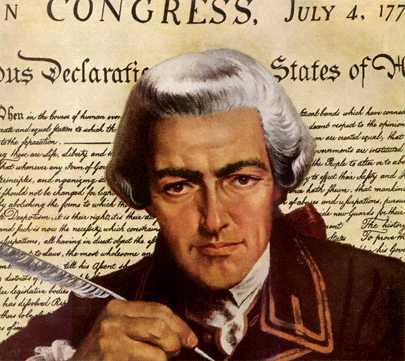
On July 4, 1776, fifty-six dedicated patriots resolved to risk everything in the hope of a new beginning. Elected to represent colonists from across the thirteen British colonies on the American continent, they decided to embark upon a grand experiment, to form a self-governing democratic republic.
They were risking their lives. Had they failed, they would have been hanged as traitors, their lands confiscated by the Crown, their fortunes forfeited, and their families left disgraced and destitute.
Yet they succeeded, and the freest, safest, and prosperous nation in the world was born.
We don’t just celebrate the historical fact of America’s birth. When we celebrate Independence Day, we celebrate everything for which the United States stands.
We celebrate the right to speak what we will, no matter how unpopular, without fear of government reprisal. We celebrate our right to worship according to the dictates of our conscience. We celebrate our right to bear arms in defense of ourselves and our freedom. We celebrate our right to be secure in our homes and our families, and should we become entangled with the law, our right not to be deprived of life, liberty or property without due process, which includes everything from our right to a jury trial, to our right to a lawyer, to our right to not incriminate ourselves or be tortured.
While many of us take those rights for granted, the reality is that they are rare, both in history and even around the globe today. But those rights, that liberty, is what we celebrate on the Fourth of July.
In other words, what we celebrate is American exceptionalism.
That’s the belief that America is something special. We are a shining beacon of light throughout the world and throughout the annals of history. We are the exception, not the rule.
The national bestseller The 5000 Year Leap: A Miracle that Changed the World does a masterful job of showing American exceptionalism in the context of world history. With a special focus on economic freedom, this book shows that the principles of liberty enshrined by our Founders in our Declaration of Independence, and later in the U.S. Constitution, led to an inconceivable level of prosperity, safety and happiness in this country that the rest of the world looked at in shocked disbelief.
Yet President Obama doesn’t believe in American exceptionalism. As we quote in our own national bestseller The Blueprint: Obama’s Plan to Subvert the Constitution and Build an Imperial Presidency, Barack Obama is on video, telling a foreign audience in Greece in 2009 that America is only exceptional in the same way that Brits think Great Britain is exceptional, or the Greeks think that Greece is exceptional.
In other words, we’re all exceptional. But since the definition of an exception is something that stands out from the norm, we cannot all be exceptional. If we’re all exceptional, then none of us are exceptional. President Obama could not be more wrong.
He’s busy fundamentally transforming our nation. He’s leading a government takeover of our free-market economy, including the best health care system the world has ever seen. He’s trying to grant citizenship and the right to vote to millions of illegal immigrants who have no interest in becoming Americans, pledging their loyalty to this exceptional nation alone and renouncing all other ties. He’s trying to silence his political critics, and muzzle those few media outlets that tell the truth.
And to top it off, as we saw last week, he’s packing our nation’s courts, and our Supreme Court, with people who see society the same way he does, and will rubber-stamp his agenda as being consistent with the Constitution.
On the Fourth of July, we celebrate our Independence Day—our freedom from oppressive government and our commitment to individual freedom. In doing so, we oppose the Obama vision, and his blueprint for America.
Calvin Coolidge, born July 4: Hero to tea partiers

By JOHN CURRAN
PLYMOUTH, Vt. — In the Vermont hamlet where Calvin Coolidge was born, folks will celebrate his star-spangled birthday the way they always do.
A Vermont National Guard contingent and a color guard will gather at noon on the village green and walk down to the Plymouth Notch Cemetery, where Coolidge is buried, trailed by hundreds of people — Coolidge descendants, presidential history buffs and locals.
There, Brig. Gen. Matthew McCoy will lay a wreath provided by the White House, a U.S. Army bugler will blow "Taps" and McCoy will lead the procession back up the road to the village, where a chicken barbecue picnic is held for anyone who wants to come.
But this year, the celebration of the only U.S. president born on July 4 won't end with the simple Independence Day ritual.
The opening of a new museum dedicated to Coolidge, the renewed cachet of his back-to-basics government philosophy and a symposium revisiting his presidency are prompting new looks at the shy, oft-maligned 30th president known as "Silent Cal."
"We haven't heard much about Coolidge for 60 years, but he's become a heroic figure to the tea partiers because of his strong anti-tax positions," said presidential historian Rogan Kersh, of New York University.
The son of a village storekeeper, he was a stern Yankee with a dry wit who believed that the best government was one that governed the least. He served as governor of Massachusetts before being tapped for the GOP ticket headed by Warren Harding in 1920.
In 1923, he was swept into history when Harding died of a heart attack. Coolidge, who was spending the summer at his family's homestead in Plymouth Notch, was sworn in as president by his father — who was a notary public — in the parlor of their house just before 3 a.m. on Aug. 3, 1923.
‘All men are created equal’ is not hypocrisy but vision

By Jeff Jacoby
‘HOW IS it,’’ the great English man of letters Samuel Johnson taunted Americans 235 years ago, “that we hear the loudest yelps for liberty among the drivers of Negroes?’’ His fellow Englishman Thomas Day remarked in 1776 with equal scorn: “If there be an object truly ridiculous in nature it is an American patriot signing resolutions of independency with the one hand and with the other brandishing a whip over his affrighted slaves.’’
That America’s founders were hypocrites, above all on the subject of race, is an enduring charge.
Examples are legion. At a Massachusetts Anti-Slavery Society rally in 1854, William Lloyd Garrison condemned the Constitution — which extolled “the blessings of liberty,’’ yet permitted slavery — as “a covenant with death, and an agreement with hell.’’ When a bill requiring public school students to recite parts of the Declaration of Independence was proposed in the New Jersey legislature in 2000, it was denounced as insulting. “You have nerve to ask my grandchildren to recite the Declaration,’’ one black lawmaker erupted angrily. “How dare you?’’
In 1975, in an essay marking the approach of the nation’s bicentennial, the eminent historian John Hope Franklin accused the Founders of “betraying the ideals to which they gave lip service.’’ Obviously, he wrote, “human bondage and human dignity were not as important to them as their own political and economic independence.’’
Are the Founders guilty as charged? There is no denying that the patriots who proclaimed it “self-evident’’ that “all men are created equal’’ tolerated black slavery. It is true that the Declaration of Independence, which so stirringly affirms that God endows every human being with “life, liberty, and the pursuit of happiness,’’ was the work of a Virginia planter who owned 200 slaves.
So, yes, it is easy to damn Jefferson and the other Founders for not living up to their highest ideals. But if that is all it takes to be convicted of hypocrisy, how many of us would escape conviction? Surely what is more remarkable about Jefferson is not that he owned slaves, but that he acknowledged forthrightly and repeatedly that slavery was wrong. In his “Notes on the State of Virginia,’’ for instance, he characterized slave ownership as “the most unremitting despotism’’ — an outrage bound to provoke divine wrath. “Indeed,’’ Jefferson wrote, “I tremble for my country when I reflect that God is just: that his justice cannot sleep for ever.’’
The Founders weren’t stupid. Of course they knew that the universal ideals embraced in the Declaration were not matched in reality across the colonies. The controversy over slavery was intense; but even more intense was the need for a united front against England. The urgent choice in 1776 was not between slavery or abolition. It was between hanging together, as Benjamin Franklin supposedly quipped in Philadelphia, or most assuredly hanging separately. They chose to hang together, and the confrontation over slavery was left for later.
But in that confrontation, the lofty ideal of equality enshrined in the Declaration — precisely because it was enshrined in the Declaration — imparted enormous moral authority to the abolitionists’ cause. Those who indict the Founders because their treatment of African slaves didn’t come up to the standard of “all men are created equal’’ should be asked: Would the Declaration of Independence have been improved if those words had been omitted? Would slavery have ended sooner had abolitionists not been able to invoke that “self-evident truth’’?
Inveighing against slavery on Independence Day in 1852, Frederick Douglass famously asked: “What, to the American slave, is your 4th of July?’’ It was a “sham,’’ he answered, “empty and heartless . . . revolting barbarity and shameless hypocrisy.’’ For after all, he demanded, “Are the great principles . . . embodied in that Declaration of Independence extended to us?’’ That Declaration could have been written without those great principles. But at what cost to Douglass and all who fought against slavery?
“We hold these truths to be self-evident, that all men are created equal.’’ The Founders chose those words not to describe the nation in which they lived, but a better, more just nation; the nation America could become. Their words became the American creed, the taproot of the American dream — as worthy of celebrating today as they were in 1776.
Subscribe to:
Posts (Atom)