Via-NRO
Showing posts with label Will. Show all posts
Showing posts with label Will. Show all posts
8/04/2013
3/02/2013
The Voting Rights Act, stuck in the past
Via-WAPO

The question concerning which the Supreme Court heard oral arguments Wednesday was whether Section 5 of the act is still constitutional, given the disappearance of the conditions that once made it acceptable as a temporary and emergency truncation of states’ sovereignty under federalism. In 2008, two years after the fourth renewal of the act, Barack Obama won a higher percentage of the white vote than did Al Gore and John Kerry in 2000 and 2004, respectively. Today Mississippi has more black elected officials — not more per capita, more — than any other state. Yet defenders of the continuing necessity of Section 5 merely shrug about the fact that race is no longer a barrier to either the nation’s highest office or to state and local offices in what once was the state most emblematic of resistance to racial equality.
On Wednesday, Chief Justice John Roberts, noting that Massachusetts has the worst rate of white turnout compared with that of blacks, and that Mississippi has the best, asked Solicitor General Donald Verrilli: “Is it the government’s submission that the citizens in the South are more racist than citizens of the North?” Verrilli said no. His answer was obviously false. Otherwise, the administration would favor extending Section 5 to the entire nation.
Justice Anthony Kennedy asked Verrilli why the government, which purports to believe both that the Voting Rights Act remains necessary and that there are not regional differences in racism, does not want to make the act universally applicable. Verrilli replied that “history remains relevant” and Congress considered it “prudent” in 2006 to maintain Section 5’s “deterrent and constraining effect.” It was prudent, and history is relevant, only if the citizens of the South remain more racist than the citizens of the North.
Verrilli did not deny that Section 5 takes a toll on federalism. Kennedy, whose vote is apt to be decisive, described the toll disapprovingly as a federal “trusteeship” over the covered states and jurisdictions. Citing the Marshall Plan and other excellent laws that were not necessary forever, Kennedy said: “Times change.”
Not for progressives, they don’t. Section 5 was enacted as a temporary response to many measures employed, primarily in the South, to disenfranchise minorities. It requires nine states and some jurisdictions in others to get federal permission — “pre-clearance” — for even minor changes in voting procedures. It has been extended four times, most recently in 2006 for 25 years. The 2006 House vote was 390 to 33, the Senate vote was 98 to 0; obviously, the political class’s piety about the act has extinguished thought about its necessity. But one reason for judicial review — for active judicial engagement in the protection of constitutional rights and arrangements — is that the political class, with its majoritarian temptations, cannot be trusted to do so.
In 1982, Section 2 of the act was amended to say that the measure is violated whenever nomination and election processes “are not equally open to participation” by minority voters. And equality of participation is said to be denied whenever minority voters “have less opportunity than other members of the electorate to . . . elect representatives of their choice.” And representatives “of their choice” has been construed to mean representatives who are members of the same minority. This expresses two tenets of progressivism’s racialism. One is identity politics: Your race is your political identity. The other is categorical representation: Members of a race can be understood and represented only by members of this race. By this reasoning the Voting Rights Act has become an instrument for what Roberts has hitherto called “a sordid business, this divvying us up by race.”
Each renewal of the 1965 act should have involved sifting the most recent voting results, but the most recent data used in 2006 were from 1972. By 2031, this data will be 59 years old. Unless the court now stops this pernicious silliness, in 2031 Section 5 will no doubt be renewed a fifth time, perhaps for 34 years, through the centennial of this temporary measure.

By George F. Will,
Progressives are remarkably uninterested in progress. Social Security is 78 years old, and myriad social improvements have added 17 years to life expectancy since 1935, yet progressives insist the program remain frozen, like a fly in amber. Medicare is 48 years old, and the competence and role of medicine have been transformed since 1965, yet progressives cling to Medicare “as we know it.” And they say that the Voting Rights Act, another 48-year-old, must remain unchanged, despite dramatic improvements in race relations.The question concerning which the Supreme Court heard oral arguments Wednesday was whether Section 5 of the act is still constitutional, given the disappearance of the conditions that once made it acceptable as a temporary and emergency truncation of states’ sovereignty under federalism. In 2008, two years after the fourth renewal of the act, Barack Obama won a higher percentage of the white vote than did Al Gore and John Kerry in 2000 and 2004, respectively. Today Mississippi has more black elected officials — not more per capita, more — than any other state. Yet defenders of the continuing necessity of Section 5 merely shrug about the fact that race is no longer a barrier to either the nation’s highest office or to state and local offices in what once was the state most emblematic of resistance to racial equality.
On Wednesday, Chief Justice John Roberts, noting that Massachusetts has the worst rate of white turnout compared with that of blacks, and that Mississippi has the best, asked Solicitor General Donald Verrilli: “Is it the government’s submission that the citizens in the South are more racist than citizens of the North?” Verrilli said no. His answer was obviously false. Otherwise, the administration would favor extending Section 5 to the entire nation.
Justice Anthony Kennedy asked Verrilli why the government, which purports to believe both that the Voting Rights Act remains necessary and that there are not regional differences in racism, does not want to make the act universally applicable. Verrilli replied that “history remains relevant” and Congress considered it “prudent” in 2006 to maintain Section 5’s “deterrent and constraining effect.” It was prudent, and history is relevant, only if the citizens of the South remain more racist than the citizens of the North.
Verrilli did not deny that Section 5 takes a toll on federalism. Kennedy, whose vote is apt to be decisive, described the toll disapprovingly as a federal “trusteeship” over the covered states and jurisdictions. Citing the Marshall Plan and other excellent laws that were not necessary forever, Kennedy said: “Times change.”
Not for progressives, they don’t. Section 5 was enacted as a temporary response to many measures employed, primarily in the South, to disenfranchise minorities. It requires nine states and some jurisdictions in others to get federal permission — “pre-clearance” — for even minor changes in voting procedures. It has been extended four times, most recently in 2006 for 25 years. The 2006 House vote was 390 to 33, the Senate vote was 98 to 0; obviously, the political class’s piety about the act has extinguished thought about its necessity. But one reason for judicial review — for active judicial engagement in the protection of constitutional rights and arrangements — is that the political class, with its majoritarian temptations, cannot be trusted to do so.
In 1982, Section 2 of the act was amended to say that the measure is violated whenever nomination and election processes “are not equally open to participation” by minority voters. And equality of participation is said to be denied whenever minority voters “have less opportunity than other members of the electorate to . . . elect representatives of their choice.” And representatives “of their choice” has been construed to mean representatives who are members of the same minority. This expresses two tenets of progressivism’s racialism. One is identity politics: Your race is your political identity. The other is categorical representation: Members of a race can be understood and represented only by members of this race. By this reasoning the Voting Rights Act has become an instrument for what Roberts has hitherto called “a sordid business, this divvying us up by race.”
Each renewal of the 1965 act should have involved sifting the most recent voting results, but the most recent data used in 2006 were from 1972. By 2031, this data will be 59 years old. Unless the court now stops this pernicious silliness, in 2031 Section 5 will no doubt be renewed a fifth time, perhaps for 34 years, through the centennial of this temporary measure.
1/25/2013
Recipe for conservative revival
Via-WAPO

George F Will
Happy days are not here again, but they are coming for conservatives. Barack Obama — with the lowest approval rating (according to Gallup, 50 percent, four points lower than that of the National Rifle Association) of any reelected president when inaugurated since World War II — has a contradictory agenda certain to stimulate a conservative revival.
Consider his vow to expend political capital on climate change. The absurdity of the Kyoto approach — global climate treaties agreed to by 190 nations — is now obvious even to most former enthusiasts. Obama can propose cutting U.S. fossil-fuel emissions (just 16 percent of the global total) with a carbon tax or a cap-and-trade scheme, but Congress will pass neither. So he will be reduced to administrative gestures costly to job growth, and government spending — often crony capitalism — for green energy incommensurate with his rhetoric.
He says that “the threat of climate change” is apparent in “raging fires,” “crippling drought” and “more powerful storms.” Are fires raging now more than ever? (There were a third fewer U.S. wildfires in 2012 than in 2006.) Are the number and severity of fires determined by climate change rather than forestry and land-use practices? Is today’s drought worse than, say, that of the Dust Bowl, and was it caused by 1930s global warming? As for “more powerful storms”:
Because Sandy struck New York City, where the nation’s media congregate and participate in the city’s provincialism, this storm was declared more cosmically momentous than the 74 other hurricanes that have hit or come near the city since 1800. In 2005, Hurricane Katrina was called a consequence of global warming and hence a harbinger of increasing numbers of Category 3 or higher hurricanes. Since then, major hurricane activity has plummeted. No Category 3 storm has hit the United States since 2005. Sandy was just a Category 1.
Obama’s vow to adjust Earth’s thermostat followed the report that 2012 was the hottest year on record in the contiguous 48 states. But the Wall Street Journal’s Holman Jenkins, who has concisely posed the actual climate policy choice (“How much should we spend on climate change in order to have no effect on climate change?”), has noted that although 2012 was 2.13 degrees Fahrenheit hotter than 2011, “2008, in the contiguous U.S., was two degrees cooler than 2006.” And “2000, 2002, 2003, 2004, 2008, 2009, 2010 and 2011 were all cooler than 1998 by a larger margin than 2012 was hotter than 1998.” Such is the rigor of many who preen as devotees of science that they declared the 2012 temperatures in the contiguous states (1.58 percent of the Earth’s surface) proof of catastrophic global warming.

George F Will
Happy days are not here again, but they are coming for conservatives. Barack Obama — with the lowest approval rating (according to Gallup, 50 percent, four points lower than that of the National Rifle Association) of any reelected president when inaugurated since World War II — has a contradictory agenda certain to stimulate a conservative revival.
Consider his vow to expend political capital on climate change. The absurdity of the Kyoto approach — global climate treaties agreed to by 190 nations — is now obvious even to most former enthusiasts. Obama can propose cutting U.S. fossil-fuel emissions (just 16 percent of the global total) with a carbon tax or a cap-and-trade scheme, but Congress will pass neither. So he will be reduced to administrative gestures costly to job growth, and government spending — often crony capitalism — for green energy incommensurate with his rhetoric.
He says that “the threat of climate change” is apparent in “raging fires,” “crippling drought” and “more powerful storms.” Are fires raging now more than ever? (There were a third fewer U.S. wildfires in 2012 than in 2006.) Are the number and severity of fires determined by climate change rather than forestry and land-use practices? Is today’s drought worse than, say, that of the Dust Bowl, and was it caused by 1930s global warming? As for “more powerful storms”:
Because Sandy struck New York City, where the nation’s media congregate and participate in the city’s provincialism, this storm was declared more cosmically momentous than the 74 other hurricanes that have hit or come near the city since 1800. In 2005, Hurricane Katrina was called a consequence of global warming and hence a harbinger of increasing numbers of Category 3 or higher hurricanes. Since then, major hurricane activity has plummeted. No Category 3 storm has hit the United States since 2005. Sandy was just a Category 1.
Obama’s vow to adjust Earth’s thermostat followed the report that 2012 was the hottest year on record in the contiguous 48 states. But the Wall Street Journal’s Holman Jenkins, who has concisely posed the actual climate policy choice (“How much should we spend on climate change in order to have no effect on climate change?”), has noted that although 2012 was 2.13 degrees Fahrenheit hotter than 2011, “2008, in the contiguous U.S., was two degrees cooler than 2006.” And “2000, 2002, 2003, 2004, 2008, 2009, 2010 and 2011 were all cooler than 1998 by a larger margin than 2012 was hotter than 1998.” Such is the rigor of many who preen as devotees of science that they declared the 2012 temperatures in the contiguous states (1.58 percent of the Earth’s surface) proof of catastrophic global warming.
1/05/2013
Tea party isn't done yet
Via-Capitol Journal On Line

George Will
Connoisseurs of democratic decadence can savor a variety of contemporary dystopias. Because familiarity breeds banality, Greece has become a boring horror. Japan, however, in its second generation of stagnation is fascinating. Once, Japan bestrode the world, jauntily buying Rockefeller Center and Pebble Beach. Now Japanese buy more adult diapers than those for infants.
America has its lowest birth rate since at least 1920 — family formation and workforce participation have declined in tandem. But it has an energy surplus, the government-produced overhang of housing inventory is shrinking and the average age of Americans’ cars is an astonishing 10.8 years. Such promising economic indicators, however, mask America’s democratic decadence, as explained by the Hudson Institute’s Christopher DeMuth (The Weekly Standard, Dec. 24):
Deficit spending once was largely for investments — building infrastructure, winning wars — which benefited future generations. Now, however, continuous borrowing burdens future generations in order to finance current consumption. Today’s policy, says DeMuth, erases “the distinction between investing for the future and borrowing from the future.”
Most Americans will be spared the educational experience of fiscal cliff-related tax increases and spending cuts. Still, December’s maneuverings taught three lessons.
First, there will be no significant spending restraint. Democrats even rejected a more accurate measurement of the cost of living that would slightly slow increases in government benefits.
Second, Barack Obama has (as Winston Churchill said of an adversary) “the gift of compressing the largest amount of words into the smallest amount of thought.” His incessant talking swaddled one wee idea — raising taxes on “millionaires and billionaires.” He has nothing pertinent to say about the steadily worsening fiscal imbalance that will make sluggish growth — under 3 percent — normal.
Third, one December winner was George W. Bush because a large majority of Democrats favored making a majority of his tax cuts permanent. December’s rancor disguised bipartisan agreement: Both parties flinch from cliff-related tax increases and spending decreases. But neither the increases nor decreases would have tamed the current $1 trillion-plus budget deficit nor made a discernible impact in the unfunded liabilities of the entitlement state.
This state cannot be funded by taxing “the rich.” Or even by higher income taxes on the middle class. Income taxes cannot fund the government liberals want, and they dare not seek the consumption and energy taxes their entitlement architecture requires. Hence, although Republicans are complicit, Democrats are ardent in embracing decadent democracy.
As economists Glenn Hubbard and Tim Kane explain in National Affairs quarterly, America’s political system “cannot govern the entitlement state” that “exists largely to provide material benefits to individuals.” Piling up unsustainable entitlement promises has been improvident for the nation but rational for the political class. The promised expenditures, far in excess of revenues, would come due “beyond the horizon of political consequences.”
“Our politicians,” say Hubbard and Kane, “are acting rationally” but “politically rational behavior is now fiscally perverse.” Both parties are responding to electoral incentives to neither raise taxes nor cut spending. Hence, “the clash over raising the debt limit that gripped Washington during the summer of 2011 was the beginning, not the end, of our fiscal woes.”
But the perils of the entitlement state are no longer (in Hubbard’s and Kane’s words) “safely beyond the politicians’ career horizons.” Furthermore, a critical mass of Republicans reject the careerists’ understanding of “politically rational” behavior. The media, which often are the last to know things because their wishes father their thoughts, say the tea party impulse is exhausted. Scores of House Republicans and seven first-term Republican senators (Rand Paul, Mike Lee, Pat Toomey, Ted Cruz, Ron Johnson, Marco Rubio and Tim Scott) will soon — hello, debt ceiling — prove otherwise.

George Will
Connoisseurs of democratic decadence can savor a variety of contemporary dystopias. Because familiarity breeds banality, Greece has become a boring horror. Japan, however, in its second generation of stagnation is fascinating. Once, Japan bestrode the world, jauntily buying Rockefeller Center and Pebble Beach. Now Japanese buy more adult diapers than those for infants.
America has its lowest birth rate since at least 1920 — family formation and workforce participation have declined in tandem. But it has an energy surplus, the government-produced overhang of housing inventory is shrinking and the average age of Americans’ cars is an astonishing 10.8 years. Such promising economic indicators, however, mask America’s democratic decadence, as explained by the Hudson Institute’s Christopher DeMuth (The Weekly Standard, Dec. 24):
Deficit spending once was largely for investments — building infrastructure, winning wars — which benefited future generations. Now, however, continuous borrowing burdens future generations in order to finance current consumption. Today’s policy, says DeMuth, erases “the distinction between investing for the future and borrowing from the future.”
Most Americans will be spared the educational experience of fiscal cliff-related tax increases and spending cuts. Still, December’s maneuverings taught three lessons.
First, there will be no significant spending restraint. Democrats even rejected a more accurate measurement of the cost of living that would slightly slow increases in government benefits.
Second, Barack Obama has (as Winston Churchill said of an adversary) “the gift of compressing the largest amount of words into the smallest amount of thought.” His incessant talking swaddled one wee idea — raising taxes on “millionaires and billionaires.” He has nothing pertinent to say about the steadily worsening fiscal imbalance that will make sluggish growth — under 3 percent — normal.
Third, one December winner was George W. Bush because a large majority of Democrats favored making a majority of his tax cuts permanent. December’s rancor disguised bipartisan agreement: Both parties flinch from cliff-related tax increases and spending decreases. But neither the increases nor decreases would have tamed the current $1 trillion-plus budget deficit nor made a discernible impact in the unfunded liabilities of the entitlement state.
This state cannot be funded by taxing “the rich.” Or even by higher income taxes on the middle class. Income taxes cannot fund the government liberals want, and they dare not seek the consumption and energy taxes their entitlement architecture requires. Hence, although Republicans are complicit, Democrats are ardent in embracing decadent democracy.
As economists Glenn Hubbard and Tim Kane explain in National Affairs quarterly, America’s political system “cannot govern the entitlement state” that “exists largely to provide material benefits to individuals.” Piling up unsustainable entitlement promises has been improvident for the nation but rational for the political class. The promised expenditures, far in excess of revenues, would come due “beyond the horizon of political consequences.”
“Our politicians,” say Hubbard and Kane, “are acting rationally” but “politically rational behavior is now fiscally perverse.” Both parties are responding to electoral incentives to neither raise taxes nor cut spending. Hence, “the clash over raising the debt limit that gripped Washington during the summer of 2011 was the beginning, not the end, of our fiscal woes.”
But the perils of the entitlement state are no longer (in Hubbard’s and Kane’s words) “safely beyond the politicians’ career horizons.” Furthermore, a critical mass of Republicans reject the careerists’ understanding of “politically rational” behavior. The media, which often are the last to know things because their wishes father their thoughts, say the tea party impulse is exhausted. Scores of House Republicans and seven first-term Republican senators (Rand Paul, Mike Lee, Pat Toomey, Ted Cruz, Ron Johnson, Marco Rubio and Tim Scott) will soon — hello, debt ceiling — prove otherwise.
3/28/2010
A Birthright? Maybe Not

Via-The Patriot Post
By George Will
WASHINGTON -- A simple reform would drain some scalding steam from immigration arguments that may soon again be at a roiling boil. It would bring the interpretation of the 14th Amendment into conformity with what the authors of its text intended, and with common sense, thereby removing an incentive for illegal immigration.
To end the practice of "birthright citizenship," all that is required is to correct the misinterpretation of that amendment's first sentence: "All persons born or naturalized in the United States, and subject to the jurisdiction thereof, are citizens of the United States and of the state wherein they reside." From these words has flowed the practice of conferring citizenship on children born here to illegal immigrants.
A parent from a poor country, writes professor Lino Graglia of the University of Texas law school, "can hardly do more for a child than make him or her an American citizen, entitled to all the advantages of the American welfare state." Therefore, "It is difficult to imagine a more irrational and self-defeating legal system than one which makes unauthorized entry into this country a criminal offense and simultaneously provides perhaps the greatest possible inducement to illegal entry."
Writing in the Texas Review of Law and Politics, Graglia says this irrationality is rooted in a misunderstanding of the phrase "subject to the jurisdiction thereof." What was this intended or understood to mean by those who wrote it in 1866 and ratified it in 1868? The authors and ratifiers could not have intended birthright citizenship for illegal immigrants because in 1868 there were and never had been any illegal immigrants because no law ever had restricted immigration.
If those who wrote and ratified the 14th Amendment had imagined laws restricting immigration -- and had anticipated huge waves of illegal immigration -- is it reasonable to presume they would have wanted to provide the reward of citizenship to the children of the violators of those laws? Surely not.
The Civil Rights Act of 1866 begins with language from which the 14th Amendment's Citizenship Clause is derived: "All persons born in the United States, and not subject to any foreign power, excluding Indians not taxed, are hereby declared to be citizens of the United States." (Emphasis added.) The explicit exclusion of Indians from birthright citizenship was not repeated in the 14th Amendment because it was considered unnecessary. Although Indians were at least partially subject to U.S. jurisdiction, they owed allegiance to their tribes, not the United States. This reasoning -- divided allegiance -- applies equally to exclude the children of resident aliens, legal as well as illegal, from birthright citizenship. Indeed, today's regulations issued by the departments of Homeland Security and Justice stipulate:
"A person born in the United States to a foreign diplomatic officer accredited to the United States, as a matter of international law, is not subject to the jurisdiction of the United States. That person is not a United States citizen under the 14th Amendment."
Sen. Lyman Trumbull of Illinois was, Graglia writes, one of two "principal authors of the citizenship clauses in 1866 act and the 14th Amendment." He said that "subject to the jurisdiction of the United States" meant subject to its "complete" jurisdiction, meaning "not owing allegiance to anybody else." Hence children whose Indian parents had tribal allegiances were excluded from birthright citizenship.
Appropriately, in 1884 the Supreme Court held that children born to Indian parents were not born "subject to" U.S. jurisdiction because, among other reasons, the person so born could not change his status by his "own will without the action or assent of the United States." And "no one can become a citizen of a nation without its consent." Graglia says this decision "seemed to establish" that U.S. citizenship is "a consensual relation, requiring the consent of the United States." So: "This would clearly settle the question of birthright citizenship for children of illegal aliens. There cannot be a more total or forceful denial of consent to a person's citizenship than to make the source of that person's presence in the nation illegal."
Congress has heard testimony estimating that more than two-thirds of all births in Los Angeles public hospitals, and more than half of all births in that city, and nearly 10 percent of all births in the nation in recent years, have been to illegal immigrant mothers. Graglia seems to establish that there is no constitutional impediment to Congress ending the granting of birthright citizenship to persons whose presence here is "not only without the government's consent but in violation of its law."
More...
3/07/2010
Privileges, Guns and the Court

Via-RCP
By George Will
WASHINGTON -- It is said, more frequently than precisely, that the reasons the Supreme Court gives for doing whatever it does are as important as what it does. Actually, the court's reasons are what it does. Hence, the interest in the case the Supreme Court considered last week.
It probably will result in a routine ruling that extends a 2008 decision and renders dubious many state and local gun control laws. What could -- but, judging from the justices' remarks during oral argument, probably will not -- make the ruling momentous would be the court deciding that the two ordinances at issue violate the 14th Amendment's "privileges or immunities" clause. Liberals and conservatives submitted briefs arguing, correctly, that this clause was intended to be a scythe for slicing through thickets of state and local laws abridging fundamental liberties.
The Second Amendment says: "A well-regulated militia, being necessary to the security of a free state, the right of the people to keep and bear arms, shall not be infringed." Until 2008, the court had never clarified whether the prefatory clause makes this right conditional: Does the amendment protect an individual's right to own firearms, or does it protect that right only in connection with a state's right to organize a militia?
In 2008, the court struck down a District of Columbia law that effectively banned possession of handguns even in an owner's home -- it banned all guns not kept at businesses, or disassembled or disabled by trigger locks. The court held, 5-4, that the Second Amendment protects individuals' rights.
But the court answered only the question then posed, which concerned the federal enclave of D.C. Left unanswered was whether the amendment protects that right against severe restrictions by state and local laws.
The oral argument concerned ordinances in Chicago and suburban Oak Park that are indistinguishable from the D.C. law. The court probably will overturn those ordinances by holding that another part of the 14th Amendment -- the guarantee that no state shall deny liberty "without due process of law" -- "incorporates" the Second Amendment. The justices evinced scant interest Tuesday in resurrecting the "privileges or immunities" clause by revisiting an incoherent decision rendered in 1873.
To the drafters of the 14th Amendment, the phrase "privileges or immunities" was synonymous with "basic civil rights." But in 1873, the court held that only some of the rights enumerated in the Bill of Rights restrict states by being "incorporated" into the 14th Amendment's "due process" clause.
Since 1897, the court has held, with no discernible principle, that some rights enumerated in the Bill of Rights are sufficiently fundamental to be "incorporated" but others are not. This doctrine bears the oxymoronic name "substantive due process." Substance is what process questions are not about.
If the court now "incorporates" the Second Amendment right via the "due process" guarantee, that will be progress because it will enlarge the sphere of protected liberty. And even Justice Antonin Scalia, who recognizes that "substantive due process" is intellectual applesauce, thinks it is too late to repudiate 137 years of the stuff. Still, three points argue for using the "privileges or immunities" scythe against the two gun ordinances.
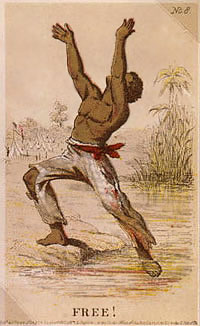
First, protecting the individual's right to keep and bear arms for self-defense was frequently mentioned by those who drafted and ratified the 14th Amendment, the purpose of which was to protect former slaves and their advocates from being disarmed by state and local governments determined to assault their security and limit their autonomy.
Second, the central tenet of American political philosophy is that government is instituted not to bestow rights but to protect pre-existing rights, aka natural rights -- those essential to the flourishing of our natures. In its 2008 decision, the court affirmed that the Second Amendment did not grant a right to keep and bear arms, it "codified a pre-existing right."
Third, "privileges or immunities" are all those rights that, at the time the 14th Amendment was ratified, were understood to be central to Americans' enjoyment of the blessings of liberty.
Liberals might hope and conservatives might fear that a revivified "privileges or immunities" clause wielded by liberal justices would breed many new "positive rights" -- to welfare, health care, etc. But conservatives know that "substantive due process" already has such a pernicious potential. And they believe that if -- a huge caveat -- it remained tethered to the intent of its 19th-century authors, the "privileges or immunities" clause would be useful protection against the statism of the states.
More...
3/03/2010
The Basement Boys

Via-Newsweek
The making of modern immaturity.
by George Will
Current economic hardships have had what is called in constitutional law a "disparate impact": The crisis has not afflicted everyone equally. Although women are a majority of the workforce, perhaps as many as 80 percent of jobs lost were held by men. This injury to men is particularly unfortunate because it may exacerbate, and be exacerbated by, a culture of immaturity among the many young men who are reluctant to grow up.
Increasingly, they are defecting from the meritocracy. Women now receive almost 58 percent of bachelor's degrees. This is why many colleges admit men with qualifications inferior to those of women applicants—which is one reason men have higher dropout rates. The Pew Research Center reports that 28 percent of wives between ages 30 and 44 have more education than their husbands, whereas only 19 percent of husbands in the same age group have more education than their wives. Twenty-three percent of men with some college education earn less than their wives. In law, medical, and doctoral programs, women are majorities or, if trends continue, will be.
In 1956, the median age of men marrying was 22.5. But between 1980 and 2004, the percentage of men reaching age 40 without marrying increased from 6 to 16.5. A recent study found that 55 percent of men 18 to 24 are living in their parents' homes, as are 13 percent of men 25 to 34, compared to 8 percent of women.
Mike Stivic, a.k.a. Meathead, the liberal graduate student in All in the Family, reflected society's belief in the cultural superiority of youth, but he was a leading indicator of something else: He lived in his father-in-law Archie Bunker's home. What are today's "basement boys" doing down there? Perhaps watching Friends and Seinfeld reruns about a culture of extended youth utterly unlike the world of young adults in previous generations.
Gary Cross, a Penn State University historian, wonders, "Where have all the men gone?" His book, Men to Boys: The Making of Modern Immaturity, argues that "the culture of the boy-men today is less a life stage than a lifestyle." If you wonder what has become of manliness, he says, note the differences between Cary Grant and Hugh Grant, the former, dapper and debonair, the latter, a perpetually befuddled boy.
Permissive parenting, Cross says, made children less submissive, and the decline of deference coincided with the rise of consumer and media cultures celebrating the indefinite retention of the tastes and habits of childhood. The opening of careers to talented women has coincided with the attenuation of male role models in popular culture: In 1959, there were 27 Westerns on prime-time television glamorizing male responsibility.
Cross says the large-scale entry of women into the workforce made many men feel marginalized, especially when men were simultaneously bombarded by new parenting theories, which cast fathers as their children's pals, or worse: In 1945, Parents magazine said a father should "keep yourself huggable" but show a son the "respect" owed a "business associate."
All this led to "ambiguity and confusion about what fathers were to do in the postwar home and, even more, about what it meant to grow up male." Playboy magazine, a harbinger of perpetual adolescence, sold trinkets for would-be social dropouts: "Join the beat generation! Buy a beat generation tieclasp." Think about that.
Although Cross, an aging academic boomer, was a student leftist, he believes that 1960s radicalism became "a retreat into childish tantrums" symptomatic "of how permissive parents infantilized the boomer generation." And the boomers' children? Consider the television commercials for the restaurant chain called Dave & Buster's, which seems to be, ironically, a Chuck E. Cheese's for adults—a place for young adults, especially men, to drink beer and play electronic games and exemplify youth not as a stage of life but as a perpetual refuge from adulthood.
At the 2006 Super Bowl, the Rolling Stones sang "Satisfaction," a song older than the Super Bowl. At this year's game, another long-of-tooth act, the Who, continued the commerce of catering to baby boomers' limitless appetite for nostalgia. "My generation's obsession with youth and its memories," Cross writes, "stands out in the history of human vanity."
Last November, when Tiger Woods's misadventures became public, his agent said: "Let's please give the kid a break." The kid was then 33. He is now 34 but, no doubt, still a kid. The puerile anthem of a current Pepsi commercial is drearily prophetic: "Forever young."
More...
2/25/2010
Why Dems' Health Care Bill is Stalled

Via-Washington Post
By George Will
WASHINGTON -- Today's health policy "summit" comes at a moment when, as happens with metronomic regularity, Washington is reverberating with lamentations about government being "broken." Such talk occurs only when the left's agenda is stalled. Do you remember mournful editorials and somber seminars about "dysfunctional" government when liberals defeated George W. Bush's Social Security reforms?
The summit's predictable failure will be a pretext for trying to ram health legislation through the Senate by misusing "reconciliation," which prevents filibusters. If the Senate parliamentarian rules, as he should, that most of the legislation is ineligible for enactment under reconciliation, the vice president, as Senate president, can overrule the parliamentarian. This has not happened since 1975, but liberals say desperate times require desperate measures.
Today's desperation? Democracy's majoritarian ethic is, liberals say, being violated by the filibuster that prevents their enacting health legislation opposed by an American majority.
Some liberals argue that the Constitution is unconstitutional, for two reasons, the first of which is a non sequitur: The Constitution empowers each chamber to "determine the rules of its proceedings." It requires five supermajorities (for ratifying treaties, endorsing constitutional amendments, overriding vetoes, expelling members and impeachment convictions). Therefore it does not permit requiring a sixth, to end filibusters.
The second reason filibusters are supposedly unconstitutional is that they exacerbate the Senate's flaw as "inherently unrepresentative." That is, the Founders -- who liberals evidently believe were dolts or knaves -- designed it to represent states rather than, as the House does, population.
Liberals fret: 41 senators from the 21 smallest states, with barely 10 percent of the population, could block a bill. But Matthew Franck of Radford University counters that if cloture were blocked by 41 senators from the 21 largest states, the 41 would represent 77.4 percent of the nation's population. Anyway, senators are never so tidily sorted, so consider today's health impasse: The 59 Democratic senators come from 36 states containing 74.9 percent of the population, while the 41 Republicans come from 27 states -- a majority -- containing 48.7 percent. (Thirteen states have senators from each party.)
Since there have been 50 states, Republicans have never had 60 senators. There were 60 or more Democratic senators after seven elections -- 1960 (64), 1962 (66), 1964 (68), 1966 (64), 1974 (61), 1976 (62) and 2008 (60, following Arlen Specter's discovery that he is a Democrat, and the protracted Minnesota recount). But both parties have been situational ethicists regarding filibusters.
In 2005, many Republicans, frustrated by Democrats blocking confirmation votes, wanted to ban filibusters of judicial nominees. They said such filibusters unconstitutionally prevent the president from doing his constitutional duty of staffing the judiciary. But this is not just the president's duty; the Senate has the constitutional role of consenting -- or not -- to nominations.
"Great innovations," said Jefferson, "should not be forced on slender majorities." Hence Barack Obama recently embraced a supermajority mechanism: The 18-member commission he created to recommend measures to reduce the deficit requires that any recommendation be endorsed by 14 members.
Filibusters are devices for registering intensity rather than mere numbers -- government by adding machine. Besides, has a filibuster ever prevented eventual enactment of anything significant that an American majority has desired, strongly and protractedly?
Liberals say filibusters confuse and frustrate the public. The public does indeed mistakenly believe government is designed to act quickly in compliance with presidential wishes. But most ideas incubated in the political cauldron of grasping factions are deplorable. Therefore, serving the public involves -- mostly involves -- saying "No." The Bill of Rights, like traditional conservatism, effectively pronounces the lovely word "no" regarding many possible government undertakings -- establishment of religion, unreasonable searches and seizures, etc.
The fiction that government is "paralyzed" by partisanship is regularly refuted. Presidents Reagan, Clinton and Bush reached across party lines in 1986, 1996 and 2001 to pass tax reform, welfare reform and No Child Left Behind, respectively. The $700 billion TARP legislation and the $862 billion stimulus were enacted with injudicious speed.
Liberals are deeply disappointed with the public, which fails to fathom the excellence of their agenda. But their real complaint is with the government's structure. And with the nature of the politics this structure presupposes in a continental nation wary of government and replete with rival factions. Liberals have met their enemy and he is the diminutive "father of the Constitution," of whom it was said that never had there been such a high ratio of mind to mass: James Madison.
More...
8/31/2009
Washington is seriously unserious.

Via- Newsweek
In August our ubiquitous president became the nation's elevator music, always out and about, heard but not really listened to, like audible wallpaper. And now, as Congress returns to resume wrestling with health care reform, we shall see if he continues his August project of proving that the idea of an Ivy LeagueHuey Long is not oxymoronic.
Barack Obama in August became a Huey for today, a rabble rouser with a better tailor, an unrumpled and modulated tribune of downtrodden Americans, telling them that opponents of his reform plan—which actually does not yet exist—are fearmongers employing scare tactics. He also told Americans to be afraid, very afraid of health-insurance providers because they are dishonest (and will remain so until there is a "public option" to make them "honest"). And to be afraid, very afraid of pediatricians who unnecessarily extract children's tonsils for monetary rather than medical reasons. And to be afraid, very afraid of doctors generally because so many of them are so rapacious that they prefer lopping off limbs of diabetes patients rather than engaging in lifestyle counseling that for "a pittance" could prevent diabetes.
Sen. Olympia Snowe, the Maine Republican whom Democrats hope will lend a patina of bipartisanship to their health legislation whenever it gets written, says that one thing we learned from the cacophonous town halls of August is "that there are many people who are satisfied with their health insurance." Actually, long before this debate began we knew that a large majority of Americans have insurance, and a large majority of that majority are content with their care. That is why the president has become shrill: There is no underlying discontent commensurate with the scale of the changes he is trying to propel.
Another reason that reasonable people are wary of any government plan for a grandiose rearrangement of the health-care sector's 17 percent of the economy is that, regarding grandiosity, the president, after less than eight months in office, is a recidivist. His health-care crusade comes after a $787 billion stimulus (which has effectively made the Energy Department into the nation's largest venture-capital firm, scattering scores of billions of dollars to speculative energy investments) and the semi-nationalization of two car companies. August ended with the unembarrassable administration uttering a $2 trillion "Oops!" by estimating that the 10-year budget-deficit projection is about $9 trillion rather than $7.1 trillion. The supposed means of paying for the president's $1 trillion health-care plan include substantial Medicare cuts that will never happen, and the auction of carbon-emission permits that, instead, would be given away by the Waxman--Markey cap-and-trade legislation the House has sent to the Senate.
That legislation is a particularly lurid illustration of why no serious person nowadays takes seriously Washington's increasingly infantile bandying of numbers. The point of cap-and-trade is to impose a ceiling on the nation's greenhouse-gas (GHG) emissions—primarily carbon dioxide. The legislation endorses the goal of holding the global carbon--dioxide level to a maximum of 450 parts per million by 2050. That. Will. Not. Happen.
Steven Hayward and Kenneth Green of the American Enterprise Institute do the math. The 450 level is less than the 2030 projected level for all countries other than the Organization for Economic Cooperation and Development's 30 developed nations. Which means the global goal would be unreachable even if in 2030 those 30 disappear—if they have zero emissions. Waxman--Markey endorses the goal of reducing all of this nation's GHG emissions 83 percent below 2005 levels by 2050. In 2005, the United States' carbon-dioxide emissions were 6 billion tons, so an 83 percent -reduction would permit about 1 billion tons—what America's emissions were in 1910, when the population was 92 million and the economy was one twenty-fifth of today's. But by 2050, the population probably will be about 420 million, so per capita carbon-dioxide emissions would have to be 2.4 tons—one quarter of 1910's per capita emissions.
Hayward and Green say that historical data indicate that the last time emissions were that low was 1875. And even before that, before widespread use of fossil fuels, wood burning by Americans may have produced more than 2.4 tons per capita. Today France, which generates approximately 80 percent of its electricity by nuclear power, and Switzerland, which generates most of its electricity by nuclear or hydropower, have per capita emissions of 6.59 and 6.13 tons, respectively.
Obviously Hayward and Green are correct that meeting the 2.4-ton goal "is not going to be seriously attempted." So why do the same politicians who want to radically expand government's control of health care pretend otherwise? Because they are not serious people. Which is why so many Americans are seriously alarmed.
More...
7/16/2009
A Ploy To Clip Some Wings
Via-RCP
By George Will
WASHINGTON -- How does the Obama administration love organized labor? Let us count the ways it uses power to repay unions for helping to put it in power.
It has given the United Auto Workers majority ownership of Chrysler. It has sent $135billion of supposed stimulus money to state governments to protect unionized public sector employees from layoffs and other sacrifices that private sector workers are making. It has sedated the Labor Department's Office of Labor-Management Standards, which protects workers against misbehavior by union leaders. Cap-and-trade legislation might please unions with protectionism -- tariffs on imports from countries not foolish enough to similarly burden their manufacturers. If Congress, seeking money for more socialized medicine, decides that some employer-paid health insurance should be taxed as employees' compensation -- which it obviously is -- generous union-negotiated benefits might be exempted.
Now it is the Teamsters' turn at the trough. Congress might change labor law to assist UPS, a Teamsters stronghold, by hindering its principal competitor, FedEx.
At 2 a.m. in Memphis, where FedEx is headquartered, the airport is humming as FedEx sorts and dispatches many of the 3.4 million packages -- 10 million pounds of freight -- it ships daily, mostly with its fleet of 654 aircraft. Eighty-five percent of FedEx packages go by air; 85 percent of UPS' go only by truck. This matters because:
The growth of railroads had put America's increasingly integrated economy at the mercy of local strikes. "Brakemen in Altoona, signalmen in Wichita," says Fred Smith, could cripple the transportation network. Smith, FedEx's founder and CEO, says that in 1926 Congress, to protect the arteries of commerce, passed the Railway Labor Act (RLA). It ensured that any bargaining unit for workers must be systemwide so that no local unit could hold the railroads hostage.
In 1935, the National Labor Relations Act (Wagner Act), which covered everyone except railway workers, allowed organizing and bargaining based on localities. The path to unionization is steeper under the RLA, which requires a nationwide vote by all workers.
In 1936, airlines were brought under the RLA. FedEx, which began as an air freight company and created the modern express business, is precisely the sort of integrated system for which the RLA was written. This matters: 53 percent of all U.S. exports by value travel by air, and virtually all priority and express U.S. mail is carried by FedEx.
In 1981, UPS began air services and in the 1990s it tried, legislatively and judicially, to be put under the RLA. In 1993 UPS said all its operations, "including ground operations," are properly subject to the RLA "because the ground operations are part of the air service." FedEx (BEG ITAL)supported(END ITAL) UPS' efforts, even though the vast majority of UPS parcels never go on an airplane, whereas FedEx's trucking operations exist to feed its air fleet and distribute what it carries.
FedEx characterizes itself as the "world's most effective airline" and UPS as "a 100-year old trucking company." FedEx, Smith insists, is not anti-union; its pilots are unionized. He says that the pay and benefits for its drivers are, on average, higher than those of UPS drivers, and that new FedEx drivers must wait only three months to be eligible for benefits whereas UPS drivers must wait a year. Nevertheless, today's Democratic majority in Congress, with UPS now aligned with the Teamsters, wants to put FedEx's ground pickup and delivery operations under the NLRA, thereby making FedEx's entire integrated system susceptible to disruption by local disputes.
"Bailout" is now both a noun and a verb, and FedEx characterizes what Congress might do for UPS as the "Brown Bailout." But properly used, "bailout" denotes a rescue of an economic entity from financial distress. Although UPS is suffering from the recession, so is FedEx. Furthermore, UPS, whose revenue is 36 percent more than FedEx's, began advocating this injury to FedEx long before this recession.
What UPS is doing is called rent-seeking -- bending public power for private advantage by hindering a competitor. This practice, which expands exponentially as government expands arithmetically, is banal but can have entertaining ricochets:
If Congress makes FedEx's operations more precarious by changing the law to make it easier for local disputes to cripple its operations, Smith says a multibillion-dollar order for 15 Boeing 777s will be automatically canceled. One of the unions lobbying on behalf of UPS and the Teamsters is the International Association of Machinists and Aerospace Workers, whose members make 777s.
More...

5/14/2009
Tincture of Lawlessness
Via-RCP
WASHINGTON -- Anyone, said T.S. Eliot, could carve a goose, were it not for the bones. And anyone could govern as boldly as their whims decreed, were it not for the skeletal structure that keeps civil society civil -- the rule of law. The Obama administration is bold. It also is careless regarding constitutional values and is acquiring a tincture of lawlessness.
In February, California's Democratic-controlled Legislature, faced with a $42 billion budget deficit, trimmed $74 million (1.4 percent) from one of the state's fastest growing programs, which provides care for low-income and incapacitated elderly and cost the state $5.42 billion last year. The Los Angeles Times reports that "loose oversight and bureaucratic inertia have allowed fraud to fester."
But the Service Employees International Union collects nearly $5 million a month from 223,000 caregivers who are members. And the Obama administration has told California that unless the $74 million in cuts are rescinded, it will deny the state $6.8 billion in stimulus money.
Such a federal ukase (the word derives from czarist Russia; how appropriate) to a state legislature is a sign of the administration's dependency agenda -- maximizing the number of people and institutions dependent on the federal government. For the first time, neither sales nor property nor income taxes are the largest source of money for state and local governments. The federal government is.
The SEIU says the cuts violate contracts negotiated with counties. California officials say the state required the contracts to contain clauses allowing pay to be reduced if state funding is.
Anyway, the Obama administration, judging by its cavalier disregard of contracts between Chrysler and some of the lenders it sought money from, thinks contracts are written on water. The administration proposes that Chrysler's secured creditors get 28 cents per dollar on the $7 billion owed to them, but that the United Auto Workers union get 43 cents per dollar on its $11 billion in claims -- and 55 percent of the company. This, even though the secured creditors' contracts supposedly guaranteed them better standing than the union.
Among Chrysler's lenders, some servile banks that are now dependent on the administration for capital infusions tugged their forelocks and agreed. Some hedge funds among Chrysler's lenders who are not dependent were vilified by the president because they dared to resist his demand that they violate their fiduciary duties to their investors, who include individuals and institutional pension funds.
The Economist says the administration has "ridden roughshod over (creditors') legitimate claims over the (automobile companies') assets. ... Bankruptcies involve dividing a shrunken pie. But not all claims are equal: some lenders provide cheaper funds to firms in return for a more secure claim over the assets should things go wrong. They rank above other stakeholders, including shareholders and employees. This principle is now being trashed." Tom Lauria, a lawyer representing hedge fund people trashed by the president as the cause of Chrysler's bankruptcy, asked that his clients' names not be published for fear of violence threatened in e-mails to them.
The Troubled Assets Relief Program, which has not yet been used for its supposed purpose (to purchase such assets from banks), has been the instrument of the administration's adventure in the automobile industry. TARP's $700 billion, like much of the supposed "stimulus" money, is a slush fund the executive branch can use as it pleases. This is as lawless as it would be for Congress to say to the IRS: We need $3.5 trillion to run the government next year, so raise it however you wish -- from whomever, at whatever rates you think suitable. Don't bother us with details.
This is not gross, unambiguous lawlessness of the Nixonian sort -- burglaries, abuse of the IRS and FBI, etc. -- but it is uncomfortably close to an abuse of power that perhaps gave Nixon ideas: When in 1962 the steel industry raised prices, President Kennedy had a tantrum and his administration leaked rumors that the IRS would conduct audits of steel executives, and sent FBI agents on pre-dawn visits to the homes of journalists who covered the steel industry, ostensibly to further a legitimate investigation.
The Obama administration's agenda of maximizing dependency involves political favoritism cloaked in the raiment of "economic planning" and "social justice" that somehow produce results superior to what markets produce when freedom allows merit to manifest itself, and incompetence to fail. The administration's central activity -- the political allocation of wealth and opportunity -- is not merely susceptible to corruption, it is corruption.
More...
5/03/2009
California as Liberalism's Laboratory

Via-RCP
By George Will
WASHINGTON -- California's increasingly severe and largely self-inflicted economic crisis will deepen on May 19 if, as is probable and desirable, voters reject most of the ballot measures that were drafted as part of a "solution" to the state's budget deficit. They would make matters worse. National economic revival is being impeded because one-eighth of the nation's population lives in a state that is driving itself into permanent stagnation. California's perennial boast -- that it is the incubator of America's future -- now has an increasingly dark urgency.
Under Arnold Schwarzenegger, the best governor the states contiguous to California have ever had, people and businesses have been relocating in those states. For four consecutive years, more Americans have moved out of California than have moved in. California's business costs are more than 20 percent higher than the average state's. In the last decade, net out-migration of Americans has been 1.4 million. California is exporting talent while importing Mexico's poverty. The latter is not California's fault; the former is.
If, since 1990, state spending increases had been held to the inflation rate plus population growth, the state would have a $15 billion surplus instead of a $42 billion budget deficit, which is larger than the budgets of all but 10 states. Since 1990, the number of state employees has increased by more than a third. In Schwarzenegger's less than six years as governor, per capita government spending, adjusted for inflation, has increased nearly 20 percent.
Liberal orthodoxy has made the state dependent on a volatile source of revenues -- high income tax rates on the wealthy. In 2006, the top 1 percent of earners paid 48 percent of the income taxes. California's income and sales taxes are among the nation's highest, its business conditions among the worst, as measured by 16 variables directly influenced by the Legislature. Unemployment, the nation's fourth highest, is 11.2 percent.
Required by law to balance the budget, the Legislature has "solved" the problem by, among other things, increasing the income, sales, gas and vehicle taxes. This, although one rationale for the federal government's gargantuan "stimulus" was to spare states the need to raise taxes which, in California, will more than vitiate the stimulus.
Proposition 1A would create a complicated -- hence probably porous -- spending cap, and a rainy day fund. Realists, however, do not trust the Legislature to obey the law, which may be why some public employees unions cynically support 1A. Another May 19 proposition, opaquely titled the "Lottery Modernization Act," would authorize borrowing $5 billion from future hypothetical lottery receipts. The title is a measure of the political class' meretriciousness.
If voters pass 1A's hypothetical restraint on government spending, their reward will be two extra years (another $16 billion) of actual income, sales and vehicle tax increases. The increases were supposed to be for just two years. Voters are being warned that if they reject the propositions, there might have to be $14 billion in spending cuts. (Note the $15 billion number four paragraphs above.) Even teachers might be laid off. California teachers -- the nation's highest paid, with salaries about 25 percent above the national average -- are emblematic of the grip government employees unions have on the state, where 57 percent of government workers are unionized (the national average is 37 percent).
Flinching from serious budget cutting, and from confronting public employees unions, some Californians focus on process questions. They devise candidate-selection rules designed to diminish the role of parties, thereby supposedly making more likely the election of "moderates" amenable to even more tax increases.
But what actually ails California is centrist evasions. The state's crisis has been caused by "moderation," understood as splitting the difference between extreme liberalism and hyperliberalism, a "reasonableness" that merely moderates the speed at which the ever-expanding public sector suffocates the private sector.
California has become liberalism's laboratory, in which the case for fiscal conservatism is being confirmed. The state is a slow learner and hence will remain a drag on the nation's economy. But it will be a net benefit to the nation if the federal government and other state governments profit from California's negative example, which Californians can make more vividly instructive by voting down the propositions on May 19.
Remember the story of the mule that paid attention only after being walloped by a two-by-four? The Democratic-controlled state Legislature is like that. Fortunately, it has handed voters some two-by-fours -- the initiatives. Resounding rejections of them should get Sacramento's attention.
More...
3/24/2009
The Toxic Assets We Elected

Via-RCP
By George Will
WASHINGTON -- With the braying of 328 yahoos -- members of the House of Representatives who voted for retroactive and punitive use of the tax code to confiscate legal earnings of a small unpopular group -- still reverberating, the Obama administration Monday invited private-sector investors to become business partners with the capricious and increasingly anti-constitutional government. This latest plan to unfreeze the financial system came almost half a year after Congress shoveled $700 billion into the Troubled Asset Relief Program, $325 billion of which has been spent without purchasing any toxic assets.
TARP funds have, however, semi-purchased, among many other things, two automobile companies (and, last week, some of their parts suppliers), which must amaze Sweden. That unlikely tutor of America regarding capitalist common sense has said, through a Cabinet minister, that the ailing Saab automobile company is on its own: "The Swedish state is not prepared to own car factories."
Another embarrassing auditor of American misgovernment is China, whose premier has rightly noted the unsustainable trajectory of America's high-consumption, low-savings economy. He has also decorously but clearly expressed sensible fears that his country's $1 trillion-plus of dollar-denominated assets might be devalued by America choosing, as banana republics have done, to use inflation for partial repudiation of improvidently incurred debts.
More...
From Mexico, America is receiving needed instruction about fundamental rights and the rule of law. A leading Democrat trying to abolish the right of workers to secret ballots in unionization elections is California's Rep. George Miller who, with 15 other Democrats, in 2001 admonished Mexico: "The secret ballot is absolutely necessary in order to ensure that workers are not intimidated into voting for a union they might not otherwise choose." Last year, Mexico's highest court unanimously affirmed for Mexicans the right that Democrats want to strip from Americans.
Congress, with the approval of a president who has waxed censorious about his predecessor's imperious unilateralism in dealing with other nations, has shredded the North American Free Trade Agreement. Congress used the omnibus spending bill to abolish a program that was created as part of a protracted U.S. stall regarding compliance with its obligation to allow Mexican long-haul trucks on U.S roads. The program, testing the safety of Mexican trucking, became an embarrassment because it found Mexican trucking at least as safe as U.S. trucking. Mexico has resorted to protectionism -- tariffs on many U.S. goods -- in retaliation for Democrats' protection of the Teamsters union.
NAFTA, like all treaties, is the "supreme law of the land." So says the Constitution. It is, however, a cobweb constraint on a Congress that, ignoring the document's unambiguous stipulations that the House shall be composed of members chosen "by the people of the several states," is voting to pretend that the District of Columbia is a state. Hence it supposedly can have a Democratic member of the House and, down the descending road, two Democratic senators. Congress rationalizes this anti-constitutional willfulness by citing the Constitution's language that each house shall be the judge of the "qualifications" of its members and Congress can "exercise exclusive legislation" over the District. What, then, prevents Congress from giving House and Senate seats to Yellowstone National Park, over which Congress exercises exclusive legislation? Only Congress' capacity for embarrassment. So, not much.
The Federal Reserve, by long practice rather than law, has been insulated from politics in performing its fundamental function of preserving the currency as a store of value -- preventing inflation. Now, however, by undertaking hitherto uncontemplated functions, it has become an appendage of the executive branch. The coming costs, in political manipulation of the money supply, of this forfeiture of independence could be steep.
Jefferson warned that "great innovations should not be forced on slender majorities." But Democrats, who trace their party's pedigree to Jefferson, are contemplating using "reconciliation" -- a legislative maneuver abused by both parties to severely truncate debate and limit the minority's right to resist -- to impose vast and controversial changes on the 17 percent of the economy that is health care. When the Congressional Budget Office announced that the president's budget underestimates by $2.3 trillion the likely deficits over the next decade, his budget director, Peter Orszag, said: All long-range budget forecasts are notoriously unreliable -- so rely on ours.
This is but a partial list of recent lawlessness, situational constitutionalism and institutional derangement. Such political malfeasance is pertinent to the financial meltdown as the administration, desperately seeking confidence, tries to stabilize the economy by vastly enlarging government's role in it.
2/12/2009
Runaway stimulus

The president, convinced that the only thing America has to fear is an insufficiency of fear, has warned that "disaster" and "catastrophe" are the certain alternatives to swift passage of the stimulus legislation. One marvels at his certitude more than one envies his custody of this adventure.
Certitude of one flavor or another is never entirely out of fashion in Washington. Thirty years ago, some conservatives were certain that their tax cuts would be so stimulative that they would be completely self-financing. Today, some liberals are certain that the spending they favor — on green jobs, infrastructure and everything else — will completely pay for itself. For liberals, "stimulus spending" is a classification that no longer classifies: All spending is, they are certain, necessarily stimulative.
At Yale's 1962 commencement, President John Kennedy expressed Washington's recurring confidence in the ability to supplant politics with expertise. As is traditional, Kennedy deplored "traditional labels" and insisted that "differences today" involve not clashes of principles but only "matters of degree." Kennedy argued that "the practical management of a modern economy" is "basically an administrative or executive problem." Congress need not intrude. Because policy issues are "sophisticated and technical questions," demanding "technical answers, not political answers," laypersons could hardly participate in the debate.
In December 1965, John Maynard Keynes, although 19 years dead, was, as today, enjoying one of his recurring resurrections as vindicator of government management of the economy by manipulating "aggregate demand." Keynes's visage was on Time magazine's cover, and the accompanying story said that happy days were here again and here to stay.
Certitude of one flavor or another is never entirely out of fashion in Washington. Thirty years ago, some conservatives were certain that their tax cuts would be so stimulative that they would be completely self-financing. Today, some liberals are certain that the spending they favor — on green jobs, infrastructure and everything else — will completely pay for itself. For liberals, "stimulus spending" is a classification that no longer classifies: All spending is, they are certain, necessarily stimulative.
At Yale's 1962 commencement, President John Kennedy expressed Washington's recurring confidence in the ability to supplant politics with expertise. As is traditional, Kennedy deplored "traditional labels" and insisted that "differences today" involve not clashes of principles but only "matters of degree." Kennedy argued that "the practical management of a modern economy" is "basically an administrative or executive problem." Congress need not intrude. Because policy issues are "sophisticated and technical questions," demanding "technical answers, not political answers," laypersons could hardly participate in the debate.
In December 1965, John Maynard Keynes, although 19 years dead, was, as today, enjoying one of his recurring resurrections as vindicator of government management of the economy by manipulating "aggregate demand." Keynes's visage was on Time magazine's cover, and the accompanying story said that happy days were here again and here to stay.
President Lyndon Johnson was embarked on building the Great Society, assisted by policymakers who, wrote Time, "have used Keynesian principles" to smooth the moderate business cycles and achieve price stability: "Washington's economic managers scaled these heights by their adherence to Keynes' central theme" that a modern economy can operate at "top efficiency" only with government "intervention and influence." So, "economists have descended in force from their ivory towers and now sit confidently at the elbow of almost every important leader in government and business, where they are increasingly called upon to forecast, plan and decide." Ten years later, the "misery index" — the unemployment rate plus the inflation rate — was 19.9, heading for 22 percent in 1980.
Today, again, we are told that "politics" has no place in the debate about the tripartite stimulus legislation, which is partly a stimulus, partly liberalism's agenda of social engineering and partly the beginning of "remaking" the economy. Gary Wolfram of Hillsdale College notes that the size of the stimulus — the House-Senate compromise bill is $789 billion — is just slighly less than the amount of all U.S. currency in circulation and is larger than the entire federal budget was until 1983. Yet it is said that in the debate about this encompassing legislation — which concerns what government can and should do, and ultimately what kind of regime America shall have — people should "transcend" (so says Larry Summers, the president's economic adviser) politics. What, then, would be left for political argument to be about?
It is said that the negligible Republican support for the stimulus legislation means that bipartisanship is dead. But what can "bipartisanship" mean concerning legislation that concerns almost everything?
John McCain probably was eager to return to the Senate as an avatar of bipartisanship, a role he has enjoyed. It is, therefore, a measure of the recklessness of House Democrats that they caused the stimulus debate to revolve around a bill that McCain dismisses as "generational theft."
The federal government, with its separation of powers and myriad blocking mechanisms, was not made for speed but for safety. This is particularly pertinent today because if $789 billion is spent ineffectively or destructively, government does not get to say "oops" and take a mulligan. Senate Republicans have slowed and altered the course of the "disaster! catastrophe!" stampede. Still, as Anthony Trollope wrote in one of his parliamentary novels, "The best carriage horses are those which can most steadily hold back against the coach as it trundles down the hill."
Not yet a third of the way through the president's "first 100 days," he and we should remember that it was not FDR's initial burst of activity in 1933 that put the phrase "100 days" into the Western lexicon. It was Napoleon's frenetic trajectory in 1815 that began with his escape from Elba and ended near the Belgian village of Waterloo.
Today, again, we are told that "politics" has no place in the debate about the tripartite stimulus legislation, which is partly a stimulus, partly liberalism's agenda of social engineering and partly the beginning of "remaking" the economy. Gary Wolfram of Hillsdale College notes that the size of the stimulus — the House-Senate compromise bill is $789 billion — is just slighly less than the amount of all U.S. currency in circulation and is larger than the entire federal budget was until 1983. Yet it is said that in the debate about this encompassing legislation — which concerns what government can and should do, and ultimately what kind of regime America shall have — people should "transcend" (so says Larry Summers, the president's economic adviser) politics. What, then, would be left for political argument to be about?
It is said that the negligible Republican support for the stimulus legislation means that bipartisanship is dead. But what can "bipartisanship" mean concerning legislation that concerns almost everything?
John McCain probably was eager to return to the Senate as an avatar of bipartisanship, a role he has enjoyed. It is, therefore, a measure of the recklessness of House Democrats that they caused the stimulus debate to revolve around a bill that McCain dismisses as "generational theft."
The federal government, with its separation of powers and myriad blocking mechanisms, was not made for speed but for safety. This is particularly pertinent today because if $789 billion is spent ineffectively or destructively, government does not get to say "oops" and take a mulligan. Senate Republicans have slowed and altered the course of the "disaster! catastrophe!" stampede. Still, as Anthony Trollope wrote in one of his parliamentary novels, "The best carriage horses are those which can most steadily hold back against the coach as it trundles down the hill."
Not yet a third of the way through the president's "first 100 days," he and we should remember that it was not FDR's initial burst of activity in 1933 that put the phrase "100 days" into the Western lexicon. It was Napoleon's frenetic trajectory in 1815 that began with his escape from Elba and ended near the Belgian village of Waterloo.
2/01/2009
The Recidivist Congress

By George Will
WASHINGTON -- "Recidivism" is Rep. Jim Cooper's laconic explanation of why he, although only 54, has spent portions of five decades on Congress' payroll. Responding with aphorisms (e.g., "Bad government starts at the grass roots") to the tedium of Congress' culture of avoidance, he grows more laconic as the welfare state's implosion approaches.
The son of a Tennessee governor, Cooper, a Democrat who represents Nashville, was a congressional page starting in 1969 and then a Rhodes Scholar before being elected to Congress in 1982. Having run unsuccessfully for the Senate in 1994, he returned to the House in 2002. A mordant Cassandra ("If members of Congress were paid on commission to cut spending we'd see fabulous results"), he is no longer astonished by Congress' bipartisan avoidance of the predictable crisis coming to the big three entitlement programs -- Social Security, Medicare and Medicaid.
"Astonishing," says Cooper of the new president's avowed determination to confront the crisis. Leadership, says Cooper, who has seen precious little of it concerning entitlements, enlarges the number of "things that can be talked about." Such as the Social Security payroll tax, which Cooper would cut for several stimulative years from 12.4 percent to 8 percent. It suppresses job-creation, is raising more revenue than Social Security is dispensing and will continue to do so until 2017. The surplus is invested in Treasury bonds. That amounts to lending it to the government "which in turn," Cooper says, "spends it on everything except Social Security."
President Lyndon Johnson, to make the deficit numbers during the Vietnam War less scary, adopted the "unified budget," under which Social Security's surplus was mingled with general revenues, thereby reducing -- disguising, really -- the deficit's size. That, Cooper says, was the "original sin" in the budgeting sleight-of-hand that prevents the public from knowing, and Congress from being compelled to act on, facts about the entitlement programs' unfunded liabilities -- promises to future beneficiaries that future taxpayers may not be willing to pay.
Cooper, who has an unshakable appetite for unappetizing numbers, wishes more Americans were similarly eccentric and would read the 188-page 2008 Financial Report of the United States Government -- the only government document that calculates what deficit and debt numbers would be if the government practiced, as businesses must, accrual accounting.
Under such accounting, future outlays to which beneficiaries are entitled by existing law are acknowledged as expenditures before they are paid. Were the Social Security surplus sequestered for accounting purposes, reflecting the truth that it is already obligated, and were there similar treatment of the other entitlement programs' liabilities, the deficit for the fiscal year that ended Sept. 30 would have been $3 trillion rather than $454.8 billion. The report's numbers show that the true national debt is $56 trillion, not the widely reported $10 trillion.
The report says that in 25 years the portion of the population 65 and older will increase from 12 percent to 20 percent, while the share of the population that is working and paying taxes will decrease from 60 percent to 55 percent. If Medicare spending continues to grow, as it has for four decades, more than one and a half times as fast as the economy, the big three entitlements, which currently are 44 percent of all federal expenditures (excluding interest costs of the national debt), will be 65 percent by 2030. Under current law, 30 years from now government revenues will cover only half of anticipated expenditures.
For years, many conservatives advocated a "starve the beast" approach to limiting government. They supported any tax cut, of any size, at any time, for any purpose, assuming that, deprived of revenue, government spending would stop growing. But spending continued, and government borrowing encouraged government's growth by making big government cheap: People were given $1 worth of government but were charged less than that, the balance being shifted, through debt, to future generations. In 2003, Republicans fattened the beast with the Medicare prescription drug benefit (Cooper opposed it), which added almost $8 trillion in the present value of benefits scheduled, but unfunded, over the next 75 years.
Liberalism's signature achievement -- the welfare state's entitlement buffet -- will, unless radically reduced, starve government of resources needed for everything on liberalism's agenda for people not elderly. Conservatives want government limited, but not this way.
Although President Obama promises entitlement reforms, what can be expected from a Congress with a long bipartisan record of reckless enrichments of the entitlement buffet? Recidivism.
More...
Complete Original Article
1/29/2009
Economic Stimulus or Opportunism?
Summoned to remove a fish bone agonizingly stuck in a rich man's throat, British surgeon Joseph Lister did so. When the grateful patient asked the charge for this service, Lister replied: “Suppose we settle for half of what you would be willing to give me if the bone were still lodged in your throat.” The point – that the price one will pay depends on the urgency of the purchase – is pertinent to the president's “stimulus” proposal.
Frightened people are receptive to his pleas for large and quick action: Just do it – we'll count the cost later. As Emerson said, when skating on thin ice, safety lies in speed, and the administration's confidence in what it is doing should be – this is not its fault – thin.
Economic policy-making in turbulent times is a science of single instances, meaning no science at all. When economic theories matter most – when the economy is in uncharted waters – all theories are necessarily untested. Hence attempts to derive prescriptions from the New Deal are somewhat surreal.
Furthermore, our language is bewitching our intelligence. Long ago – a year ago – Russell Roberts, economics professor at George Mason University, deplored terms that suggest that economics is a science akin to medicine. With a “stimulus,” of a sort that makes the legs of a dead frog twitch, the government will “inject” money as a doctor gives a blood transfusion. Or as a life-reviving “jolt” from a defibrillator.
Sensible people are queasy about throwing trillions of dollars at barely understood problems on the basis of untested theories. For Republicans, the question is: What are the duties of the opposition at a moment like this? The answer has three components, beginning with elementary political arithmetic:
Having received near 53 percent of the popular vote – better than Ronald Reagan's 50.7 percent in 1980 – Barack Obama won 100 percent of the presidency, and almost that much of the nation's leadership expectations now that the public, which really should diversify its investments, invests such extravagant hopes in presidents. To govern is to choose, always on the basis of imperfect information, and the president may never have more public support than he has now. He deserves some deference. Some.
Second, congressional Democrats have turned the 647-page stimulus legislation into an excuse for something that never needs an excuse – an exercise in wretched excess. They have forfeited some of the president's claim to deference.
The opposition should oppose mere opportunism, which comes in two forms. One is presenting pet projects hitherto considered unworthy of funding, as suddenly meritorious because somehow stimulative. The other attaches major and nongermane policy changes to the stimulus legislation, counting on the need for speed to allow them to escape appropriate scrutiny. For example:
The stimulus legislation would create a council for Comparative Effectiveness Research. This is about medicine but not about healing the economy. The CER would identify (this is language from the draft report on the legislation) medical “items, procedures and interventions” that it deems insufficiently effective or excessively expensive. They “will no longer be prescribed” by federal health programs. The next secretary of health and human services, Tom Daschle, has advocated a “Federal Health Board” similar to the CER, whose recommendations “would have teeth”: Congress could restrict the tax exclusion for private health insurance to “insurance that complies with the Board's recommendation.” The CER, which would dramatically advance government control – and rationing – of health care, should be thoroughly debated, not stealthily created in the name of “stimulus.”
The opposition's third duty is to assert inconvenient truths, one of which is that the truth shall make you modest. There never is a moment when an open society that wants to remain such does not need the wisdom of Friedrich Hayek, the Nobel Prize-winning economist who said: “The curious task of economics is to demonstrate to men how little they really know about what they imagine they can design.” So the deference accorded this president should be proportional to his willingness to acknowledge that neither he nor anyone else can know whether the stimulus will work.
And from the quantity of deference owed to him, Republicans should subtract the sum of the opportunism of congressional Democrats. If Republicans conclude that the truly stimulative portion of the legislation is less than half the size of the portion composed of banal and brazen opportunism, and irrelevant but consequential policies surreptitiously pursued, they should oppose it. More...
Complete Original Article from San Diego Union Tribune
1/25/2009
Grand, Yes. Bargain, No.

WASHINGTON -- Days before becoming responsible, in the eyes of a public fixated on the presidency, for almost everything, Barack Obama vowed to convene a "fiscal responsibility summit." It will consider the economy's long-term problems, one of which is the growing cost of entitlements in an aging nation that is caught in the tightening grip of an iron law of welfare states: Graying means paying.
Presumably the president's summit will help chart a path toward what has been called a "grand bargain." This Big Bang will aim to create a new universe of domestic policy by, among other things, making the entitlement menu -- particularly Social Security, Medicare and Medicaid, which are more than 40 percent of federal spending -- manageable. Obama spoke of his summit a day after the House of Representatives, evidently believing that the nation is so flush that there is no need for restraint, voted to make matters worse by enriching that menu.
More...
By a vote of 289-139, with 40 Republicans joining the majority, the House, in the process of reauthorizing the State Children's Health Insurance Program, doubled the funding, thereby transforming it through "mission creep." SCHIP's purpose, when it was enacted by a Republican-controlled Congress in 1997, was to subsidize state governments as they subsidize health care for families too affluent to be eligible for Medicaid but not affluent enough to afford health insurance. Because any measure acquires momentum when it is identified as for "the children," SCHIP was said to be for "poor children" or children of "the working poor."
In 2007, President Bush proposed a $5 billion increase in SCHIP, the House voted a $50 billion increase but receded to the Senate's proposed $35 billion, which became the definition of moderation. That compromise, which Bush successfully vetoed, at first would have extended SCHIP eligibility to some households with incomes 400 percent of the poverty line ($83,000 for a family of four), and more than $30,000 above the median household income ($50,233). So people with incomes higher than most people's became eligible for a program supposedly for low-income people. Call that compassionate arithmetic.
The new expansion, which is vengeance for Bush's veto, is mission gallop: It will make it much easier for some states to extend SCHIP eligibility to children from families earning up to $84,800. Furthermore, to make "poor" an extremely elastic concept, generous "income disregards" are allowed. Families can, depending on their state's policies, subtract from their income calculation what they spend on rent or mortgage or heating or food or transportation or some combination of these. So children in some families with incomes well over $100,000 will be eligible.
Grace-Marie Turner, a student of health care policies, says this SCHIP expansion is sensible -- if your goal is quickly to get as many people on public coverage as possible, and to have children grow up thinking that it is normal for them to get their health insurance from the government. That is the goal.
And this is the Congress with which the president will try to strike a grand bargain. Because of the 22nd Amendment, he may not be president long enough to get a Democratic Congress to agree to the shape of the table at which to bargain.
If he does tackle the problem of the teetering entitlement system, he will do so at an unpropitious moment: Events are making reform more necessary while making it seem less urgent. A nation in which $350 billion was but the first half of the Troubled Asset Relief Program, and in which TARP is distinct from the perhaps $850 billion "stimulus" program, is a nation being taught not to take seriously sums with merely nine digits and two commas. Remember, just 15 months ago Bush vetoed SCHIP because of $30 billion, a sum that, from the TARP bucket, nowadays disappears into the thin air from which much of the almost $1 trillion of stimulus will be conjured.
The theory of a grand bargain is that if every American faction is being nicked simultaneously -- if tax increases and benefit cuts ("cuts" understood, perhaps, as disappointing increases) make everyone surly at the same time -- there will be unity born of universal grievance, which will morph into a public-spirited consensus. Perhaps. On the other hand, George Kennan, diplomat and historian, said that the unlikelihood of any negotiation reaching an agreement grows by the square of the number of parties involved.
Complete Original Article from RCP
Subscribe to:
Posts (Atom)