Tip Jar

1/24/2009

The Hockey Stick Hoax


The key evidence relied on by Al Gore, the United Nations and other global warming alarmists is the "hockey stick" graph developed by Mann, Bradley and Hughes. It purports to show that 20th-century warming is unprecedented and that the 20th century was the warmest ever:


More...
The "hockey stick" graph had the virtue, from the alarmists' perspective, of "getting rid of" the Medieval Warm Period, which had always been acknowledged as the predecessor to the Little Ice Age and our own era, in which temperatures have recovered from the Little Ice Age:


More recent scientific work has thoroughly debunked the Mann "hockey stick" analysis. It has been shown to rest on "collation errors, unjustified truncation or extrapolation of source data, obsolete data, incorrect principal component calculations, geographical mislocations and other serious defects," as well as "incorrect mathematics." There are indications, at least, that some of the errors on the part of Mann and his collaborators were deliberate--an instance of the corruption of science by politics and perverse financial incentives that underlies the entire global warming movement.

Andrew Bostom provides an excellent short summary of the significance of the hockey stick and its debunking by more rigorous scientists, which is readily understandable by the lay reader.

If you really want to worry about the climate, consider the fact that we are due for another ice age. I don't believe there is anything we can do that will control the Earth's weather, but if anyone seriously thinks that putting more carbon dioxide into the atmosphere will materially raise temperatures, a rational risk assessment would suggest that we emit as much carbon dioxide as possible in hopes of delaying the onset of the far greater evil--the next ice age.


Complete Original Article from Power Line

More...

Complete Original Article

Vatican official accuses Obama of 'arrogance'


A senior Vatican official on Saturday attacked US President Barack Obama for "arrogance" for overturning a ban on state funding for family-planning groups that carry out or facilitate abortions overseas.

It is "the arrogance of someone who believes they are right, in signing a decree which will open the door to abortion and thus to the destruction of human life," Archbishop Rino Fisichella was quoted as saying by the Corriere della Sera daily.

Fisichella is president of the Pontifical Academy for Life, one of a number of so-called pontifical academies which are formed by or under the direction of the Holy See.

"What is important is to know how to listen... without locking oneself into ideological visions with the arrogance of a person who, having the power, thinks they can decide on life and death," he added.

Obama signed the executive order cancelling the eight-year-old restrictions on Friday, the third full day of his presidency.

A senior Vatican official on Saturday attacked US President Barack Obama for "arrogance" for overturning a ban on state funding for family-planning groups that carry out or facilitate abortions overseas.

It is "the arrogance of someone who believes they are right, in signing a decree which will open the door to abortion and thus to the destruction of human life," Archbishop Rino Fisichella was quoted as saying by the Corriere della Sera daily.

Fisichella is president of the Pontifical Academy for Life, one of a number of so-called pontifical academies which are formed by or under the direction of the Holy See.

"What is important is to know how to listen... without locking oneself into ideological visions with the arrogance of a person who, having the power, thinks they can decide on life and death," he added.

Obama signed the executive order cancelling the eight-year-old restrictions on Friday, the third full day of his presidency.
More...


Complete Original Article from Breitbart

AP IMPACT: Freedom looms for terrorist


NEW YORK — In 1973, a young terrorist named Khalid Duhham Al-Jawary entered the United States and quickly began plotting an audacious attack in New York City.

He built three powerful bombs — bombs powerful enough to kill, maim and destroy — and put them in rental cars scattered around town, near Israeli targets.

The plot failed. The explosive devices did not detonate, and Al-Jawary fled the country, escaping prosecution for nearly two decades — until he was convicted of terrorism charges in Brooklyn and sentenced to 30 years in federal penitentiary.

But his time is up

More...

In less than a month, the 63-year-old Al-Jawary is expected to be released. He will likely be deported; where to is anybody's guess. The shadowy figure had so many aliases it's almost impossible to know which country is his true homeland.

Al-Jawary has never admitted his dark past or offered up tidbits in exchange for his release. Much of Al-Jawary's life remains a mystery — even to the dogged FBI case agent who tracked him down.

But an Associated Press investigation — based on recently declassified documents, extensive court records, CIA investigative notes and interviews with former intelligence officials — reveals publicly for the first time Al-Jawary's deep involvement in terrorism beyond the plot that led to his conviction.

Government documents link Al-Jawary to Black September's murderous letter-bombing campaign targeting world leaders in the 1970s and a botched terrorist attack in 1979. Former intelligence officials suspect he had a role in the bombing of a TWA flight in 1974 that killed 88 people.

"He's a very dangerous man," said Mike Finnegan, the former FBI counterterrorism agent who captured Al-Jawary. "A very bad guy."

The events linked to Al-Jawary happened long ago, when the conflagration in the Middle East spread around the world; he is being released into another century, one in which the scale of terrorism has grown exponentially, even bringing down two of New York's skyscrapers.

Al-Jawary has long insisted that he was framed and that the government has the wrong guy. Al-Jawary declined an interview through prison officials and has since failed to answer letters mailed to him in the last year and a half, but his former lawyer, Ron Kuby, insists he "wasn't a threat in 1991 and he's not a threat now."

Federal prosecutors didn't see it that way. They point to his trip to the United States in the 1970s as proof.

A slender, nattily dressed man with a thin mustache, Al-Jawary walked into the U.S. Embassy in Beirut in November 1972 and applied for a visa using a phony Iraqi passport. He answered some routine questions, had his picture taken and was granted a visa.

On Jan. 12, 1973, Al-Jawary flew to Boston via Montreal and then to New York City.

Five days later, after the bureau's office in Tel Aviv received a tip in connection to another investigation, agents tried to locate a man who later turned out to be Al-Jawary.

They found him in New York City and conducted a perfunctory interview. Where do you live? Baghdad. Why did you come here? Flight training at Teterboro Airport in New Jersey.

The agent asked if Al-Jawary was affiliated with any political groups. He said he was "nonpolitical."

The agent asked how long he was staying. Al-Jawary said he planned to return to the Middle East after his training ended in about a month and get a job as a commercial pilot, according to FBI documents obtained under the Freedom of Information Act.

Al-Jawary befriended a woman named Carol and her young son Todd. Carol and Al-Jawary grew close, with Al-Jawary taking her son on trips to Manhattan. Unbeknownst to the woman, the boy was a decoy. Al-Jawary had no interest in a relationship with her or Todd. He was scouting targets for a terrorist attack, and the presence of the boy would help him avoid suspicion.

He picked two Israeli banks on Fifth Avenue and the El-Al cargo terminal at Kennedy Airport.

Possibly working with two or more people, Al-Jawary rented three cars and assembled three bombs comprised of large containers filled with gasoline, propane tanks, plastic explosives, blasting caps and batteries, according to FBI and federal court records. The propane tanks were particularly diabolical, adding shrapnel to the blast.

Two of the bombs used alarm clocks, but a third employed a sophisticated electronic-timing device commonly referred to as an "e-cell," said Terence G. McTigue, who worked on the New York Police Department's bomb squad. It was twice as powerful as the other two bombs.

On March 4, Al-Jawary — and possibly others — readied the cars in anticipation of Israeli Prime Minister Golda Meir's visit to the city.

Each car contained a Hebrew language newspaper with propaganda from Black September — the terrorist organization that carried out the massacre of Israeli athletes at the Munich Olympics just months earlier — tucked inside.

But the bombs failed to explode. It is not clear why. They were discovered after the two cars on Fifth Avenue were towed, and the FBI learned about the third car at JFK and notified police.

McTigue disarmed the e-cell bomb at JFK and found the components for the fourth one in the car. It was cutting edge, the work of a professional.

"It was a sea change because it was the first time we encountered an electronic timer rather than a simple alarm clock or mechanical timer," recalled McTigue, who would be badly injured in 1976 when he tried to dismantle a bomb left by a Croatian terrorist.

McTigue also recognized something else as he examined the car bomb: a plastic explosive called Semtex from Czechoslovakia. It had been used in scores of letter bombs sent around the world the previous year, targeting Jews and Israelis and even U.S. Secretary of State William Rogers. One had killed an agricultural counselor at the Israeli embassy in London and another mangled the hands of a 26-year-old postal worker in the Bronx.

McTigue knew those letter bombs. He had handled them. The letters had pressure-release firing devices and were the work of Black September, Palestinian guerrillas believed by intelligence officials to be controlled by Palestine Liberation Organization leader Yasser Arafat.

Rogers called the attempted New York City attack a "disturbing development" in a confidential memo to President Richard Nixon — it was, he said, the first time Black September had "mounted an operation on American soil."

As it turns out, Al-Jawary's car bombs and the letter explosives contained similarities that made authorities suspect they were linked.

"The explosive material found in the rental cars was imported and found to be identical to that used in the recent worldwide letter bomb campaign," according to declassified State Department documents obtained from the U.S. National Archives in College Park, Md.

The FBI began a large investigation, "one of the most intensive in the history of the FBI," called "Tribomb," deploying 300 agents and interviewing hundreds of people.

The FBI lifted 60 fingerprints; they all matched Al-Jawary's. They uncovered a fake Jordanian passport behind an air conditioning duct and bomb materials from a room Al-Jawary had rented at a hotel near JFK. Agents recovered a copy of a Jordanian driver's license he had used to rent the cars.

Agents quickly realized that Al-Jawary was involved in the attempted attack and issued an arrest warrant. But he had already slipped out of the country.

The FBI focused on Lebanon because Al-Jawary had gotten his visa there. But Lebanon was the Wild West of the Middle East at that time, a safe haven where Arab and PLO terrorists circulated without fear of arrest. If he was there, Al-Jawary was out of reach.

Al-Jawary brazenly sent postcards to Carol from Paris, Rome, Beirut.

Years passed. The FBI gave up the hunt.

But their elusive quarry resurfaced in 1979, not long after Israel assassinated a top Black September terrorist. Border police stopped Al-Jawary's car as he and another man tried to cross into Germany from Austria, according to federal court documents.

In the trunk of the car, police found 88 pounds of high explosives, electronic timing-delay devices and detonators hidden in a suitcase. They also unearthed cash and nine passports inside a portable radio that could be used to monitor transmissions from ships, airplanes or the police.

Al-Jawary was traveling under the alias "Yousif Salim Sejaan" and refused to talk. He was carrying a French passport indicating he was born in Lebanon, and riding with a man who was a PLO officer.

German authorities soon learned why Al-Jawary was in the country. They had nabbed a total of 11 Palestinians and 40 pounds of explosives around the time of Al-Jawary's arrest. Two of the men admitted they were going to bomb targets in Germany — most likely, Jewish and Israeli ones.

All the explosives seized from Al-Jawary and the other men bore the same wrapping from a pastry shop in Beirut which served as a front for Fatah, the military arm of the PLO. Al-Jawary's fingerprints were on the wrapping.

Still, Germany released Al-Jawary long before the FBI knew that he had been taken into custody.

And he disappeared once again.

But those e-cell bombs did not. A group known as the 15 May Organization — named for the date that Israel was founded — began carrying out terror attacks from Lebanon, Tunis and Baghdad in the 1980s. Suitcase bombs made with e-cells were the 15 May trademark. Its leader was a skilled bomb-maker named Husayn al-Umari, commonly referred to as Abu Ibrahim. Ibrahim had an education in chemical and electrical engineering and a proclivity for targeting airliners. He also received KGB training.

In one high-profile attack in 1982, an explosion rocked a Pan Am jet flying to Honolulu from Tokyo, killing a 16-year-old Japanese boy and injuring several others.

Denny Kline was an explosives guru for the FBI and worked the 15 May cases. He also transported Al-Jawary's 1973 e-cell bomb to FBI headquarters in Washington.

As Kline recollects, the bombs were compared. Yes, both Al-Jawary and Ibrahim had used e-cells, but that was the only common denominator. This similarity didn't mean the bombs were built by the same person, Kline said.

The FBI's bomb expert worked closely with the CIA and never received any evidence or information to suggest that Al-Jawary was involved with 15 May.

But other investigators have since learned of the e-cell connection and believe it's a powerful one, because they were such sophisticated devices and so few people knew how to operate and create them.

"That's a big commonality especially since I don't know of anyone else using the e-cells in the bomb," said Billie Vincent, the former FAA security chief from 1982 to 1986 who studied the Ibrahim devices.

CIA investigative notes obtained by the AP, based on human intelligence and communication intercepts, indicate that Al-Jawary's nom de guerre was Abu Walid al-Iraqi. The notes link Al-Jawary to a man named Abdullah Labib, aka Col. Hawari, who took his orders from Arafat. The notes say that Al-Jawary also worked as a document forger for the PLO and Hawari.

Hawari, a senior Fatah security official and Arafat confidant, "inherited" elements of Black September, according to the CIA notes. Declassified State Department and CIA documents say Hawari took over 15 May in the mid-1980s while Ibrahim continued to supply his expertise.

According to declassified CIA records, Hawari orchestrated the 1986 attack on a TWA flight from Rome to Athens that killed four Americans, including an infant, after they were sucked out of the plane. The explosives used in the attack were linked to Ibrahim.

Hawari reportedly died in a car crash in 1991. Ibrahim, who was charged in the 1982 Pan Am attack, remains at large, possibly hiding out in Iraq.

Besides the use of e-cells, Al-Jawary had another link to 15 May. Ibrahim was suspected of being Black September's bomb maker, Kline and other former intelligence officials said.

Al-Jawary acted on behalf of Black September in 1973 when he rigged the car bombs in New York, federal prosecutors asserted in court documents.

FBI agent Mike Finnegan didn't know any of this when he arrived at work one day in 1988 to find the entire case file — many volumes and thousands of pages — sitting on his desk with a note that said: "Find Him" — find Al-Jawary.

Finnegan thought to himself: "I am screwed."

It took Finnegan a year to review the entire file. He followed every lead and re-interviewed witnesses. Nothing. He asked the CIA for help. Nothing.

Finnegan also looked at other terrorism cases involving bombs. There was one in particular that drew his attention: TWA Flight 841 crashed Sept. 8, 1974, in the Ionian Sea near Greece after an explosive device detonated.

Seventy-nine passengers and nine crew members were killed. Among them were 17 Americans on the flight that originated in Tel Aviv and was headed ultimately for John F. Kennedy International Airport in New York.

Thirteen days earlier, the same flight had landed in Rome. When a ramp agent opened the rear cargo compartment, smoke was found coming from a suitcase.

The fire was extinguished. Italian authorities wrongly determined it had started accidentally when batteries inside a tape recorder caused lighter fluid to ignite. One of the flight's passengers — Jose Maria Aveneda Garcia — stepped forward and identified the bag, according to recently declassified FBI files.

Garcia, who was probably using a fake Chilean passport, wasn't detained. Garcia's address in Rome was bogus.

The suitcase and contents were sent to an FBI laboratory in the U.S., which concluded it was a bomb.

The FBI tried to find Garcia. They never located him. The National Transportation Safety Board said the suitcase was "an attempt at the same form of sabotage" that downed the flight over the Ionian Sea.

Neither attack was ever solved. The suitcase was later destroyed.

Finnegan thought Al-Jawary had been behind the suitcase bomb. It employed an e-cell, according to the FBI. At that time, he was told, the use of an e-cell was a bomb signature.

"It had a very distinct timing device," said Finnegan, who retired in 2004. "It was almost like a foregone conclusion. This was my guy. I desperately wanted to resurrect that case."

James R. Lyons, a retired FBI agent who worked many big cases such as the World Trade Center bombing in 1993, said the use of e-cells in 1973 and 1974 would have been considered the signature of a bomb-maker, making Al-Jawary a prime suspect.

"Absolutely," said Lyons, who was also an FBI bomb technician. "I'd be going after the same guy. No doubt about it."

Another top FBI explosives expert, Dave Williams, said: "Look back in the '70s and '80s and there weren't too many bomb builders out there. So it was very likely that some of these bomb builders got their instructions from the same person or persons. If I were investigating it back then, I would have come to the conclusion that he was an integral part of that conspiracy."

But it wasn't Finnegan's call to pursue the 1974 attack. Street agents don't make those decisions. He had to focus on the New York investigation.

Finnegan had "computer-aged" pictures of Al-Jawary — ones from Al-Jawary's visits to the U.S. Embassy in Beirut in 1971 and 1972. He also had one from a Jordanian driver's license that had been obtained from the investigation.

He now had a good idea what Al-Jawary looked like as a 45-year-old man, and he passed the photos along to foreign intelligence agencies.

In the fall of 1990, Finnegan learned Al-Jawary was residing on Cyprus — a center of terrorism — as the PLO's "cultural attache" under the name of Khaled Mohammed El-Jassem.

Finnegan finally had Al-Jawary in his sights, but then he was gone: In December, Al-Jawary escaped to Iraq, after he figured out the FBI was on to him. Finnegan was furious.

Then, some luck. In January 1991, Al-Jawary left Iraq to attend a funeral in Tunis for his good friend, Saleh Khalef, the leader of Black September and Arafat deputy known as Abu Iyad who had been gunned down by a rival Palestinian group.

But Al-Jawary's travel plans were derailed. He tried to go to Cyprus first but was denied entry. He was put on a plane to Athens. Again, denied entry. He flew to Italy.

Finnegan alerted the Italians that Al-Jawary was on his way. As he passed through Rome, Italian authorities detained him for using a fake Jordanian passport.

But the Italians were reluctant to give him to the FBI, said Robert Blitzer, who served in the FBI's International Terrorism Operations Section from 1986 to 1995.

"They didn't want to release him," Blitzer said. "They were afraid to release him."

After many months of diplomatic wrangling, Finnegan and Bassem Youssef, an Arabic-speaking FBI agent, flew to Rome on a military transport plane to take Al-Jawary back to the U.S.

Under intense security that included the closing of the Rome airport and its air space, Al-Jawary arrived on a helicopter gunship. He had iron plates protecting the front and back of his torso. He was wearing a Kevlar hood.

Inside the plane, Finnegan took off Al-Jawary's hood. Finnegan introduced himself to a bewildered Al-Jawary: "I am Mike Finnegan, New York office FBI."

Youssef began speaking to Al-Jawary in Arabic. Startled, Al-Jawary responded briefly, allowing Youssef enough time to detect a Palestinian dialect along with a Libyan one.

But Al-Jawary quickly switched back to English and began yelling, believing Youssef was an Israeli agent.

"I am not going to talk to you," an animated Al-Jawary told Youssef. "I am not talking to the Mossad."

Convinced, finally, that he was in the custody of the FBI, Al-Jawary collapsed in a chair, relieved. He allowed Finnegan to question him.

Youssef listened.

"The guy was definitely lying about a lot of things," Youssef said. "He did not want to telegraph anything about the truth."

Al-Jawary told Finnegan he wasn't in New York when the bombs were planted. The FBI had the wrong guy. The Mossad had framed him. He's not from Mosul, Iraq. He's not an Iraqi national as the American government asserted.

He's Khaled Mohammed El-Jassem, father of five and devoted husband. He's a victim of Israeli aggression and bombs, which killed his brother and an infant son.

In time, he would say that he was born in Palestine in 1947 but was forced to flee from his home after Israel was established in 1948 and war erupted with its Arab neighbors.

Al-Jawary claims in court filings that he grew up in refugee camps in Jordan. When he was 18, in 1965, he joined Arafat's PLO.

While mired in poverty, a resourceful Al-Jawary managed to earn a bachelor's degree in Palestinian history in Deraa, Jordan, in 1972. Later, he says, he was arrested in Damascus, Syria, from September 1972 to July 1973 — the period of the New York bombing attempts — for publishing an anti-Syrian letter in a local newspaper.

After graduation, Al-Jawary claims he taught history and Arabic in Jordan and married a woman named Rima Omar in 1975.

In 1977 the family moved to Beirut, where Al-Jawary claims he worked as a teacher. Five years later, Al-Jawary left Lebanon, choosing to start a new life in Nicosia, Cyprus, where he operated a legitimate business importing electronic equipment from Japan and exporting it to various Middle Eastern countries.

The store folded in a couple of years, according to his version. At some point, he became the PLO's cultural attache.

A Brooklyn jury didn't buy any of this. It took about three hours for the jury to convict Al-Jawary in 1993 — just days after the first attack on the World Trade Center — based on evidence that included his fingerprints on one of the bombs.

Judge Jack B. Weinstein sentenced Al-Jawary to 30 years in prison on April 16, 1993. Weinstein later rejected his pleas for mercy in a written opinion issued after the trial, saying the bombs would have "killed and maimed hundreds, caused large fires and terrorized thousands of people."

Al-Jawary, the judge wrote, was a serious threat.

"It is highly likely that were this defendant released he would continue his dangerous terrorist activities," the judge said.

Since his conviction, many top Palestinian officials have written to the judge on Al-Jawary's behalf, seeking his release. There's even a death certificate in court files along with witnesses claiming Al-Jawary was killed by Israeli shelling in 1988.

None of it was convincing. Al-Jawary's appeals foundered.

But those countless hours behind bars are almost over. Freedom looms for this gaunt and graying terrorist who has spent about a quarter of his life in maximum-security prisons. He was transferred recently to a federal detention center in Manhattan.

Al-Jawary is scheduled to be released Feb. 19 after completing only about half his term, including time served prior to his sentencing and credit for good behavior, according to the federal Bureau of Prisons.

Once he's released, Al-Jawary will be handed over to U.S. Immigration and Customs Enforcement and held until his deportation.

It remains unclear where he'll go, largely because Al-Jawary's true identity remains in question — even to this day.

Those who helped put Al-Jawary behind bars believe he'll pick up where he left off.

"What is he going to do when he gets out?" McTigue said. "He'll be deported and received as a hero and go right back into his terrorist activities. He's had years to think about nothing else but causing havoc and destruction."


Complete Original Article from AP

More...

Complete Original Article

Roma Holocaust victims speak out

Holocaust Memorial Day on 27 January is an occasion for Jews and Roma (Gypsies) to remind the world how their families were terrorised and butchered by the Nazis in World War II.

Roma in Vlasca, a village in southeastern Romania, told the BBC's Delia Radu about their wartime ordeal.


During the deportation pregnant Roma women were killed because they were unable to walk fast enough.

"A heavily pregnant woman was shot before my eyes," Maria Mihai recalls. "She fell on the ground. And the baby started struggling inside her."


More...
The Roma people of Vlasca - traditional metal workers called Kalderash - are closed and inward-looking. They are reluctant to talk to anyone from outside the community.

It took weeks of negotiation to hear the accounts of Holocaust survivors in the village.

Historians often call it "the forgotten Holocaust". Up to 500,000 Roma are believed to have died in mass shootings and Nazi gas chambers.

Recent studies have brought more of their suffering to public attention, but to this day little is known about the Roma targeted for persecution and extermination by the allies of the Third Reich on the eastern front.

The men are the first to speak - and later, when it is the women's turn, they leave the room.

Dumping ground

Sandu Stanescu remembers how, in the early summer of 1942, some policemen installed a table by the road, covered it with papers and made lists: Roma families, extended families, communities - shatras.

The Nazi-backed ruler of Romania - military dictator Ion Antonescu - had just received his reward for attacking the Soviet Union: Trans-Dniester, "the land beyond the Dniester". It was a chunk of land in the east, between the rivers Dniester and Bug.

The territory, most of it part of today's Ukraine, became Nazi Romania's ethnic "dustbin" for Jews and Roma.

Conveniently the nomadic Roma had carts and horses and the police only had to escort them across the border.

But as soon as the convoys reached Trans-Dniester, the Romanian authorities confiscated everything.

"We lost our carts, horses, all our baggage and all the gold our fathers had hidden in the carts' shafts," Mr Stanescu says.

See maps showing Romania in 1942 and today

In freezing cold, with no food, thousands of Roma were marched towards the river Bug. The survivors were forced to live in camps of flimsy hovels on the outskirts of war-torn villages, or in stables on deserted collective farms, to provide forced labour.

"My father, Mihai Gheorghe, died there, my mother Maria died there, both my brothers died there," says Mihai Gogu.

"They died because of the bitter cold, because there was nothing to eat and you couldn't wash. I think filth was the main killer: lice were crawling everywhere, like teeming ants in an anthill. That was our ordeal."

Scavenging for food

One man speaks of "beatings, disease and bitterness in the fields".

Mihai Iorga recalls how his mother had "brought with her some embroidered pieces of cloth, like those ones people arrange on walls under the icons".

His sharp grey eyes are moist and he stands in the middle of the gathering to tell the story better.

"She tried to sell those in the neighbouring village, for food. But a Romanian policeman and a Ukrainian guard saw her, beat her badly and threatened to shoot her. She rushed back home crying.

"Me and my brothers begged her not to go again. But the following day off she went. She did what she did and managed to find another way to sneak back into the village.

"We waited and waited, fearing she might never come back... But lo and behold, there she was, carrying two buckets of potatoes and sweet cornflour! Oh, how we hugged her, how we kissed her! She then baked those potatoes straight on the flame because we were left with nothing, not even a pan or dish for cooking.

"Afterwards she managed to find a small tin. She melted some snow in it, there was no other source of water, and made a nice tiny polenta. It was so good! We felt so good!"

In 1944, when the war front moved west and the Romanian administration withdrew from Trans-Dniester, the Roma had to walk back hundreds of miles, "covered in mud, covered in bitterness".

A teenager at the time, Mihai Gogu was the only survivor in his family and saw many children dying on the road.

"We walked back, barefoot. Parents carried children on their shoulders. But time and again, one of these little ones would slip and fall off the grown-up's back. They died of hunger."

Mihai Iorga's father was taken ill and died during the return journey. It was his mother who managed to see her children safely to Romania.

Girls targeted

The men leave, the women enter in their flowery scarves.

During the deportation pregnant Roma women were killed because they were unable to walk fast enough.

"A heavily pregnant woman was shot before my eyes," Maria Mihai recalls. "She fell on the ground. And the baby started struggling inside her."

The women remember how their mothers had to find water and food miles away from the camps, there were long queues at the wells, sometimes the water sources had dried up. They remember their mothers making clothes out of thick brown paper potato sacks.

But most stories revolve around the constant fear of being raped by the armed guards.

"Both my parents died. I was only a girl, in the flower of my youth. That was very dangerous. They tried to take us young girls by force," says Natalia Mihai.

There were horsemen hunting women and little girls hiding under their mothers' long-layered Gypsy skirts.

"Once they put a gun at a girl's neck and raped her, something like a whole committee raped her and they were shouting and chanting," says Floarea Stanescu. But Natalia Mihai asks her to stop: "Don't remind me of all that, I feel like dying".

A report by the International Commission for the Study of the Romanian Holocaust says the number of Roma victims in Trans-Dniester is difficult to establish, mainly because the lists of deportees were negligently put together.

Some 25,000 Roma deportees are accounted for and the number of dead is thought to be 11,000. According to the report, half of the deported Roma were children and the women were frequently subjected to brutal sexual attacks.

Now that the Roma women in Vlasca have finished their stories, the men are back.

Both groups make a few final comments about the food in Trans-Dniester. "The Ukrainians used to catch those underground creatures, moles, you know", says Maria Mihai. "They skinned these animals and either ate them or sold them to us."

"Yes," says Mihai Iorga, "I ate moles too, on the banks of the Bug".

"And when we saw those moles, we wept with revulsion," continues Maria Mihai. "And we ate dogs, too… Yes, dead dogs, sweet Jesus, we were given dog meat, too."

"But in the summer, the mussels in the Bug were a luxury," says Mihai Iorga. "She knew how to cook those, my poor mum."

Most of the Holocaust survivors in Vlasca have received compensation via the International Organization for Migration, in Geneva. The IOM says survivors and their close relatives receive up to 7,000 euros (£6,590; $9,070) each.

The compensation is paid under an IOM partnership with Germany.
Complete Original Article from BBC

Obama and the End of the Democracy Agenda


For the first time in decades, one very important word was conspicuously absent from an inaugural address.

Amidst all the “soaring rhetoric” and many high-sounding words in Barack Obama’s inauguration speech, one word was conspicuous precisely by its absence: “democracy.” Neither the noun “democracy” nor the adjective “democratic” was uttered. The “democracy agenda” so closely associated with the foreign policy ideas of President Bush appears to be well and truly off the table. But the “democracy agenda” was not only an integral part of Bush foreign policy; it has — at least on the level of rhetoric — been an integral part of American foreign policy as such for decades now.

More...

Complete Original Article From Pajama Media

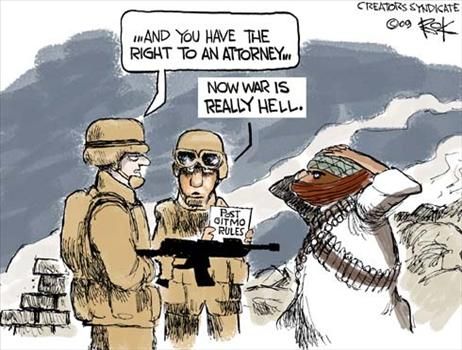
Two ex-Guantanamo inmates appear in Al-Qaeda video


WASHINGTON (AFP) — Two men released from the US "war on terror" prison at Guantanamo Bay, Cuba have appeared in a video posted on a jihadist website, the SITE monitoring service reported.

One of the two former inmates, a Saudi man identified as Abu Sufyan al-Azdi al-Shahri, or prisoner number 372, has been elevated to the senior ranks of Al-Qaeda in Yemen, a US counter-terrorism official told AFP.

Three other men appear in the video, including Abu al-Hareth Muhammad al-Oufi, identified as an Al-Qaeda field commander. SITE later said he was prisoner No. 333.

A Pentagon spokesman, Commander Jeffrey Gordon, on Saturday declined to confirm the SITE information.

"We remain concerned about ex-Guantanamo detainees who have re-affiliated with terrorist organizations after their departure," said Gordon.

"We will continue to work with the international community to mitigate the threat they pose," he said.

On the video, al-Shihri is seen sitting with three other men before a flag of the Islamic State of Iraq, the front for Al-Qaeda in Iraq.

"By Allah, imprisonment only increased our persistence in our principles for which we went out, did jihad for, and were imprisoned for," al-Shihri was quoted as saying.

Al-Shiri was transferred from Guantanamo to Saudi Arabia in 2007, the US counter-terrorism official said.

The other men in the video are identified as Commander Abu Baseer al-Wahayshi and Abu Hureira Qasm al-Rimi (also known as Abu Hureira al-Sana'ani).

The Defense Department has said as many as 61 former Guantanamo detainees -- about 11 percent of 520 detainees transferred from the detention center and released -- are believed to have returned to the fight.

The latest case highlights the risk the new US administration faces as it moves to empty Guantanamo of its remaining 245 prisoners and close the controversial detention camp within a year.

More...

Complete Original Article from AFP
War on Terror Update 55% of Voters Say U.S. and Allies are Winning War on Terror


Must be our new Commander and Chieftain-Jer

Public confidence in the War on Terror rose for the fourth straight week, with 55% who now believe the U.S. and its allies are winning.

Confidence is now at its highest level since November 11, when it hit a record high of 60%. Last week, 53% of voters said the U.S. held the advantage.

The latest Rasmussen Reports national telephone survey found that 18% think the terrorists are winning, while 22% say neither side is winning.

Forty-six percent (46%) of voters say the situation in Iraq will get better in the next six months, the highest level of optimism on this score since mid-November. Twenty-three percent (23%) say the situation will worsen and another 21% say it will be stay about the same.


More...

Complete Original Article from RR

More...

Complete Original Article

More...

Complete Original Article

A Free Pass For The Indispensable Man


During the hothouse days of the presidential campaign, Joe Wurzelbacher became famous because he got Barack Obama to confess that he likes to spread the wealth around. Better known as Joe the Plumber, the Toledo, Ohio, laborer became the target of bottomless venom and scorn because he seemed like an obstacle to Obama's coronation.

One of the main talking points, particularly among left-wing bloggers, was that Wurzelbacher was a tax cheat because, it was revealed by ABC News, he had a tax lien of $1,182 for back Ohio state taxes. This fueled the argument that he was a fraud, his opinion didn't matter. Nothing to see here, folks. Move along.

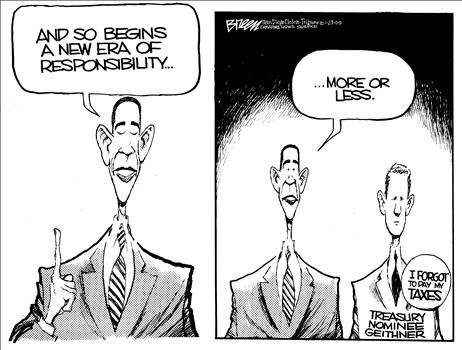
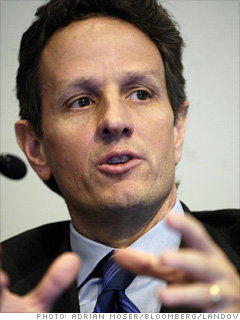
Fast-forward to today. Timothy Geithner, President Obama's choice to be the next treasury secretary, quite clearly tried to defraud the government of tens of thousands in payroll taxes while working at the International Monetary Fund. The IMF does not withhold such taxes but does compensate American employees who must pay them out of pocket. Geithner took the compensation -- which involves considerable paperwork -- but then simply pocketed the money.More...
His explanations for his alleged oversight don't pass the smell test. When the IRS busted him for his mistakes in 2003
and 2004, he decided to take advantage of the statute of limitations and not pay the thousands of dollars he also failed to pay in 2001 and 2002. That is, until he was nominated to become treasury secretary.

Obama defends Geithner, saying that his was a "common mistake," that it is embarrassing but happens all the time. My National Review colleague Byron York reports that, at least according to the World Bank, Geithner's "mistakes" are actually quite rare. Indeed, it's almost impossible to believe that the man didn't know exactly what he was doing given that he would have had to sign documents, disregard warnings and all in all turn his brain off to make the same "mistake" year after year. And keep in mind, Geithner is supposed to run the IRS. So maybe sloppiness isn't that great a defense anyway.

The bulk of Senate Republicans seem willing to green-light his appointment because, in the words of many, "he's too big to fail." Wall Street likes this guy and so does Obama. So, who cares if he breaks and bends the rules? Who cares that he took a child-care tax credit to send his kids to summer camp? He's the right man for the job, no one else can do it, he's the financial industry's man of the moment.

This strikes me as both offensively hypocritical and absurd. Obama has made much of Wall Street greed. He and his vice president talk about paying taxes like it is a holy sacrament. They both belittled Wurzelbacher for daring to suggest that the Democratic Party isn't much concerned with how the little guy can get ahead.

Heck, Obama and pretty much the entire Democratic party insist that they speak for the little guy. But it appears they fight for the big guys.

You would think this is a perfect moment for Republicans to stand on principle, particularly since their votes aren't needed to confirm Geithner. What they will tell you is that Geithner is the indispensable man and, in the words of South Carolina Rep. Lindsey Graham,
"These are not the times to think in small political terms."

Never mind that there's nothing small about the belief that paying taxes in an honest fashion is a minimal requirement for the job of treasury secretary. What's absurd is that Geithner, who helped regulate Wall Street as head of the New York Fed, is the indispensable man now. He may indeed be qualified to be treasury secretary, but is he really the only man who can do the job? Really? Everyone said the same thing about Hank Paulson not long ago. How'd that work out?

I thought the Democrats believed the financial implosion was caused by arrogant and greedy men who thought the rules didn't apply to them because they were so important. I guess they didn't mean it.


Complete Original Article from Caglr Post

More...

Complete Original Article

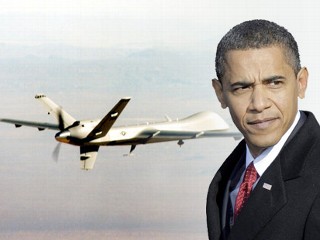
Obama to CIA: Bombs Away! No Let Up in US Drone Attacks

Please note the new look media coverage. Heroic President Obama kills 8 Al Queda, in first week in office. Note the picture also, how Commander and Chiefish. Also note no big hoopla about civilian casualties, as was the case during Bush Administration and Pakistan protests are buried at the bottom. At the bottom of the page I've posted a picture from The LAT which surely would be the picture, or something like it, if this had occurred a week ago. Also note how they make it sound as if this was Obama's plan and Bush implemented it until he showed up. The MSM spin is up to speed Our Heroic Leader has come to save the world-JER


New President Approves Continued Attacks That Have Killed 8 of al Qaeda's Top 20

The CIA's bombing campaign against al Qaeda leadership in Pakistan continued with two more attacks today, an indication, senior officials say, that President Barack Obama has approved the U.S. strategy that has killed at least eight of al Qaeda's top 20 leaders since July 2008.

The two attacks today in Pakistan were the first since President Obama took office on Tuesday.

Asked about it at his daily press briefing, White House Press Secretary Robert Gibbs said, "I'm not going to discuss that matter."

During the campaign, Obama called for cross-border attacks against high-value al Qaeda targets in Pakistan, even before the CIA campaign began.

Pakistani officials and villagers told ABCNews.com that 17 people were killed in two successive strikes against compounds in North and South Waziristan.

Al Qaeda Leader May Be Among the Dead

A senior U.S. official said one of al Qaeda's top 20 leaders may be among the dead today, although it is too soon to be certain.

Since July, the CIA has carried out a relentless bombing campaign against that has targeted the top leadership of al Qaeda, based on a sophisticated intelligence collection effort similar to what was used against insurgents in Iraq.

Eight of the top 20 have been killed in the attacks, according to the U.S. official.

"Al qaeda leaders are freaking out over this," said one person briefing on the bombing campaign. "They have begun to punish local tribesmen who they suspect have tipped off the U.S. to their presence and this is beginning to drive a wedge between the al Qaeda people and the locals."

With the arrest earlier this week by Pakistani authorities of another senior al Qaeda leader, the total number of killed or captured would be nine.

The U.S. attacks have created a firestorm of controversy in Pakistan and some politicians expressed hope the new President would put a halt to bombing campaign.

The new round of CIA bombings came one day after Secretary of State Hillary Clinton phoned Pakistani President Asif Ali Zardari. Pakistani officials said the 30-minute call was mostly limited to "pleasantries" but did include a discussion of the need to fight militants in the tribal areas.

Today, some 1000 people attended a rally in Islamabad to protest the latest U.S. bombings.


Complete Original Article from ABC


More...

Complete Original Article

Obama's Inaugural Surprise


WASHINGTON -- Fascinating speech. It was so rhetorically flat, so lacking in rhythm and cadence, one almost has to believe he did it on purpose. Best not to dazzle on Opening Day. Otherwise, they'll expect magic all the time.

The most striking characteristic of Barack Obama is not his nimble mind, engaging manner or wide-ranging intellectual curiosity. It's the absence of neediness. He's Bill Clinton, master politician, but without the hunger.

Clinton craves your adulation (the source of all his troubles). Obama will take it, but he can leave it too. He is astonishingly self-contained. He gives what he must to advance his goals, his programs, his ambitions. But no more. He has no need to.

Which seems to me the only way to understand the mediocrity of his inaugural address. The language lacked lyricism. The content had neither arc nor theme: no narrative trajectory like Lincoln's second inaugural; no central idea, as was (to take a lesser example) universal freedom in Bush's second inaugural.

This is odd because Obama is so clearly capable of more. But he decisively left behind the candidate who made audiences swoon and the impressionable faint. And that left the million-plus on the Mall, while unshakably euphoric about the moment, let down and puzzled by the speech. He'd given them nothing to cheer or chant, nothing to sing.More...

Candidate Obama had promised the moon. In soaring cadences, he described a world laid waste by Bush, a world that President Obama would redeem -- bringing boundless hope and universal health, receding oceans and a healing planet.

But now that Obama was president, the redeemer was withholding, the tone newly sober, even dour. The world was still in Bushian ruin, marked by "fear ... conflict ... discord ... petty grievances and false promises ... recriminations and worn-out dogmas." But now no more the prospect of magical restoration. In a stunning exercise in lowered expectations, Obama offered not quite blood, sweat and tears, but responsibility, work, sacrifice and service.

When candidate Obama said "it's not about me, it's about you," that was sheer chicanery. But now he means it, because he really cannot part the waters. Hence his admonition to rely not on the "skill or vision of those in high office," but on "We the People."

On the issue of race, he was even more withholding, and admirably so. He understood that his very presence was enough to mark the monumentality of the moment. Words would be superfluous -- as introducer Dianne Feinstein was apparently unaware -- and he gave it very few.

This was surprising, given that the announced theme of the inaugural -- "a new birth of freedom" -- invited grandiose comparison to Lincoln. Yet in the inaugural address, Obama abandoned the conceit. He allowed that "a man whose father less than 60 years ago might not have been served at a local restaurant can now stand before you to take a most sacred oath." When he followed that with "So let us mark this day with remembrance of who we are and how far we have traveled," you were sure he would trace the journey back to Lincoln and the Second (post-Gettysburg) Republic or to King and the civil rights revolution.

But Obama didn't. Remarkably, he instead reached back -- over King and Lincoln -- to George Washington. He rooted the values he cherishes most (and wants us to renew) in the Founders, in the First Republic, the slave-tainted one (as our schoolchildren are incessantly reminded) that had to await Lincoln for its cleansing.

Obama's unapologetic celebration of Washington and the founders of the original imperfect union was a declaration of his own emancipation from -- or better, transcendence of -- the civil rights movement. The old warrior Joseph Lowery prayed for the day when "white will embrace what is right." Not Obama. By connecting himself in this historic address to Washington rather than Lincoln the liberator, Obama was legitimizing the full sweep of American history without annotation or mental reservation. If we ever have a post-racial future, this moment will mark its beginning.

Obama did this in prose, not his usual poetry. And he buried it in an otherwise undistinguished speech marred by a foreign-policy section featuring the mushy internationalism of his still-bizarre Berlin adventure.

Perhaps that was just a bone to appease the faithful he had otherwise left hungry. We have no way of knowing. A complicated man, this new president. Opaque, contradictory and subtle. And that's just day one.
Complete Original Article from RCP

More...

Complete Original Article

Giving Most-Productive Their Due In One-Sided Tax-Burden Debate

This is reaching the "Atlas Shrugged " level and it looks like it is only going to get worse-Jer


Class warriors are mobilizing again. The high federal deficit, decreasing revenues, increasing spending and the expiring 2001 tax cuts all can serve them as reasons to raise taxes. With such ample ammunition for class warfare's resumption, the Left will have no problem singling out who should pay these higher taxes.

The rest of us, however, should use this opportunity to re-examine how the tax burden debate has been mischaracterized to the detriment of our most productive workers.

The common perception is that the federal income-tax burden focuses on the upper-income part of the scale, while social insurance taxes — Social Security and Medicare — focus on the lower-income range.
More...

Social insurance, or payroll, taxes are flat-rate assessments on the first dollar earned. There are no deductions or credits to diminish their impact and, in the case of Social Security taxes, they are not assessed beyond a certain earnings threshold ($102,000 in 2008).

The Left argues that, for lower-income earners, payroll taxes neutralize the income tax's progressive nature.

The logical leap from the Left's argument is that lower-income groups shoulder the same disproportionate level of contributing to total payroll tax revenues as upper income groups do to total income-tax revenues — right? Wrong.

As the accompanying table shows, the U.S. is not much less dependent on top earners for funding its social insurance programs than it is for its general revenues.

The bottom 51% of earners have a negative income-tax burden — due to refundable credits such as the earned income credit — but they still only shoulder 13% of total payroll tax revenues. In contrast, the top 49% of earners pay 102.4% of income-tax revenues (making up for refundable credits' cost) but still pay 87% of payroll taxes too.

Judged as a ratio of their population percentage vs. their contribution percentage, the difference grows dramatically up the income scale.

The top 3% of earners pay almost 20 times their population rate in income-tax revenues and over five times their rate in payroll tax revenues. The bottom 51% of earners contribute just one-tenth their population level in combined federal tax revenues.

While social insurance programs are regressive in their taxation, they are progressive in their distribution — low-income contributors receiving a greater relative payout than higher-income contributors do. This is possible only because of the top earners' disproportionate contribution.

Illuminating in its own right, this distributional examination also underscores how one-sided the tax debate has become. Top earners are immediately transformed into "the wealthy" — despite the fact that there is substantial lifetime movement up and down the income scale.

In fact, earning status is an "effect," not a "cause." It results from the worker's contribution. Without output, there is no income — the more the output and the more it is valued, the more the remuneration. Top earners are not only top revenue contributors, they are because they are also our most productive workers.

These are workers who we want producing — and, yes, earning — at their full potential. Again, it is an illusion that paychecks follow positions rather than performance. They do not, simply because they can not. The private sector cannot overcompensate for long, whether willfully or mistakenly, because it cannot afford to. Only a redistributive system can do that.

By allowing the tax debate to be cast in terms of wealth, instead of value-produced, redistributional aims can seem plausible to the misguided but well-intentioned Left.

But if we speak in proper terms of productivity, an increased redistributional goal takes on an entirely different meaning. The effect of shifting resources away from more- to less-productive uses reduces the entire system's output.

No struggling private company shifts resources away from its most productive uses. Yet the public sector routinely and tacitly seeks to do just this.

The policies of class warfare result because we nonwarriors do not understand the extent or the effect of redistributional policies. We neither recognize how pervasive redistribution already is nor what in fact is being redistributed.

In hard times, the emotional reaction is to reallocate all the more. Yet what is truly necessary is to increase productivity as much as possible — and thereby the overall economy — and then allow the private sector to allocate resources according to their best uses. Our tax policy goal should be to minimize the reallocation, not further increase it.

• Young served in the Department of Treasury and the Office of Management and Budget from 2001 to 2004 and as a congressional staff member from 1987 to 2000.

Complete Original Article from IBD

"White on the Rocks"


More...

Complete Original Article

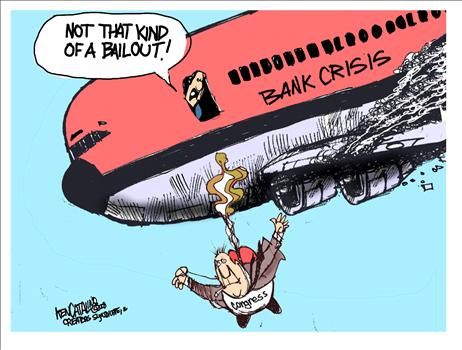
Politicians Asked Feds to Prop Up Ailing Bank


Two Illinois congressmen urged the Treasury in October to avoid taking any regulatory action against a struggling bank in their state, illustrating the aggressive efforts some politicians are taking to help hometown lenders during the bank crisis.

In a letter they sent, Democratic Reps. Danny K. Davis and Luis Gutierrez also asked government officials to provide financial aid to National Bank of Commerce, based in the Chicago suburb of Berkeley, Ill.

More...

Complete Original Article from WSJ

"Angel Wings"


More...

Complete Original Article

California’s Tipping Point


This goes along with what I was writing about the other day. The problem is that it is reaching national proportions and it is just a matter of time until the lid blows-Jer


I think a threshold or tipping point exists in the ratio between the political power of those who pay taxes and those who consume taxes directly. After that tipping point is reached, those who pay taxes become the economic slaves of those who consume taxes.

I think California has passed that point. [h/t Instapundit] Tax consumers now control the state government and can vote themselves almost any level of personal income and benefits they wish while taxpayers cannot muster the political capital to defend themselves.

This might seem overwrought but it has a precedent in the concept of the military-industrial complex. When that arch-leftist Eisenhower created the concept he warned that those who benefited from military spending, from stockholders and CEOs of defense companies to strippers who work the clubs outside military bases, would bring political pressure to distort defense priorities. He was right. The problem has bedeviled us ever since WWII. We keep bases we don’t need and buy new toys instead of spending money on training ammo.

Now, in addition to the existing vested interest in military spending, imagine that the 3 million active and reserve service members along with 500,000 civilian military employees all belonged to a single compulsory union. Imagine that the union endorsed candidates and policies, donated a lot of money to campaigns, assigned soldiers to go door-to-door and man phone banks. Imagine that the majority of people in Washington were in the union and had constant access to politicians. Unions provide a ready-made organizational framework that makes unions much more politically effective than a similar number of unorganized citizens of the same size would be. Their ability to buy advertising alone dwarfs that of any other group. The military union could bring enormous pressure to bear on any politician and force them to vote for more military spending. How much more distorted would military spending be than it is now? How much harder would it be to reduce military spending?

This is the condition that California and other states with powerful public-sector unions find themselves in. California has ~2.3 million unionized government workers and ~18.6 million civilians. With so many people organized with a laser-like focus on increasing taxes and spending, the private working citizens of California find it nearly impossible to prevent government workers from voting their own paychecks.More...

In effect, government workers have hijacked democracy. Instead of state employees working for the people, the people now work for the state employees. As far as the state government is concerned, people in the private sector work merely so that they can be taxed for the benefit of the tax consumers. They’ve entered a condition not unlike like that of pre-industrial serfs.

Of course no one is being whipped, but in effect an ordinary citizen of California cannot get their desires for reduced state spending implemented due to the disproportionate power of the State’s employees and allied interest. It appears now that the government unions will not accept any solution to California’s budget crisis except increased taxes in a declining economy. Ordinary citizens have no choice but to either emigrate or just lie there and take it.

By long custom and law, the U.S. military has remained ruthlessly apolitical. Serving members do not endorse candidates, organize politically in any fashion or make independent public statements about campaign issues. That standard evolved due to the obvious danger of having a military with a positive feedback loop into the political system that controls its budget. The same danger exists for all other state employees, albeit in a slower and less dramatic fashion.

No one should be able to vote their own paycheck. Government-employee unions should be legally restricted from engaging in any kind of political activity. If not, it is only a matter of time before civil servants become civil masters.

Complete Original Article from Chicago Boyz

Geithner Accused of Lying About Tax Cheating


Art Cashin, one of the talking heads on CNBC, said early on Thursday morning that the stock market was going down in part because of a lack of confidence caused by the failure of the Senate to quickly confirm Timothy Geithner as Treasury Secretary. This was the party line of the Wall Street insiders who have a special interest in getting Geithner confirmed. Later on that day, Geithner was endorsed 18-5 by the Senate Finance Committee. A full Senate vote on the nomination may be held on Monday.

The American people can’t be blamed for thinking that if a tax cheat inspires confidence on Wall Street and can get an overwhelmingly positive vote in a Senate committee, the nation must indeed be headed for financial ruin.

But Geithner not only got caught cheating on his taxes, he is now being accused of lying about his cheating during his confirmation hearing when he attempted to blame the problem on his TurboTax computer software program.

But don’t expect this to be a major issue for business cable network CNBC.

In a major conflict of interest media scandal, General Electric’s media properties, which include CNBC, NBC News and MSNBC, are indirectly benefitting from the Wall Street bailout through a federal loan guarantee of $139 billion extended to GE Capital, the lending arm of GE.

What’s more, GE chairman Jeffrey Immelt is a member of the board of the New York Federal Reserve, headed by one Timothy Geithner. In fact, Immelt may be involved in finding a successor to Geithner as president of the New York Federal Reserve Bank.

When GE Capital got its federal loan guarantee, the story was covered on CNBC by reporter Steve Liesman. A transcript includes the obligatory notation that “GE is the parent company of CNBC” but the video of Liesman breaking the story didn’t mention that.

The mantra, “GE is the parent company of CNBC,” is supposed to protect GE’s media property from any charges of conflict of interest in its coverage of the financial meltdown.

One of CNBC’s most famous and outspoken talking heads, Jim Cramer, did an amazing turnaround, first opposing Geithner and then supporting him. “I’ve given up fighting this,” he blurted out. “Obama loves him.” Cramer said that “the guy got a free pass” and “everybody on Wall Street―all my buddies who lost billions for you, for the American people, told me, ‘Jim, he’s the greatest.’”

“Well, now, everybody has discovered the truth,” he added, alluding to the tax cheating. Cramer said that if he had committed similar offenses, he would be going to jail.

On Capitol Hill, some senators were listening to their constituents, thousands of whom were phoning in protest over the Geithner pick, rather than to CNBC.

“I cannot vote to confirm the nomination based on the record and the need to foster greater accountability in both big government and our financial institutions,” declared Senator Charles Grassley, the top Republican on the committee, in making a point that should have been obvious to other members. He quoted a constituent as saying, “If the man cannot handle his own finances, how is he going to handle the country’s?”

Nevertheless, only four members joined with Grassley in voting against Geithner. They were Senators Jon Kyl of Arizona, Jim Bunning of Kentucky, Pat Roberts of Kansas, and Michael B. Enzi of Wyoming.

“I cannot even believe we are voting on this nomination today,” is how Enzi described the situation. He couldn’t believe a person with tax problems like Geithner could even be considered for the position.

Enzi, the Senate’s only accountant, announced his opposition to Geithner by asking, “How do I explain to my constituents that I voted to confirm someone who will make them pay taxes, but sometimes does not pay his own taxes?”

Enzi called Geithner’s handling of his taxes “negligent behavior” that “deserves more than a simple slap on the wrist or half-hearted apology before a Senate committee.” He explained, “In previous years, nominees for positions that do not oversee tax reporting and collection have been forced to withdraw their nomination” because of similar issues.

All 13 Democrats on the committee voted for him. Five Republicans―Hatch, Snowe, Crapo, Ensign and Cornyn―did so as well.

Senator John Ensign, chairman of the Senate Republican Policy Committee, which is composed of GOP Senate leaders and the chairmen of the Senate’s standing committees, voted for Geithner despite being quoted by the BBC as saying that his switchboard had lit up with calls from constituents asking how someone who’d failed to pay their taxes could be put in charge of the IRS.

Republican Senator Orrin Hatch, once considered a conservative, said he would vote for Geithner because his tax cheating was nothing more than a series of “honest mistakes.”

The Hatch rationale for confirming Geithner reflected the influence of what Politico.com reported was a document of “talking points” originally prepared by the Obama transition office and “distributed to Capitol Hill, K Street and congressional reporters.” The “talking points” were designed to portray Geithner’s problems as “simple mistakes or oversights.”

In his confirmation hearing, however, Geithner dug a deeper hole by falsely suggesting that some of his tax dodging may have stemmed from use of the TurboTax computer software program that helps an individual file his tax returns.

While insisting that “these are my responsibilities, not the tax software’s responsibilities,” he was specifically asked by Grassley, “Did the software prompt you to report income and pay self-employment taxes on your IMF income?” He answered, “Not to my recollection, Senator.”

CNBC reported that shares of TurboTax-maker Intuit “fell to their low on the day on strong volume” after Geithner’s claims but did not include a rebuttal from TurboTax. But officials of the company flatly denied the allegation that their software could or should be blamed for his failure to pay taxes.

Dan Maurer, senior vice president and general manager of TurboTax, issued a statement saying that “Each year, millions of Americans use TurboTax to accurately prepare and file their federal and state tax returns. The software helps taxpayers report their income and find the deductions and credits they’re entitled to claim. TurboTax, and all software and in-person tax preparation services, base their calculations on the information users provide when completing their returns. TurboTax also has built-in error-checking tools that routinely catch common taxpayer mistakes.”

The headline, “Treasury Pick Misfiled Using Off-the-Shelf Tax Software,” over a story by business reporter Frank Ahrens of the Washington Post, suggested that the software was to blame. But inside the article Ahrens quoted an official of an international agency who handles these matters and understands the software as saying that TurboTax sends up a “red flag” in order to catch the “mistakes” that Geithner claims he made.More...

Complete Original Article from AIM

More...

Complete Original Article

More...

Complete Original Article

1/23/2009

"Sir Owl"


More...

Complete Original Article

Correlation demonstrated between cosmic rays and temperature of the stratosphere


This offers renewed hope for Svensmark’s theory of cosmic ray modulation of earth’s cloud cover. Here is an interesting correlation published just yesterday in GRL.

Cosmic rays detected deep underground reveal secrets of the upper atmosphere


More...

Complete Original Article From WUWT

More...

Complete Original Article

PREZ ZINGS GOP FOE IN A $TIMULATING TALK


WASHINGTON -- President Obama warned Republicans on Capitol Hill today that they need to quit listening to radio king Rush Limbaugh if they want to get along with Democrats and the new administration.

"You can't just listen to Rush Limbaugh and get things done," he told top GOP leaders, whom he had invited to the White House to discuss his nearly $1 trillion stimulus package.

One White House official confirmed the comment but said he was simply trying to make a larger point about bipartisan efforts.

"There are big things that unify Republicans and Democrats," the official said. "We shouldn't let partisan politics derail what are very important things that need to get done."

That wasn't Obama's only jab at Republicans today.

While discussing the stimulus package with top lawmakers in the White House's Roosevelt Room, President Obama shot down a critic with a simple message.

"I won," he said, according to aides who were briefed on the meeting. "I will trump you on that."

The response was to the objection by Rep. Eric Cantor (R-Va.) to the president's proposal to increase benefits for low-income workers who don't owe federal income taxes.

Not that Obama was gloating. He was just explaining that he aims to get his way on the stimulus package and all other legislation, sources said, noting his unrivaled one-party control of both congressional chambers.

Republicans, along with Democratic leaders in the House and the Senate, met with Obama to hammer out details on a stimulus package that has reached $825 billion.

"We are experiencing an unprecedented economic crisis that has to be dealt with and dealt with rapidly," Obama said during the meeting. Republicans say that is too big a burden for a nation already crippled by debt and that it doesn't do enough to stimulate the economy by cutting taxes.

"You know, I'm concerned about the size of the package. And I'm concerned about some of the spending that's in there, [about] ... how you can spend hundreds of millions on contraceptives," House GOP Leader John Boehner (R-Ohio) later said. "How does that stimulate the economy?"

But White House Press Secretary Robert Gibbs countered: "There was a lot of agreement in that room this morning about the notion that we're facing an economic crisis unlike we've seen in quite some time ... There was agreement that we must act quickly to stimulate the economy, create jobs, put money back in people's pockets."

Gibbs disagreed with those who called the meeting window dressing.

"The president is certainly going to listen to any ideas," he said. "He will also go to Capitol Hill the beginning of next week to talk to Republican caucuses and solicit their input and their ideas."

Obama acknowledged that $825 billion was a tough price tag for some conservatives and deficit hawks to swallow.

"I know that it is a heavy lift to do something as substantial as we're doing right now," he said. "I recognize there are still some differences around the table and between the administration and members of Congress about particular details on the plan," he said. "But I think what unifies this group is a recognition that we are experiencing an unprecedented, perhaps, economic crisis that has to be dealt with," he said.

The president added that legislation governing the use of an additional $350 billion in bailout money for the financial industry must include new measures to ensure accountability.

And he continued his initial round of calls to foreign leaders, dialing up Canadian Prime Minister Stephen Harper, Saudi King Abdallah and British Prime Minister Gordon Brown.More...

Complete Original Article from NY Post

"In Purple"


More...

Complete Original Article

More...

Complete Original Article

What would Larry Summers do?


There's been a worthwhile argument between Tyler Cowen, Matt Yglesias, Paul Krugman and Greg Mankiw over the standards we should apply to the debate over the stimulus package. It's a debate I'm going to do my best to avoid.

But a related question is whether or not the stimulus package meets the standards of its own architects. And it just so happens that prior to being tapped for the NEC Larry Summers was writing a monthly column for the Financial Times. A year ago, he wrote a column advocating the use of fiscal stimulus only under certain conditions:


First, to be effective, fiscal stimulus must be timely. To be worth undertaking, it must be [...] based on changes in taxes and benefits that can be implemented almost immediately.

Second, fiscal stimulus only works if it is spent so it must be targeted. Targeting should favour those with low incomes and those whose incomes have recently fallen for whom spending is most urgent.

Third, fiscal stimulus, to be maximally effective, must be clearly and credibly temporary - with no significant adverse impact on the deficit for more than a year or so after implementation. Otherwise it risks being counterproductive by raising the spectre of enlarged future deficits pushing up longer-term interest rates and undermining confidence and longer-term growth prospects
.


Temporary, targeted and timely -- that was supposed to be the fiscal policy mantra of Rubin and Summers' Hamilton Project. I think those standards are worth keeping in mind as the debate proceeds, especially since there are certainly tradeoffs between them -- e.g., the more timely the bill, the harder it is to make it targetted. Will the current stimilus meet the standards? Obama wants the stimulus on his desk by February 16. Good luck.

More...

Complete Original Article-From The Atlantic

More...

Complete Original Article

Palin Preaches Fiscal Restraint for Alaska


An upbeat Sarah Palin congratulated her state for tightening its belt during past years and asked them to sacrifice a little more in the year ahead during her State of the State address Thursday evening.

“At a time when other states are staring at multi-billion-dollar deficits, and when our federal government proposes a deficit in excess of a trillion dollars this year alone, we all have the cautionary examples we need in the virtues of living within our means,” Palin said. “With less revenue we have an obligation to spend less money.”

She proposed a spending freeze, except for public safety, and new restrictions on discretionary purchases to help do this in 2009. Palin also praised the state for “finding efficiencies during times of prosperity” enabling the state to allocate billions to infrastructure needs in previous years. “That’s common sense fiscal responsibility,” she said.

Palin discussed a number of other state issues, including her state's lawsuit against the federal government for its decision to list the polar bear as an endangered species. “We’ll challenge abuse of federal law when it’s used just to lock up Alaska,” she warned.

The Governor barely mentioned her high-profile run as the GOP vice presidential candidate in her remarks, saying only that, “I used to wonder if the occasionally rough edges of politics were unique here under the Great North Star. But I ventured out a bit this past year, and I tell you that, as partisan quarrels go, ours really aren't so bad.”
More...


Complete Original Article from Townhall

More...

Complete Original Article

President Obama 'orders Pakistan drone attacks'


Missiles fired from suspected US drones killed at least 15 people inside Pakistan today, the first such strikes since Barack Obama became president and a clear sign that the controversial military policy begun by George W Bush has not changed.

Security officials said the strikes, which saw up to five missiles slam into houses in separate villages, killed seven "foreigners" - a term that usually means al-Qaeda - but locals also said that three children lost their lives.

Dozens of similar strikes since August on northwest Pakistan, a hotbed of Taleban and al-Qaeda militancy, have sparked angry government criticism of the US, which is targeting the area with missiles launched from unmanned CIA aircraft controlled from operation rooms inside the US.

The operations were stepped up last year after frustration inside the Bush administration over a perceived failure by Islamabad to stem the flow of Taleban and al-Qaeda fighters from the tribal regions into Afghanistan. Mr Obama has made Afghanistan his top foreign policy priority and said during his presidential campaign that he would consider military action inside Pakistan if the government there was unable or unwilling to take on the militants.

The strikes come just a day after Mr Obama appointed Richard Holbrooke, a former UN ambassador, as a special envoy for the region.

Eight people died when missiles hit a compound near Mir Ali, an al-Qaeda hub in Pakistan's North Waziristan region. Seven more died when hours later two missiles hit a house in Wana, in South Waziristan. Local officials said the target in Wana was a guest house owned by a pro-Taleban tribesman. One said that as well as three children, the tribesman's relatives were killed in the blast.

Pakistan has objected to such attacks, saying they are a violation of its territory that undermines its efforts to tackle militants. Since September, the US is estimated to have carried out about 30 such attacks, killing more than 220 people. More...


Complete Original Article From Times On Line

More...

Complete Original Article

John Stossel :Anything That's Peaceful


This week the Left arrived in Washington, excited about the wonderful things it will do to us -- I mean, for us. They always do it for us.

Liberals say that they, unlike those reactionaries who've held power for too long, want to give us more choices. Abortion-rights advocates and want women to have the "right to choose." Gay-rights advocates want the choice of marrying someone of the same sex and serving in the military.

Choice is good. As a libertarian, I'm all over choice. But strangely, today, liberals are mostly about what Americans should not be allowed to choose.
More...

AFL-CIO boss John Sweeney says, "[O]ur top priority is passage of the Employee Free Choice Act, legislation that will restore workers' freedom to bargain for a better life".

That sounds nice. But it really means that workers will no longer have the privacy and safety of a secret ballot when voting on a union. If a union can round up signatures from more than half the employees at a plant, other workers will be forced to unionize, too.

Unorganized labor -- better known as most of us, or free people making our own way -- won't be helped by this coercive limiting of choice.

Parents have little choice when they send their children to school. Government forces everyone to pay into a system that locks most kids into a unionized monopoly.

If low-income parents were allowed $11,000 vouchers (that's about how much government spends per student), that would give poor parents a choice. But liberals don't want that.

If you take risks with your own money to build a business, liberals want to limit your choice as to what you can say, how much you pay, and whom you can hire or fire. Freedom of association? Fugeddabout it. You cannot choose to offer newcomers on-the-job training at less than $7.25 per hour. You can't choose to pay older people or pregnant women less because their medical costs may be higher. So newcomers, older people and pregnant women can't choose those jobs. Liberals don't want to liberalize that.

In a job interview, you better not ask about age, citizenship status, disability, or whether the person goes by "Mr." "Mrs." "Miss" or "Ms." Those questions are forbidden

Liberal litigators have essentially outlawed racial and sexual comments in schools and workplaces. A cashier at the Senate coffee shop was threatened with firing for addressing customers as "honey" and "baby" because one man complained it was "sexual harassment.".

Liberal senators like Dick Durbin, John Kerry and Charles Schumer want speech limited further by the "fairness doctrine." Fairness here means depriving people of the choice of all-conservative radio.

And what's more liberal than voluntary exchange between consenting adults? Free trade lets everyone in the world find the best buys, no matter where they are. It gives us more things for less money. Even Paul Krugman supports free trade. But liberals don't want to allow buyers and sellers to make their own choices. Liberals want trade curtailed.

Even life-saving trade: 95,000 Americans are waiting for organ transplants. Thousands die while waiting. Legalizing the sale of organs would give people the choice of life, while allowing sellers to choose cash over an extra kidney.

But liberals don't want to let willing buyers and sellers have that choice.

The Food and Drug Administration (FDA) decides what you may put in your own body. A truly liberal FDA would acknowledge that adults own their bodies and can decide for themselves what risks are appropriate. That would give consumers more choice. But liberals want the FDA to be tougher.

Liberals don't want you to have the choice of owning a handgun, a big car or keeping your own money so you can use it as you see fit. Liberals want to restrict our choices.

I'm a classical liberal. I believe people should have the freedom to do anything that is peaceful. That's truly liberal.

I want the word back.

Complete Original Article-from Townhall